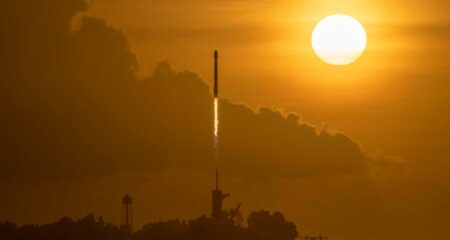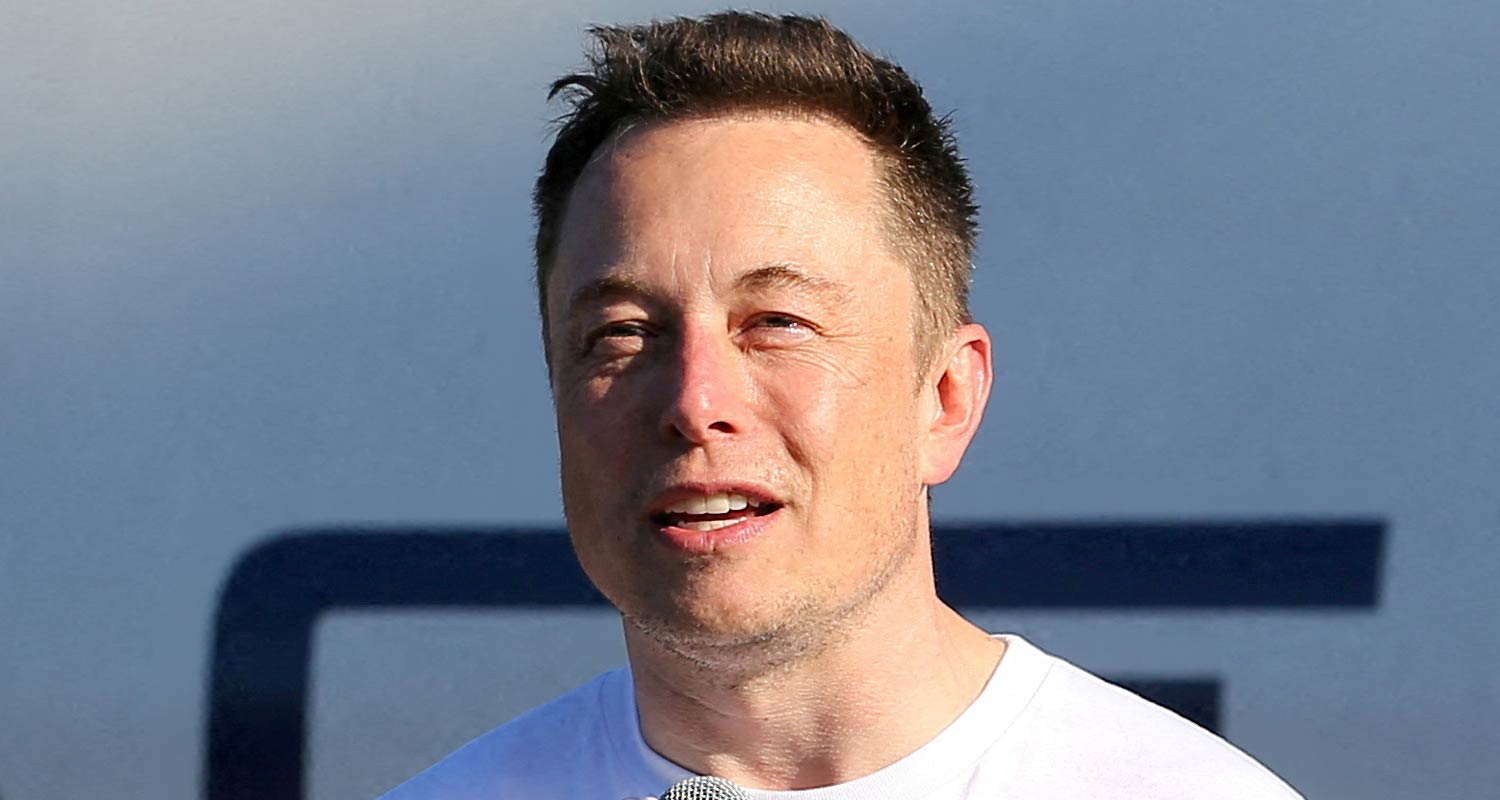
SpaceX has adopted corporate governance policies that will erode typical shareholder protections in unprecedented ways, giving founder Elon Musk virtually unchecked executive authority when the rocket maker goes public later this year.
Excerpts of SpaceX’s IPO registration statement show the company is combining supervoting shares, mandatory arbitration, stricter rules on shareholder proposals and Texas corporate law to give Musk and other insiders broad control. At the same time, it sharply limits investors’ ability to challenge management, sue in court and force votes on governance issues.
And the only person who can fire Musk is Musk, who will retain majority control through supervoting shares.
“It closes the voting door, the courthouse door and the proposal door simultaneously. It’s unprecedented in terms of creating a total lack of accountability,” said Bruce Herbert, CEO of Seattle-based sustainability-focused wealth management firm Newground Social Investment, which challenged Musk at his electric vehicle company, Tesla, with a shareholder proposal that won 49% of the vote in November.
For all of Musk’s controversies, many investors see him as a visionary able to achieve impossible things. At Tesla, the board recently awarded him a 10-year pay package worth close to US$1-trillion, saying the company would lose significant value “without Elon”. At SpaceX, much of his pay is tied to launching massive data centres in space and colonising Mars.
SpaceX did not respond to a request for comment.
Piling in
The restrictions may not stop investors from piling in. Some investors see relinquishing some of their rights as the cost to buy in to what is expected to be the biggest public listing in history as SpaceX eyes up to $75-billion in proceeds and a $1.75-trillion valuation. Many investors fear missing out, especially if the billionaire entrepreneur can generate returns similar to those of Tesla. The EV maker’s shares have risen to about $389 compared with their 2012 debut at $17.
“SpaceX is going to be such a huge part of the market that for most portfolio managers it’s very difficult not to buy, because it’s going to be driving the price of everything,” said Ann Lipton, a professor of law at the University of Colorado Law School. “And if SpaceX soars, and you don’t have a piece of it, then you’re going to look like you’re underperforming the market by comparison.”
Read: Icasa caught in the political crossfire over Starlink
Musk is structuring SpaceX to protect the company from the kind of shareholder criticism aimed at Tesla, according to corporate governance experts. The EV maker’s investors have challenged Musk on issues ranging from his pay package to the acquisition of his solar energy company, SolarCity.
There is a risk for investors, the experts added, that Musk sets a precedent for other high-profile, founder-led IPOs expected to come to market later this year or next, including artificial intelligence companies Anthropic and OpenAI.
“They are all complicated, potentially controversial figures that are also creating history in real time,” Dishmi Capital co-founder Shang Chou said of Musk, OpenAI founder Sam Altman and other founders. “You focus less on valuation and more on the fact that you’ve been offered a seat on a rocket ship.”
Musk will stay on as CEO, chief technical officer and chairman of SpaceX’s nine-member board of directors after the company’s stock starts trading later this year. He has a firm grip with 42.5% of the company’s equity and 83.8% of the voting control, according to a 4 May filing with federal regulators.
SpaceX plans to use a dual-class equity structure that gives class-B shareholders 10 votes for every class-A share available to everyday investors, concentrating power with Musk and a handful of other insiders with supervoting shares. Musk’s class-B stock, which will not be available to the public, will allow him to retain more than 50% of the voting power in the company after it goes public, handing him and other insiders the power to pick a majority of the board of directors.
That will also give Musk the power to “elect, remove or fill any vacancy” among those directors, the company said. It also hands to him the power to control other issues requiring shareholder approval, including M&A transactions, potentially making it easier to merge with Tesla later if he wants.
The supervoting shares will be immediately converted to class-A shares if the stock is sold, further consolidating power among the remaining class-B holders. Although the company can issue more class-B shares, only Musk, his family and “certain entities” will be eligible to receive them, the filing shows.
Risk factors
Musk’s voting power will make SpaceX a “controlled company” under securities rules, the filing shows. It is not uncommon for founder-led companies in media and tech to hand control to their charismatic CEOs, as happened with Mark Zuckerberg at Meta Platforms and at News Corp with former CEO Rupert Murdoch. That designation allows them to bypass certain corporate governance requirements so they can make big, bold moves fast.
While most publicly traded companies are required to have independent directors make up a majority of their nominating and compensation committees, controlled companies do not have to and SpaceX said it does not plan to.
Read: SpaceX bets the rocket farm on AI
“You will not have the same protections afforded to shareholders of companies that are subject to all of the corporate governance requirements,” the company warned in a list of potential risk factors for investors.
The company significantly limits shareholders’ rights to sue. SpaceX’s bylaws will make it clear that anyone who owns shares “irrevocably and unconditionally” waives all rights to pursue a jury trial. Shareholders will also be prohibited from bringing class actions against the company, its directors, officers, controlling shareholders or bankers tied to the IPO, according to the filing.
Instead, shareholders will be subject to mandatory arbitration, which had long been illegal in the US. The Securities and Exchange Commission reversed its position in September, allowing companies to adopt mandatory arbitration policies, which are private proceedings overseen by arbitrators.
Joel Shulman, founder and chief investment officer of ERShares, which manages the $993-million Private/Public Crossover ETF, said he has no issues with the restrictions as a SpaceX investor.
“I would rather have him making these decisions and be in control,” he said. “He may be controversial and polarising and he does some crazy, bizarre things sometimes, but he’s a brilliant guy when it comes to building something completely new and building wealth” for himself and shareholders. — Anirban Sen, Suzanne McGee, Echo Wang, Milana Vinn, Ross Kerber, Svea Herbst-Bayliss, Joey Roulette and Akash Sriram, (c) 2026 Reuters
Get breaking news from TechCentral on WhatsApp. Sign up here.