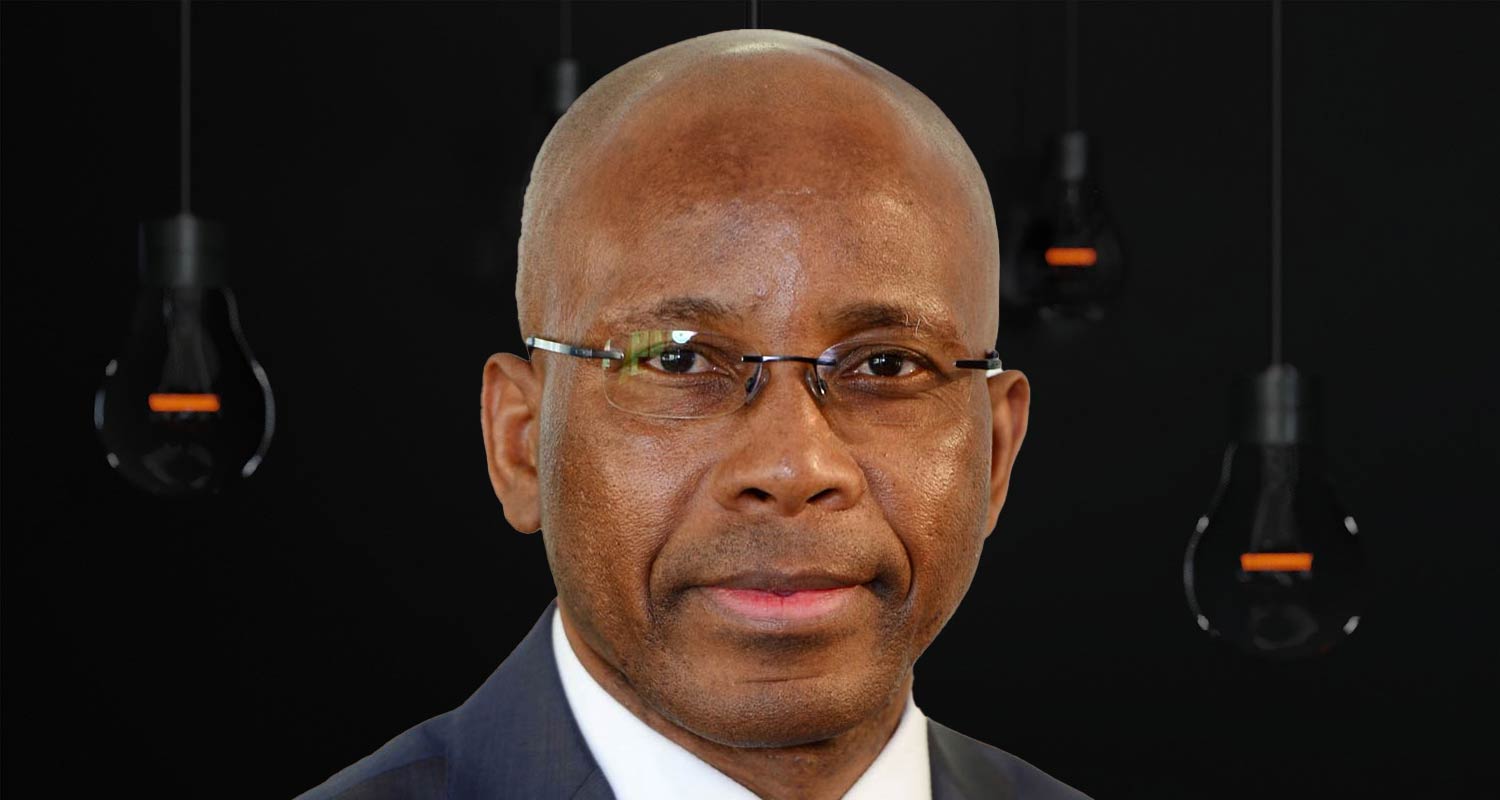
Eskom chairman Mteto Nyati has said the establishment of a fourth entity within the utility’s unbundling plan — a dedicated renewables business called Eskom Green — is fundamentally about ensuring the state-owned power company has a future beyond its ageing coal fleet.
Speaking to SAfm on Thursday, Nyati said the strategy the board inherited when it was appointed in October 2022 would have seen Eskom progressively retire coal-fired power stations without building new generation capacity, effectively ceding the future energy market entirely to independent power producers (IPPs).
“If we were to continue with that strategy, there would not be an Eskom in 40 years’ time,” Nyati said. “We cannot be presiding over an entity that is slowly dying… No, we need to have an Eskom in the future.”
The decision to create Eskom Green added a fourth unit to what was originally a three-way unbundling into generation, transmission and distribution — a restructuring first announced by government in 2019.
However, Nyati cautioned that renewable energy alone cannot meet the country’s needs, pointing to the intermittency challenges that arise during periods of poor weather. “People say, ‘I am off grid’, but you’ve got poor weather for a day or two and they slowly, quietly come back into Eskom,” he said.
The chairman argued that dispatchable base-load generation — from coal and nuclear — will remain essential alongside renewables. “Renewable energy alone is not the answer to our problems,” he said.
Unbundling
Nyati said the unbundling process is now moving into a more decisive phase. The National Transmission Company of South Africa (NTCSA) has been established as a wholly owned subsidiary of Eskom with its own independent board — the first of the four entities to be formally separated.
Distribution is intended to follow, with generation the last to be carved out. However, the distribution entity faces a significant obstacle: municipalities owe Eskom R110-billion, rendering the unit unviable as a standalone business in its current form.
Read: Eskom tariffs to surge on 1 April as Nersa blunder hits home
Nyati said Eskom has pursued legal action against some municipalities and struck repayment agreements with others, including Ekurhuleni, the City of Tshwane and the City of Johannesburg.
But he expressed frustration at the underlying problem. “Why should we be in a situation where municipalities are comfortable just taking services from Eskom and not paying for them? They are collecting from residents but not paying Eskom.”
On the question of whether unbundling is a precursor to privatisation — a concern raised repeatedly by labour unions — Nyati was clear: “This unbundling is not privatisation,” he said. “You separate these entities so that they can compete in their individual spaces effectively. They can be much more agile.” All four entities will remain wholly owned by government through Eskom, he said.
Read: Eskom marks 300 days without load shedding
Nyati also drew a distinction between NTCSA and the planned independent transmission system operator (TSO), which he compared to a stock exchange for electricity. The Energy Regulation Amendment Act, passed last year, requires the establishment of an independent TSO to govern the buying and selling of electricity in a market that now includes multiple IPPs alongside Eskom. NTCSA is acting in this capacity on an interim basis until the TSO is formally established in September. — (c) 2026 NewsCentral Media
Get breaking news from TechCentral on WhatsApp. Sign up here.