Close Menu
TechCentralTechCentral

    Subscribe to the newsletter

    Get the best South African technology news and analysis delivered to your e-mail inbox every morning.

    Facebook X (Twitter) YouTube LinkedIn
    WhatsApp Facebook X (Twitter) LinkedIn YouTube
    TechCentralTechCentral
    • News
      Big Microsoft 365 price increases coming next year

      Big Microsoft price increases coming next year

      5 December 2025
      Vodacom to take control of Safaricom in R36-billion deal - Shameel Joosub

      Vodacom to take control of Safaricom in R36-billion deal

      4 December 2025
      Black Friday goes digital in South Africa as online spending surges to record high

      Black Friday goes digital in South Africa as online spending surges to record high

      4 December 2025
      BYD takes direct aim at Toyota with launch of sub-R500 000 Sealion 5 PHEV

      BYD takes direct aim at Toyota with launch of sub-R500 000 Sealion 5 PHEV

      4 December 2025
      'Get it now': Takealot in new instant deliveries pilot

      ‘Get it now’: Takealot in new instant deliveries pilot

      4 December 2025
    • World
      Amazon and Google launch multi-cloud service for faster connectivity

      Amazon and Google launch multi-cloud service for faster connectivity

      1 December 2025
      Google makes final court plea to stop US breakup

      Google makes final court plea to stop US breakup

      21 November 2025
      Bezos unveils monster rocket: New Glenn 9x4 set to dwarf Saturn V

      Bezos unveils monster rocket: New Glenn 9×4 set to dwarf Saturn V

      21 November 2025
      Tech shares turbocharged by Nvidia's stellar earnings

      Tech shares turbocharged by stellar Nvidia earnings

      20 November 2025
      Config file blamed for Cloudflare meltdown that disrupted the web

      Config file blamed for Cloudflare meltdown that disrupted the web

      19 November 2025
    • In-depth
      Jensen Huang Nvidia

      So, will China really win the AI race?

      14 November 2025
      Valve's Linux console takes aim at Microsoft's gaming empire

      Valve’s Linux console takes aim at Microsoft’s gaming empire

      13 November 2025
      iOCO's extraordinary comeback plan - Rhys Summerton

      iOCO’s extraordinary comeback plan

      28 October 2025
      Why smart glasses keep failing - no, it's not the tech - Mark Zuckerberg

      Why smart glasses keep failing – it’s not the tech

      19 October 2025
      BYD to blanket South Africa with megawatt-scale EV charging network - Stella Li

      BYD to blanket South Africa with megawatt-scale EV charging network

      16 October 2025
    • TCS
      TCS+ | How Cloud on Demand helps partners thrive in the AWS ecosystem - Odwa Ndyaluvane and Xenia Rhode

      TCS+ | How Cloud On Demand helps partners thrive in the AWS ecosystem

      4 December 2025
      TCS | MTN Group CEO Ralph Mupita on competition, AI and the future of mobile

      TCS | Ralph Mupita on competition, AI and the future of mobile

      28 November 2025
      TCS | Dominic Cull on fixing South Africa's ICT policy bottlenecks

      TCS | Dominic Cull on fixing South Africa’s ICT policy bottlenecks

      21 November 2025
      TCS | BMW CEO Peter van Binsbergen on the future of South Africa's automotive industry

      TCS | BMW CEO Peter van Binsbergen on the future of South Africa’s automotive industry

      6 November 2025
      TCS | Why Altron is building an AI factory - Bongani Andy Mabaso

      TCS | Why Altron is building an AI factory in Johannesburg

      28 October 2025
    • Opinion
      Your data, your hardware: the DIY AI revolution is coming - Duncan McLeod

      Your data, your hardware: the DIY AI revolution is coming

      20 November 2025
      Zero Carbon Charge founder Joubert Roux

      The energy revolution South Africa can’t afford to miss

      20 November 2025
      It's time for a new approach to government IT spend in South Africa - Richard Firth

      It’s time for a new approach to government IT spend in South Africa

      19 November 2025
      How South Africa's broken Rica system fuels murder and mayhem - Farhad Khan

      How South Africa’s broken Rica system fuels murder and mayhem

      10 November 2025
      South Africa's AI data centre boom risks overloading a fragile grid - Paul Colmer

      South Africa’s AI data centre boom risks overloading a fragile grid

      30 October 2025
    • Company Hubs
      • Africa Data Centres
      • AfriGIS
      • Altron Digital Business
      • Altron Document Solutions
      • Altron Group
      • Arctic Wolf
      • AvertITD
      • Braintree
      • CallMiner
      • CambriLearn
      • CYBER1 Solutions
      • Digicloud Africa
      • Digimune
      • Domains.co.za
      • ESET
      • Euphoria Telecom
      • Incredible Business
      • iONLINE
      • IQbusiness
      • Iris Network Systems
      • LSD Open
      • NEC XON
      • Netstar
      • Network Platforms
      • Next DLP
      • Ovations
      • Paracon
      • Paratus
      • Q-KON
      • SevenC
      • SkyWire
      • Solid8 Technologies
      • Telit Cinterion
      • Tenable
      • Vertiv
      • Videri Digital
      • Vodacom Business
      • Wipro
      • Workday
      • XLink
    • Sections
      • AI and machine learning
      • Banking
      • Broadcasting and Media
      • Cloud services
      • Contact centres and CX
      • Cryptocurrencies
      • Education and skills
      • Electronics and hardware
      • Energy and sustainability
      • Enterprise software
      • Financial services
      • Information security
      • Internet and connectivity
      • Internet of Things
      • Investment
      • IT services
      • Lifestyle
      • Motoring
      • Public sector
      • Retail and e-commerce
      • Satellite communications
      • Science
      • SMEs and start-ups
      • Social media
      • Talent and leadership
      • Telecoms
    • Events
    • Advertise
    TechCentralTechCentral
    Home » World » Fears Russia could sabotage global Internet

    Fears Russia could sabotage global Internet

    By The Conversation29 October 2015
    Twitter LinkedIn Facebook WhatsApp Email Telegram Copy Link
    News Alerts
    WhatsApp

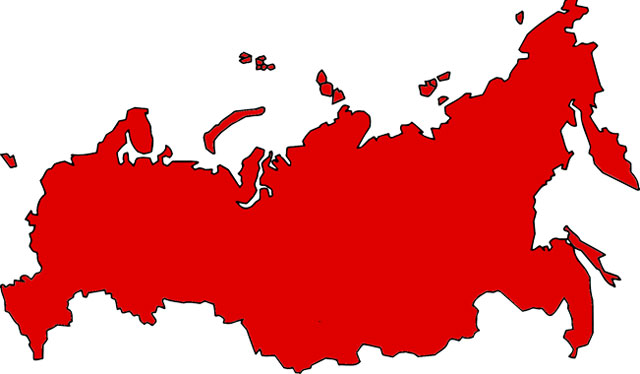
    russia-640

    It may sound far-fetched at first, but there’s a growing fear of the damage a newly aggressive Russia might inflict in a time of tension or conflict simply by damaging or cutting the undersea cables that carry almost all of the West’s Internet traffic.

    The New York Times reported that Russian submarines and spy ships were aggressively operating near the vital undersea cables. Could they be preparing for a new form of warfare?

    The perfect global cyberattack could involve severing the fibre-optic cables at some of their hardest-to-access locations in order to halt the instant communications on which the West’s governments, military, economies and citizens have grown dependent.

    Effectively, this would cripple world commerce and communications, destabilise government business and introduce uncertainty into military operations. A significant volume of military data is routed via the Internet backbone.

    The fibre-optic cables that carry the majority of the planet’s Internet traffic follow designated paths under the oceans. To cause global chaos, all that is needed is some “wire cutters” (realistically a submarine with a depth charge would do). This is not rocket science and there will be no need for clever hackers.

    While there is no evidence yet of any “cable snipping”, there is concern among senior US and allied military and intelligence officials over the accelerated activity by Russian armed forces around the globe. At the same time, the internal debate in Washington illustrates how the US is viewing Russian moves with distrust. Surveillance activity shows a significant increase in Russian activity along the known routes of the cables and more than a dozen officials confirmed in broad terms that it had become the source of significant attention in the Pentagon.

    Talking to the BBC’s Gordon Corera, the deputy director of the US National Security Agency, Richard Ledgett, warned of the increasing danger of destructive cyberattacks by nation states in addition to criminal organisations. A concerted cyberattack against another nation state can result in the breaking down of society and the loss in ability to defend itself. Information warfare (IW) is an extension of electronic warfare, but importantly it embraces cyberwarfare.

    More than 50% of effort in future conflicts will be in both cyberspace and electromagnetically in the ether — this will be known as “information warfare”. It will disrupt radio communications, radar and intelligence surveillance, military command and control, weapon systems control, aircraft navigation, national infrastructures, emergency services, and all Internet communication. Severing Internet backbone networks will cause major worldwide disruption causing widespread suffering without firing a single shot in anger.

    In March 2003, allied forces led by the US began Operation Iraqi Freedom. In the first few days of that conflict, an information war took place that completely neutralised the ability of Iraq to use the electromagnetic spectrum and the Internet. Its armed forces and its civilian infrastructure was virtually paralysed. The conflict lasted just 43 days and Iraq had a formidable and well-equipped military.

    Russia has long realised that this “soft” warfare is the equal partner to the familiar hard-weapons side and is planning to spend billions perfecting techniques required. Cyberwarfare has become an important weapon in the military arsenal.

    cable-640

    Attack on Estonia
    In April 2007, denial-of-service (DOS) attacks targeted Estonian websites including the Estonian parliament, banks, ministries, newspapers and broadcasters, amid the country’s disagreement with Russia on the relocation of the Bronze Soldier of Tallinn (a Soviet war grave monument) together with Soviet war graves in Tallinn.

    Cyber analysts concluded that the cyberattack on Estonia was well planned and sophisticated, with no precedent. Although Russia vehemently denied involvement the foundations for future IW were becoming established. Military strategists worldwide study the attack to for its inclusion into an order of battle, and to develop mitigating measures.

    Military and government strategists did not have to wait long for another example of IW. On 20 July 2008, just prior to the Russian military invasion of Georgia to support the self-proclaimed republics of South Ossetia and Abkhazia, a massive Russian-based Internet DOS attack against Georgia began. Targets for the distributed DOS attack included websites of the Georgian president, Mikheil Saakashvili, the OSInform news agency and OS radio station. It was also reported that key sections of Georgia’s Internet traffic had been rerouted through servers based in Russia and Turkey, where the traffic was either blocked or diverted — effectively closing the Internet in Georgia for the duration of hostilities.

    There was also circumstantial evidence that the Baku-Tbilisi-Ceyhan pipeline control system was targeted by a sophisticated computer virus similar to Stuxnet, which led to an uncontrolled pressure incident. The Russian government again distanced itself from any involvement and blamed the Russian criminal fraternity. However, observers have acknowledged that the resources needed for this level of attack point to a nation-state involvement.

    The escalating military conflict in Ukraine has featured a mirrored cyberwar between the two sides with distributed DOS and malware attacks against public websites, banks, radio and television channels and public utilities. At the same time, Ukrainian forces have grappled with formidable Russian electronic warfare capabilities.

    Russia has deployed its new multi-functional Krasukha-4 electronic warfare systems to support Ukrainian separatists and “volunteer” Russian combat troops. It is the Krasukha-4 that has been deployed to Syria. Russia has again denied any involvement in the cyberattack and blames criminal organisations. But this is the first time a fully integrated IW has been witnessed.

    Lieutenant-General Ben Hodges, the commander of the US army in Europe, has described the Russian capability as “eye watering” and confirmed that US army personnel from Nato are working alongside their counterparts in the Ukrainian army to gain first-hand experience of information warfare from a state-based adversary.

    Is Russia is developing the capability to repeat Operation Iraqi Freedom on a global scale? If its investment in IW is any measure, we should be concerned — this investment is not being matched by the US and Europe combined.

    Western leaders should be made aware of the need to accelerate development of IW capability and train more people to deal with it. They should stop isolating Russia in the world and putting it in a position where it feels the need to cash in on this investment.The Conversation

    • David Stupples is professor of electrical and electronic engineering and director of electronic warfare at City University London
    • This article was originally published on The Conversation


    David Stupples National Security Agency Nato NSA Richard Ledgett
    Subscribe to TechCentral Subscribe to TechCentral
    Share. Facebook Twitter LinkedIn WhatsApp Telegram Email Copy Link
    Previous ArticleTshwane free Wi-Fi reaches a million users
    Next Article MPs declare war on cable thieves

    Related Posts

    NSA chief accuses China of ‘very aggressive’ hacking strategy

    31 May 2024
    China accuses US of hacking Huawei servers

    China accuses US of hacking Huawei servers

    20 September 2023

    Likely new NSA boss warns of AI dangers

    21 July 2023
    Company News
    AI is not a technology problem - iqbusiness

    AI is not a technology problem – iqbusiness

    5 December 2025
    Telcos are sitting on a data gold mine - but few know what do with it - Phillip du Plessis

    Telcos are sitting on a data gold mine – but few know what do with it

    4 December 2025
    Unlock smarter computing with your surface Copilot+ PC

    Unlock smarter computing with your Surface Copilot+ PC

    4 December 2025
    Opinion
    Your data, your hardware: the DIY AI revolution is coming - Duncan McLeod

    Your data, your hardware: the DIY AI revolution is coming

    20 November 2025
    Zero Carbon Charge founder Joubert Roux

    The energy revolution South Africa can’t afford to miss

    20 November 2025
    It's time for a new approach to government IT spend in South Africa - Richard Firth

    It’s time for a new approach to government IT spend in South Africa

    19 November 2025

    Subscribe to Updates

    Get the best South African technology news and analysis delivered to your e-mail inbox every morning.

    Latest Posts
    Big Microsoft 365 price increases coming next year

    Big Microsoft price increases coming next year

    5 December 2025
    AI is not a technology problem - iqbusiness

    AI is not a technology problem – iqbusiness

    5 December 2025
    Vodacom to take control of Safaricom in R36-billion deal - Shameel Joosub

    Vodacom to take control of Safaricom in R36-billion deal

    4 December 2025
    Black Friday goes digital in South Africa as online spending surges to record high

    Black Friday goes digital in South Africa as online spending surges to record high

    4 December 2025
    © 2009 - 2025 NewsCentral Media
    • Cookie policy (ZA)
    • TechCentral – privacy and Popia

    Type above and press Enter to search. Press Esc to cancel.

    Manage consent

    TechCentral uses cookies to enhance its offerings. Consenting to these technologies allows us to serve you better. Not consenting or withdrawing consent may adversely affect certain features and functions of the website.

    Functional Always active
    The technical storage or access is strictly necessary for the legitimate purpose of enabling the use of a specific service explicitly requested by the subscriber or user, or for the sole purpose of carrying out the transmission of a communication over an electronic communications network.
    Preferences
    The technical storage or access is necessary for the legitimate purpose of storing preferences that are not requested by the subscriber or user.
    Statistics
    The technical storage or access that is used exclusively for statistical purposes. The technical storage or access that is used exclusively for anonymous statistical purposes. Without a subpoena, voluntary compliance on the part of your Internet Service Provider, or additional records from a third party, information stored or retrieved for this purpose alone cannot usually be used to identify you.
    Marketing
    The technical storage or access is required to create user profiles to send advertising, or to track the user on a website or across several websites for similar marketing purposes.
    • Manage options
    • Manage services
    • Manage {vendor_count} vendors
    • Read more about these purposes
    View preferences
    • {title}
    • {title}
    • {title}