Close Menu
TechCentralTechCentral

    Subscribe to the newsletter

    Get the best South African technology news and analysis delivered to your e-mail inbox every morning.

    Facebook X (Twitter) YouTube LinkedIn
    WhatsApp Facebook X (Twitter) LinkedIn YouTube
    TechCentralTechCentral
    • News
      Big Microsoft 365 price increases coming next year

      Big Microsoft price increases coming next year

      5 December 2025
      Vodacom to take control of Safaricom in R36-billion deal - Shameel Joosub

      Vodacom to take control of Safaricom in R36-billion deal

      4 December 2025
      Black Friday goes digital in South Africa as online spending surges to record high

      Black Friday goes digital in South Africa as online spending surges to record high

      4 December 2025
      BYD takes direct aim at Toyota with launch of sub-R500 000 Sealion 5 PHEV

      BYD takes direct aim at Toyota with launch of sub-R500 000 Sealion 5 PHEV

      4 December 2025
      'Get it now': Takealot in new instant deliveries pilot

      ‘Get it now’: Takealot in new instant deliveries pilot

      4 December 2025
    • World
      Amazon and Google launch multi-cloud service for faster connectivity

      Amazon and Google launch multi-cloud service for faster connectivity

      1 December 2025
      Google makes final court plea to stop US breakup

      Google makes final court plea to stop US breakup

      21 November 2025
      Bezos unveils monster rocket: New Glenn 9x4 set to dwarf Saturn V

      Bezos unveils monster rocket: New Glenn 9×4 set to dwarf Saturn V

      21 November 2025
      Tech shares turbocharged by Nvidia's stellar earnings

      Tech shares turbocharged by stellar Nvidia earnings

      20 November 2025
      Config file blamed for Cloudflare meltdown that disrupted the web

      Config file blamed for Cloudflare meltdown that disrupted the web

      19 November 2025
    • In-depth
      Jensen Huang Nvidia

      So, will China really win the AI race?

      14 November 2025
      Valve's Linux console takes aim at Microsoft's gaming empire

      Valve’s Linux console takes aim at Microsoft’s gaming empire

      13 November 2025
      iOCO's extraordinary comeback plan - Rhys Summerton

      iOCO’s extraordinary comeback plan

      28 October 2025
      Why smart glasses keep failing - no, it's not the tech - Mark Zuckerberg

      Why smart glasses keep failing – it’s not the tech

      19 October 2025
      BYD to blanket South Africa with megawatt-scale EV charging network - Stella Li

      BYD to blanket South Africa with megawatt-scale EV charging network

      16 October 2025
    • TCS
      TCS+ | How Cloud on Demand helps partners thrive in the AWS ecosystem - Odwa Ndyaluvane and Xenia Rhode

      TCS+ | How Cloud On Demand helps partners thrive in the AWS ecosystem

      4 December 2025
      TCS | MTN Group CEO Ralph Mupita on competition, AI and the future of mobile

      TCS | Ralph Mupita on competition, AI and the future of mobile

      28 November 2025
      TCS | Dominic Cull on fixing South Africa's ICT policy bottlenecks

      TCS | Dominic Cull on fixing South Africa’s ICT policy bottlenecks

      21 November 2025
      TCS | BMW CEO Peter van Binsbergen on the future of South Africa's automotive industry

      TCS | BMW CEO Peter van Binsbergen on the future of South Africa’s automotive industry

      6 November 2025
      TCS | Why Altron is building an AI factory - Bongani Andy Mabaso

      TCS | Why Altron is building an AI factory in Johannesburg

      28 October 2025
    • Opinion
      Your data, your hardware: the DIY AI revolution is coming - Duncan McLeod

      Your data, your hardware: the DIY AI revolution is coming

      20 November 2025
      Zero Carbon Charge founder Joubert Roux

      The energy revolution South Africa can’t afford to miss

      20 November 2025
      It's time for a new approach to government IT spend in South Africa - Richard Firth

      It’s time for a new approach to government IT spend in South Africa

      19 November 2025
      How South Africa's broken Rica system fuels murder and mayhem - Farhad Khan

      How South Africa’s broken Rica system fuels murder and mayhem

      10 November 2025
      South Africa's AI data centre boom risks overloading a fragile grid - Paul Colmer

      South Africa’s AI data centre boom risks overloading a fragile grid

      30 October 2025
    • Company Hubs
      • Africa Data Centres
      • AfriGIS
      • Altron Digital Business
      • Altron Document Solutions
      • Altron Group
      • Arctic Wolf
      • AvertITD
      • Braintree
      • CallMiner
      • CambriLearn
      • CYBER1 Solutions
      • Digicloud Africa
      • Digimune
      • Domains.co.za
      • ESET
      • Euphoria Telecom
      • Incredible Business
      • iONLINE
      • IQbusiness
      • Iris Network Systems
      • LSD Open
      • NEC XON
      • Netstar
      • Network Platforms
      • Next DLP
      • Ovations
      • Paracon
      • Paratus
      • Q-KON
      • SevenC
      • SkyWire
      • Solid8 Technologies
      • Telit Cinterion
      • Tenable
      • Vertiv
      • Videri Digital
      • Vodacom Business
      • Wipro
      • Workday
      • XLink
    • Sections
      • AI and machine learning
      • Banking
      • Broadcasting and Media
      • Cloud services
      • Contact centres and CX
      • Cryptocurrencies
      • Education and skills
      • Electronics and hardware
      • Energy and sustainability
      • Enterprise software
      • Financial services
      • Information security
      • Internet and connectivity
      • Internet of Things
      • Investment
      • IT services
      • Lifestyle
      • Motoring
      • Public sector
      • Retail and e-commerce
      • Satellite communications
      • Science
      • SMEs and start-ups
      • Social media
      • Talent and leadership
      • Telecoms
    • Events
    • Advertise
    TechCentralTechCentral
    Home » News » Future of the Space Station thrown into doubt by war

    Future of the Space Station thrown into doubt by war

    By The Conversation28 February 2022
    Twitter LinkedIn Facebook WhatsApp Email Telegram Copy Link
    News Alerts
    WhatsApp
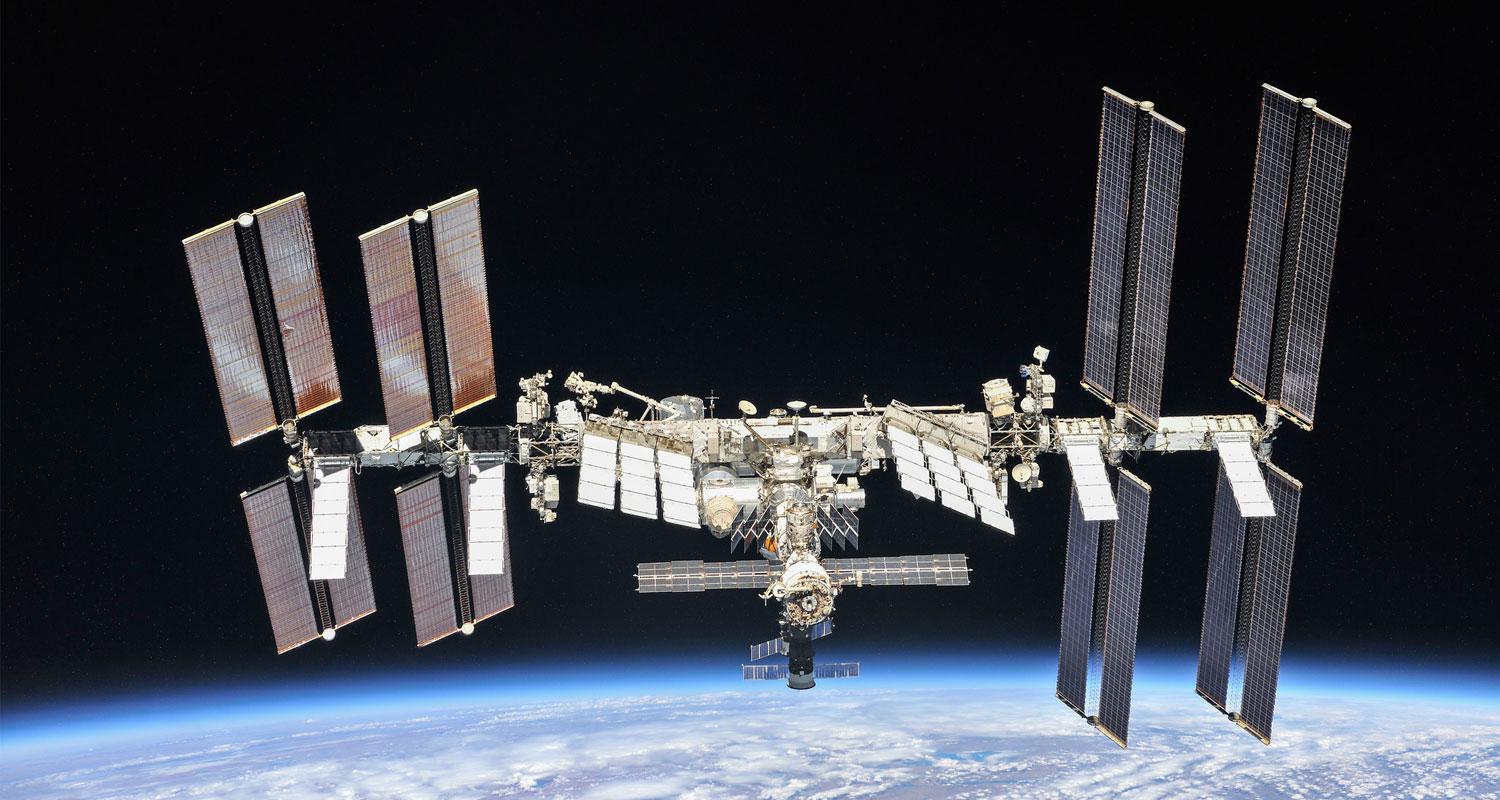
    The International Space Station in 2018. Image: Nasa

    New US sanctions on Russia will encompass Russia’s space agency, Roscosmos, according to a speech US President Joe Biden gave last Thursday.

    In response to these sanctions, the head of Roscosmos on the same day posted a tweet saying, among other things, “If you block cooperation with us, who will save the ISS from an uncontrolled deorbit and fall into the US or Europe?”

    The International Space Station has often stayed above the fray of geopolitics. That position is under threat.

    Built and run by the US, Russia, Europe, Japan and Canada, the ISS has shown how countries can cooperate on major projects in space. The station has been continuously occupied for over 20 years and has hosted more than 250 people from 19 countries.

    The International Space Station is made of 16 different segments constructed by different countries

    The ISS represents a high point of cooperation in space exploration. But for the current crew of two Russians, four Americans and one German, things may be getting worrisome as tensions rise between the US and Russia.

    Several agreements and systems are in place to make sure that the space station can function smoothly while being run by five different space agencies. At the time of writing, were were no announcements of unusual actions aboard the station despite the ongoing Russian invasion of Ukraine. But the Russian government has brought the ISS into geopolitics before and is doing so again.

    What came to be known as the International Space Station was first conceived on Nasa drawing boards in the early 1980s. As costs rose past initial estimates, Nasa officials invited international partners from the European Space Agency, Canada and Japan to join the project.

    Dire straits

    When the Soviet Union collapsed at the end of the Cold War in the early 1990s, the Russian space programme found itself in dire straits, suffering from lack of funding and an exodus of engineers and program officials. To take advantage of Russian expertise in space stations and foster post-Cold War cooperation, the Nasa administrator at the time, Dan Goldin, convinced the Clinton administration to bring Russia into the programme that was rechristened the International Space Station.

    By 1998, just prior to the launch of the first modules, Russia, the US and the other international partners of the ISS entered into memorandums of understanding that spelled out how major decisions would be made and what kind of control each nation would have over various parts of the station.

    The body that governs the operation of the space station is the Multilateral Coordination Board. This board has representatives from each of the space agencies involved in the ISS and is chaired by the US. The board operates by consensus in making decisions on things like a code of conduct for ISS crews.

    Even among international partners who want to work together, consensus is not always possible. If this happens, either the chair of the board can make decisions on how to move forward or the issue can be elevated to the Nasa administrator and the head of the Russian space agency, Roscosmos.

    While the overall operations of the station are run by the Multilateral Coordination Board, things are more complicated when it comes to the modules themselves.
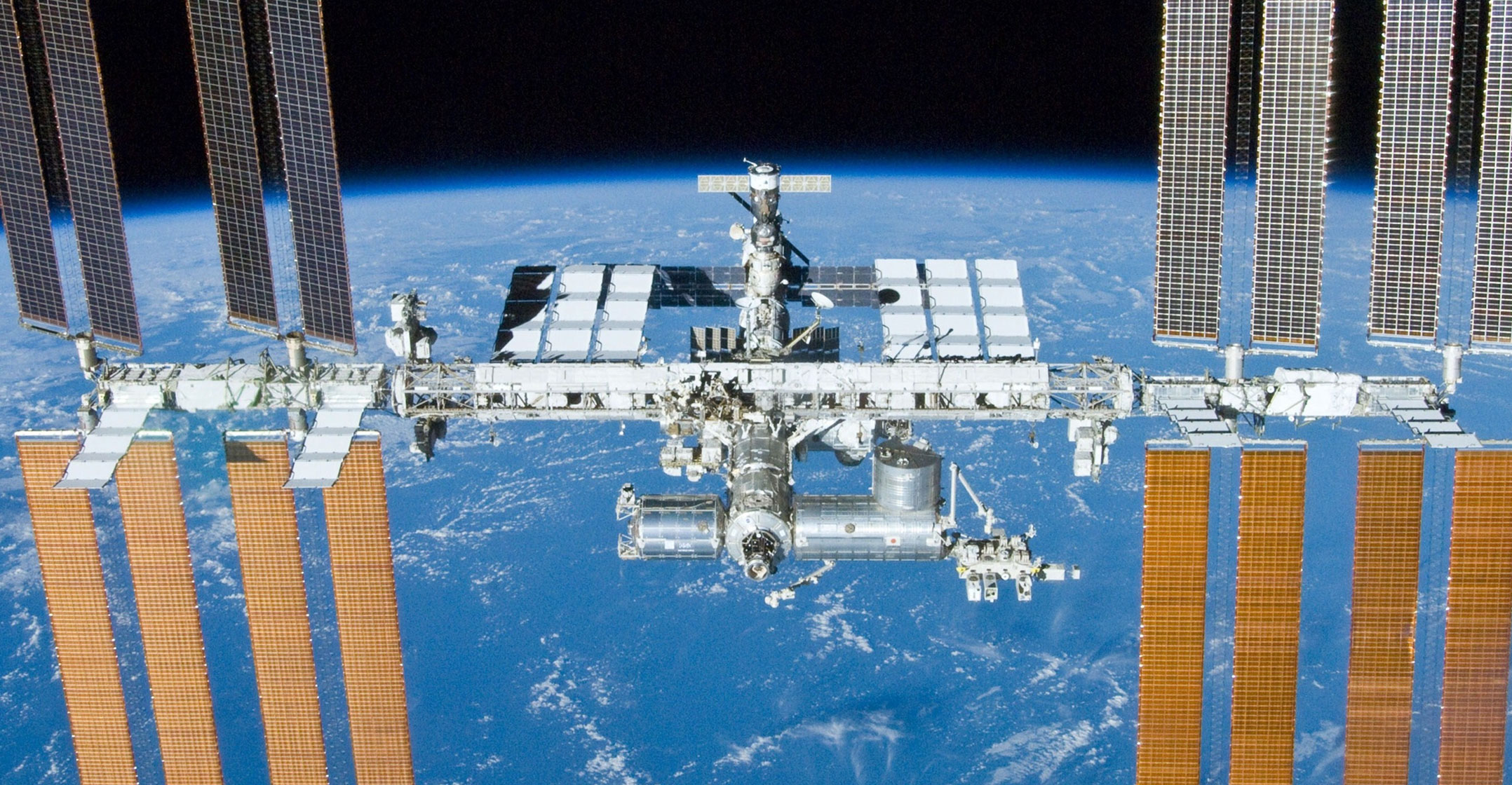
    Russia’s invasion of Ukraine could mean an early end for the ISS

    The International Space Station is made of 16 different segments constructed by different countries, including the US, Russia, Japan, Italy and the European Space Agency. Under the ISS agreements, each country maintains control over how its modules are used. This includes the Russian Zarya, which provides electricity and propulsion to the station, and Zvezda, which provides all of the station’s life support systems like oxygen production and water recycling.

    The result is that ISS modules are treated legally as if they are territorial extensions of their countries of origin. While all crew onboard can theoretically be in and use any of the modules, how they are used must be approved by each country.

    While the ISS has functioned under this structure remarkably well since its launch more than 20 years ago, there have been some disputes.

    When Russian forces annexed the Ukrainian territory of Crimea in 2014, the US imposed economic sanctions on Russia. As a result, Russian officials announced that they would no longer launch US astronauts to and from the space station beginning in 2020. Since Nasa had retired the space shuttle in 2011, the US was entirely dependent on Russian rockets to get astronauts to and from the ISS, and this threat could have meant the end of the American presence aboard the space station entirely.

    While Russia did not follow through on its threat and continued to transport US astronauts, the threat needed to be taken seriously. The situation today is quite different. The US has been relying on private SpaceX rockets to transport astronauts to and from the ISS. This makes potential Russian threats to launch access less meaningful.

    A concern is how the invasion will affect the remaining years of the space station

    But the invasion of Ukraine does seem to have upped the intensity of geopolitical manoeuvring involving the ISS.

    The new US sanctions are designed to “degrade their aerospace industry, including their space programme”. The tweet in response from Dmitry Rogozin, the head of Roscosmos, “explained” that Russian modules are key to moving the station when it needs to dodge space junk or adjust its orbit. He went on to say that Russia could either refuse to move the station when needed or even crash it into the US, Europe, India or China.

    Though dramatic, this is likely an idle threat due to both political consequences and the practical difficulty of getting Russian cosmonauts off the ISS safely. But a concern is how the invasion will affect the remaining years of the space station.

    In December 2021, the US announced its intention to extend operation of ISS operations from its planned end date of 2024 to 2030. Most ISS partners expressed support for the plan, but Russia will also need to agree to keep the ISS operating beyond 2024. Without Russia’s support, the station – and all of its scientific and cooperative achievements – may face an early end.

    The ISS has served as a prime example for how nations can cooperate with one another in an endeavour that has been relatively free from politics. Increasing tensions, threats and more aggressive Russian actions – including its recent test of anti-satellite weapons – are straining the realities of international cooperation in space going forward.The Conversation

    • Written by Wendy Whitman Cobb, professor of strategy and security studies, Air University
    • This article is republished from The Conversation under a Creative Commons licence

    International Space Station ISS Nasa Roscosmos
    Subscribe to TechCentral Subscribe to TechCentral
    Share. Facebook Twitter LinkedIn WhatsApp Telegram Email Copy Link
    Previous ArticlePublic sector workers handed huge wages defeat in concourt
    Next Article Ukraine raises R200-million in crypto after crowdfunding appeal

    Related Posts

    Nasa astronauts head home on SpaceX capsule

    Nasa astronauts head home on SpaceX capsule

    18 March 2025
    Low-Earth orbit satellites - the way forward for Africa

    Why car companies like Toyota are turning to space

    14 February 2025

    Bookmarks | The number of new mobile internet users is stalling

    25 November 2024
    Company News
    AI is not a technology problem - iqbusiness

    AI is not a technology problem – iqbusiness

    5 December 2025
    Telcos are sitting on a data gold mine - but few know what do with it - Phillip du Plessis

    Telcos are sitting on a data gold mine – but few know what do with it

    4 December 2025
    Unlock smarter computing with your surface Copilot+ PC

    Unlock smarter computing with your Surface Copilot+ PC

    4 December 2025
    Opinion
    Your data, your hardware: the DIY AI revolution is coming - Duncan McLeod

    Your data, your hardware: the DIY AI revolution is coming

    20 November 2025
    Zero Carbon Charge founder Joubert Roux

    The energy revolution South Africa can’t afford to miss

    20 November 2025
    It's time for a new approach to government IT spend in South Africa - Richard Firth

    It’s time for a new approach to government IT spend in South Africa

    19 November 2025

    Subscribe to Updates

    Get the best South African technology news and analysis delivered to your e-mail inbox every morning.

    Latest Posts
    Big Microsoft 365 price increases coming next year

    Big Microsoft price increases coming next year

    5 December 2025
    AI is not a technology problem - iqbusiness

    AI is not a technology problem – iqbusiness

    5 December 2025
    Vodacom to take control of Safaricom in R36-billion deal - Shameel Joosub

    Vodacom to take control of Safaricom in R36-billion deal

    4 December 2025
    Black Friday goes digital in South Africa as online spending surges to record high

    Black Friday goes digital in South Africa as online spending surges to record high

    4 December 2025
    © 2009 - 2025 NewsCentral Media
    • Cookie policy (ZA)
    • TechCentral – privacy and Popia

    Type above and press Enter to search. Press Esc to cancel.

    Manage consent

    TechCentral uses cookies to enhance its offerings. Consenting to these technologies allows us to serve you better. Not consenting or withdrawing consent may adversely affect certain features and functions of the website.

    Functional Always active
    The technical storage or access is strictly necessary for the legitimate purpose of enabling the use of a specific service explicitly requested by the subscriber or user, or for the sole purpose of carrying out the transmission of a communication over an electronic communications network.
    Preferences
    The technical storage or access is necessary for the legitimate purpose of storing preferences that are not requested by the subscriber or user.
    Statistics
    The technical storage or access that is used exclusively for statistical purposes. The technical storage or access that is used exclusively for anonymous statistical purposes. Without a subpoena, voluntary compliance on the part of your Internet Service Provider, or additional records from a third party, information stored or retrieved for this purpose alone cannot usually be used to identify you.
    Marketing
    The technical storage or access is required to create user profiles to send advertising, or to track the user on a website or across several websites for similar marketing purposes.
    • Manage options
    • Manage services
    • Manage {vendor_count} vendors
    • Read more about these purposes
    View preferences
    • {title}
    • {title}
    • {title}