Close Menu
TechCentralTechCentral

    Subscribe to the newsletter

    Get the best South African technology news and analysis delivered to your e-mail inbox every morning.

    Facebook X (Twitter) YouTube LinkedIn
    WhatsApp Facebook X (Twitter) LinkedIn YouTube
    TechCentralTechCentral
    • News
      Vuyani Jarana: Mobile coverage masks a deeper broadband failure

      Vuyani Jarana: Mobile coverage masks a deeper broadband failure

      30 January 2026
      SABC Plus to flight Microsoft AI training videos

      SABC Plus to flight Microsoft AI training videos

      30 January 2026
      Fibre ducts

      Fibre industry consolidation in KZN

      30 January 2026
      Watts & Wheels S1E3: 'BYD's Corolla Cross challenger'

      Watts & Wheels S1E3: ‘BYD’s Corolla Cross challenger’

      30 January 2026
      What ordinary South Africans really think of AI

      What ordinary South Africans really think of AI

      30 January 2026
    • World
      Apple acquires audio AI start-up Q.ai

      Apple acquires audio AI start-up Q.ai

      30 January 2026
      SpaceX IPO may be largest in history

      SpaceX IPO may be largest in history

      28 January 2026
      Nvidia throws AI at the weather

      Nvidia throws AI at weather forecasting

      27 January 2026
      Debate erupts over value of in-flight Wi-Fi

      Debate erupts over value of in-flight Wi-Fi

      26 January 2026
      Intel takes another hit - Intel CEO Lip-Bu Tan. Laure Andrillon/Reuters

      Intel takes another hit

      23 January 2026
    • In-depth
      How liberalisation is rewiring South Africa's power sector

      How liberalisation is rewiring South Africa’s power sector

      21 January 2026
      The top-performing South African tech shares of 2025

      The top-performing South African tech shares of 2025

      12 January 2026
      Digital authoritarianism grows as African states normalise internet blackouts

      Digital authoritarianism grows as African states normalise internet blackouts

      19 December 2025
      TechCentral's South African Newsmakers of 2025

      TechCentral’s South African Newsmakers of 2025

      18 December 2025
      Black Friday goes digital in South Africa as online spending surges to record high

      Black Friday goes digital in South Africa as online spending surges to record high

      4 December 2025
    • TCS
      TCS+ | How Cloud On Demand is helping SA businesses succeed in the cloud - Xhenia Rhode, Dion Kalicharan

      TCS+ | Cloud On Demand and Consnet: inside a real-world AWS partner success story

      30 January 2026
      Watts & Wheels S1E3: 'BYD's Corolla Cross challenger'

      Watts & Wheels S1E2: ‘China attacks, BMW digs in, Toyota’s sublime supercar’

      23 January 2026

      TCS+ | Why cybersecurity is becoming a competitive advantage for SA businesses

      20 January 2026
      Watts & Wheels S1E3: 'BYD's Corolla Cross challenger'

      Watts & Wheels: S1E1 – ‘William, Prince of Wheels’

      8 January 2026
      TCS+ | Africa's digital transformation - unlocking AI through cloud and culture - Cliff de Wit Accelera Digital Group

      TCS+ | Cloud without culture won’t deliver AI: Accelera’s Cliff de Wit

      12 December 2025
    • Opinion
      South Africa's skills advantage is being overlooked at home - Richard Firth

      South Africa’s skills advantage is being overlooked at home

      29 January 2026
      Why Elon Musk's Starlink is a 'hard no' for me - Songezo Zibi

      Why Elon Musk’s Starlink is a ‘hard no’ for me

      26 January 2026
      South Africa's new fibre broadband battle - Duncan McLeod

      South Africa’s new fibre broadband battle

      20 January 2026
      AI moves from pilots to production in South African companies - Nazia Pillay SAP

      AI moves from pilots to production in South African companies

      20 January 2026
      South Africa's new fibre broadband battle - Duncan McLeod

      ANC’s attack on Solly Malatsi shows how BEE dogma trumps economic reality

      14 December 2025
    • Company Hubs
      • Africa Data Centres
      • AfriGIS
      • Altron Digital Business
      • Altron Document Solutions
      • Altron Group
      • Arctic Wolf
      • AvertITD
      • Braintree
      • CallMiner
      • CambriLearn
      • CYBER1 Solutions
      • Digicloud Africa
      • Digimune
      • Domains.co.za
      • ESET
      • Euphoria Telecom
      • Incredible Business
      • iONLINE
      • IQbusiness
      • Iris Network Systems
      • LSD Open
      • NEC XON
      • Netstar
      • Network Platforms
      • Next DLP
      • Ovations
      • Paracon
      • Paratus
      • Q-KON
      • SevenC
      • SkyWire
      • Solid8 Technologies
      • Telit Cinterion
      • Tenable
      • Vertiv
      • Videri Digital
      • Vodacom Business
      • Wipro
      • Workday
      • XLink
    • Sections
      • AI and machine learning
      • Banking
      • Broadcasting and Media
      • Cloud services
      • Contact centres and CX
      • Cryptocurrencies
      • Education and skills
      • Electronics and hardware
      • Energy and sustainability
      • Enterprise software
      • Financial services
      • Information security
      • Internet and connectivity
      • Internet of Things
      • Investment
      • IT services
      • Lifestyle
      • Motoring
      • Public sector
      • Retail and e-commerce
      • Satellite communications
      • Science
      • SMEs and start-ups
      • Social media
      • Talent and leadership
      • Telecoms
    • Events
    • Advertise
    TechCentralTechCentral
    Home » Sections » Broadcasting and Media » Google and Facebook lose a battle to win the war

    Google and Facebook lose a battle to win the war

    By Agency Staff18 February 2021
    Twitter LinkedIn Facebook WhatsApp Email Telegram Copy Link
    News Alerts
    WhatsApp

    When prospectors made what was the biggest oil discovery in history at Texas’s Spindletop well in 1901, the world’s premier oil monopolist was absent from the scene. Standard Oil, a decade away from being split up in an antitrust suit, was content to sit back and let smaller local rivals establish themselves.

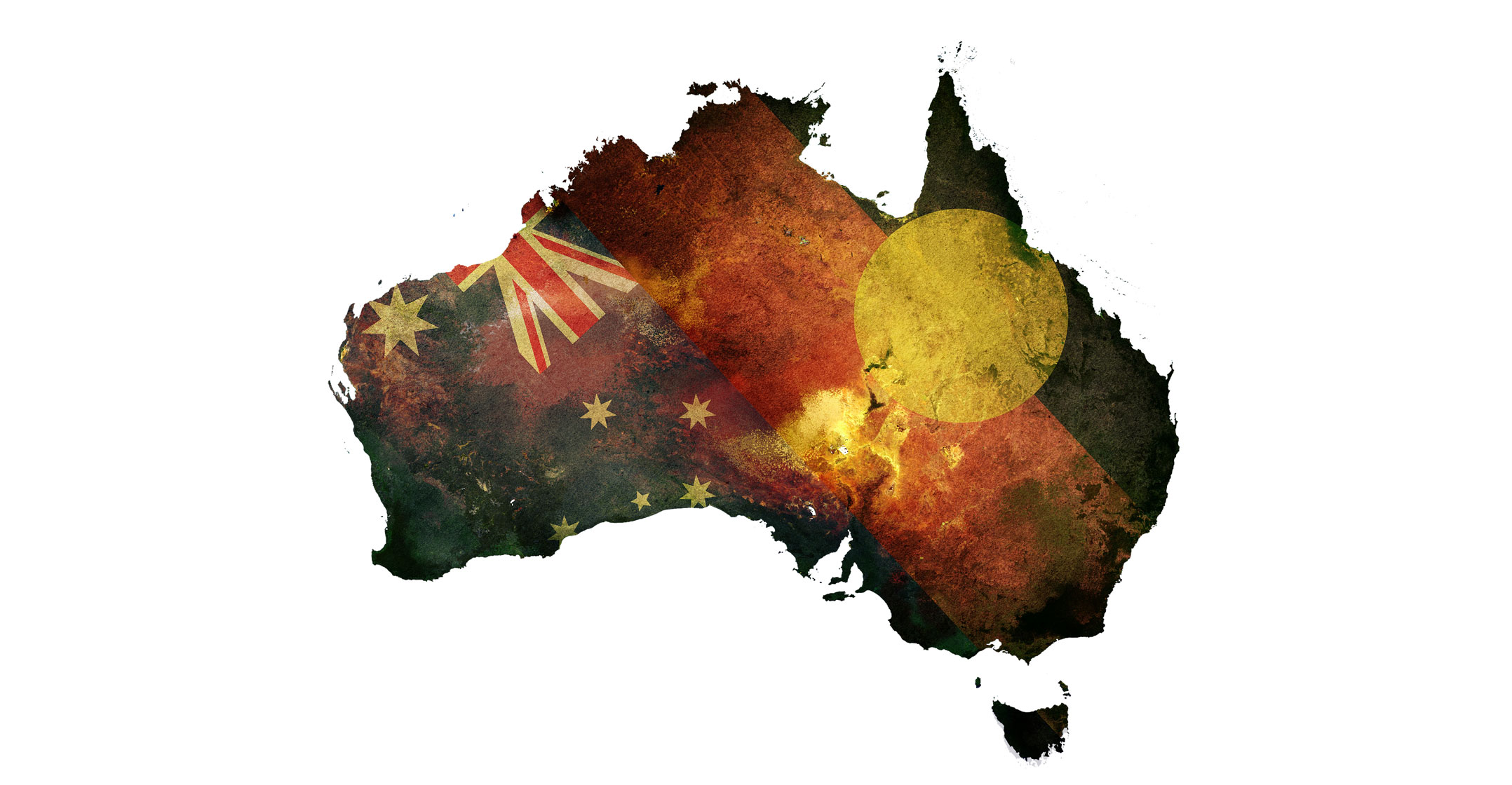
    That’s a good analogy for the deals Google is striking with News Corp and Australian newspaper publishers, ahead of planned legislation there to enhance the news business’s bargaining power in negotiating with online platforms. Facebook is taking a more extreme approach, announcing on Thursday that it would quit distributing news from Australian publishers, and to Facebook news feeds in the country, altogether.

    John D Rockefeller didn’t much care who produced America’s oil, as long as he had a stranglehold on piping it, refining it and distributing it. Google is little different. By granting a boon to publishers, erstwhile rivals in the online advertising industry, it’s hoping to keep its hands on a far richer prize — scarcely challenged control and distribution of the world’s online information. Facebook, by refusing to compromise, is working toward the same end.

    Eventually, it took the supreme court to break John D Rockefeller’s empire. The digital platforms are hoping that they’ll be able to avoid a similar fate

    Still, the unconfirmed figures in the range of A$30-million mentioned in news reports are small beer compared to Australia’s roughly A$10-billion digital advertising market. Next to Google parent Alphabet and Facebook’s $183-billion and $86-billion in respective annual revenues, they barely register.

    The core of what the country’s antitrust regulator had sought from Google and Facebook was a levelling of the playing field. Google and Facebook are not just competitors with the news business in the market for digital advertising. They’re also crucial distributors who direct much of the traffic on which publishers’ ad revenues are based.

    ‘Monopoly gatekeeper’

    That’s no different from other countries around the world, and indeed other industries beyond news. Google is, in the words of a US department of justice antitrust suit filed last October, “a monopoly gatekeeper for the Internet”. The European Union has levied some €8.3-billion of fines against the company since 2017 for anticompetitive practices.

    The real motherlode for these businesses is their ability to act as intermediaries for a digital advertising market that’s increasingly swallowing the world’s marketing budgets, hoovering up data on every side of the millisecond auctions that deliver eyeballs to online ads. That’s a black box that media buyers like Johnson & Johnson and L’Oreal, as well as media owners like News Corp and the New York Times Co, would love to get some insight into — and Australia’s proposed legislation offered a precedent for how it could happen.

    Under the rules, publishers would be allowed to negotiate as a group with digital platforms rather than individually, much as franchisees are allowed to locally in their dealings with global fast-food and convenience store chains. If the two sides are unable to come to an agreement on the revenue split, they’d have to submit blind final offers to an independent arbitration panel which would pick whichever looked more reasonable. The way to win those negotiations is to be open and honest about how much the business is worth to you.

    It’s striking that the threat of such a setup was so profound that Facebook has pulled out of news in Australia completely. Google, after threatening to do the same and shut off its local search engine for good measure, has opted to divide and conquer by striking deals with publishers one by one. In return for the small coin that an Australian news organisation would require to keep its head above water, those deals will hope to ensure that Google never has to get into a serious negotiation with an equally matched opponent, or establish a benchmark for what online content is worth.

    This might seem like a little local bother in a small, faraway country — but the willingness of the digital platforms to wheel out the big guns in defence of their position should be a clue to their ambitions and vulnerabilities worldwide.

    By sacrificing a chess piece in Texas, Standard Oil was able to hold onto its monopoly in the bit of the oil industry that really mattered for a decade. By giving up the fight over Australian news, Google and Facebook are able to focus their efforts on maintaining their monopolistic positions in the far larger markets for online information, and data about everyone who uses the web. Eventually, it took the supreme court to break John D Rockefeller’s empire. The digital platforms are hoping that they’ll be able to avoid a similar fate.  — By David Fickling, (c) 2021 Bloomberg LP



    Facebook Google top
    WhatsApp YouTube Follow on Google News Add as preferred source on Google
    Share. Facebook Twitter LinkedIn WhatsApp Telegram Email Copy Link
    Previous ArticleFacebook Australia standoff sows chaos
    Next Article ‘Deeply wrong’: Facebook allegedly inflated ad metrics

    Related Posts

    What ordinary South Africans really think of AI

    What ordinary South Africans really think of AI

    30 January 2026
    Meta, TikTok, YouTube to stand trial on youth addiction claims

    Meta, TikTok, YouTube to stand trial on youth addiction claims

    27 January 2026
    WhatsApp boosts defences for high-risk users

    WhatsApp boosts defences for high-risk users

    27 January 2026
    Company News
    Huawei turns 25 in South Africa, celebrates with major device discounts

    Huawei turns 25 in South Africa, celebrates with major device discounts

    30 January 2026
    Phishing has not disappeared, but it has grown up - KnowBe4

    Phishing has not disappeared, but it has grown up

    30 January 2026
    Smartphone affordability: South Africa's new economic divide - PayJoy

    Smartphone affordability: South Africa’s new economic divide

    29 January 2026
    Opinion
    South Africa's skills advantage is being overlooked at home - Richard Firth

    South Africa’s skills advantage is being overlooked at home

    29 January 2026
    Why Elon Musk's Starlink is a 'hard no' for me - Songezo Zibi

    Why Elon Musk’s Starlink is a ‘hard no’ for me

    26 January 2026
    South Africa's new fibre broadband battle - Duncan McLeod

    South Africa’s new fibre broadband battle

    20 January 2026

    Subscribe to Updates

    Get the best South African technology news and analysis delivered to your e-mail inbox every morning.

    Latest Posts
    Vuyani Jarana: Mobile coverage masks a deeper broadband failure

    Vuyani Jarana: Mobile coverage masks a deeper broadband failure

    30 January 2026
    TCS+ | How Cloud On Demand is helping SA businesses succeed in the cloud - Xhenia Rhode, Dion Kalicharan

    TCS+ | Cloud On Demand and Consnet: inside a real-world AWS partner success story

    30 January 2026
    Huawei turns 25 in South Africa, celebrates with major device discounts

    Huawei turns 25 in South Africa, celebrates with major device discounts

    30 January 2026
    SABC Plus to flight Microsoft AI training videos

    SABC Plus to flight Microsoft AI training videos

    30 January 2026
    © 2009 - 2026 NewsCentral Media
    • Cookie policy (ZA)
    • TechCentral – privacy and Popia

    Type above and press Enter to search. Press Esc to cancel.

    Manage consent

    TechCentral uses cookies to enhance its offerings. Consenting to these technologies allows us to serve you better. Not consenting or withdrawing consent may adversely affect certain features and functions of the website.

    Functional Always active
    The technical storage or access is strictly necessary for the legitimate purpose of enabling the use of a specific service explicitly requested by the subscriber or user, or for the sole purpose of carrying out the transmission of a communication over an electronic communications network.
    Preferences
    The technical storage or access is necessary for the legitimate purpose of storing preferences that are not requested by the subscriber or user.
    Statistics
    The technical storage or access that is used exclusively for statistical purposes. The technical storage or access that is used exclusively for anonymous statistical purposes. Without a subpoena, voluntary compliance on the part of your Internet Service Provider, or additional records from a third party, information stored or retrieved for this purpose alone cannot usually be used to identify you.
    Marketing
    The technical storage or access is required to create user profiles to send advertising, or to track the user on a website or across several websites for similar marketing purposes.
    • Manage options
    • Manage services
    • Manage {vendor_count} vendors
    • Read more about these purposes
    View preferences
    • {title}
    • {title}
    • {title}