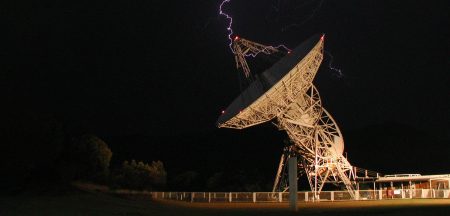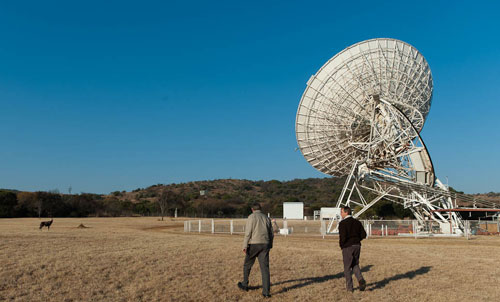
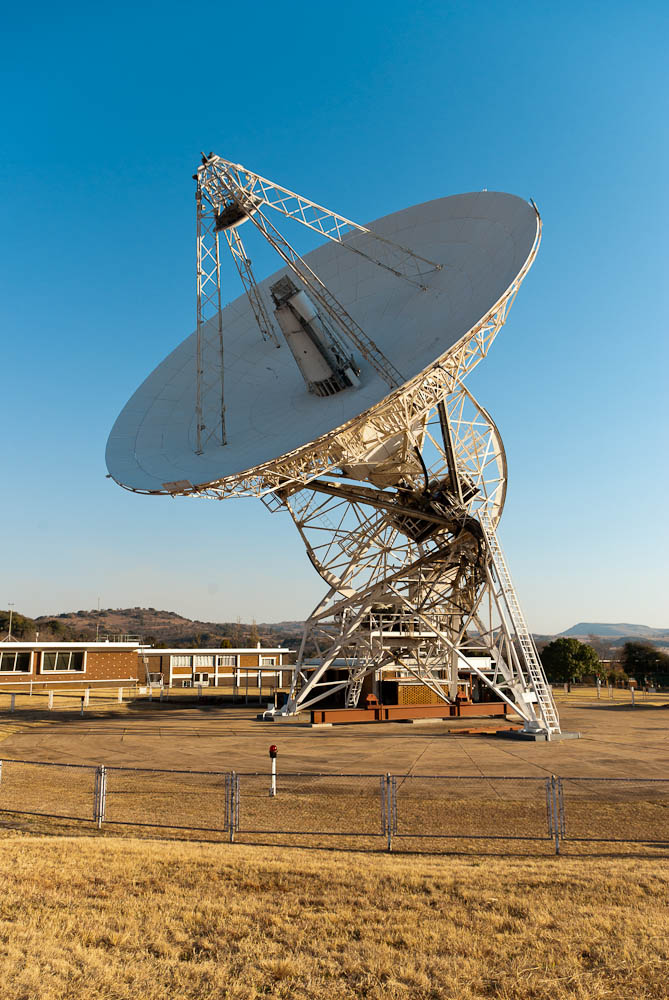
First built by the US National Aeronautics and Space Administration (Nasa) as one of three tracking stations for its space programme, the Hartebeesthoek Radio Astronomy Observatory (HartRAO) celebrates its 50th anniversary this month. At 26m, HartRAO’s radio antenna in the Magaliesberg is the largest working example in Africa. TechCentral’s Craig Wilson went to speak to staff about its history and its current work.
Nestled in a secluded valley north-west of Johannesburg, HartRAO was built as one of three similar facilities — the other two were in Goldstone, California and in Woomera in Australia. Regardless of which side of the planet a probe, satellite, or, eventually, space shuttle happened to be at any given time, one of the stations would remain in communication with it.
When Nasa accelerated its moon missions in the late 1950s, it realised that it would need more powerful equipment, particularly if it wanted to maintain contact with craft that were going beyond Earth’s orbit.
On Christmas Day in 1960, a team from Texas began laying the foundations for the radio antenna. Because the antenna arrived in pieces, and only had to be assembled — rather than built from scratch — construction took just 69 days.
Ranger missions
HartRAO was originally designed to support Nasa’s Ranger missions, which were exercises in crashing camera-carrying probes onto the surface of the moon. The craft would transmit images of the moon until the moment of impact in the hope that they would reveal crucial information about the lunar surface.
At the time, scientists didn’t know if it would be possible to land on the moon. Even with the most powerful optical telescopes at the time, it was impossible to tell if the moon’s surface was flat and firm enough to allow for a landing or whether there was a layer of dust that would swallow up any landing vehicle.
Scientists were also concerned that the Ranger missions might contaminate the moon with bacteria from Earth, so they sanitised the first half a dozen Ranger probes. The problem was that they did such a good job they destroyed the probes’ electronics, and it would take six failed missions before Nasa would glean anything from the programme.
In 1964, Ranger 7 successfully transmitted the first close-up pictures of the moon. Rapid improvements in probe technology followed and soon the Lunar Orbiter programme was putting probes into orbit around the moon and looking for landing sites for the upcoming Apollo mission.
HartRAO went on to provide back-up capacity for the Apollo mission. Taking no chances, Nasa had three separate networks communicating with Apollo: the Deep Space Network, the Manned Space Flight Network, and the Spacecraft Tracking and Data Acquisition Network.
Once Nasa had successfully completed a moon landing and, moreover, beaten the Russians to it, the US government no longer saw fit to throw money at the space race, and Nasa was forced to cut its spending, merging its various networks and closing some of its facilities entirely.
Saved
By 1974, HartRAO was set to be decommissioned and would have been closed down had it not been for the efforts of one George Nicolson and the Council for Scientific and Industrial Research (CSIR). By this time, HartRAO was primarily staffed by Europeans and managed by the CSIR, and Nicolson had been using the antenna’s downtime to dabble in radio astronomy.
When the CSIR heard that HartRAO was to be closed, it asked Nicolson if he would be interested in running it as a radio observatory. He leapt at the chance.
Although Nasa stripped the facility to its essentials, it left a transmitter, a receiver and the necessary control instrumentation, which it wasn’t obliged to do, and HartRAO as we know it today was born.
Acting MD of HartRAO, Michael Gaylard, was an MSc student studying physics at Grahamstown’s Rhodes University at the time. “I’d been working on a 2m dish until that point,” says Gaylard, “so the opportunity to work on a 26m one was irresistible. The only problem was, I had to come up with a suitable project.”
Gaylard says that one of the reasons the antenna at HartRAO survived Nasa’s cull was that it had been upgraded from its original 960MHz operating frequency to 2,3GHz. “That not only prolonged the life of the antenna, but made it possible to track objects further away,” says Gaylard.
The question, he says, was what sort of astronomy one could do with it? Eventually, it was decided that HartRAO would map the entire southern sky. Because this required perfect weather, could only be done at night when the sun’s rays wouldn’t interfere, and everything had to be done three times for the sake of verification and repeatability, the project took 10 years to complete.
“The map we created is still in use, which is comforting considering how long it took,” says Gaylard. The current director of SA’s bid to host Square Kilometre Array (SKA) radio telescope, Justin Jonas, produced the final map and received a PhD for his trouble.
Gaylard says one of the greatest achievements of HartRAO is the countless students that have been awarded further qualifications for work they’ve done at the facility. “HartRAO has trained generations of astronomers who would otherwise have had to go to Sutherland — an optical not a radio observatory — or abroad.”
Gaylard says HartRAO has seen a wide variety of innovation, instrument and software development, and groundbreaking research in its 50 years. By way of example, he says that the facility’s spectrometer (used to measure radio emissions at specific frequencies) started life as the project of an engineering student from the University of the Witwatersrand.
HartRAO isn’t simply a purely astronomical or research facility, but one that has affected a wide-range of fields, including physics, geology, geography, engineering, computer science, climatology and meteorology.
Ties with Nasa
Although HartRAO hasn’t been a Nasa facility since the mid-1970s, Gaylard says the US space administration hasn’t severed ties completely and maintains an active interest in HartRAO’s work, particularly in its observational abilities.
HartRAO participates in something called very long baseline interferometry (VLBI). In layman’s terms, VLBI involves multiple telescopes looking at the same object, at the same time, from different positions around Earth or in space. Aside from being able to look further and more carefully at the cosmos, VLBI has other, surprising uses.
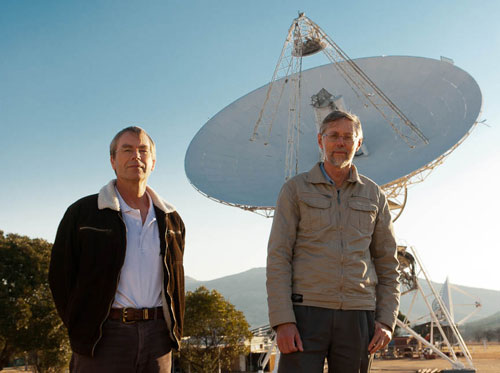
“Using VLBI, we were able to use stars and other radiowave emitting bodies to work out the exact positions of our telescope, and others in the VLBI network,” says Gaylard. One could be forgiven for thinking the HartRAO team knew where their telescope was to begin with? Not exactly.
It’s easy to tell where something is relative to something else, but it’s very difficult to get a precise absolute measurement because there are so many variables at play. Consider, for example, continental drift. If last year the telescope was 20cm further east, then factoring this in to calculations will result in a more accurate result.
Measuring continental drift — in fact, proving that it happens at all — was one of the early successes of VLBI. HartRAO has been tracking the movement of its telescope since 1986 and Gaylard says that it is moving “about 2,5cm north-east per year”.
He explains that some of the variables that VLBI helps mitigate, or at least calculate, include the Earth’s various movements.
While many think the Earth simply rotates on its axis while orbiting the sun, this isn’t the case. Our planet speeds up and slows down depending on things like tides, it wobbles on its axis and its orbit isn’t entirely uniform.
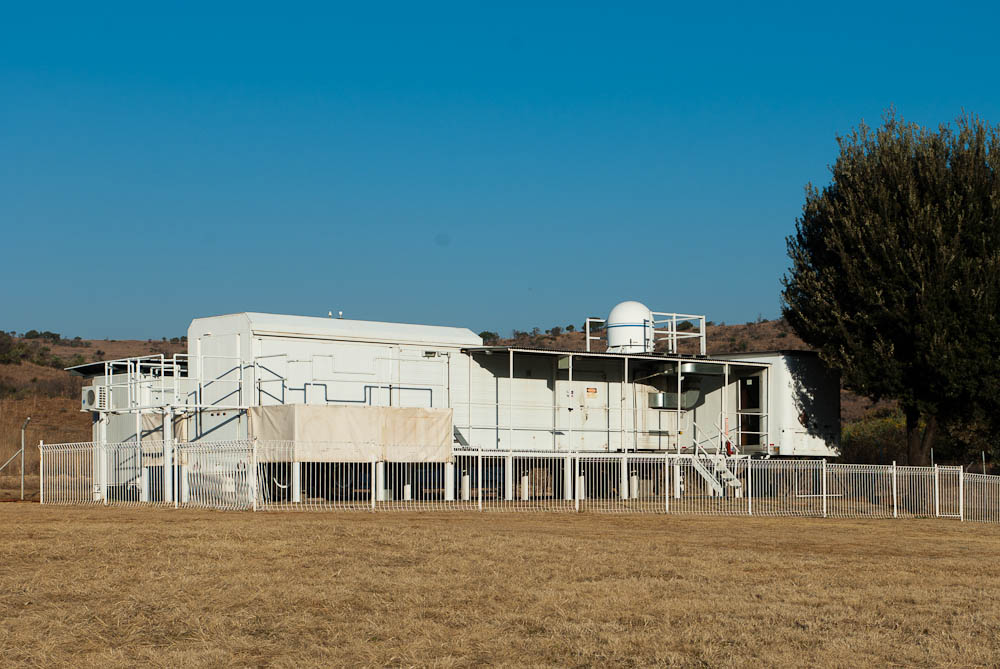
Because the radio telescope’s position can be calculated absolutely, after 1994, when NASA deemed it politically acceptable to return to SA, it built a satellite laser ranger (SLR) system next to HartRAO’s radio telescope. As the name suggests, SLR is used to track satellites in orbit. Thanks to HartRAO’s VLBI activities, Nasa can now do so even more accurately.
Similarly, HartRAO is involved in a number of GPS-related projects and has GPS receivers all over Southern Africa. Tracking these is useful for providing reference points for national survey systems, in addition to various studies and projects by those interested in GPS or those demanding a high level of accuracy.
Some of these projects include measuring the water vapour in the atmosphere, measuring the rate at which Greenland’s ice caps are melting, and tracking sea levels and trying to predict tsunami’s with sensors off the east coast of Africa.
Of course, HartRAO hasn’t only driven innovation but has also improved itself because of it. Gaylard says that in the early days of VLBI, data was recorded to magnetic reels before being shipped to Europe for analysis. Now HartRAO has access to fibre-optic cable and can transmit data in real time.
“We can stream approximately 1Gbit/s to Europe these days, and that should be improving further soon. Three years ago we could only send 32Mbit/s and it cost an absolute fortune,” says Gaylard.
200-ton headache
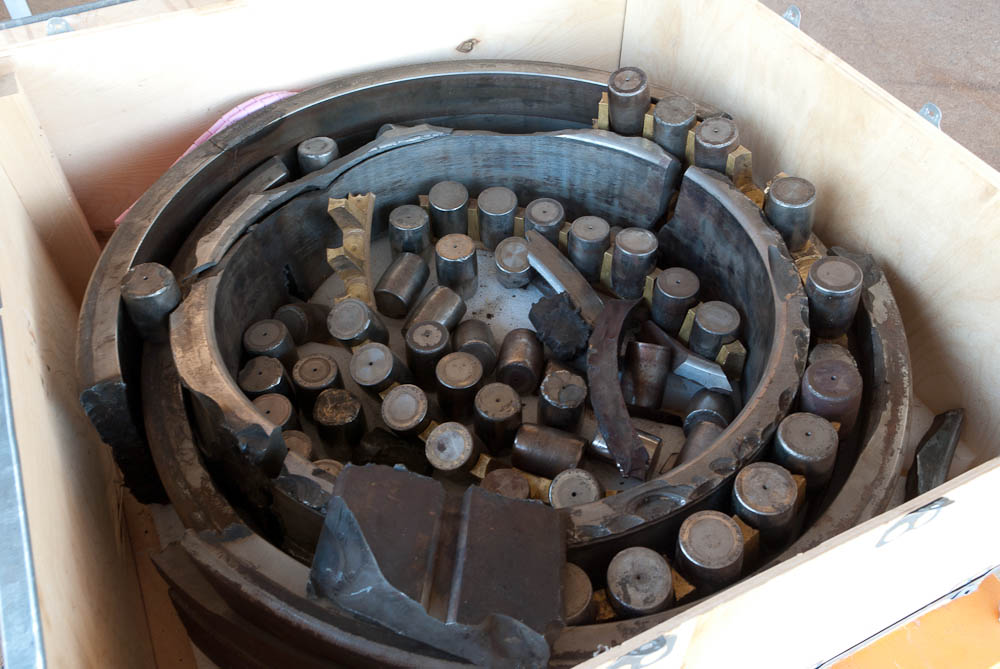
In July 2008, HartRAO suffered a catastrophic setback when a crucial bearing on the radio telescope failed. After much cajoling, the National Research Foundation agreed to replace it and managed to convince the department of science & technology to fund it, but the problem was finding a replacement bearing.
“We contacted an American engineering firm called General Dynamics who had the necessary interest and expertise. The problem was, it was going to take two years to machine a replacement part. We placed the order and a week later were called and asked where we’d like the bearing delivered. It turned out Eskom had a spare, so we got theirs and General Dynamics made them a new spare.”
Exactly a year later, on 22 July 2009, HartRAO’s radio telescope returned to service after an incredible feat of engineering that made it possible to repair HartRAO’s functionality without fully dismantling it — a feat made all the more impressive when one considers that the dish weighs over 200 tons.
Real-world applications
Ludwig Combrinck, HartRAO’s associate director and programme leader of the facility’s space geodesy programme, explains some of the real-world applications of the facility. The Japanese space programme once “lost” one of its probes. “We helped to track it down, and once we’d found it keeping track of it wasn’t difficult at all because we are able to make incredibly accurate projections of it’s future course,” he says.
“We’ve also helped track low-pressure systems for the US government that it feared might lead to coastal flooding,” he says.
HartRAO, and facilities like it, are also helpful in putting satellites into orbit. “We can help determine the gravity field and the necessary injection angles and power required to achieve the correct orbit.”
The future
Asked whether a successful SA bid for the SKA will render HartRAO redundant, Gaylard says it might, but that “SKA doesn’t do geodesy”. The SKA is “essentially a supercomputer connected to a large number of dishes. HartRAO may also continue to have value for technology development; that is, figuring out how we can do what we do better than we do it now.”
Gaylard has found a number of disused, derelict and abandoned dishes around Africa, some of which are even bigger than HartRAO’s 26m dish. “There are almost two dozen around Africa and I’m in talks with Ghana about converting one of theirs into a radio telescope.”
Of the three radio telescopes that were built around the time, HartRAO is the only that remains intact. “Woomera had an arrangement where the land had to be returned to its original state after a given period, so their entire antenna was demolished and another Nasa 26m antenna was moved to Tasmania. Goldstone’s facility is now a museum,” says Gaylard.
Even if HartRAO doesn’t have another 50 years of useful life left in it, it’s been one of the few African facilities that has made its mark on global radio astronomy. It’s trained innumerable astronomers, physicists, scientists, mathematicians, engineers and a wide variety of people from other fields along the way. It’s helped mankind better understand its place in the universe, both literally and figuratively.
For more information, visit www.hartrao.ac.za. — Craig Wilson, TechCentral
- Subscribe to our free daily newsletter
- Follow us on Twitter or on Facebook