

Close Menu
TechCentralTechCentral

    Subscribe to the newsletter

    Get the best South African technology news and analysis delivered to your e-mail inbox every morning.

    Facebook X (Twitter) YouTube LinkedIn
    WhatsApp Facebook X (Twitter) LinkedIn YouTube
    TechCentralTechCentral
    • News
      Eskom lifts load reduction for 140 000 customers

      Eskom lifts load reduction for 140 000 customers

      8 February 2026
      AI chatbots are coming to Apple CarPlay

      AI chatbots are coming to Apple CarPlay

      8 February 2026
      South Africa's stablecoin silence is becoming a policy failure

      South Africa’s stablecoin silence is becoming a policy failure

      6 February 2026
      Every electric car you can buy in South Africa in early 2026, ranked by price

      Every electric car you can buy in South Africa in early 2026, ranked by price

      6 February 2026
      From stocks to crypto, markets reel as AI doubts grow

      From stocks to crypto, markets reel as AI doubts grow

      6 February 2026
    • World
      Crypto firm accidentally sends R700-billion in bitcoin to its users

      Crypto firm accidentally sends R700-billion in bitcoin to its users

      8 February 2026
      AI won't replace software, says Nvidia CEO amid market rout - Jensen Huang

      AI won’t replace software, says Nvidia CEO amid market rout

      4 February 2026
      Apple acquires audio AI start-up Q.ai

      Apple acquires audio AI start-up Q.ai

      30 January 2026
      SpaceX IPO may be largest in history

      SpaceX IPO may be largest in history

      28 January 2026
      Nvidia throws AI at the weather

      Nvidia throws AI at weather forecasting

      27 January 2026
    • In-depth
      How liberalisation is rewiring South Africa's power sector

      How liberalisation is rewiring South Africa’s power sector

      21 January 2026
      The top-performing South African tech shares of 2025

      The top-performing South African tech shares of 2025

      12 January 2026
      Digital authoritarianism grows as African states normalise internet blackouts

      Digital authoritarianism grows as African states normalise internet blackouts

      19 December 2025
      TechCentral's South African Newsmakers of 2025

      TechCentral’s South African Newsmakers of 2025

      18 December 2025
      Black Friday goes digital in South Africa as online spending surges to record high

      Black Friday goes digital in South Africa as online spending surges to record high

      4 December 2025
    • TCS
      TCS+ | How Cloud On Demand is helping SA businesses succeed in the cloud - Xhenia Rhode, Dion Kalicharan

      TCS+ | Cloud On Demand and Consnet: inside a real-world AWS partner success story

      30 January 2026
      Watts & Wheels S1E3: 'BYD's Corolla Cross challenger'

      Watts & Wheels S1E3: ‘BYD’s Corolla Cross challenger’

      30 January 2026
      Watts & Wheels S1E3: 'BYD's Corolla Cross challenger'

      Watts & Wheels S1E2: ‘China attacks, BMW digs in, Toyota’s sublime supercar’

      23 January 2026

      TCS+ | Why cybersecurity is becoming a competitive advantage for SA businesses

      20 January 2026
      Watts & Wheels S1E3: 'BYD's Corolla Cross challenger'

      Watts & Wheels: S1E1 – ‘William, Prince of Wheels’

      8 January 2026
    • Opinion
      South Africa's skills advantage is being overlooked at home - Richard Firth

      South Africa’s skills advantage is being overlooked at home

      29 January 2026
      Why Elon Musk's Starlink is a 'hard no' for me - Songezo Zibi

      Why Elon Musk’s Starlink is a ‘hard no’ for me

      26 January 2026
      South Africa's new fibre broadband battle - Duncan McLeod

      South Africa’s new fibre broadband battle

      20 January 2026
      AI moves from pilots to production in South African companies - Nazia Pillay SAP

      AI moves from pilots to production in South African companies

      20 January 2026
      South Africa's new fibre broadband battle - Duncan McLeod

      ANC’s attack on Solly Malatsi shows how BEE dogma trumps economic reality

      14 December 2025
    • Company Hubs
      • Africa Data Centres
      • AfriGIS
      • Altron Digital Business
      • Altron Document Solutions
      • Altron Group
      • Arctic Wolf
      • AvertITD
      • Braintree
      • CallMiner
      • CambriLearn
      • CYBER1 Solutions
      • Digicloud Africa
      • Digimune
      • Domains.co.za
      • ESET
      • Euphoria Telecom
      • Incredible Business
      • iONLINE
      • IQbusiness
      • Iris Network Systems
      • LSD Open
      • NEC XON
      • Netstar
      • Network Platforms
      • Next DLP
      • Ovations
      • Paracon
      • Paratus
      • Q-KON
      • SevenC
      • SkyWire
      • Solid8 Technologies
      • Telit Cinterion
      • Tenable
      • Vertiv
      • Videri Digital
      • Vodacom Business
      • Wipro
      • Workday
      • XLink
    • Sections
      • AI and machine learning
      • Banking
      • Broadcasting and Media
      • Cloud services
      • Contact centres and CX
      • Cryptocurrencies
      • Education and skills
      • Electronics and hardware
      • Energy and sustainability
      • Enterprise software
      • Financial services
      • Information security
      • Internet and connectivity
      • Internet of Things
      • Investment
      • IT services
      • Lifestyle
      • Motoring
      • Public sector
      • Retail and e-commerce
      • Satellite communications
      • Science
      • SMEs and start-ups
      • Social media
      • Talent and leadership
      • Telecoms
    • Events
    • Advertise
    TechCentralTechCentral
    Home » In-depth » How Assange became an enemy of the truth

    How Assange became an enemy of the truth

    By Agency Staff6 January 2017
    Twitter LinkedIn Facebook WhatsApp Email Telegram Copy Link
    News Alerts
    WhatsApp
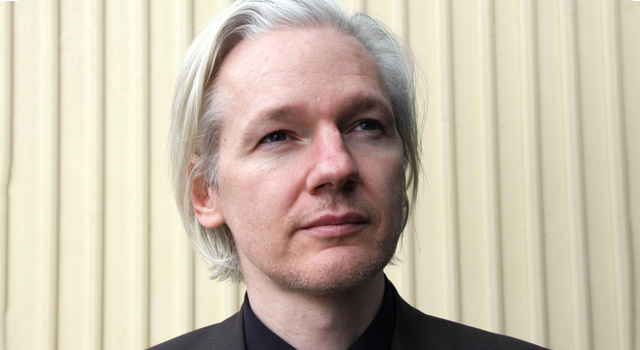
    Julian Assange

    You almost have to feel sorry for Julian Assange. Shut in at the Ecuadorean Embassy in London without access to sunlight, the founder of WikiLeaks is reduced to self-parody these days.

    Here is a man dedicated to radical transparency, yet he refuses to go to Sweden despite an arrest warrant in connection with allegations of sexual assault. His organisation retweets the president-elect who once called for him to be put to death. He spreads the innuendo that Seth Rich, a Democratic National Committee staffer, was murdered this summer because he was the real source of the e-mails WikiLeaks published in the run-up to November’s election. And now he tells Fox News’s Sean Hannity that it’s the US media that is deeply dishonest.

    This is the proper context to evaluate Assange’s claim, repeated by Donald Trump and his supporters, that Russia was not the source for the e-mails of leading Democrats distributed by WikiLeaks.

    We all know that the US intelligence community is standing by its judgment that Russia hacked the Democrats’ e-mails and distributed them to influence the election. And while it’s worrisome that Trump would dismiss this judgment out of hand, this also misses the main point. Sometimes the spies get it wrong, like the “slam-dunk” conclusion that Saddam Hussein was concealing Iraqi weapons of mass destruction.

    The real issue is Assange. The founder of WikiLeaks has a history of saying paranoid nonsense. This is particularly true of Assange’s view of Hillary Clinton. His delusions have led him to justify the interference in our elections as an act of holding his nemesis accountable to the public.

    Bill Keller, the former New York Times executive editor, captured Assange’s penchant for dark fantasy in a 2011 essay that described him casually telling a group of journalists from The Guardian that former Stasi agents were destroying East German archives of the secret police. A German reporter from Der Spiegel, John Goetz, was incredulous. “That’s utter nonsense, he said. Some former Stasi personnel were hired as security guards in the office, but the records were well protected,” Keller recounts him as saying.

    In this sense, WikiLeaks’ promotion of the John Grishamesque yarn that Seth Rich was murdered on orders from Hillary Clinton’s network is in keeping with a pattern. Both Rich’s family and the Washington police have dismissed this as a conspiracy theory. That, however, did not stop WikiLeaks from raising a US$20 000 reward to find his “real” killers.

    Add to this Assange’s approach to Russia. It’s well known that his short-lived talk show, which once aired a respectful interview with the leader of the Lebanese terrorist group Hezbollah, was distributed by Russian state television. WikiLeaks has also never published sensitive documents from Russian government sources comparable to the US state department cables it began publishing in 2010, or the e-mails of leading Democrats last year.

    When an Italian journalist asked him last month why WikiLeaks hasn’t published the Kremlin’s secrets, Assange’s answer was telling. “In Russia, there are many vibrant publications, online blogs, and Kremlin critics such as [Alexey] Navalny are part of that spectrum,” he said. “There are also newspapers like Novaya Gazeta, in which different parts of society in Moscow are permitted to critique each other and it is tolerated, generally, because it isn’t a big TV channel that might have a mass popular effect, its audience is educated people in Moscow. So my interpretation is that in Russia there are competitors to WikiLeaks, and no WikiLeaks staff speak Russian, so for a strong culture which has its own language, you have to be seen as a local player.”

    This is bizarre for a few reasons. To start, Assange’s description of the press environment in Russia has a curious omission. Why no mention of the journalists and opposition figures who have been killed or forced into exile? Assange gives the impression that the Russian government is just as vulnerable to mass disclosures of its secrets as the US government has been. That’s absurd, even if it’s also true that some oppositional press is tolerated there.

    Also, WikiLeaks once did have a Russian-speaking associate. His name is Yisrael Shamir, and according to former WikiLeaks staffer James Ball, he worked closely with the organisation when it began distributing the US state department cables. Shamir is a supporter of Vladimir Putin.
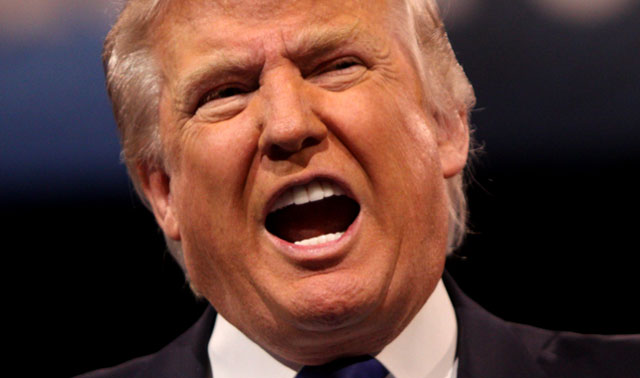
    Donald Trump (image: Michael Vadon)

    This is all a pity. A decade ago, when Assange founded WikiLeaks, it was a very different organisation. As Raffi Khatchadourian reported in a 2010 New Yorker profile, Assange told potential collaborators in 2006: “Our primary targets are those highly oppressive regimes in China, Russia and Central Eurasia, but we also expect to be of assistance to those in the West who wish to reveal illegal or immoral behavior in their own governments and corporations.”

    For a while, WikiLeaks followed this creed. The first document published, but not verified, was an internal memo purporting to show how Somalia’s Islamic Courts Union intended to murder members of the transitional government there. It published the e-mails of University of East Anglia climate scientists discussing manipulation of climate change data. In its early years, WikiLeaks published information damaging to the US as well. But no government or entity or political side appeared to be immune from the organisation’s anonymous whistle-blowers.

    Today, WikiLeaks’s actions discredit its original mission. Does anyone believe Assange when he darkly implies that he received the Democratic National Committee e-mails from a whistle-blower? Even if you aren’t persuaded that Russia was behind it, there is a preponderance of public evidence that the e-mail account of Hillary Clinton’s campaign chairman John Podesta was hacked, such as the e-mail that asked him to give his password in a phishing scam. Assange himself is not even sticking to his old story: he told Hannity that a 14-year-old could have hacked Podesta’s e-mails. Good to know.

    In short, the founder of a site meant to expose the falsehoods of governments and large institutions has been gaslighting us. Just look at the WikiLeaks statement on the e-mails right before the election. “To withhold the publication of such information until after the election would have been to favour one of the candidates above the public’s right to know,” it said.

    That’s precious. WikiLeaks did favour a candidate in the election simply by publishing the e-mails. And the candidate it aided, Donald Trump, is so hostile to the public’s right know that he won’t even release his tax returns. In two weeks, he will be in charge of an intelligence community that asserts with high confidence the e-mails WikiLeaks made public were stolen by Russian government hackers. Assange, of course, denies it, and Trump seems to believe him. Sad!  — (c) 2017 Bloomberg LP

    • Eli Lake is a Bloomberg View columnist. He was the senior national security correspondent for the Daily Beast and covered national security and intelligence for The Washington Times, The New York Sun and UPI


    Donald Trump Hillary Clinton Julian Assange Seth Rich WikiLeaks Yisrael Shamir
    WhatsApp YouTube Follow on Google News Add as preferred source on Google
    Share. Facebook Twitter LinkedIn WhatsApp Telegram Email Copy Link
    Previous ArticleWhy Medium failed to disrupt the media
    Next Article Samsung shrugs off Note7 debacle as profit soars

    Related Posts

    Taiwan, US strike strategic AI and chip supply-chain pact - TSMC

    Taiwan, US strike strategic AI and chip supply-chain pact

    20 January 2026
    Nvidia's next AI chips are in full production - Jensen Huang

    Nvidia’s next AI chips are in full production

    6 January 2026
    It has been a year of policy victories, but crypto firms warn momentum could fade without durable US legislation.- Donald Trump

    Crypto’s Trump-era boom faces a 2026 reality check

    18 December 2025
    Company News
    The skills gap is a thinking gap: why South African employers can't find problem solvers

    The skills gap is a thinking gap: why SA employers can’t find problem solvers

    6 February 2026
    Vox Kiwi Wireless: fibre-like broadband for South African homes

    Vox Kiwi Wireless: fibre-like broadband for South African homes

    5 February 2026
    NEC XON achieves an African first with full Fortinet accreditation - Ian Kruger

    NEC XON achieves an African first with full Fortinet accreditation

    5 February 2026
    Opinion
    South Africa's skills advantage is being overlooked at home - Richard Firth

    South Africa’s skills advantage is being overlooked at home

    29 January 2026
    Why Elon Musk's Starlink is a 'hard no' for me - Songezo Zibi

    Why Elon Musk’s Starlink is a ‘hard no’ for me

    26 January 2026
    South Africa's new fibre broadband battle - Duncan McLeod

    South Africa’s new fibre broadband battle

    20 January 2026

    Subscribe to Updates

    Get the best South African technology news and analysis delivered to your e-mail inbox every morning.

    Latest Posts
    Eskom lifts load reduction for 140 000 customers

    Eskom lifts load reduction for 140 000 customers

    8 February 2026
    Crypto firm accidentally sends R700-billion in bitcoin to its users

    Crypto firm accidentally sends R700-billion in bitcoin to its users

    8 February 2026
    AI chatbots are coming to Apple CarPlay

    AI chatbots are coming to Apple CarPlay

    8 February 2026
    South Africa's stablecoin silence is becoming a policy failure

    South Africa’s stablecoin silence is becoming a policy failure

    6 February 2026
    © 2009 - 2026 NewsCentral Media
    • Cookie policy (ZA)
    • TechCentral – privacy and Popia

    Type above and press Enter to search. Press Esc to cancel.

    Manage consent

    TechCentral uses cookies to enhance its offerings. Consenting to these technologies allows us to serve you better. Not consenting or withdrawing consent may adversely affect certain features and functions of the website.

    Functional Always active
    The technical storage or access is strictly necessary for the legitimate purpose of enabling the use of a specific service explicitly requested by the subscriber or user, or for the sole purpose of carrying out the transmission of a communication over an electronic communications network.
    Preferences
    The technical storage or access is necessary for the legitimate purpose of storing preferences that are not requested by the subscriber or user.
    Statistics
    The technical storage or access that is used exclusively for statistical purposes. The technical storage or access that is used exclusively for anonymous statistical purposes. Without a subpoena, voluntary compliance on the part of your Internet Service Provider, or additional records from a third party, information stored or retrieved for this purpose alone cannot usually be used to identify you.
    Marketing
    The technical storage or access is required to create user profiles to send advertising, or to track the user on a website or across several websites for similar marketing purposes.
    • Manage options
    • Manage services
    • Manage {vendor_count} vendors
    • Read more about these purposes
    View preferences
    • {title}
    • {title}
    • {title}