Close Menu
TechCentralTechCentral

    Subscribe to the newsletter

    Get the best South African technology news and analysis delivered to your e-mail inbox every morning.

    Facebook X (Twitter) YouTube LinkedIn
    WhatsApp Facebook X (Twitter) LinkedIn YouTube
    TechCentralTechCentral
    • News
      Netflix, Warner Bros talks raise fresh headaches for MultiChoice

      Netflix, Warner Bros talks raise fresh headaches for MultiChoice

      5 December 2025
      Big Microsoft 365 price increases coming next year

      Big Microsoft price increases coming next year

      5 December 2025
      Vodacom to take control of Safaricom in R36-billion deal - Shameel Joosub

      Vodacom to take control of Safaricom in R36-billion deal

      4 December 2025
      Black Friday goes digital in South Africa as online spending surges to record high

      Black Friday goes digital in South Africa as online spending surges to record high

      4 December 2025
      BYD takes direct aim at Toyota with launch of sub-R500 000 Sealion 5 PHEV

      BYD takes direct aim at Toyota with launch of sub-R500 000 Sealion 5 PHEV

      4 December 2025
    • World
      Amazon and Google launch multi-cloud service for faster connectivity

      Amazon and Google launch multi-cloud service for faster connectivity

      1 December 2025
      Google makes final court plea to stop US breakup

      Google makes final court plea to stop US breakup

      21 November 2025
      Bezos unveils monster rocket: New Glenn 9x4 set to dwarf Saturn V

      Bezos unveils monster rocket: New Glenn 9×4 set to dwarf Saturn V

      21 November 2025
      Tech shares turbocharged by Nvidia's stellar earnings

      Tech shares turbocharged by stellar Nvidia earnings

      20 November 2025
      Config file blamed for Cloudflare meltdown that disrupted the web

      Config file blamed for Cloudflare meltdown that disrupted the web

      19 November 2025
    • In-depth
      Jensen Huang Nvidia

      So, will China really win the AI race?

      14 November 2025
      Valve's Linux console takes aim at Microsoft's gaming empire

      Valve’s Linux console takes aim at Microsoft’s gaming empire

      13 November 2025
      iOCO's extraordinary comeback plan - Rhys Summerton

      iOCO’s extraordinary comeback plan

      28 October 2025
      Why smart glasses keep failing - no, it's not the tech - Mark Zuckerberg

      Why smart glasses keep failing – it’s not the tech

      19 October 2025
      BYD to blanket South Africa with megawatt-scale EV charging network - Stella Li

      BYD to blanket South Africa with megawatt-scale EV charging network

      16 October 2025
    • TCS
      TCS+ | How Cloud on Demand helps partners thrive in the AWS ecosystem - Odwa Ndyaluvane and Xenia Rhode

      TCS+ | How Cloud On Demand helps partners thrive in the AWS ecosystem

      4 December 2025
      TCS | MTN Group CEO Ralph Mupita on competition, AI and the future of mobile

      TCS | Ralph Mupita on competition, AI and the future of mobile

      28 November 2025
      TCS | Dominic Cull on fixing South Africa's ICT policy bottlenecks

      TCS | Dominic Cull on fixing South Africa’s ICT policy bottlenecks

      21 November 2025
      TCS | BMW CEO Peter van Binsbergen on the future of South Africa's automotive industry

      TCS | BMW CEO Peter van Binsbergen on the future of South Africa’s automotive industry

      6 November 2025
      TCS | Why Altron is building an AI factory - Bongani Andy Mabaso

      TCS | Why Altron is building an AI factory in Johannesburg

      28 October 2025
    • Opinion
      Your data, your hardware: the DIY AI revolution is coming - Duncan McLeod

      Your data, your hardware: the DIY AI revolution is coming

      20 November 2025
      Zero Carbon Charge founder Joubert Roux

      The energy revolution South Africa can’t afford to miss

      20 November 2025
      It's time for a new approach to government IT spend in South Africa - Richard Firth

      It’s time for a new approach to government IT spend in South Africa

      19 November 2025
      How South Africa's broken Rica system fuels murder and mayhem - Farhad Khan

      How South Africa’s broken Rica system fuels murder and mayhem

      10 November 2025
      South Africa's AI data centre boom risks overloading a fragile grid - Paul Colmer

      South Africa’s AI data centre boom risks overloading a fragile grid

      30 October 2025
    • Company Hubs
      • Africa Data Centres
      • AfriGIS
      • Altron Digital Business
      • Altron Document Solutions
      • Altron Group
      • Arctic Wolf
      • AvertITD
      • Braintree
      • CallMiner
      • CambriLearn
      • CYBER1 Solutions
      • Digicloud Africa
      • Digimune
      • Domains.co.za
      • ESET
      • Euphoria Telecom
      • Incredible Business
      • iONLINE
      • IQbusiness
      • Iris Network Systems
      • LSD Open
      • NEC XON
      • Netstar
      • Network Platforms
      • Next DLP
      • Ovations
      • Paracon
      • Paratus
      • Q-KON
      • SevenC
      • SkyWire
      • Solid8 Technologies
      • Telit Cinterion
      • Tenable
      • Vertiv
      • Videri Digital
      • Vodacom Business
      • Wipro
      • Workday
      • XLink
    • Sections
      • AI and machine learning
      • Banking
      • Broadcasting and Media
      • Cloud services
      • Contact centres and CX
      • Cryptocurrencies
      • Education and skills
      • Electronics and hardware
      • Energy and sustainability
      • Enterprise software
      • Financial services
      • Information security
      • Internet and connectivity
      • Internet of Things
      • Investment
      • IT services
      • Lifestyle
      • Motoring
      • Public sector
      • Retail and e-commerce
      • Satellite communications
      • Science
      • SMEs and start-ups
      • Social media
      • Talent and leadership
      • Telecoms
    • Events
    • Advertise
    TechCentralTechCentral
    Home » In-depth » How the Internet ignited a global inferno

    How the Internet ignited a global inferno

    By Editor23 December 2011
    Twitter LinkedIn Facebook WhatsApp Email Telegram Copy Link
    News Alerts
    WhatsApp
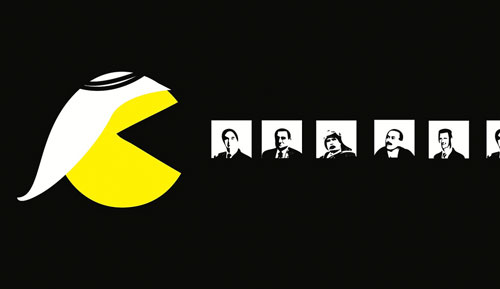
    Image: Khalid Albaih

    It was easy to overlook the first report of trouble brewing in Tunisia. According to a Reuters article dated 19 December 2010, “hundreds of youths” were “angered by an incident in which a young man, Mohamed Bouazizi, had set fire to himself in protest after police confiscated the fruit and vegetables he was selling from a street stall”. The report also noted that “riots are extremely rare for Tunisia, a North African country of about 10-million people that is one of the most prosperous and stable in the region”.

    The only evidence in the article of the firestorm that was about to be unleashed on the region comes near the bottom of the news pyramid.

    “Footage posted on the Facebook social networking site showed several hundred protesters outside the regional government headquarters, with lines of police blocking them from getting closer to the building. It did not show any violence.”

    It’s a little tidbit of information that, looked at through the crystal ball of hindsight, turned out to be prophetic.

    Rather than being contained in Sidi Bouzid — a city 200km from Tunis that was last in the headlines for a battle between Allied and German forces in World War II — the pictures on Facebook made this incident a national, regional and global issue. The violence in the town escalated and spread, and the clashes were filmed and tweeted on smartphones and quickly disseminated on social networking sites.

    Another contributing technological factor was WikiLeaks, once a moderate, responsible whistleblower site that had spiralled slowly out of control during the preceding three months as its founder, Julian Assange, started to believe a little too much of his own press.

    A tech hero, the Australian is both loved and reviled, often by the same people at the same time. He started hacking when he was 16 and, in 1991, was charged with more than 30 offences. Driven by a sharp intellect, a rough childhood and an overly polarised sense of right and wrong, Assange founded WikiLeaks in 2006. The first documents leaked included information on Daniel arap Moi’s family corruption, Guantanamo Bay detention protocols and the “bibles” of Scientology.

    WikiLeaks quickly grew in prominence, and deservedly so. The documents it got were often vital for democracy and individual freedoms, but also extremely sensitive. It generally handled these with care, removing names of foreign informants and working with news publications to bring serious corruption, toxic dumping, assassination orders and other wrong-doings to light.

    In 2010, it hit paydirt. Bradley Manning, a young US Army intelligence analyst, leaked 260 000 diplomatic cables from American embassies around the world.

    This impressive haul came on top of 400 000 American documents relating to the Iraqi war and 92 000 on the country’s Afghanistan campaign. In a classic case of a victim of its own success, the Iraqi documents started to tear the WikiLeaks team apart. Dissension arose over the speed with which Assange released the documents, too soon for them to be properly cleansed of all information that could threaten lives (or be “redacted”, as WikiLeaks likes to call the process).

    WikiLeaks vs OpenLeaks
    In an altercation that defined the period, strong words were traded between WikiLeaks’s German spokesperson, Daniel Domscheit-Berg, and Assange, on the group’s secure chat site towards the end of September, as reported by Wired magazine:

    “Domscheit-Berg: i want to know what the agreements are in respect to iraq
    “Assange: That is a procedural issue. Don’t play games with me.
    “Domscheit-Berg: stop shooting at messengers
    “Assange: I’ve had it.
    “Domscheit-Berg: likewise, and that doesnt go just for me
    “Assange: If you do not answer the question, you will be removed.
    “Domscheit-Berg: you are not anyones king or god / and you’re not even fulfilling your role as a leader right now / a leader communicates and cultivates trust in himself / you are doing the exact opposite / you behave like some kind of emperor or slave trader
    “Assange: You are suspended for one month, effective immediately.”

    Julian Assange (image: DonkeyHotey)

    The suspension proved permanent, with Domscheit-Berg breaking away to start competitor OpenLeaks. The Independent reported that, in total, “at least a dozen key supporters of the website are known to have left”. Assange, never good with criticism, appeared to react by getting increasingly paranoid and, considering the material he was holding, the paranoia was probably not entirely unfounded.

    When WikiLeaks did start leaking American cables, the fallout was immense. It was even felt in SA, with ANC Youth League leader Julius Malema proving to be a source of information on the internal politics of the ANC.

    The revelations were far more serious for Tunisia. In a 2008 cable with the pithy title “Corruption in Tunisia: What’s Yours is Mine”, by American ambassador Robert Godec, President Zine al-Abidine Ben Ali’s extended family was compared to the Mafia.

    “Often referred to as a quasi-mafia, an oblique mention of ‘the Family’ is enough to indicate which family you mean. Seemingly half of the Tunisian business community can claim a Ben Ali connection through marriage, and many of these relations are reported to have made the most of their lineage.”

    The timing of the release of the documents in early December was perfect for the Tunisian revolution. It became a powder keg when added to pictures of Bouazizi setting himself alight doing the rounds on social networks and a purported suicide note to his mother on Facebook.

    “I will be travelling, my mother, forgive me. Reproach is not helpful. I am lost in my way, it is not in my hand, forgive me if I disobeyed words of my mother. Blame our times and do not blame me, I am going and not coming back. Look, I did not cry and tears did not fall from my eyes. Reproach is not helpful in times of treachery in the land of the people. I am travelling and I am asking who leads the travel to forget.”

    By January 14 this year, less than a month after that first Reuters report, Ben Ali had fled to Saudi Arabia and protests were starting in Egypt and Algeria. By the end of the month the unrest had spread to Libya, Yemen, Lebanon and Jordan.

    Two days after Ben Ali fled, a causal link was identified between the uprising in Tunisia and WikiLeaks, by Libyan leader Muammar Gaddafi, of all people. He blamed his old dictator-friend’s woes on “WikiLeaks, which publishes information written by lying ambassadors in order to create chaos”.

    And so started the Arab Spring, the first Internet-driven revolution of our time. For those of us in the Internet industry, revolutions are a daily occurrence. Everyone claims a revolutionary product, service or gizmo, so when we heard the term “Twitter revolution” and “information revolution”, it was met with a mixture of mirth and scepticism.

    But, unlike the typical hype revolutions in the tech industry, this one was actually a revolution, with blood and teargas and police states and occupations and dead people. Sceptical or not, there was a direct link between the Internet and what was playing out in real life on the streets of Tripoli and Cairo. When Bouazizi set fire to himself, he ignited an inferno fuelled by Facebook, Twitter and YouTube.

    Muammar Gaddafi (image: Mark Hammermeister)

    ‘Pace of the revolutions’
    Today, it is still being debated whether the uprisings would have happened anyway. Many say they would have but the Internet surely accelerated the pace of the revolutions dramatically.

    The French, Chinese and Russians certainly did not rely on Twitter for their revolutions. Yet how would an incident like Tiananmen Square affect China and the world today if it was being videoed and tweeted live by all those involved? Could apartheid have survived if SA watched the Soweto uprising and its brutal suppression through the eyes of the victims as it was happening?

    The answer might lie in the London riots in August, after the police shot and killed 29-year-old Mark Duggan. The “R.I.P Mark Duggan” Facebook page posted this message as the riots began:

    “We presume the Nazi filth likes to shoot and beat up black men. Well, not anymore, this Facebook page must send a message to the filth that we will not accept this kind of insults at the British black community. It is us, the people, who must rise as one. Whatever beef we have, let it drop and let us unite. Please send your prayers to Mark’s family.”

    The BlackBerry instant messenger network was the tool used to organise the protests.

    “Everyone in edmonton enfield woodgreen everywhere in north link up at enfield town station 4 o clock sharp!!!! Start leaving ur yards n linking up with you niggas. Guck da feds, bring your ballys and your bags trollys, cars vans, hammers the lot!! Keep sending this around to bare man, make sure no snitch boys get dis!!! What ever ends your from put your ballys on link up and cause havic, just rob everything. Police can’t stop it. Dead the fires though!! Rebroadcast!!!!!”

    Suddenly the oppressed, marginalised and voiceless have a voice and an ability to connect to like-minded people in a way that makes distance irrelevant. The Internet, for all its sins, is able to mobilise huge numbers of people simultaneously with a common goal, a rough organisation and an almost unstoppable communications infrastructure.

    Ironically, during the Egyptian revolution, the Egyptian government did manage to shut down the country’s Internet. This was such an affront to the youth, most of whom consider access to the Internet as a basic human right, that observers reported an increase in the number of youths on the street following the shutdown. News still got out — Google and Twitter set up phone numbers in Egypt that protesters could phone to dictate their tweets.

    The Internet changes everything it touches. Unlike so many other technologies, it really does deserve the term “revolutionary”. Now it is touching government, freedom, people. We are changing. It is revolutionary.  — Jason Norwood-Young, Mail & Guardian

    • Jason Norwood-Young is the founder of the technology start-up company 10Layer
    • Visit the Mail & Guardian Online, the smart news source
    • Subscribe to our free daily newsletter
    • Follow us on Twitter or on Google+ or on Facebook
    • Visit our sister website, SportsCentral (still in beta)


    Bradley Manning Daniel Domscheit-Berg Julian Assange Julius Malema OpenLeaks Robert Godec WikiLeaks Zine al-Abidine Ben Ali
    Subscribe to TechCentral Subscribe to TechCentral
    Share. Facebook Twitter LinkedIn WhatsApp Telegram Email Copy Link
    Previous ArticleEpson EB-1775W review: lightweight but loud projector
    Next Article Tintin navigates uncanny valley

    Related Posts

    EFF vows to stop Starlink from launching in South Africa - Elon Musk

    EFF vows to stop Starlink from launching in South Africa

    11 July 2025
    Julian Assange to be freed in US plea deal

    Julian Assange to be freed in US plea deal

    25 June 2024
    South Africans head to the polls in crucial election

    South Africans head to the polls in crucial election

    29 May 2024
    Company News
    Beat the summer heat with Samsung's WindFree air conditioners

    Beat the summer heat with Samsung’s WindFree air conditioners

    5 December 2025
    AI is not a technology problem - iqbusiness

    AI is not a technology problem – iqbusiness

    5 December 2025
    Telcos are sitting on a data gold mine - but few know what do with it - Phillip du Plessis

    Telcos are sitting on a data gold mine – but few know what do with it

    4 December 2025
    Opinion
    Your data, your hardware: the DIY AI revolution is coming - Duncan McLeod

    Your data, your hardware: the DIY AI revolution is coming

    20 November 2025
    Zero Carbon Charge founder Joubert Roux

    The energy revolution South Africa can’t afford to miss

    20 November 2025
    It's time for a new approach to government IT spend in South Africa - Richard Firth

    It’s time for a new approach to government IT spend in South Africa

    19 November 2025

    Subscribe to Updates

    Get the best South African technology news and analysis delivered to your e-mail inbox every morning.

    Latest Posts
    Beat the summer heat with Samsung's WindFree air conditioners

    Beat the summer heat with Samsung’s WindFree air conditioners

    5 December 2025
    Netflix, Warner Bros talks raise fresh headaches for MultiChoice

    Netflix, Warner Bros talks raise fresh headaches for MultiChoice

    5 December 2025
    Big Microsoft 365 price increases coming next year

    Big Microsoft price increases coming next year

    5 December 2025
    AI is not a technology problem - iqbusiness

    AI is not a technology problem – iqbusiness

    5 December 2025
    © 2009 - 2025 NewsCentral Media
    • Cookie policy (ZA)
    • TechCentral – privacy and Popia

    Type above and press Enter to search. Press Esc to cancel.

    Manage consent

    TechCentral uses cookies to enhance its offerings. Consenting to these technologies allows us to serve you better. Not consenting or withdrawing consent may adversely affect certain features and functions of the website.

    Functional Always active
    The technical storage or access is strictly necessary for the legitimate purpose of enabling the use of a specific service explicitly requested by the subscriber or user, or for the sole purpose of carrying out the transmission of a communication over an electronic communications network.
    Preferences
    The technical storage or access is necessary for the legitimate purpose of storing preferences that are not requested by the subscriber or user.
    Statistics
    The technical storage or access that is used exclusively for statistical purposes. The technical storage or access that is used exclusively for anonymous statistical purposes. Without a subpoena, voluntary compliance on the part of your Internet Service Provider, or additional records from a third party, information stored or retrieved for this purpose alone cannot usually be used to identify you.
    Marketing
    The technical storage or access is required to create user profiles to send advertising, or to track the user on a website or across several websites for similar marketing purposes.
    • Manage options
    • Manage services
    • Manage {vendor_count} vendors
    • Read more about these purposes
    View preferences
    • {title}
    • {title}
    • {title}