Close Menu
TechCentralTechCentral

    Subscribe to the newsletter

    Get the best South African technology news and analysis delivered to your e-mail inbox every morning.

    Facebook X (Twitter) YouTube LinkedIn
    WhatsApp Facebook X (Twitter) LinkedIn YouTube
    TechCentralTechCentral
    • News
      The real reason SA graduates can't get hired into tech jobs

      The real reason SA graduates can’t get hired into tech jobs

      23 June 2026
      The pivot South Africa's MVNOs cannot afford to miss

      The pivot South Africa’s MVNOs cannot afford to miss

      23 June 2026
      Why South Africans spend so little time on 5G

      Why South Africans spend so little time on 5G

      23 June 2026
      Oracle is slashing its workforce as it automates with AI

      Oracle is slashing its workforce as it automates with AI

      23 June 2026
      Namibia tells Starlink to take a hike - again

      Namibia tells Starlink to take a hike – again

      22 June 2026
    • World

      SK Hynix ends Samsung’s 26-year reign at the top

      22 June 2026
      Google on the hook for what its AI tells users, court rules

      Google on the hook for what its AI tells users, court rules

      15 June 2026
      How Russians juggle VPNs to outwit the Kremlin

      How Russians juggle VPNs to outwit the Kremlin

      15 June 2026
      Amazon CEO flagged Anthropic AI risks to Washington - Andy Jassy

      Amazon CEO flagged Anthropic AI risks to Washington

      14 June 2026
      Trouble at Xbox

      Trouble at Xbox

      11 June 2026
    • In-depth
      AI boom sparks rally, frenzy and fear

      AI boom sparks rally, frenzy and fear

      11 June 2026
      Every plug-in hybrid on sale in South Africa, ranked by price - Lamborghini Temerario

      Every plug-in hybrid on sale in South Africa, ranked by price

      7 June 2026
      What Wi-Fi 8 will mean for wireless networks

      What Wi-Fi 8 will mean for wireless networks

      1 June 2026
      Alfa's electric rebel - Alfa Romeo Junior Elettrica Veloce

      Alfa’s electric rebel

      29 April 2026
      Africa switches on as Europe dims the lights

      Africa switches on as Europe dims the lights

      9 April 2026
    • TCS
      Watts & Wheels S1E6: 'A flawless Alfa and a bakkie that divides'

      Watts & Wheels S1E6: ‘A flawless Alfa and a bakkie that divides’

      17 June 2026
      Watts & Wheels S1E6: 'A flawless Alfa and a bakkie that divides'

      Watts & Wheels S1E5: ‘A Bentley of the bush and a car that swims’

      8 June 2026
      TCS | Charge's R1.8-billion bet on an off-grid EV future - Charge chairman Joubert Roux

      TCS | Charge’s R1.8-billion bet on an off-grid EV future

      18 May 2026
      TCS+ | The Up&Up Group on the hidden cost of AI - Jason Harrison

      TCS+ | The Up&Up Group on the hidden cost of AI

      13 May 2026
      Michael Rossouw

      TCS+ | The retirement decision most South Africans get wrong

      6 May 2026
    • Opinion
      Brazil's online gambling crackdown is a lesson for South Africa

      Brazil’s online gambling crackdown is a lesson for South Africa

      22 June 2026
      Finish the job Mandela started - Farzam Ehsani

      Finish the job Mandela started

      18 June 2026
      The author, Fanie van Rooyen

      The US just showed it can switch off our AI

      17 June 2026
      The author, Pambos Soteriades

      The clock is ticking on South African banks’ biggest advantage

      9 June 2026

      Clashing judgments leave South Africa’s crypto law unsettled

      2 June 2026
    • Company Hubs
      • 1Stream
      • Africa Data Centres
      • AfriGIS
      • Altron Digital Business
      • Altron Document Solutions
      • Altron Group
      • Arctic Wolf
      • Ascent Technology
      • AvertITD
      • BBD
      • Braintree
      • CallMiner
      • CambriLearn
      • CM Telecom
      • Contactable
      • CYBER1 Solutions
      • Digicloud Africa
      • Digimune
      • Domains.co.za
      • ESET
      • Euphoria Telecom
      • HOSTAFRICA
      • Incredible Business
      • iONLINE
      • IQbusiness
      • Iris Network Systems
      • Kaspersky
      • LSD Open
      • Mitel
      • NEC XON
      • Netstar
      • Network Platforms
      • Next DLP
      • Ovations
      • Paracon
      • Paratus
      • Q-KON
      • SevenC
      • SkyWire
      • Solid8 Technologies
      • Telit Cinterion
      • Telviva
      • Tenable
      • Vertiv
      • Videri Digital
      • Vodacom Business
      • Wipro
      • Workday
      • XLink
    • Sections
      • AI and machine learning
      • Banking
      • Broadcasting and Media
      • Cloud services
      • Contact centres and CX
      • Cryptocurrencies
      • Education and skills
      • Electronics and hardware
      • Energy and sustainability
      • Enterprise software
      • Financial services
      • HealthTech
      • Information security
      • Internet and connectivity
      • Internet of Things
      • Investment
      • IT services
      • Lifestyle
      • Motoring
      • Policy and regulation
      • Public sector
      • Retail and e-commerce
      • Satellite communications
      • Science
      • SMEs and start-ups
      • Social media
      • Talent and leadership
      • Telecoms
    • Events
    • Advertise
    TechCentralTechCentral
    Home » In-depth » How the Taliban retook Afghanistan – using modern technology

    How the Taliban retook Afghanistan – using modern technology

    By Tim Culpan20 August 2021
    Twitter LinkedIn Facebook WhatsApp Email Telegram Copy Link
    News Alerts
    WhatsApp

    When the Taliban was last in control of Afghanistan, the world used cellphones for voice calls, the Internet was accessed from desktop computers over copper phone lines, and digital photography was in its infancy.

    But within a few years of defeat by the US military in 2001, the militant Islamists who’d once eschewed technology were deploying makeshift surveillance drones and coordinating their political and operational messaging through a network of mobile handsets.

    The decision to embrace, rather than reject, the trappings of the 21st century went on to become a key to the movement’s survival and eventual retaking of the landlocked central Asian nation.

    One of the things that they learnt was to focus on communications, and away from the model of the 1990s

    “They moved into much greater technology sophistication by about 2007. It’s a sign of the group’s capacity to adapt and learn and that’s one of the reasons why they won,” said Vanda Felbab-Brown, a senior fellow and director of the Initiative on Nonstate Armed Actors at the Brookings Institution. “One of the things that they learnt was to focus on communications, and away from the model of the 1990s, which was to move the country away from any kind of modernity.”

    Rejection to embrace

    The organisation originally emerged in the country’s rugged, rural heartlands and fought to the top of Afghanistan’s power struggles in 1996, advocating a return to the 7th century, when Islam was founded. It envisioned a nation of self-sufficient peasant farmers, ruled under Shariah, and rejected any need for modern technology. There wasn’t much, anyway: Afghanistan’s development was pulverised during the Soviet occupation and fighting between rival warlords.

    Yet by 2007 and deep into insurgency against the Americans, the Taliban were using monochrome flip-phones bearing names like Nokia and Motorola to push propaganda and keep tabs on people. Felbab-Brown recalls visiting Afghanistan around that time, when the movement was sending both mass and targeted text messages. They included reminders to pay zakat (religious tax), and that the group knew where you lived.

    One irony is that this broad roll-out of telecommunications was enabled by US and international companies, with Nato forces building the pylons that would hold cellphone antennas. Before long, Taliban spokesmen fluent in English were regularly updating Western media directly over text and voice, answering questions and claiming victory in battles that journalists didn’t even know had happened.
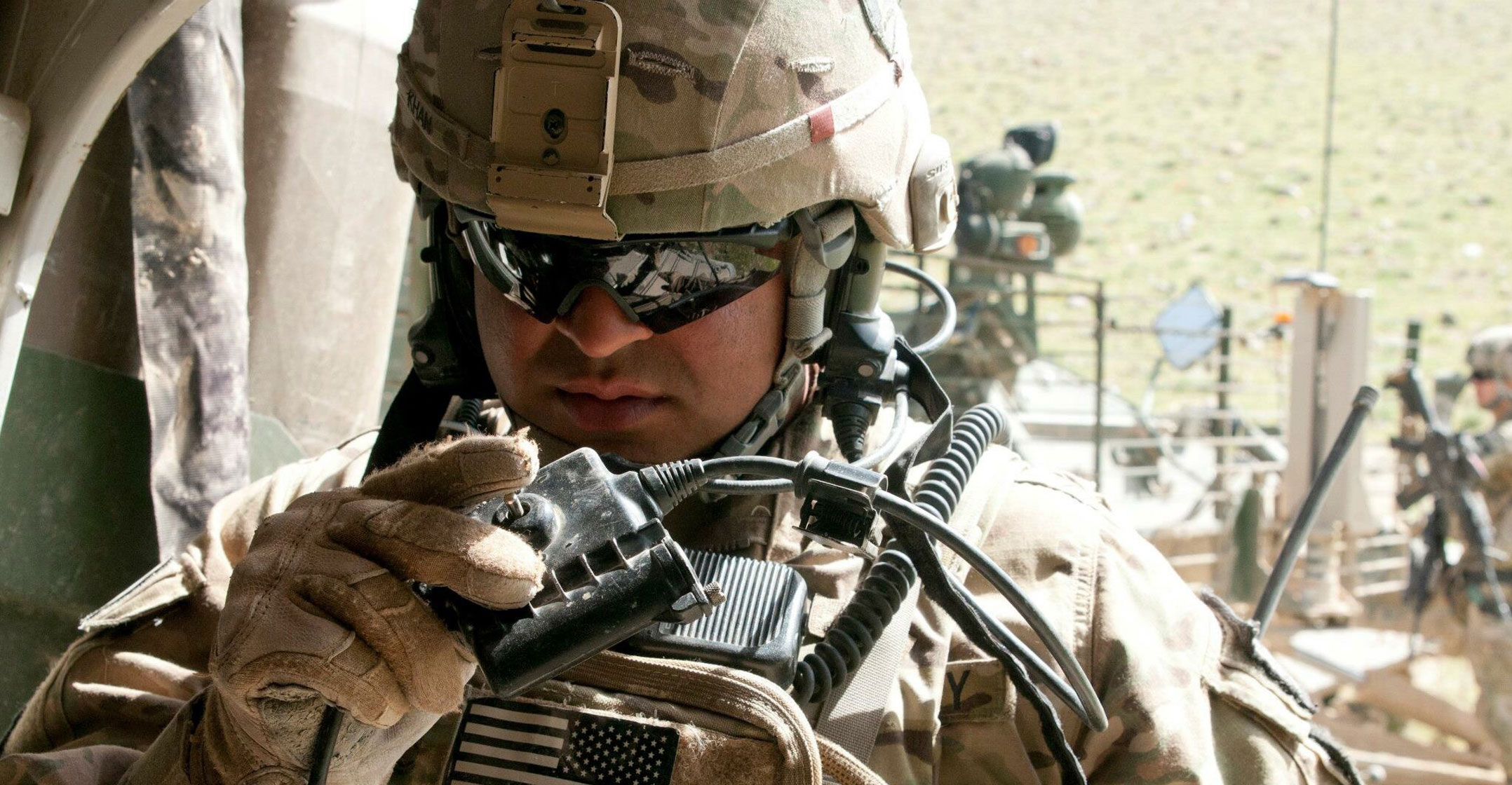
    The Taliban retook Afghanistan in a matter of days after the US withdrew its troops

    The early Taliban were viewed by foreign powers, and perhaps even themselves, as a fast-moving light military force equipped mostly with rifles and RPGs. But with a more modern foe in the US and its allies came the need to to add psychological operations. “That’s where technology is crucial, there’s no way around it,” notes Kamran Bokhari, director of analytical development at the Newlines Institute for Strategy & Policy. “Previously they were able to do without it, but after 9/11 the world changed.”

    The Taliban needed to catch up with innovations on the battlefield, and learnt fast. Around 2005, Bokhari recalls, a jerry-rigged drone — a camcorder strapped to a toy remote-controlled aircraft — was discovered near the border with Pakistan. And they weren’t learning only from their enemies. Fellow jihadists, such as al-Qaeda, Isis and Hezbollah, had discovered the power of digital technologies to recruit members, threaten opponents and control messaging. The Taliban benefited from a cross-pollination of tradecraft in propaganda and information warfare.

    These groups followed the arc of technology in the wider world. Early on, they engaged in a cat-and-mouse game of using websites to claim responsibility for attacks and to distribute messages and videos before foreign governments knocked them offline. That gave way to more sophisticated handheld devices and faster networks that meant a video could be shot on a cellphone and e-mailed directly to supporters or international media. The Taliban and their ilk became early adopters of platforms that made sharing information even easier — YouTube, Facebook, Twitter, Telegram and WhatsApp. A key strategy was to not only win battles, but shape perceptions of strength and capabilities, Bokhari notes.

    As the US went deeper into its second decade of occupation, the Taliban kept up a steady drumbeat of messaging across all mediums

    As the US went deeper into its second decade of occupation, the Taliban kept up a steady drumbeat of messaging across all mediums, targeting local Afghan forces and overseas governments. The aim was to create the belief that the movement’s ascendancy was inevitable and resistance futile. The perception helped bring US administrations to the table and may have fed the collapse of the military.

    Western governments and corporations weren’t blind to the online threats. Facebook and Alphabet say they have long-held bans on the group, while Twitter chose to take down individual pieces of violent content. But the Taliban’s flexibility in shifting messages and platforms made stamping out all presence impossible.

    Social media

    By the time they took Kabul, the Taliban had upped their presence on Twitter and taken to WhatsApp and text messages to engage with the local populace and outsiders. Spokesmen have used Twitter in recent weeks in an attempt to ease concerns about human-rights violations, forcing US tech giants to reiterate their policies. “The Taliban is under US sanctions, which means that due to our dangerous-organisation policies, we don’t actually allow any presence” by them on Instagram or any of the Facebook apps, Adam Mosseri, head of the company’s photo-sharing service said this week. WhatsApp banned a helpline the Taliban had set up to allow Afghans to report violence and looting.

    How long tech companies keep the Taliban off their platforms may come down to US policy. Any hope of controlling the narrative and neutralising the movement’s initiatives will require coordinating with governments and corporations to curb access to technology. But the group’s ability to adapt makes a full freeze-out unlikely. Even if the Taliban can’t use mass outlets like YouTube, Facebook or Twitter, messaging apps such as Telegram and WhatsApp will remain an option thanks to the point-to-point nature of their service coupled with end-to-end encryption.

    The digital revolution doesn’t end here. With a vast country to run and disparate groups to placate, a Taliban government will rely even more on information, messaging and perception-shaping. For that, it can learn from the way neighbours like Iran, Pakistan and even China exercise control by censorship and surveillance. The latter, a global leader in facial recognition and artificial intelligence, has already made overtures to the Taliban and is likely to offer aid in the form of infrastructure that could include communications and surveillance capabilities.

    Today’s Taliban has fought its way back to control over Afghanistan. It’ll rely on technology to stay there.  — (c) 2021 Bloomberg LP

    Follow TechCentral on Google News Add TechCentral as your preferred source on Google


    Facebook Taliban top Twitter
    WhatsApp YouTube
    Share. Facebook Twitter LinkedIn WhatsApp Telegram Email Copy Link
    Previous ArticleEU faces backlash for importing Covid vaccines from South Africa
    Next Article Eskom narrowly averts load shedding

    Related Posts

    Jury finds Meta enabled child exploitation

    Jury finds Meta enabled child exploitation

    25 March 2026
    X moves to block bid to revive Twitter brand

    X moves to block bid to revive Twitter brand

    17 December 2025
    Australia has banned kids from social media. Should South Africa follow suit?

    Australia has banned kids from social media. Should South Africa follow suit?

    11 December 2025
    Company News
    A smarter way to buy or renew your Red Hat subscriptions - LSD Open

    A smarter way to buy or renew your Red Hat subscriptions

    22 June 2026
    Moving past the pilot: inside the CloudZA and AWS closed-door AI executive roundtable

    CloudZA and AWS chart the road from AI pilots to production

    19 June 2026
    The role of edge infrastructure in South Africa's AI leap - OADC Open Access Data Centres

    The role of edge infrastructure in South Africa’s AI leap

    19 June 2026
    Opinion
    Brazil's online gambling crackdown is a lesson for South Africa

    Brazil’s online gambling crackdown is a lesson for South Africa

    22 June 2026
    Finish the job Mandela started - Farzam Ehsani

    Finish the job Mandela started

    18 June 2026
    The author, Fanie van Rooyen

    The US just showed it can switch off our AI

    17 June 2026

    Subscribe to Updates

    Get the best South African technology news and analysis delivered to your e-mail inbox every morning.

    Latest Posts
    The real reason SA graduates can't get hired into tech jobs

    The real reason SA graduates can’t get hired into tech jobs

    23 June 2026
    The pivot South Africa's MVNOs cannot afford to miss

    The pivot South Africa’s MVNOs cannot afford to miss

    23 June 2026
    Why South Africans spend so little time on 5G

    Why South Africans spend so little time on 5G

    23 June 2026
    Oracle is slashing its workforce as it automates with AI

    Oracle is slashing its workforce as it automates with AI

    23 June 2026
    © 2009 - 2026 NewsCentral Media
    • Cookie policy (ZA)
    • TechCentral – privacy and Popia

    Type above and press Enter to search. Press Esc to cancel.

    Manage consent

    TechCentral uses cookies to enhance its offerings. Consenting to these technologies allows us to serve you better. Not consenting or withdrawing consent may adversely affect certain features and functions of the website.

    Functional Always active
    The technical storage or access is strictly necessary for the legitimate purpose of enabling the use of a specific service explicitly requested by the subscriber or user, or for the sole purpose of carrying out the transmission of a communication over an electronic communications network.
    Preferences
    The technical storage or access is necessary for the legitimate purpose of storing preferences that are not requested by the subscriber or user.
    Statistics
    The technical storage or access that is used exclusively for statistical purposes. The technical storage or access that is used exclusively for anonymous statistical purposes. Without a subpoena, voluntary compliance on the part of your Internet Service Provider, or additional records from a third party, information stored or retrieved for this purpose alone cannot usually be used to identify you.
    Marketing
    The technical storage or access is required to create user profiles to send advertising, or to track the user on a website or across several websites for similar marketing purposes.
    • Manage options
    • Manage services
    • Manage {vendor_count} vendors
    • Read more about these purposes
    View preferences
    • {title}
    • {title}
    • {title}