Close Menu
TechCentralTechCentral

    Subscribe to the newsletter

    Get the best South African technology news and analysis delivered to your e-mail inbox every morning.

    Facebook X (Twitter) YouTube LinkedIn
    WhatsApp Facebook X (Twitter) LinkedIn YouTube
    TechCentralTechCentral
    • News
      Vuyani Jarana: Mobile coverage masks a deeper broadband failure

      Vuyani Jarana: Mobile coverage masks a deeper broadband failure

      30 January 2026
      SABC Plus to flight Microsoft AI training videos

      SABC Plus to flight Microsoft AI training videos

      30 January 2026
      Fibre ducts

      Fibre industry consolidation in KZN

      30 January 2026
      Watts & Wheels S1E3: 'BYD's Corolla Cross challenger'

      Watts & Wheels S1E3: ‘BYD’s Corolla Cross challenger’

      30 January 2026
      What ordinary South Africans really think of AI

      What ordinary South Africans really think of AI

      30 January 2026
    • World
      Apple acquires audio AI start-up Q.ai

      Apple acquires audio AI start-up Q.ai

      30 January 2026
      SpaceX IPO may be largest in history

      SpaceX IPO may be largest in history

      28 January 2026
      Nvidia throws AI at the weather

      Nvidia throws AI at weather forecasting

      27 January 2026
      Debate erupts over value of in-flight Wi-Fi

      Debate erupts over value of in-flight Wi-Fi

      26 January 2026
      Intel takes another hit - Intel CEO Lip-Bu Tan. Laure Andrillon/Reuters

      Intel takes another hit

      23 January 2026
    • In-depth
      How liberalisation is rewiring South Africa's power sector

      How liberalisation is rewiring South Africa’s power sector

      21 January 2026
      The top-performing South African tech shares of 2025

      The top-performing South African tech shares of 2025

      12 January 2026
      Digital authoritarianism grows as African states normalise internet blackouts

      Digital authoritarianism grows as African states normalise internet blackouts

      19 December 2025
      TechCentral's South African Newsmakers of 2025

      TechCentral’s South African Newsmakers of 2025

      18 December 2025
      Black Friday goes digital in South Africa as online spending surges to record high

      Black Friday goes digital in South Africa as online spending surges to record high

      4 December 2025
    • TCS
      TCS+ | How Cloud On Demand is helping SA businesses succeed in the cloud - Xhenia Rhode, Dion Kalicharan

      TCS+ | Cloud On Demand and Consnet: inside a real-world AWS partner success story

      30 January 2026
      Watts & Wheels S1E3: 'BYD's Corolla Cross challenger'

      Watts & Wheels S1E2: ‘China attacks, BMW digs in, Toyota’s sublime supercar’

      23 January 2026

      TCS+ | Why cybersecurity is becoming a competitive advantage for SA businesses

      20 January 2026
      Watts & Wheels S1E3: 'BYD's Corolla Cross challenger'

      Watts & Wheels: S1E1 – ‘William, Prince of Wheels’

      8 January 2026
      TCS+ | Africa's digital transformation - unlocking AI through cloud and culture - Cliff de Wit Accelera Digital Group

      TCS+ | Cloud without culture won’t deliver AI: Accelera’s Cliff de Wit

      12 December 2025
    • Opinion
      South Africa's skills advantage is being overlooked at home - Richard Firth

      South Africa’s skills advantage is being overlooked at home

      29 January 2026
      Why Elon Musk's Starlink is a 'hard no' for me - Songezo Zibi

      Why Elon Musk’s Starlink is a ‘hard no’ for me

      26 January 2026
      South Africa's new fibre broadband battle - Duncan McLeod

      South Africa’s new fibre broadband battle

      20 January 2026
      AI moves from pilots to production in South African companies - Nazia Pillay SAP

      AI moves from pilots to production in South African companies

      20 January 2026
      South Africa's new fibre broadband battle - Duncan McLeod

      ANC’s attack on Solly Malatsi shows how BEE dogma trumps economic reality

      14 December 2025
    • Company Hubs
      • Africa Data Centres
      • AfriGIS
      • Altron Digital Business
      • Altron Document Solutions
      • Altron Group
      • Arctic Wolf
      • AvertITD
      • Braintree
      • CallMiner
      • CambriLearn
      • CYBER1 Solutions
      • Digicloud Africa
      • Digimune
      • Domains.co.za
      • ESET
      • Euphoria Telecom
      • Incredible Business
      • iONLINE
      • IQbusiness
      • Iris Network Systems
      • LSD Open
      • NEC XON
      • Netstar
      • Network Platforms
      • Next DLP
      • Ovations
      • Paracon
      • Paratus
      • Q-KON
      • SevenC
      • SkyWire
      • Solid8 Technologies
      • Telit Cinterion
      • Tenable
      • Vertiv
      • Videri Digital
      • Vodacom Business
      • Wipro
      • Workday
      • XLink
    • Sections
      • AI and machine learning
      • Banking
      • Broadcasting and Media
      • Cloud services
      • Contact centres and CX
      • Cryptocurrencies
      • Education and skills
      • Electronics and hardware
      • Energy and sustainability
      • Enterprise software
      • Financial services
      • Information security
      • Internet and connectivity
      • Internet of Things
      • Investment
      • IT services
      • Lifestyle
      • Motoring
      • Public sector
      • Retail and e-commerce
      • Satellite communications
      • Science
      • SMEs and start-ups
      • Social media
      • Talent and leadership
      • Telecoms
    • Events
    • Advertise
    TechCentralTechCentral
    Home » In-depth » Hydrogen cars take a back seat to electric vehicles

    Hydrogen cars take a back seat to electric vehicles

    By Agency Staff28 November 2017
    Twitter LinkedIn Facebook WhatsApp Email Telegram Copy Link
    News Alerts
    WhatsApp
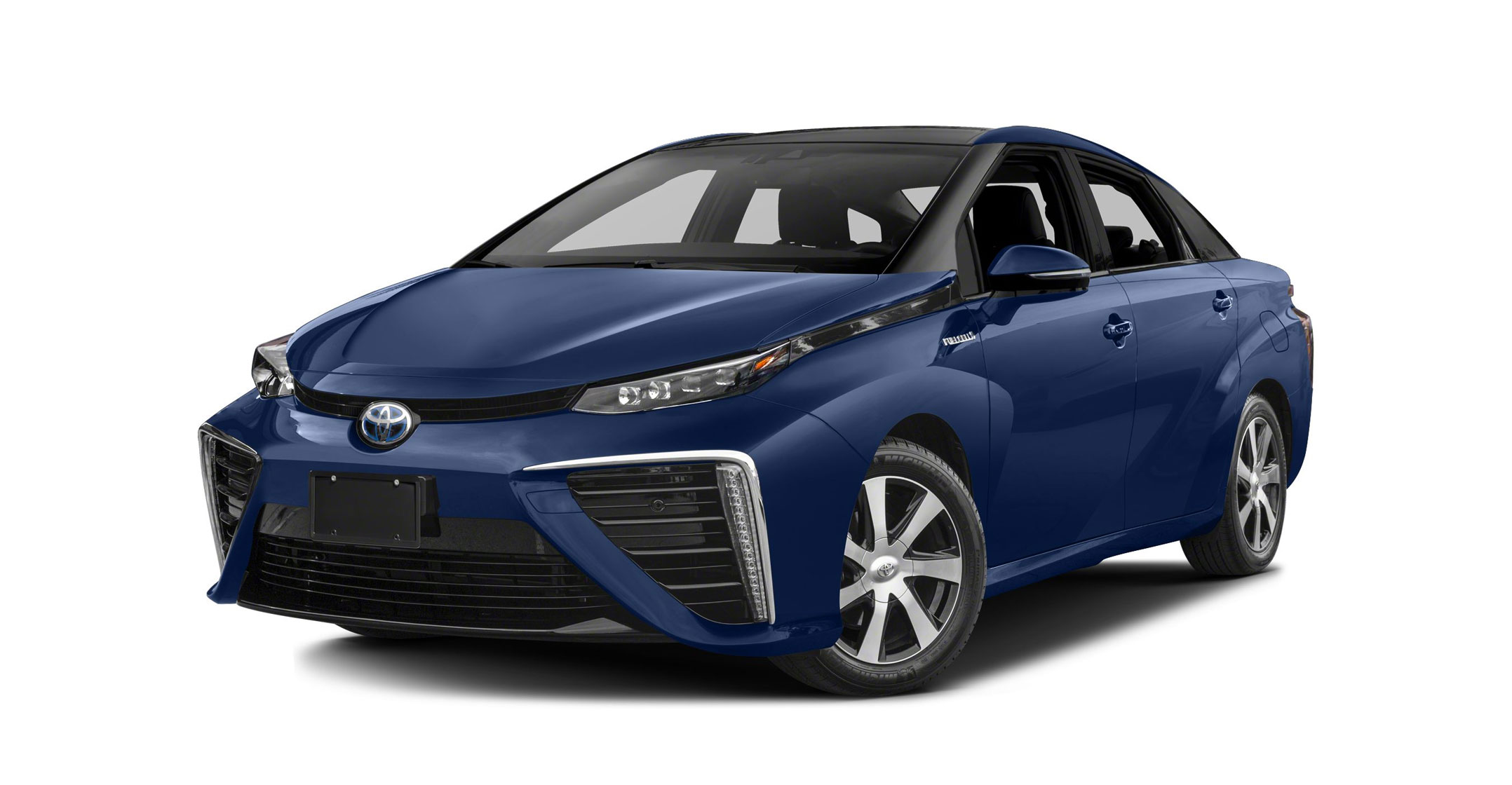
    The Toyota Mirai

    Toyota, which has made a big bet on hydrogen-powered cars, is looking more isolated as industry rivals double down on plug-in electric vehicles as the dominant technology in the emerging post-fossil fuel era.

    Three years ago, Toyota president Akio Toyoda, grandson of company founder Kiichiro Toyoda, unveiled the Mirai, a four-door family sedan powered by hydrogen tanks and fuel-cell technology that emits nothing but heat and water — and none of the gases that contribute to global warming.

    However, sales of the US$57 500 sedan — available in Japan, California and parts of Europe — have yet to break the 5 000 mark, compared to some 300 000 of Nissan’s battery-electric Leaf.

    Even hydrogen-car backers such as Honda, Hyundai  and Volkswagen’s Audi have refocused their zero-emissions car strategies on EVs

    Toyota isn’t the only player in fuel-cell vehicle development. However, even hydrogen-car backers such as Honda, Hyundai  and Volkswagen’s Audi have refocused their zero-emissions car strategies on EVs. Investment in hydrogen power stations has been glacial and technology advances have lowered the cost of batteries and extended driving ranges.

    China, the world’s biggest car market, nearly doubled the number of charging points last year to 215 000, while the number of hydrogen stations was all of five. It plans to introduce a cap-and-trade emissions policy from 2019, and has joined a growing list of countries seeking deadlines to phase out fossil fuel-powered vehicles.

    Tesla this month unveiled a new Roadster with a 1 000km driving range, twice that of Toyota’s Mirai. The electric car maker’s CEO, Elon Musk, has long disparaged fuel cells because of the cost and difficulty of creating, storing and transporting hydrogen.

    New entrants

    By contrast, the relative simplicity of EV powertrains has helped open the door to a host of new entrants, including vacuum-cleaner billionaire James Dyson. Bloomberg New Energy Finance sees electric cars reaching price parity with their petrol-burning cousins as early as 2025, following a 73% plunge in lithium-ion battery prices between 2010 and 2016.

    “It’s easier for companies to make a profit with EV, and it’s easier for governments to prepare the infrastructure,” said Richard Kaye, a portfolio manager at Nippon Comgest. “For the past few years, it’s been EV that’s been gaining traction. Because of that, it’s EV that’s much closer to becoming reality.”

    As such, fuel-cell technology is increasingly being put on the back burner. Honda CEO Takahiro Hachigo said last month he thinks EVs will proliferate faster in the near term, and Hyundai executive vice president Lee Kwang-guk said in August that EVs will now be the “mainstay” of the Korean automaker’s eco-car line-up.
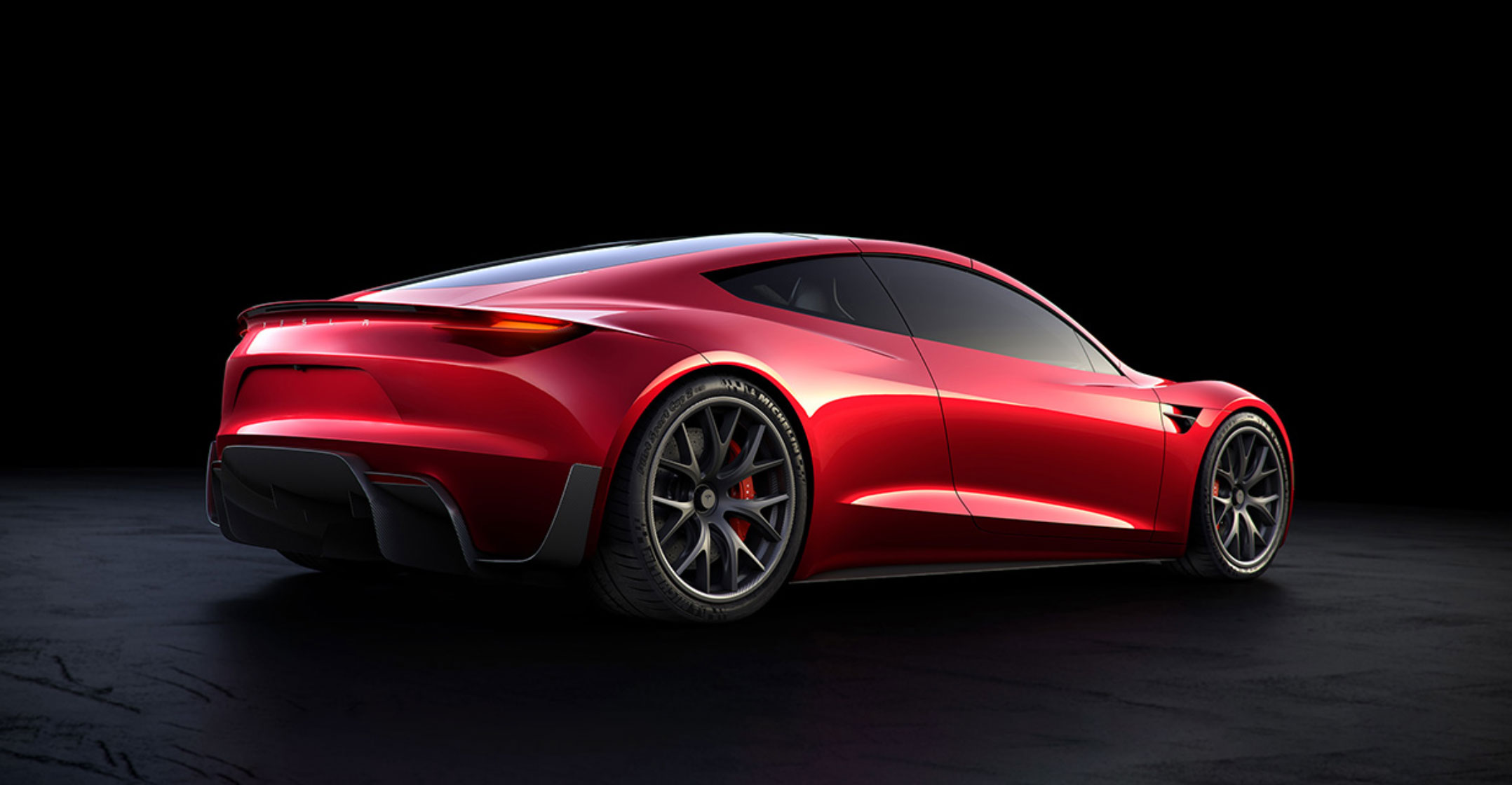
    Tesla’s new $200 000 Roadster EV

    Fuel cells were barely a footnote when VW CEO Matthias Mueller announced the group’s aggressive electrification strategy in September.

    By contrast, Toyota says its fervour for the technology it began developing in the early 1990s remains undiminished. Fuel-cell and battery-electric vehicles must be developed “at the same speed” because different parts of the world will favour different energy sources based on their specific needs, executive vice president Didier Leroy said in an interview at last month’s Tokyo Motor Show, where Toyota was the only Japanese car maker to display hydrogen-powered vehicles.

    “We know, for example, that the fuel cells in the Japanese society will be much more than just cars,” Leroy said. “In many other places in the world, it will be the same.”

    Japan has 91 hydrogen stations and is aiming for 160 by 2020 and 320 by 2025. But that’s against more than 28 000 charging points at the end of last year

    California is currently the main market for fuel-cell vehicles outside Japan, but has just 30 hydrogen stations. Efforts by Toyota and its partners to set up infrastructure on America’s east coast have been plagued by delays. By contrast, BNEF counted more than 44 000 charging points nationwide in 2016.

    Japan has 91 hydrogen stations and is aiming for 160 by 2020 and 320 by 2025. But that’s against more than 2  000 charging points at the end of last year, according to BNEF, whose analysts forecast the high costs and strict regulations governing hydrogen stations will mean the government can only meet 75% of its 2020 goal, and an even smaller proportion of its 2025 target.

    “Unlike lithium-ion batteries for electric vehicles, there is no existing parallel industry for fuel cells that accelerates the speed of cost reduction,” said BNEF analyst Ali Izadi-Najafabadi. “Fuel-cell vehicles will not achieve the same level of market penetration.”

    The gap is widening even as Toyota forges partnerships aimed at promoting fuel cells. One such global entity established at the start of this year, the Hydrogen Council, said this month that the lightest element could supply a fifth of worldwide energy needs by 2025.

    Fuel-cell proponents face a chicken-and-egg dilemma: increased infrastructure requires additional vehicles to support it, and vice versa.

    Poor sales

    Toyota, which leads FCV sales globally with the Mirai, has only shipped about 4 300 since its launch in late 2014. By contrast, Nissan has sold about 300 000 of the Leaf since 2010 and Tesla has delivered more than 250 000 electric vehicles since the first Roadster rolled out in 2008.

    The figures at other FCV makers are even starker: Honda has shipped fewer than 700 of the Clarity Fuel Cell since its debut last year, while Hyundai has moved about 900 of its Tucson Fuel Cell since 2013.

    Toyota has set a lofty goal of selling 30 000 FCVs annually by around 2020. Achieving that will need not just more infrastructure, but improvements to the Mirai itself, according to chief engineer Yoshikazu Tanaka. The list he gave echoed what Musk has done with his second-generation Roadster, which on top of a 1 000km range can go 0-100km/h in 1.9 seconds.

    Mirai cutaway showing the power control unit and the electric traction motor in the front, the fuel-cell stack and hydrogen storage tank in the middle, and the nickel–metal hydride rechargeable battery above in the rear. Image by Mario Roberto Durán Ortiz (CC BY-SA 4.0)

    First, the Mirai’s range of about 500km under US standards is “not nearly enough”, Tanaka said on the sidelines of a conference in Tokyo last month. The other is more abstract. “We don’t want people to buy the car just for its environmental credentials,” he said. “We have to make it cool.”

    Toyota chairman Takeshi Uchiyamada told Der Spiegel in an interview this month that Tesla is not the Japanese company’s “role model”, and that battery-electric vehicles with long ranges are both heavy and too expensive to be mass produced. The new Roadster will be available from 2020 with a base price of $200 000. “Such cars do not fit in our programme,” Uchiyamada said.

    Toyota’s immediate priority is to step up development of hydrogen-powered commercial vehicles

    In a management reshuffle involving some three dozen people announced Tuesday, Kiyotaka Ise, who heads advanced R&D including FCV and EV development, will become chief executive of group company Aisin Seiki, which makes parts including transmissions and suspensions. His current role will be taken by Shigeki Terashi, an executive vice president and chairman of Toyota’s in-house powertrain company. The changes are aimed at strengthening cooperation among group companies and boosting innovation, according to a statement.

    Toyota’s immediate priority is to step up development of hydrogen-powered commercial vehicles, which the company sees as encouraging new filling stations to service them because their largely predetermined routes guarantee revenue. Toyota sold a pair of fuel-cell buses to the Tokyo government at the start of this year, and plans to have about 100 on the road by 2020. It’s also developing a delivery truck for trials with convenience store 7-Eleven Japan from 2019. In California, it’s testing a semi-trailer truck.

    “In order to promote our fuel-cell vehicles, we need to promote hydrogen infrastructure,” Toyota senior managing officer Shigeki Tomoyama told reporters at an event to launch a hydrogen project near Tokyo Bay in July. “Commercial vehicles are extremely effective in doing that, so that’s what we want to make.”  — Reported by Kevin Buckland and Nao Sano, with assistance from Dana Hull, (c) 2017 Bloomberg LP



    Audi Honda Nissan top Toyota Volkswagen
    WhatsApp YouTube Follow on Google News Add as preferred source on Google
    Share. Facebook Twitter LinkedIn WhatsApp Telegram Email Copy Link
    Previous ArticleNaspers must commission MultiChoice probe
    Next Article ‘Not true’: Elon Musk denies he invented bitcoin

    Related Posts

    Watts & Wheels S1E3: 'BYD's Corolla Cross challenger'

    Watts & Wheels S1E2: ‘China attacks, BMW digs in, Toyota’s sublime supercar’

    23 January 2026
    Chery to take over Nissan's historic Rosslyn plant

    Chery to take over Nissan’s historic Rosslyn plant

    23 January 2026
    Watts & Wheels S1E3: 'BYD's Corolla Cross challenger'

    Watts & Wheels: S1E1 – ‘William, Prince of Wheels’

    8 January 2026
    Company News
    Huawei turns 25 in South Africa, celebrates with major device discounts

    Huawei turns 25 in South Africa, celebrates with major device discounts

    30 January 2026
    Phishing has not disappeared, but it has grown up - KnowBe4

    Phishing has not disappeared, but it has grown up

    30 January 2026
    Smartphone affordability: South Africa's new economic divide - PayJoy

    Smartphone affordability: South Africa’s new economic divide

    29 January 2026
    Opinion
    South Africa's skills advantage is being overlooked at home - Richard Firth

    South Africa’s skills advantage is being overlooked at home

    29 January 2026
    Why Elon Musk's Starlink is a 'hard no' for me - Songezo Zibi

    Why Elon Musk’s Starlink is a ‘hard no’ for me

    26 January 2026
    South Africa's new fibre broadband battle - Duncan McLeod

    South Africa’s new fibre broadband battle

    20 January 2026

    Subscribe to Updates

    Get the best South African technology news and analysis delivered to your e-mail inbox every morning.

    Latest Posts
    Vuyani Jarana: Mobile coverage masks a deeper broadband failure

    Vuyani Jarana: Mobile coverage masks a deeper broadband failure

    30 January 2026
    TCS+ | How Cloud On Demand is helping SA businesses succeed in the cloud - Xhenia Rhode, Dion Kalicharan

    TCS+ | Cloud On Demand and Consnet: inside a real-world AWS partner success story

    30 January 2026
    Huawei turns 25 in South Africa, celebrates with major device discounts

    Huawei turns 25 in South Africa, celebrates with major device discounts

    30 January 2026
    SABC Plus to flight Microsoft AI training videos

    SABC Plus to flight Microsoft AI training videos

    30 January 2026
    © 2009 - 2026 NewsCentral Media
    • Cookie policy (ZA)
    • TechCentral – privacy and Popia

    Type above and press Enter to search. Press Esc to cancel.

    Manage consent

    TechCentral uses cookies to enhance its offerings. Consenting to these technologies allows us to serve you better. Not consenting or withdrawing consent may adversely affect certain features and functions of the website.

    Functional Always active
    The technical storage or access is strictly necessary for the legitimate purpose of enabling the use of a specific service explicitly requested by the subscriber or user, or for the sole purpose of carrying out the transmission of a communication over an electronic communications network.
    Preferences
    The technical storage or access is necessary for the legitimate purpose of storing preferences that are not requested by the subscriber or user.
    Statistics
    The technical storage or access that is used exclusively for statistical purposes. The technical storage or access that is used exclusively for anonymous statistical purposes. Without a subpoena, voluntary compliance on the part of your Internet Service Provider, or additional records from a third party, information stored or retrieved for this purpose alone cannot usually be used to identify you.
    Marketing
    The technical storage or access is required to create user profiles to send advertising, or to track the user on a website or across several websites for similar marketing purposes.
    • Manage options
    • Manage services
    • Manage {vendor_count} vendors
    • Read more about these purposes
    View preferences
    • {title}
    • {title}
    • {title}