
Close Menu
TechCentralTechCentral

    Subscribe to the newsletter

    Get the best South African technology news and analysis delivered to your e-mail inbox every morning.

    Facebook X (Twitter) YouTube LinkedIn
    WhatsApp Facebook X (Twitter) LinkedIn YouTube
    TechCentralTechCentral
    • News
      Big win for South African innovation agency - Technology Innovation Agency CEO Titus Mathe

      R1.2-billion win for South African innovation agency

      9 June 2026
      Eskom Green to build 32GW of renewables by 2040 - Mteto Nyati - Mteto Nyati

      Eskom Green to build 32GW of renewables by 2040

      9 June 2026
      South Africa's EV sales nearly double - but the base is still tiny

      South Africa’s EV sales nearly double – but the base is still tiny

      9 June 2026
      MTN enlists Alipay owner to turn MoMo into a super app

      MTN enlists Alipay owner to turn MoMo into a super app

      9 June 2026
      The clock is ticking on South African banks' biggest advantage

      The clock is ticking on South African banks’ biggest advantage

      9 June 2026
    • World
      Meta declares war on Israeli spyware firm

      Meta declares war on Israeli spyware firm

      8 June 2026
      Meta takes on OpenAI and Anthropic in enterprise AI

      Meta takes on OpenAI and Anthropic in enterprise AI

      4 June 2026
      AI demand sparks 'chipflation' warning

      AI demand sparks ‘chipflation’ warning

      4 June 2026
      Astronomers discover exoplanets with magnetic fields

      Strange winds reveal magnetic fields on distant ‘hot Jupiters’

      2 June 2026
      AI giant Anthropic files for landmark US listing

      AI giant Anthropic files for landmark US listing

      1 June 2026
    • In-depth
      Every plug-in hybrid on sale in South Africa, ranked by price - Lamborghini Temerario

      Every plug-in hybrid on sale in South Africa, ranked by price

      7 June 2026
      What Wi-Fi 8 will mean for wireless networks

      What Wi-Fi 8 will mean for wireless networks

      1 June 2026
      Alfa's electric rebel - Alfa Romeo Junior Elettrica Veloce

      Alfa’s electric rebel

      29 April 2026
      Africa switches on as Europe dims the lights

      Africa switches on as Europe dims the lights

      9 April 2026
      The biggest untapped EV market on Earth is hiding in plain sight

      The biggest untapped EV market on Earth is hiding in plain sight

      1 April 2026
    • TCS
      Watts & Wheels S1E5: 'A Bentley of the bush and a car that swims'

      Watts & Wheels S1E5: ‘A Bentley of the bush and a car that swims’

      8 June 2026
      TCS | Charge's R1.8-billion bet on an off-grid EV future - Charge chairman Joubert Roux

      TCS | Charge’s R1.8-billion bet on an off-grid EV future

      18 May 2026
      TCS+ | The Up&Up Group on the hidden cost of AI - Jason Harrison

      TCS+ | The Up&Up Group on the hidden cost of AI

      13 May 2026
      Michael Rossouw

      TCS+ | The retirement decision most South Africans get wrong

      6 May 2026
      TCS | The Cape Town start-up listening for TB with AI - Braden van Breda

      TCS | The Cape Town start-up listening for TB with AI

      4 May 2026
    • Opinion

      Clashing judgments leave South Africa’s crypto law unsettled

      2 June 2026
      The author, Pambos Soteriades

      The trap inside South Africa’s banking MVNO boom

      1 June 2026
      The hidden cost of social media age bans is everyone's privacy - Petrus Potgieter

      The hidden cost of social media age bans is everyone’s privacy

      29 May 2026
      Treasury's crypto crackdown is a betrayal of Mandela's promise - Duncan McLeod

      Treasury’s crypto crackdown is a betrayal of Mandela’s promise

      22 May 2026
      South Africa is sleepwalking into another AI policy failure - Celeste Labuschagne

      South Africa is sleepwalking into another AI policy failure

      20 May 2026
    • Company Hubs
      • 1Stream
      • Africa Data Centres
      • AfriGIS
      • Altron Digital Business
      • Altron Document Solutions
      • Altron Group
      • Arctic Wolf
      • Ascent Technology
      • AvertITD
      • BBD
      • Braintree
      • CallMiner
      • CambriLearn
      • CM Telecom
      • Contactable
      • CYBER1 Solutions
      • Digicloud Africa
      • Digimune
      • Domains.co.za
      • ESET
      • Euphoria Telecom
      • HOSTAFRICA
      • Incredible Business
      • iONLINE
      • IQbusiness
      • Iris Network Systems
      • Kaspersky
      • LSD Open
      • Mitel
      • NEC XON
      • Netstar
      • Network Platforms
      • Next DLP
      • Ovations
      • Paracon
      • Paratus
      • Q-KON
      • SevenC
      • SkyWire
      • Solid8 Technologies
      • Telit Cinterion
      • Telviva
      • Tenable
      • Vertiv
      • Videri Digital
      • Vodacom Business
      • Wipro
      • Workday
      • XLink
    • Sections
      • AI and machine learning
      • Banking
      • Broadcasting and Media
      • Cloud services
      • Contact centres and CX
      • Cryptocurrencies
      • Education and skills
      • Electronics and hardware
      • Energy and sustainability
      • Enterprise software
      • Financial services
      • HealthTech
      • Information security
      • Internet and connectivity
      • Internet of Things
      • Investment
      • IT services
      • Lifestyle
      • Motoring
      • Policy and regulation
      • Public sector
      • Retail and e-commerce
      • Satellite communications
      • Science
      • SMEs and start-ups
      • Social media
      • Talent and leadership
      • Telecoms
    • Events
    • Advertise
    TechCentralTechCentral
    Home » Opinion » Duncan McLeod » Naspers must commission MultiChoice probe

    Naspers must commission MultiChoice probe

    By Duncan McLeod27 November 2017
    Twitter LinkedIn Facebook WhatsApp Email Telegram Copy Link
    News Alerts
    WhatsApp

    Naspers urgently needs to appoint an independent auditor or law firm to get to the bottom of the scandal now threatening to engulf its subsidiary, pay-television operator MultiChoice. If any evidence of malfeasance is found, executives’ heads need to roll.

    The mere suggestion that the DStv parent may have made payments to Gupta-owned 24-hour TV new channel ANN7 to influence government policy on encryption of digital terrestrial television signals requires an impartial investigation not dissimilar to the one launched by German software giant SAP into alleged kickbacks paid by its South African office to secure government contracts.

    MultiChoice has flatly denied any suggestion that it paid kickbacks or bribes to ANN7 to secure a change in policy on digital TV (or influence government broadcasting policy more broadly), but this is not good enough. If MultiChoice is innocent, as it claims (and which it may well be), it should welcome an independent probe.

    MultiChoice has flatly denied any suggestion that it paid kickbacks or bribes to ANN7 to secure a change in policy on digital TV

    News24 reported last week (courageously, as Anton Harber has pointed out) that MultiChoice made a “questionable payment” of R25m to ANN7. It uncovered the payment in the trove of so-called “Gupta Leaks” e-mails. The broadcaster also increased its annual payment for ANN7 from R50m to R141m, even though the news channel’s viewership numbers were tiny compared to its rivals, eNCA and SABC News, which are also carried on the DStv platform.

    The e-mails suggest that the Guptas assisted Faith Muthambi, the controversial former communications minister (who was suddenly elevated into the position in 2014 from a minor local government position), to transfer broadcasting powers to her office. This is after President Jacob Zuma unexpectedly split the old communications ministry in two after the 2014 election, firing the former minister – the respected Yunus Carrim – in the process.

    Muthambi reversed Carrim’s earlier stance on encryption (in which he sought unsuccessfully to find a middle ground between MultiChoice and e.tv, which were warring on the issue). Though I’d argue (and many disagree with me) that Muthambi’s decision was the correct one for the digital migration process and for the country, many industry role players questioned whether there were other factors at play when she made it. It seemed possible – likely even – that the old communications ministry was split in two in 2014, and Muthambi appointed, so she could rubber-stamp a decision on encryption made higher up the political chain.

    ANC policy position

    It must be remembered that the ANC policy position on the matter was in favour of encryption, so Muthambi was thumbing her nose at her own party. Why would she do that? It is unlikely in the extreme that she would have forced through the anti-encryption position that she did without political support from on high.

    At the heart of all of all of this is the years-long battle between MultiChoice and e.tv over the encryption of free-to-air terrestrial broadcasting signals for the digital migration project.

    In short, e.tv wanted (and still wants) encrypted signals, with “conditional access”, for digital broadcasts. The free-to-air broadcaster has long argued that it needed this to secure current and high-quality content from Hollywood and other producers.
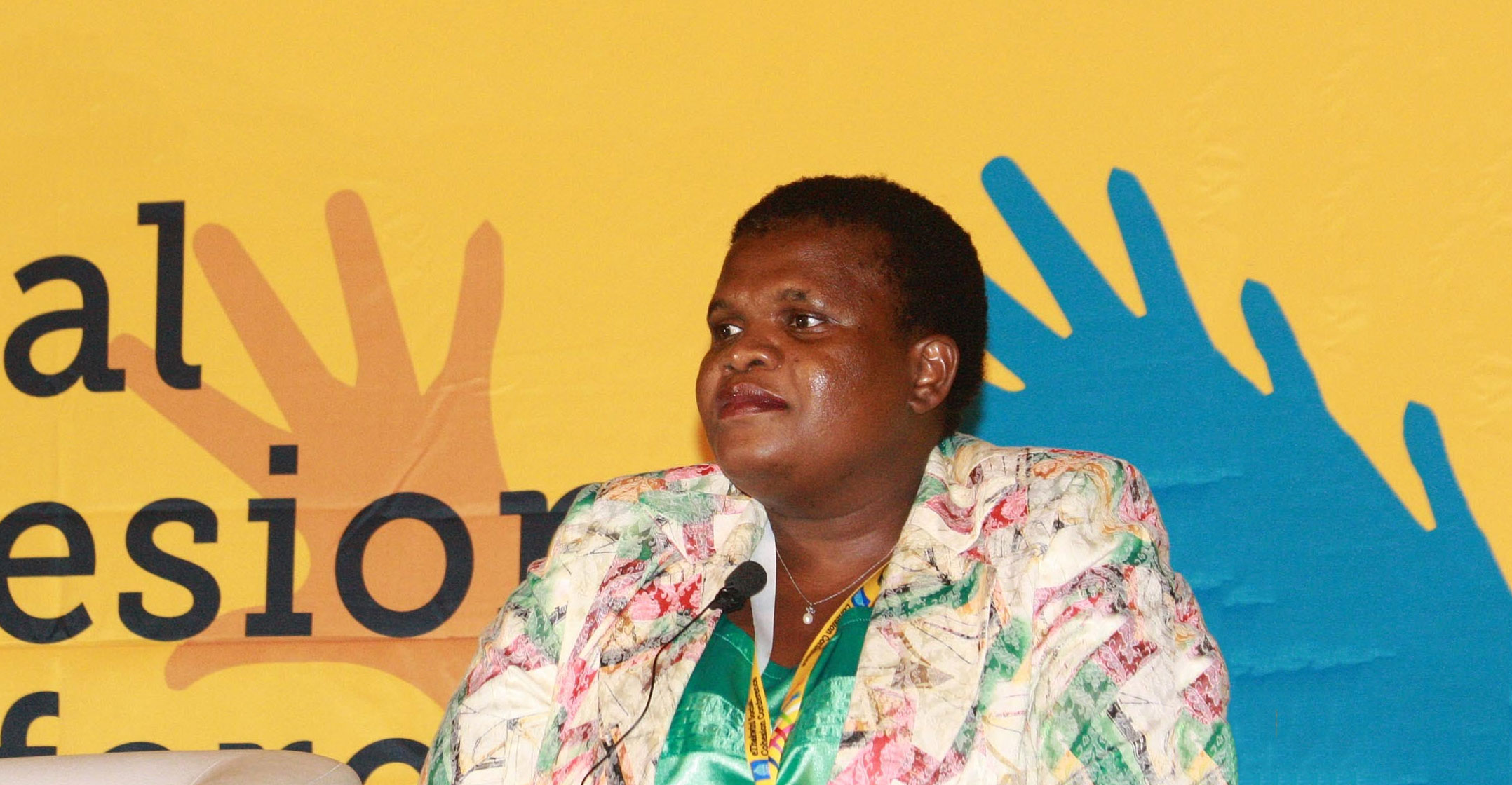
    Former communications minister Faith Muthambi

    But this may have been a red herring. Its argument doesn’t necessarily stand up to scrutiny, because digital set-top receivers all have a type of encryption in the form of high-bandwidth digital content protection. HDCP is the encryption mechanism used over HDMI cables (which connect the set-top box to a TV) to prevent unauthorised piracy of content. And this encryption was mandated by the South African Bureau of Standards in the set-top box certification. Encrypted signals and conditional access are typically used to stop people from pirate viewing of subscription services.

    MultiChoice, on the other hand, claimed e.tv wanted encrypted signals so government could effectively subsidise its future entry into pay TV. Government plans to give 5m free boxes to indigent households – with conditional access built in, this would be a perfect base on which to build a pay-TV platform without incurring the huge cost of deploying the boxes to consumers. E.tv has denied it had any intention of launching a pay-TV service on any of its platforms.

    There’s no doubt that there were (and still are) big egos at play in this fight, and neither e.tv nor MultiChoice were prepared to back down

    Encryption is typically used to scramble signals for pay-TV services, not free-to-air services. Very few countries encrypt terrestrial free-to-air broadcasts. The only example I’ve come across is Ukraine, but there may be one or two others; it’s certainly not the international norm.

    Critics of MultiChoice argued that the company is against encryption because this will entrench its near-monopoly in the pay-TV market. The counter argument is that MultiChoice has invested billions of rand building a strong position in the South African market, so why should prospective rivals be given a free ride on government’s coattails?

    There’s no doubt that there were (and still are) big egos at play in this fight, and neither e.tv nor MultiChoice were prepared to back down. The animosity was intense. There was powerful lobbying going on, and the high turnover of government ministers in the communications portfolio led to rampant indecision. Weaker ministers, like the disgraced Dina Pule, who was fired after being caught up in a corruption scandal, flip-flopped between the opposing sides.

    War

    But just how dirty did the war between e.tv and MultiChoice get? A leak in 2013 revealed that MultiChoice and the SABC struck a confidential five-year channel-supply deal (signed off by controversial former SABC executive Hlaudi Motsoeneng) that prohibited the public broadcaster from offering any of its channels over a free-to-air TV platform that used encryption. It was a strange clause to include in a channel-supply deal. E.tv said the contract directly contradicted government policy at the time on encryption. Was MultiChoice trying to engineer government policy through a commercial contract? It firmly denied this.

    Imtiaz Patel, at the time the CEO of MultiChoice South Africa Group (and since promoted to CEO of Naspers’s video entertainment unit), said there was nothing untoward about the agreement with the SABC and that e.tv was attempting to get the government to subsidise its plans to launch a pay-TV service to compete with DStv. Patel argued then that there was “no country in the world” that had used taxpayers’ money to introduce conditional access in digital terrestrial television, and that South Africa should follow international norms.

    Now, however, there are suggestions (unproven, it must be emphasised) emanating from the Gupta Leaks e-mails that MultiChoice may have played dirty in this fight – that there may have been inducements paid in an attempt to influence government policy.

    The question that needs to be answered is whether MultiChoice increased its payments to ANN7 (owned by the Guptas), including the R25m once-off payment, to, in effect, try to influence policy outcomes. It has strongly denied this.

    But a simple denial is not enough. Naspers must appoint an external auditor, or maybe a law firm or some other respected and independent investigatory body, to probe the allegations. It must have a wide mandate and unimpeded access to do its work. The stench now surrounding the ANN7 deal will not go away without it. It would allow MultiChoice the opportunity to clear its name.

    What next?

    What happens now to the digital migration project? There’s the not-insignificant matter of the subsidised set-top box programme, which has also become mired in allegations of corruption.

    At this late stage, it’s almost certainly best simply to shut it down (and write off the costs). South Africa was never never going to create a robust local electronics manufacturing industry on the back of the broadcasting digital migration project. Factories might have been spun up, and a few temporary jobs created, but they would then have been scaled back or closed once the government boxes had been sold. Set-top boxes were only ever meant to be a temporary solution for people with older TV models. Newer TVs would have integrated receivers, obviating the need for a set-top box.

    A better solution, at this late stage, may simply be to give identified indigent households vouchers and let them buy (government-approved) cheap imported boxes from China that conform to the South African Bureau of Standards’ specification.

    And, although many will disagree with me on this point, government should forget about encrypting the signals: it makes little sense and only benefits the set-top box makers. Worse, it harms consumers, who will be forced to use such boxes in perpetuity, and taxpayers, who have to foot the bill for price-inflated boxes. Prospective new pay-TV entrants should fund their own infrastructure, not rely on government largesse.  — (c) 2017 NewsCentral Media

    • Duncan McLeod is editor of TechCentral

    Follow TechCentral on Google News Add TechCentral as your preferred source on Google


    ANN7 Dina Pule DStv Duncan McLeod e.tv Faith Muthambi Imtiaz Patel MultiChoice top Yunus Carrim
    WhatsApp YouTube
    Share. Facebook Twitter LinkedIn WhatsApp Telegram Email Copy Link
    Previous ArticleScientists probing why matter exists could transform physics
    Next Article Hydrogen cars take a back seat to electric vehicles

    Related Posts

    Watts & Wheels S1E5: 'A Bentley of the bush and a car that swims'

    Watts & Wheels S1E5: ‘A Bentley of the bush and a car that swims’

    8 June 2026
    In South Africa, the bundle is the new battleground

    In South Africa, the bundle is the new battleground

    5 June 2026
    Canal+ doubles down on sport to defend DStv

    Canal+ doubles down on sport to defend DStv

    3 June 2026
    Company News
    Huawei nova 15 Max now available in South Africa

    Huawei nova 15 Max now available in South Africa

    9 June 2026
    Avert IT Distribution, AnyDesk create growth opportunities for African IT partners

    Avert IT Distribution, AnyDesk create growth opportunities for African IT partners

    9 June 2026
    South Africa's cloud reckoning: have your say

    South Africa’s cloud reckoning: have your say

    9 June 2026
    Opinion

    Clashing judgments leave South Africa’s crypto law unsettled

    2 June 2026
    The author, Pambos Soteriades

    The trap inside South Africa’s banking MVNO boom

    1 June 2026
    The hidden cost of social media age bans is everyone's privacy - Petrus Potgieter

    The hidden cost of social media age bans is everyone’s privacy

    29 May 2026

    Subscribe to Updates

    Get the best South African technology news and analysis delivered to your e-mail inbox every morning.

    Latest Posts
    Huawei nova 15 Max now available in South Africa

    Huawei nova 15 Max now available in South Africa

    9 June 2026
    Big win for South African innovation agency - Technology Innovation Agency CEO Titus Mathe

    R1.2-billion win for South African innovation agency

    9 June 2026
    Eskom Green to build 32GW of renewables by 2040 - Mteto Nyati - Mteto Nyati

    Eskom Green to build 32GW of renewables by 2040

    9 June 2026
    Avert IT Distribution, AnyDesk create growth opportunities for African IT partners

    Avert IT Distribution, AnyDesk create growth opportunities for African IT partners

    9 June 2026
    © 2009 - 2026 NewsCentral Media
    • Cookie policy (ZA)
    • TechCentral – privacy and Popia

    Type above and press Enter to search. Press Esc to cancel.

    Manage consent

    TechCentral uses cookies to enhance its offerings. Consenting to these technologies allows us to serve you better. Not consenting or withdrawing consent may adversely affect certain features and functions of the website.

    Functional Always active
    The technical storage or access is strictly necessary for the legitimate purpose of enabling the use of a specific service explicitly requested by the subscriber or user, or for the sole purpose of carrying out the transmission of a communication over an electronic communications network.
    Preferences
    The technical storage or access is necessary for the legitimate purpose of storing preferences that are not requested by the subscriber or user.
    Statistics
    The technical storage or access that is used exclusively for statistical purposes. The technical storage or access that is used exclusively for anonymous statistical purposes. Without a subpoena, voluntary compliance on the part of your Internet Service Provider, or additional records from a third party, information stored or retrieved for this purpose alone cannot usually be used to identify you.
    Marketing
    The technical storage or access is required to create user profiles to send advertising, or to track the user on a website or across several websites for similar marketing purposes.
    • Manage options
    • Manage services
    • Manage {vendor_count} vendors
    • Read more about these purposes
    View preferences
    • {title}
    • {title}
    • {title}