 Towards the end of last year, I finally bit the proverbial bullet. After much discussion about technology choices with Metrowatt and its CEO David Neale, I deployed solar at my home, a townhouse in Johannesburg’s northern suburbs.
In hindsight, I should have done it a lot earlier.
Load shedding is no longer a big factor in our lives at home, and that’s a gamechanger for anyone tired of sitting in the dark for hours on end. It’s so seamless that we now need an app – more on that later – to let us know when the power goes off and comes back on.
This article is an overview of the process I went through, the technology choices I made, the installation and what it involved, and why the deployment – with Neale’s egging on – led me to start a smart home project that turned out to be an exciting journey into a (very deep) rabbit hole.
Key learnings I have taken away from the experience of deploying solar include the following:
- It’s imperative to choose a reputable installer, like Metrowatt, that knows what it’s doing, particularly when it comes to tweaking and managing your chosen inverter system to allow for optimal energy production and consumption – this is critical; without it you’ll end up with poor solar and battery utilisation that doesn’t maximise your savings on grid power. Worse, you could be putting your home at risk of fire;
- You should not go completely off the grid, but still use the grid to supplement your system where needed. The upfront cost of going off-grid is simply unaffordable for most people – you’d need to spend a fortune on batteries and panels. Solar systems that supply between 50% and 80% of your electricity needs provide the best balance for most homes.
- Buy good-quality components – PV panels, inverters, batteries and even power cables. If you cut corners or skimp on any of these, your system will be suboptimal and will lead to frustration, and it even could end up costing you more in the long term.
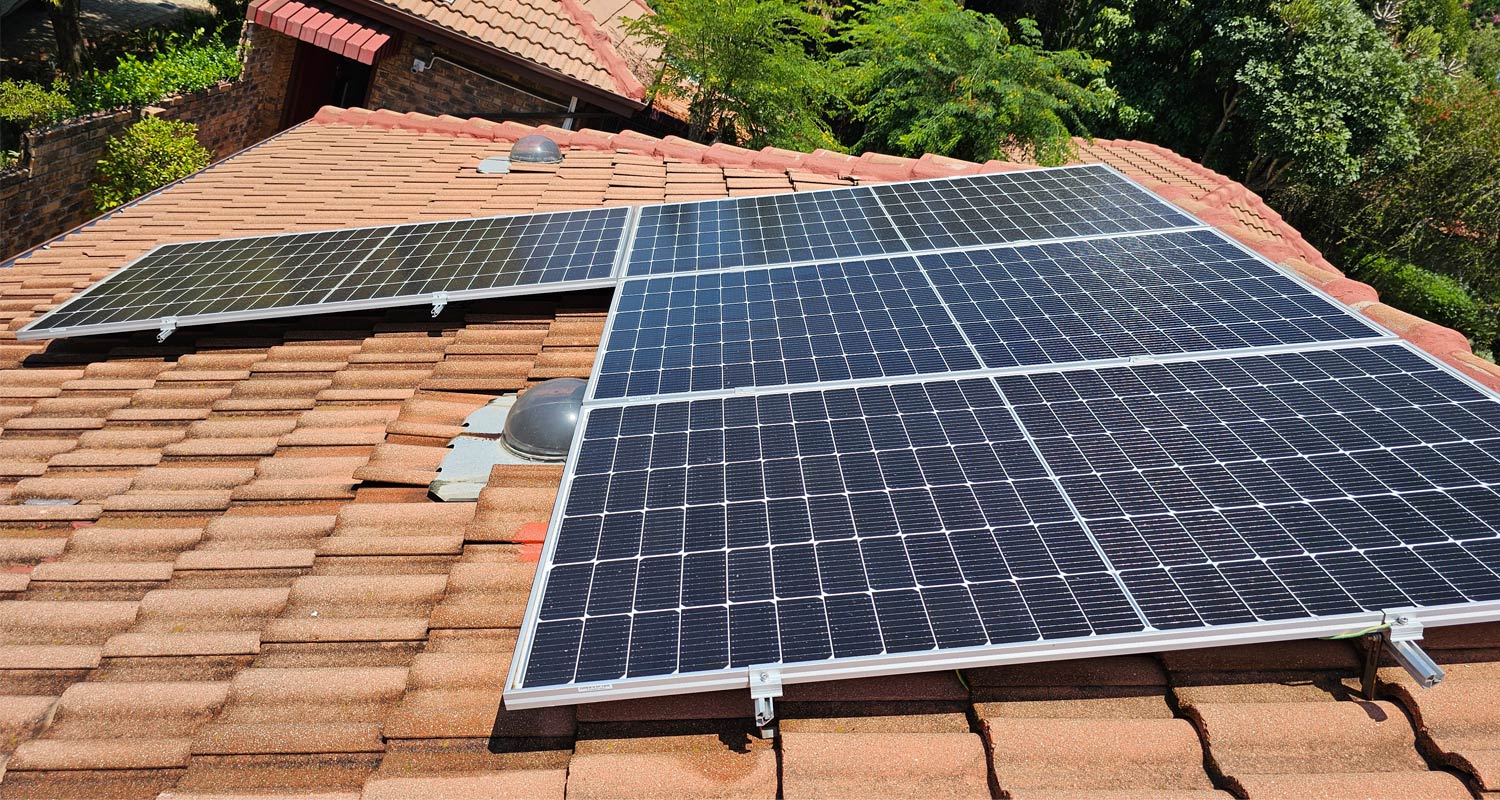
But let’s start at the beginning – how, as a consumer, I went about choosing – with Neale’s expert help – the right panels, inverter and battery system for our needs. We have a small home, with only two full-time occupants: my wife and me. Prior to the installation, our monthly bill was already a relatively low R2 500/month on average; it’s now less than R800/month.
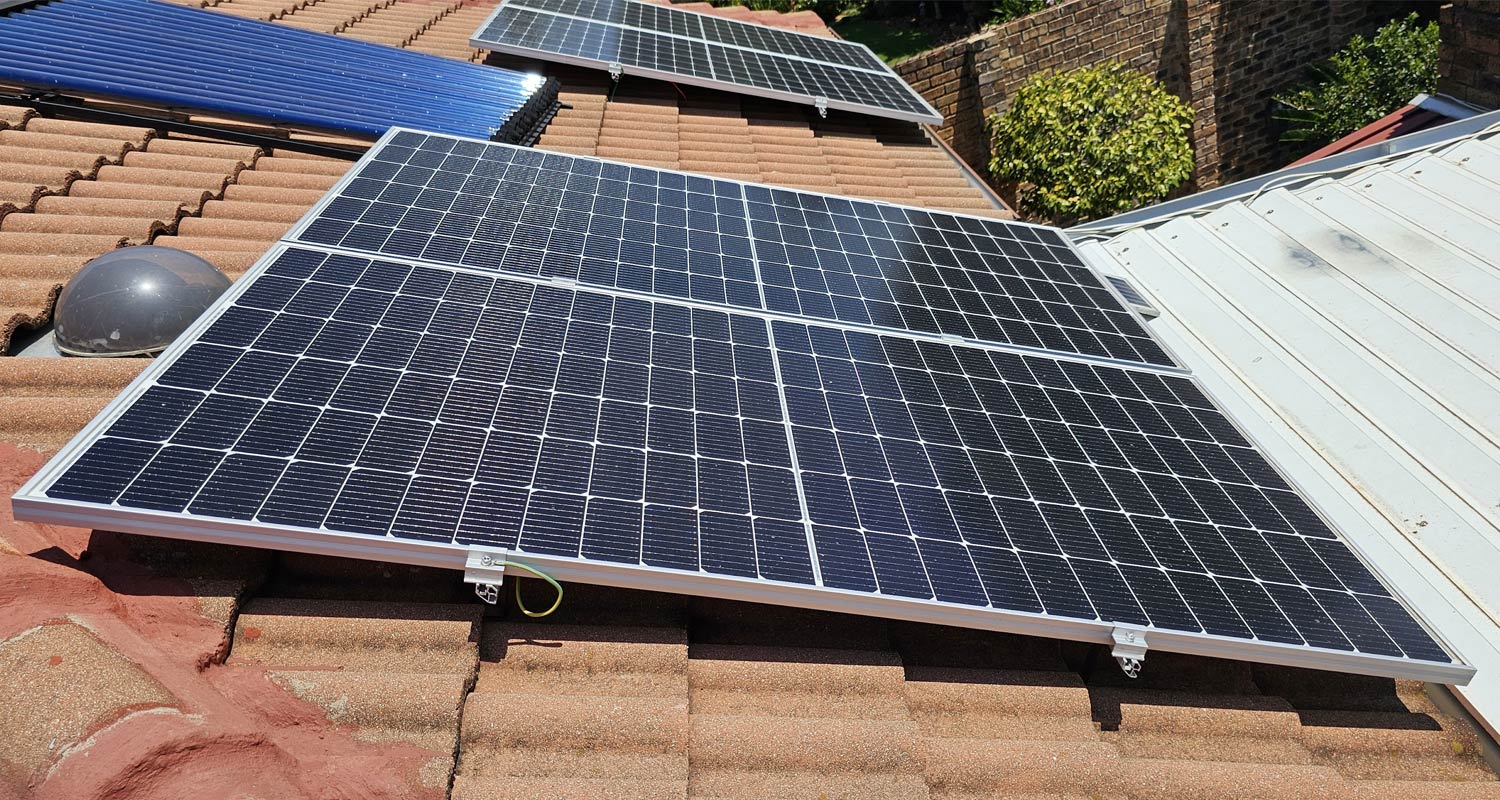
The panels – the least expensive part of any home solar system – were the easiest part of my decision-making process. I quickly settled on eight 460W panels from Canadian Solar, which, despite the company’s name, is a Chinese manufacturer of PV panels (almost all panels sold globally, from poor-quality options to high-end solutions, are made in China). Canadian Solar is a reputable manufacturer of good quality but affordable panels, and the brand came highly recommended by Metrowatt. There was no need for endless discussion on this – the decision was taken to go Canadian Solar and the 460W profile was selected to fit my roof spacing constraints.
Next up was choosing the right inverter. This was much more involved, but came down to these options, all available and supported locally: the Huawei Luna, the Huawei Power M, or a solution from SunSynk, a 5kW, 48V “hybrid” PV system with a Wi-Fi dongle for connectivity, remote management and (eventually) smart home integration.
After much deliberation, I chose the SunSynk.
According to Neale, the Huawei Luna is due for a significant upgrade in the coming months. But we didn’t have the luxury of time to wait for the upgraded system, so that left two options: Huawei’s Power M and the SunSynk.
The Power M is also, by all accounts, an excellent product, and because it’s relatively compact and runs almost silently, it’s a good option for apartment living.
Power M vs SunSynk
Huawei, which actively markets and supports the Power M system as a solution for load shedding in South Africa, describes it as a “versatile and efficient hybrid power solution that seamlessly integrates grid, solar, distributed generation and battery power sources” and is “designed specifically for off-grid and unreliable grid areas as it provides a reliable and stable backup power supply for various settings, including residences, apartments and more”.
It offers a modular design, too, allowing owners to “start small and scale up”, as required – it scales from 5kWh to 15kWh and three inverters can be installed in parallel (great even for sprawling homes) – and appears to be an excellent solution for many South African homeowners.
Like the Luna, it also allows for 100% depth of discharge from its battery without worrying about excessive degradation of the cells.
Read: Cape Town to pay homeowners for their excess solar
The output of the Power M is, however, limited to 2.5kW in its most basic configuration, despite being a 5kW inverter (so-called “half C” in the industry parlance). In its entry-level configuration, it’s better suited for non-demanding home environments like apartments. Still, it’s a great option worth considering if you are going solar (and even if you’re not). Also, you can get around the 2.5kW limitation by installing a second 5kWh battery – but that obviously comes at an additional cost (R30 000 at the time of writing).
The Power M had one other drawback that made it unsuitable for my installation: it has only one MPPT (“maximum power point tracking”), meaning it can control only one string of panels, all pointing in the same direction. Because of space constraints on our roof, we had install the panels facing two directions, and hence had to use two strings.
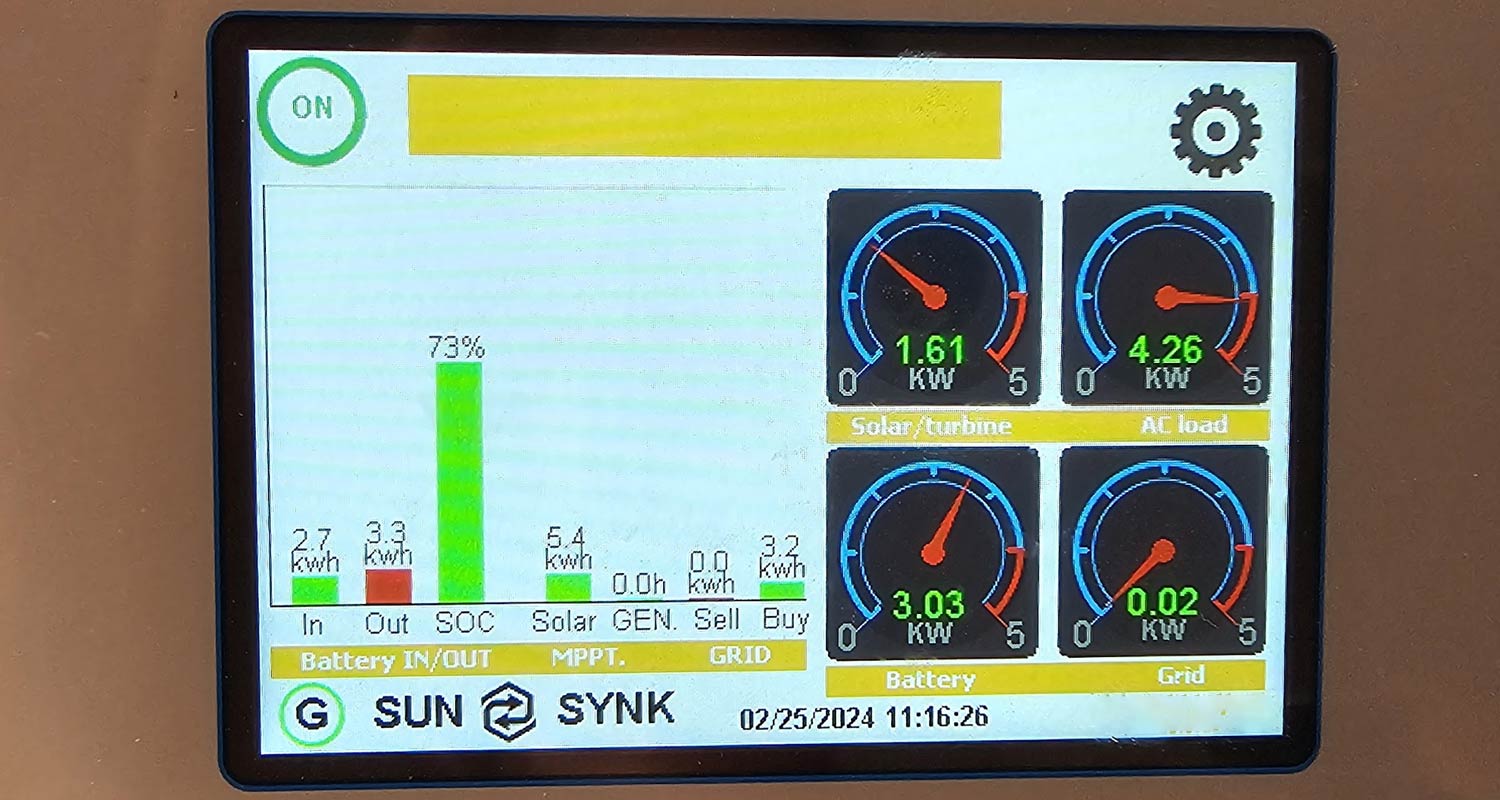
So, after much deliberation and discussion with Neale, I eventually settled on the SunSynk 5kW full hybrid inverter (coupled with a 5.3kWh SunSynk lithium-ion battery pack), and two strings of PV made up of four Canadian Solar 460W panels each (for a total of eight). In short, this seemed best suited for my environment – especially since it could output the full 5kW when needed – but your requirements may be quite different to mine.
The SunSynk also cuts over to battery backup much faster when the grid supply ends – typically less than 20ms, short enough that I don’t even notice the lights flickering.
And having the full 5kW available from the inverter is useful if we’re watching TV, playing console games in another room, and running the washing machine and dishwasher all at the same time, as we sometimes do at weekends.
By the way, a hybrid inverter (as opposed to a backup inverter, which functions more like a UPS) allows you to utilise solar power generation before tapping into grid power to ensure maximum savings on your utility bill.
The choice for the SunSynk solution made, the next job was deciding what not to connect to the backup system during load shedding, and in our home that was our 3.5kW oven (a hybrid DeLonghi with electric oven and gas hob) and our 3kW geyser. Since getting an air fryer two years ago, we very rarely use the oven anymore anyway, and drawing power from the backup system for the geyser made little sense. Perhaps we’d have considered it if we had two 5.3kWh batteries, but the added expense didn’t make sense, especially since we have a solar tube water-heating system installed on the roof already, which pipes sun-heated water into our existing but retrofitted in-ceiling geyser. (Even with the solar geyser, it should be noted that the geyser will still “top up” using electricity – including from the solar panels – when needed.)
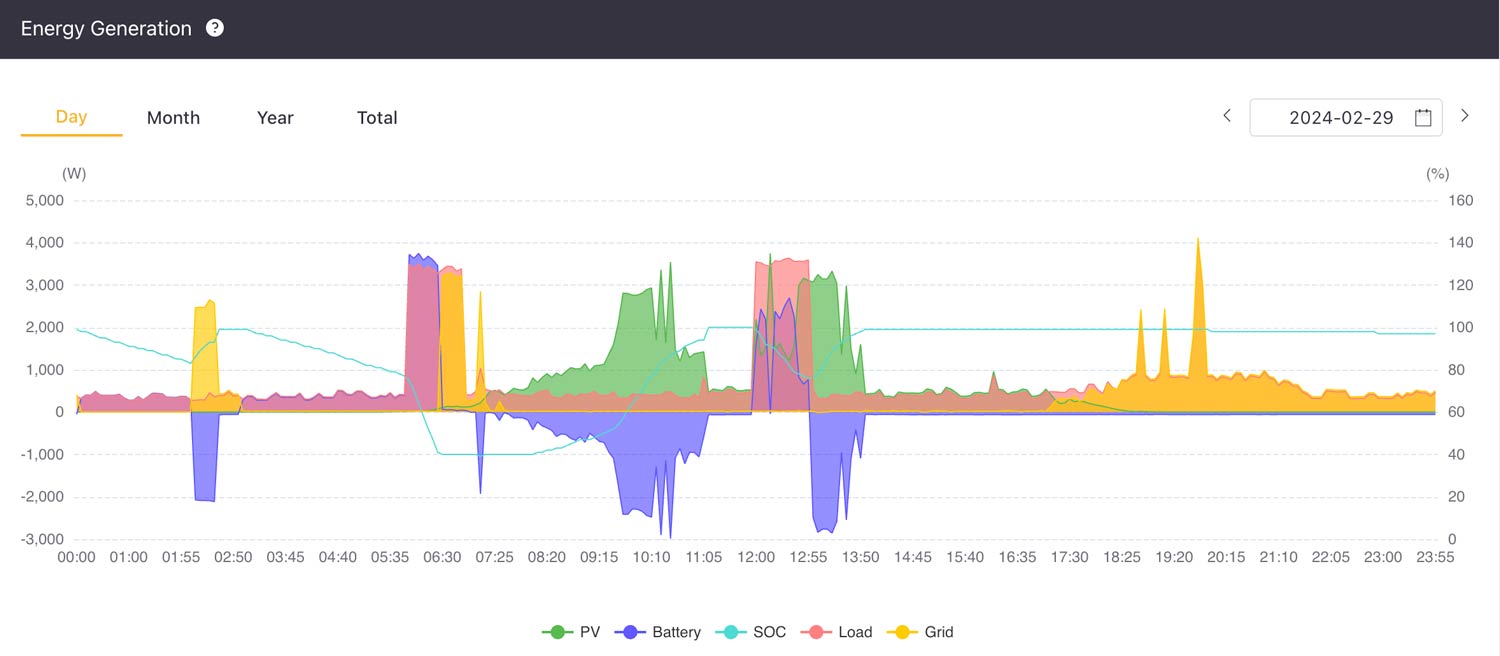
During the day, when the sun is shining brightly and solar production is maximised (it easily reaches more than 3kW), we have no qualms about using multiple appliances at the same time – dishwasher, washing machine and kettle, for example – and have only once experienced a trip from overloading the system during load shedding in the three months it’s been operational.
The SunSynk inverter is also designed to push electricity back into the grid, but City Power – Johannesburg’s electricity supply utility – is not yet practically ready to support this properly. But it’s worth considering getting a system that does allow for it, especially as it could further reduce your electricity bill down the line through earnings through a feed-in tariff. When City Power offers homeowners this tariff and properly develops the rules governing feed-in, all that will be needed is a simple modification to the inverter, according to Metrowatt’s Neale. He explained that although City Power has a set tariff structure for feed-in, it’s not yet practicably allowing residents to feed power back into the grid.
Don’t decide on price alone
Many South Africans looking to go solar have been – or will be – tempted to go with the cheapest solution, often supplied by a friend of a friend, or from a member of the so-called “bakkie brigade” – usually electricians of varying ability who have pivoted their businesses into solar. But it’s not advisable simply to go for the cheapest option you can find – you’ll end up with inferior parts, or worse, you’ll have a system that might short-circuit or even cause a devastating fire. These systems have many complex components, and you must hire someone who knows what they’re doing.
Neale said there are up to 160 items in any solar installation that must be checked thoroughly to ensure a safe system that isn’t prone to problems, including fire. Too often, the person doing the installation work is associated with – or even works alongside – the person doing the certificate of compliance. “There is something fundamentally wrong about that. It’s like marking your own homework,” he said.
Read: Solar in South Africa is growing at an astonishing rate
For example, some inexperienced installers might use pliers instead of a specialised crimper to connect power cables to the solar panels, which is fine for normal electrical work but not for the high voltages produced by the panels, and this can lead to arcing and sparking, causing a fire risk. Also, the entire subframe of the panels must be earthed, and there needs to be a sufficient gap between the panel and the roof to prevent dead foliage from accumulating and potentially causing problems. “If you skimp anywhere, make sure it’s not on the panels or panel structures,” Neale advised me.
…article continues below…
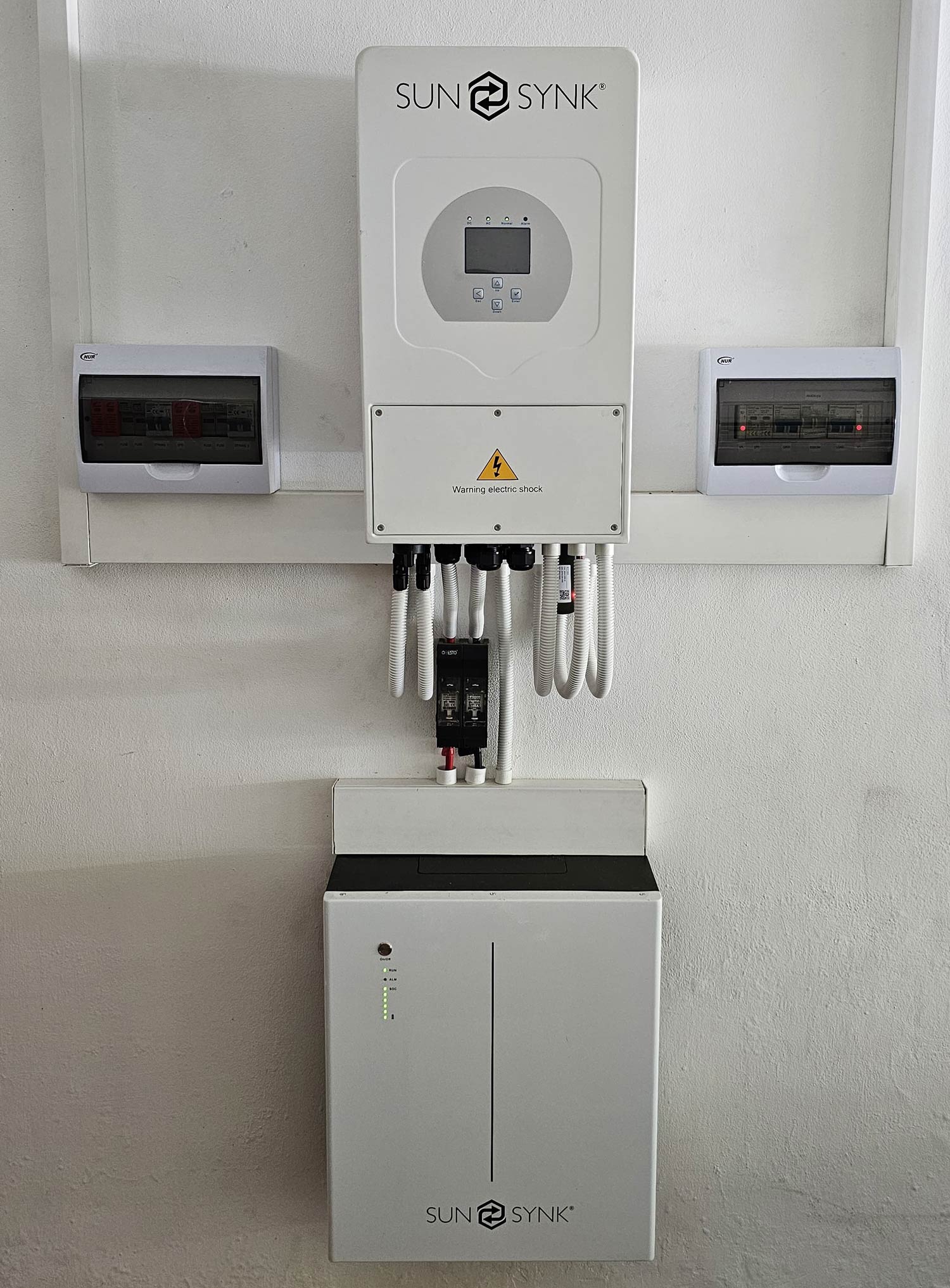
Once the system is fully installed (it took a day plus another morning), it’s by no means the end of the story. Next, our brand new SunSynk inverter – installed in our garage – had to be optimised (programmed) to ensure it was being run as energy efficiently as possible. This is generally best left to the installer, in my case Metrowatt. The work they did included:
- Determining when to draw from the battery, and when to use the grid. We charge our battery up from solar, use the grid to maintain a full battery going into the evening, and then deplete some of that charge overnight (down to 40%, though I’m thinking of reducing that a little further, perhaps to 30%). During the day, unless it’s heavily overcast, the house runs on solar power only – and we try to ensure we don’t run appliances such as the dishwasher, vacuum cleaner or washing machine when the sun isn’t shining, purely to reduce our utility bill.
- Installing an internet-connected smart geyser timer (mine’s made by Sonoff, via Metrowatt), that allows me to set the geyser to come on at certain times of the day only. Currently, ours is set to come on at 5.45am, and to switch off before we bath or shower in the morning. It then stays off until midday, when we “peak” it for up to an hour (it draws from the solar system – rarely the grid – and rarely for long on sunny days given the solar tubes are also pumping hot water. Otherwise, the geyser is now kept switched off. I may be able to optimise this further, but our utility bill has already plummeted by more than two-thirds, with the system expected to offer a payback in five years through energy savings (and that’s not factoring in Eskom tariff increases or the possibility of further savings through a future feed-in tariff).
So, in short, the system works flawlessly, we no longer suffer from load shedding-induced anxiety, and we simply carry on as if Eskom’s problems don’t exist. It’s truly a gamechanger, and with the wide range of payment options now available from solar providers like Metrowatt and many others, these solutions are accessible and affordable to millions of homeowners.
Smart home
Interestingly, the solar installation – and specifically the smart geyser timer – also triggered a personal interest in smart home technology, which I’d read about but never explored in any sort of detail. With a stable power supply, I started to wonder what else, other than the geyser timer, I could connect to help me reduce our power bill.
That exploratory work expanded to the point where I have now deployed open-source server software called Home Assistant on a Raspberry Pi, which controls our smart home. This journey is worth an article on its own, and I will pen one later this year (once I have my head fully around it all). In short, though, I have:
- Replaced my light switches with Sonoff smart switches, which can be turned on or off remotely using an app or voice control via a smart speaker (I use Alexa on a Sonos Era 300, but plan to deploy Home Assistant’s own voice assistant soon – mainly because I don’t think a Big Tech company should have that amount of information about what’s happening in my home).
- Deployed smart motion sensors that automatically switch lights on when someone enters a room (during specified evening hours only) or off when no motion has been detected for a set period (usually two or three minutes).
- Set up a smart weather station that records the temperature and humidity in a log file and sends me an alert if the temperature exceeds 35 degrees or drops below zero – I am a bit of a weather geek, and a smart, self-emptying rain gauge is next on my shopping list. I’ve also installed a temperature sensor in the kitchen fridge to alert me if there is a variance that could suggest a problem with the thermostat.
- Deployed a Sonoff smart doorbell, connected to a Zigbee bridge, that, when pressed, instantly sends my wife and I a message on our phones via a shared Telegram group (using the IFTTT, or “IF This Then That” app) and announces there’s someone at the door on the centrally located Era 300 smart speaker. (This took quite some work.)
- An IFTTT routine, connected via a tool called Voice Monkey, to announce on the Era 300, via Alexa, when load shedding starts or ends (again, only during specified hours – programmed using a bit of “filter code” in IFTTT).
There’s more I’ve done besides this, and I’m still exploring many new possibilities – and have yet to delve deeply into the guts of Home Assistant. The plan next is to hook up a Raspberry Pi to the SunSynk inverter and install software called Solar Assistant that integrates tightly with Home Assistant and provides additional analytics regarding the solar installation, along with the ability to tweak the system remotely.
Read: Shift to solar a big threat to South Africa’s municipalities
Keep an eye on TechCentral later this year for a detailed article about my smart home adventures, but if you’re tech-savvy and have a geeky bent like me (and have solar – this stuff isn’t energy-sapping but really needs a constant supply of power), I highly recommend diving into this particular rabbit hole head-first. You won’t regret it. — (c) 2024 NewsCentral Media
- Duncan McLeod is editor of TechCentral