Close Menu
TechCentralTechCentral

    Subscribe to the newsletter

    Get the best South African technology news and analysis delivered to your e-mail inbox every morning.

    Facebook X (Twitter) YouTube LinkedIn
    WhatsApp Facebook X (Twitter) LinkedIn YouTube
    TechCentralTechCentral
    • News
      Big Microsoft 365 price increases coming next year

      Big Microsoft price increases coming next year

      5 December 2025
      Vodacom to take control of Safaricom in R36-billion deal - Shameel Joosub

      Vodacom to take control of Safaricom in R36-billion deal

      4 December 2025
      Black Friday goes digital in South Africa as online spending surges to record high

      Black Friday goes digital in South Africa as online spending surges to record high

      4 December 2025
      BYD takes direct aim at Toyota with launch of sub-R500 000 Sealion 5 PHEV

      BYD takes direct aim at Toyota with launch of sub-R500 000 Sealion 5 PHEV

      4 December 2025
      'Get it now': Takealot in new instant deliveries pilot

      ‘Get it now’: Takealot in new instant deliveries pilot

      4 December 2025
    • World
      Amazon and Google launch multi-cloud service for faster connectivity

      Amazon and Google launch multi-cloud service for faster connectivity

      1 December 2025
      Google makes final court plea to stop US breakup

      Google makes final court plea to stop US breakup

      21 November 2025
      Bezos unveils monster rocket: New Glenn 9x4 set to dwarf Saturn V

      Bezos unveils monster rocket: New Glenn 9×4 set to dwarf Saturn V

      21 November 2025
      Tech shares turbocharged by Nvidia's stellar earnings

      Tech shares turbocharged by stellar Nvidia earnings

      20 November 2025
      Config file blamed for Cloudflare meltdown that disrupted the web

      Config file blamed for Cloudflare meltdown that disrupted the web

      19 November 2025
    • In-depth
      Jensen Huang Nvidia

      So, will China really win the AI race?

      14 November 2025
      Valve's Linux console takes aim at Microsoft's gaming empire

      Valve’s Linux console takes aim at Microsoft’s gaming empire

      13 November 2025
      iOCO's extraordinary comeback plan - Rhys Summerton

      iOCO’s extraordinary comeback plan

      28 October 2025
      Why smart glasses keep failing - no, it's not the tech - Mark Zuckerberg

      Why smart glasses keep failing – it’s not the tech

      19 October 2025
      BYD to blanket South Africa with megawatt-scale EV charging network - Stella Li

      BYD to blanket South Africa with megawatt-scale EV charging network

      16 October 2025
    • TCS
      TCS+ | How Cloud on Demand helps partners thrive in the AWS ecosystem - Odwa Ndyaluvane and Xenia Rhode

      TCS+ | How Cloud On Demand helps partners thrive in the AWS ecosystem

      4 December 2025
      TCS | MTN Group CEO Ralph Mupita on competition, AI and the future of mobile

      TCS | Ralph Mupita on competition, AI and the future of mobile

      28 November 2025
      TCS | Dominic Cull on fixing South Africa's ICT policy bottlenecks

      TCS | Dominic Cull on fixing South Africa’s ICT policy bottlenecks

      21 November 2025
      TCS | BMW CEO Peter van Binsbergen on the future of South Africa's automotive industry

      TCS | BMW CEO Peter van Binsbergen on the future of South Africa’s automotive industry

      6 November 2025
      TCS | Why Altron is building an AI factory - Bongani Andy Mabaso

      TCS | Why Altron is building an AI factory in Johannesburg

      28 October 2025
    • Opinion
      Your data, your hardware: the DIY AI revolution is coming - Duncan McLeod

      Your data, your hardware: the DIY AI revolution is coming

      20 November 2025
      Zero Carbon Charge founder Joubert Roux

      The energy revolution South Africa can’t afford to miss

      20 November 2025
      It's time for a new approach to government IT spend in South Africa - Richard Firth

      It’s time for a new approach to government IT spend in South Africa

      19 November 2025
      How South Africa's broken Rica system fuels murder and mayhem - Farhad Khan

      How South Africa’s broken Rica system fuels murder and mayhem

      10 November 2025
      South Africa's AI data centre boom risks overloading a fragile grid - Paul Colmer

      South Africa’s AI data centre boom risks overloading a fragile grid

      30 October 2025
    • Company Hubs
      • Africa Data Centres
      • AfriGIS
      • Altron Digital Business
      • Altron Document Solutions
      • Altron Group
      • Arctic Wolf
      • AvertITD
      • Braintree
      • CallMiner
      • CambriLearn
      • CYBER1 Solutions
      • Digicloud Africa
      • Digimune
      • Domains.co.za
      • ESET
      • Euphoria Telecom
      • Incredible Business
      • iONLINE
      • IQbusiness
      • Iris Network Systems
      • LSD Open
      • NEC XON
      • Netstar
      • Network Platforms
      • Next DLP
      • Ovations
      • Paracon
      • Paratus
      • Q-KON
      • SevenC
      • SkyWire
      • Solid8 Technologies
      • Telit Cinterion
      • Tenable
      • Vertiv
      • Videri Digital
      • Vodacom Business
      • Wipro
      • Workday
      • XLink
    • Sections
      • AI and machine learning
      • Banking
      • Broadcasting and Media
      • Cloud services
      • Contact centres and CX
      • Cryptocurrencies
      • Education and skills
      • Electronics and hardware
      • Energy and sustainability
      • Enterprise software
      • Financial services
      • Information security
      • Internet and connectivity
      • Internet of Things
      • Investment
      • IT services
      • Lifestyle
      • Motoring
      • Public sector
      • Retail and e-commerce
      • Satellite communications
      • Science
      • SMEs and start-ups
      • Social media
      • Talent and leadership
      • Telecoms
    • Events
    • Advertise
    TechCentralTechCentral
    Home » Editor's pick » If Elon Musk is a Luddite, count me in

    If Elon Musk is a Luddite, count me in

    By The Conversation29 December 2015
    Twitter LinkedIn Facebook WhatsApp Email Telegram Copy Link
    News Alerts
    WhatsApp
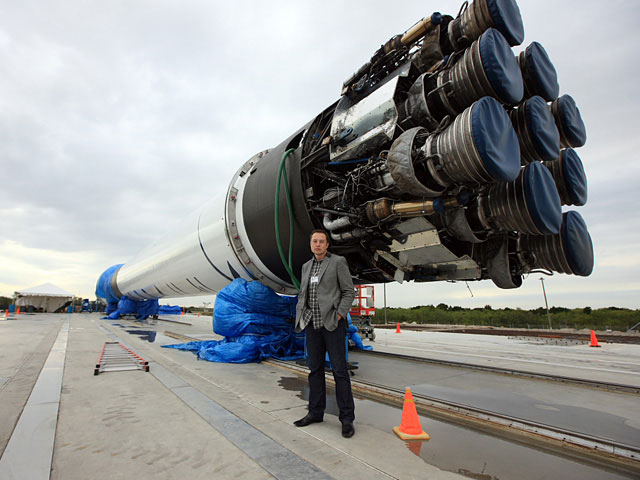
    Elon Musk (photo by OnInnovation)
    Elon Musk (photo by OnInnovation)

    On 21 December, SpaceX made history by successfully launching a rocket and returning it to a safe landing on Earth. It’s also the day that SpaceX founder Elon Musk was nominated for a Luddite Award.

    The nomination came as part of a campaign by the Information Technology & Innovation Foundation (ITIF), a leading science and technology policy think tank, to call out the “worst of the year’s worst innovation killers.”

    It’s an odd juxtaposition, to say the least.

    The Luddite Awards — named after an 18th century English worker who inspired a backlash against the industrial revolution — highlight what ITIF refers to as “egregious cases of neo-Luddism in action.”

    Musk, of course, is hardly a shrinking violet when it comes to promoting technology innovation. Whether it’s self-driving cars, reusable commercial rockets or the futuristic “hyperloop”, he’s not known for being a tech party pooper.

    So what’s the deal?

    ITIF, as it turns out, took exception to Musk’s concerns over the potential dangers of artificial intelligence (AI) — along with those other well-known “neo-Luddites”, Stephen Hawking and Bill Gates.

    ITIF is right to highlight the importance of technology innovation as an engine for growth and prosperity. But what it misses by a mile is the importance of innovating responsibly.
    Back in 2002, the European Environment Agency published its report Late Lessons from Early Warnings. The report — and its 2013 follow-on publication — catalogues innovations, from PCBs to the use of asbestos, that damaged lives and environments because early warnings of possible harm were either ignored or overlooked.

    This is a picture that is all too familiar these days as we grapple with the consequences of unfettered innovation — whether it’s climate change, environmental pollution or the health impacts of industrial chemicals.

    Things get even more complex, though, with emerging technologies like AI, robotics and the “Internet of things”. With these and other innovations, it’s increasingly unclear what future risks and benefits lie over the horizon — especially when they begin to converge.

    This confluence — the “fourth industrial revolution” as it’s being called by some — is generating remarkable opportunities for economic growth. But it’s also raising concerns.

    Klaus Schwab, Founder of the World Economic Forum and an advocate of the new “revolution,” writes “the [fourth industrial] revolution could yield greater inequality, particularly in its potential to disrupt labour markets. As automation substitutes for labour across the entire economy, the net displacement of workers by machines might exacerbate the gap between returns to capital and returns to labour.”

    Schwab is, by any accounting, a technology optimist. Yet he recognises the social and economic complexities of innovation, and the need to act responsibly if we are to see a societal return on our techno-investment.

    Of course, every generation has had to grapple with the consequences of innovation. And it’s easy to argue that past inventions have led to a better present — especially if you’re privileged and well off. Yet our generation faces unprecedented technology innovation challenges that simply cannot be brushed off by assuming business as normal.

    For the first time in human history, for instance, we can design and engineer the stuff around us at the level of the very atoms it’s made of. We can redesign and reprogram the DNA at the core of every living organism. We can aspire to creating artificial systems that are a match for human intelligence. And we can connect ideas, people and devices together faster and with more complexity than ever before.

    Innovating responsibly
    This explosion of technological capabilities offers unparalleled opportunities for fighting disease, improving well-being and eradicating inequalities. But it’s also fraught with dangers. And like any complex system, it’s likely to look great … right up to the moment it fails.

    Because of this, an increasing number of people and organisations are exploring how we as a society can avoid future disasters by innovating responsibly. It’s part of the reasoning behind why Arizona State University launched the new School for the Future of Innovation in Society earlier this year, where I teach. And it’s the motivation behind Europe’s commitment to Responsible Research and Innovation.

    Far from being a neo-Luddite movement, people the world over are starting to ask how we can proactively innovate to improve lives, and not simply innovate in the hope that things will work out okay in the end.

    This includes some of the world’s most august scientific bodies. In December, for instance, the US National Academy of Sciences, the Chinese Academy of Sciences and the UK’s Royal Society jointly convened a global summit on human gene editing. At stake was the responsible development and use of techniques that enable the human genome to be redesigned and passed on to future generations.

    In a joint statement, the summit organisers recommended: “It would be irresponsible to proceed with any clinical use of germline editing unless and until (i) the relevant safety and efficacy issues have been resolved, based on appropriate understanding and balancing of risks, potential benefits, and alternatives, and (ii) there is broad societal consensus about the appropriateness of the proposed application.”

    Neo-Luddites? Or simply responsible scientists? I’d go for the latter.

    If innovation is to serve society’s needs, we need to ask tough questions about what the consequences might be, and how we might do things differently to avoid mistakes. And rather than deserving the label “neo-Luddite”, Musk and others should be applauded for asking what could go wrong with technology innovation, and thinking about how to avoid it.

    That said, if anything, they sometimes don’t go far enough. Musk’s answer to his AI fears, for instance, was to launch an open AI initiative — in effect, accelerating the development of AI in the hopes that the more people are involved, the more responsible it’ll be.

    It’s certainly a novel approach — and one that seriously calls into question ITIF’s Luddite label. But it still adheres to the belief that the answer to technology innovation is … more technology innovation.

    The bottom line is that innovation that improves the lives and livelihoods of all — not just the privileged — demands a willingness to ask questions, challenge assumptions and work across boundaries to build a better society.

    If that’s what it means to be a Luddite, count me in.The Conversation

    • Andrew Maynard is director, Risk Innovation Lab, Arizona State University
    • This article was originally published on The Conversation


    Andrew Maynard Bill Gates Elon Musk Information Technology & Innovation Foundation ITIF Klaus Schwab SpaceX Stephen Hawking World Economic Forum
    Subscribe to TechCentral Subscribe to TechCentral
    Share. Facebook Twitter LinkedIn WhatsApp Telegram Email Copy Link
    Previous ArticleMost pirated TV shows of 2015
    Next Article Hollywood faces Internet piracy nightmare

    Related Posts

    Bezos unveils monster rocket: New Glenn 9x4 set to dwarf Saturn V

    Bezos unveils monster rocket: New Glenn 9×4 set to dwarf Saturn V

    21 November 2025
    Starlink risks ceding ground to rivals in South Africa amid licensing battle - Dominic Cull

    Starlink risks ceding ground to rivals in South Africa amid licensing battle

    17 November 2025
    Kuiper no more: Amazon Leo steps up to challenge to Musk's Starlink

    Kuiper no more: Amazon Leo steps up to challenge Musk’s Starlink

    14 November 2025
    Company News
    AI is not a technology problem - iqbusiness

    AI is not a technology problem – iqbusiness

    5 December 2025
    Telcos are sitting on a data gold mine - but few know what do with it - Phillip du Plessis

    Telcos are sitting on a data gold mine – but few know what do with it

    4 December 2025
    Unlock smarter computing with your surface Copilot+ PC

    Unlock smarter computing with your Surface Copilot+ PC

    4 December 2025
    Opinion
    Your data, your hardware: the DIY AI revolution is coming - Duncan McLeod

    Your data, your hardware: the DIY AI revolution is coming

    20 November 2025
    Zero Carbon Charge founder Joubert Roux

    The energy revolution South Africa can’t afford to miss

    20 November 2025
    It's time for a new approach to government IT spend in South Africa - Richard Firth

    It’s time for a new approach to government IT spend in South Africa

    19 November 2025

    Subscribe to Updates

    Get the best South African technology news and analysis delivered to your e-mail inbox every morning.

    Latest Posts
    Big Microsoft 365 price increases coming next year

    Big Microsoft price increases coming next year

    5 December 2025
    AI is not a technology problem - iqbusiness

    AI is not a technology problem – iqbusiness

    5 December 2025
    Vodacom to take control of Safaricom in R36-billion deal - Shameel Joosub

    Vodacom to take control of Safaricom in R36-billion deal

    4 December 2025
    Black Friday goes digital in South Africa as online spending surges to record high

    Black Friday goes digital in South Africa as online spending surges to record high

    4 December 2025
    © 2009 - 2025 NewsCentral Media
    • Cookie policy (ZA)
    • TechCentral – privacy and Popia

    Type above and press Enter to search. Press Esc to cancel.

    Manage consent

    TechCentral uses cookies to enhance its offerings. Consenting to these technologies allows us to serve you better. Not consenting or withdrawing consent may adversely affect certain features and functions of the website.

    Functional Always active
    The technical storage or access is strictly necessary for the legitimate purpose of enabling the use of a specific service explicitly requested by the subscriber or user, or for the sole purpose of carrying out the transmission of a communication over an electronic communications network.
    Preferences
    The technical storage or access is necessary for the legitimate purpose of storing preferences that are not requested by the subscriber or user.
    Statistics
    The technical storage or access that is used exclusively for statistical purposes. The technical storage or access that is used exclusively for anonymous statistical purposes. Without a subpoena, voluntary compliance on the part of your Internet Service Provider, or additional records from a third party, information stored or retrieved for this purpose alone cannot usually be used to identify you.
    Marketing
    The technical storage or access is required to create user profiles to send advertising, or to track the user on a website or across several websites for similar marketing purposes.
    • Manage options
    • Manage services
    • Manage {vendor_count} vendors
    • Read more about these purposes
    View preferences
    • {title}
    • {title}
    • {title}