Close Menu
TechCentralTechCentral

    Subscribe to the newsletter

    Get the best South African technology news and analysis delivered to your e-mail inbox every morning.

    Facebook X (Twitter) YouTube LinkedIn
    WhatsApp Facebook X (Twitter) LinkedIn YouTube
    TechCentralTechCentral
    • News
      Cell C cleans up its balance sheet but faces tough trading reality

      Cell C cleans up its balance sheet but faces tough trading reality

      13 February 2026
      MVNO business shines in Cell C's first post-listing results - Jorges Mendes

      MVNO business shines in Cell C’s first post-listing results

      13 February 2026
      Ramaphosa presses ahead with Eskom break-up - Cyril Ramaphosa

      Ramaphosa presses ahead with Eskom break-up

      13 February 2026
      The key technology takeaways from Ramaphosa's 2026 Sona - Cyril Ramaphosa

      The key technology takeaways from Ramaphosa’s 2026 Sona

      13 February 2026
      Toyota SA CEO: NEV inaction will cost South Africa its motoring industry - Andrew Kirby

      Toyota SA CEO: NEV inaction will cost South Africa its motoring industry

      12 February 2026
    • World
      Russia bans WhatsApp

      Russia bans WhatsApp

      12 February 2026
      EU regulators take aim at WhatsApp

      EU regulators take aim at WhatsApp

      9 February 2026
      Musk hits brakes on Mars mission

      Musk hits brakes on Mars mission

      9 February 2026
      Crypto firm accidentally sends R700-billion in bitcoin to its users

      Crypto firm accidentally sends R700-billion in bitcoin to its users

      8 February 2026
      AI won't replace software, says Nvidia CEO amid market rout - Jensen Huang

      AI won’t replace software, says Nvidia CEO amid market rout

      4 February 2026
    • In-depth
      How liberalisation is rewiring South Africa's power sector

      How liberalisation is rewiring South Africa’s power sector

      21 January 2026
      The top-performing South African tech shares of 2025

      The top-performing South African tech shares of 2025

      12 January 2026
      Digital authoritarianism grows as African states normalise internet blackouts

      Digital authoritarianism grows as African states normalise internet blackouts

      19 December 2025
      TechCentral's South African Newsmakers of 2025

      TechCentral’s South African Newsmakers of 2025

      18 December 2025
      Black Friday goes digital in South Africa as online spending surges to record high

      Black Friday goes digital in South Africa as online spending surges to record high

      4 December 2025
    • TCS
      Watts & Wheels S1E4: 'We drive an electric Uber'

      Watts & Wheels S1E4: ‘We drive an electric Uber’

      10 February 2026
      TCS+ | How Cloud On Demand is helping SA businesses succeed in the cloud - Xhenia Rhode, Dion Kalicharan

      TCS+ | Cloud On Demand and Consnet: inside a real-world AWS partner success story

      30 January 2026
      Watts & Wheels S1E4: 'We drive an electric Uber'

      Watts & Wheels S1E3: ‘BYD’s Corolla Cross challenger’

      30 January 2026
      Watts & Wheels S1E4: 'We drive an electric Uber'

      Watts & Wheels S1E2: ‘China attacks, BMW digs in, Toyota’s sublime supercar’

      23 January 2026

      TCS+ | Why cybersecurity is becoming a competitive advantage for SA businesses

      20 January 2026
    • Opinion
      A million reasons monopolies don't work - Duncan McLeod

      A million reasons monopolies don’t work

      10 February 2026
      Eskom unbundling U-turn threatens to undo hard-won electricity gains - Busi Mavuso

      Eskom unbundling U-turn threatens to undo hard-won electricity gains

      9 February 2026
      South Africa's skills advantage is being overlooked at home - Richard Firth

      South Africa’s skills advantage is being overlooked at home

      29 January 2026
      Why Elon Musk's Starlink is a 'hard no' for me - Songezo Zibi

      Why Elon Musk’s Starlink is a ‘hard no’ for me

      26 January 2026
      A million reasons monopolies don't work - Duncan McLeod

      South Africa’s new fibre broadband battle

      20 January 2026
    • Company Hubs
      • Africa Data Centres
      • AfriGIS
      • Altron Digital Business
      • Altron Document Solutions
      • Altron Group
      • Arctic Wolf
      • AvertITD
      • Braintree
      • CallMiner
      • CambriLearn
      • CYBER1 Solutions
      • Digicloud Africa
      • Digimune
      • Domains.co.za
      • ESET
      • Euphoria Telecom
      • Incredible Business
      • iONLINE
      • IQbusiness
      • Iris Network Systems
      • LSD Open
      • Mitel
      • NEC XON
      • Netstar
      • Network Platforms
      • Next DLP
      • Ovations
      • Paracon
      • Paratus
      • Q-KON
      • SevenC
      • SkyWire
      • Solid8 Technologies
      • Telit Cinterion
      • Tenable
      • Vertiv
      • Videri Digital
      • Vodacom Business
      • Wipro
      • Workday
      • XLink
    • Sections
      • AI and machine learning
      • Banking
      • Broadcasting and Media
      • Cloud services
      • Contact centres and CX
      • Cryptocurrencies
      • Education and skills
      • Electronics and hardware
      • Energy and sustainability
      • Enterprise software
      • Financial services
      • Information security
      • Internet and connectivity
      • Internet of Things
      • Investment
      • IT services
      • Lifestyle
      • Motoring
      • Public sector
      • Retail and e-commerce
      • Satellite communications
      • Science
      • SMEs and start-ups
      • Social media
      • Talent and leadership
      • Telecoms
    • Events
    • Advertise
    TechCentralTechCentral
    Home » Sections » SMEs and start-ups » From Silicon Valley to Shenzhen: who’s really winning the innovation war?

    From Silicon Valley to Shenzhen: who’s really winning the innovation war?

    If America still leads the world in inventing the future, China leads in bringing it to life.
    By Agency Staff4 August 2025
    Twitter LinkedIn Facebook WhatsApp Email Telegram Copy Link
    News Alerts
    WhatsApp

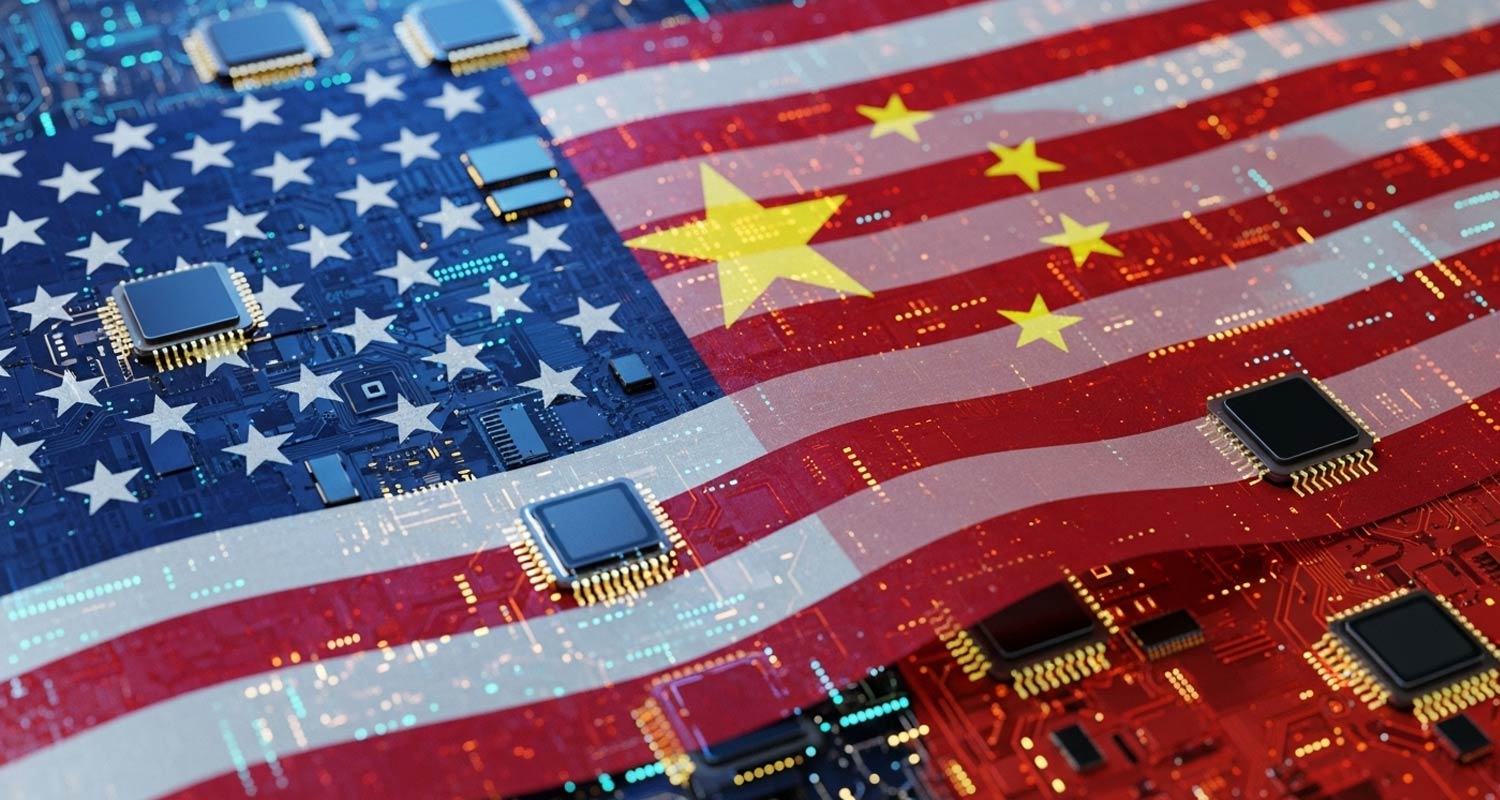
    From Silicon Valley to Shenzhen: who's really winning the innovation war?One of the barriers to understanding the world is our fixation on sports thinking: who is winning and who is catching up? This has long been true of politics — we focus obsessively on the race for the White House while ignoring the debt mountain that may bring the whole system crashing down. It is also becoming true of business. We tend to look at the race for number one without thinking more generally about what being in the lead, in this industry or that niche, means.

    Looked at through this sports prism, the innovation landscape is simple. The US is still far ahead. America is responsible for almost all the breakthrough technologies that define the current era (AI, smartphones, social networks) just as it was responsible for all the breakthrough technologies that defined the last era (PCs, the internet, semiconductors). Three of the world’s most consequential AI companies — OpenAI, Anthropic and Databricks — are headquartered within 3.2km of each other in San Francisco. Nvidia is so dominant in the market for high-end chips that one commentator remarks that “there’s a war going on in AI out there, and Nvidia is the only arms dealer”.

    Yet China is breathing down America’s neck — and in some areas, such as surveillance and hypersonic rockets, it’s taking the lead. The most cited paper on AI, known as the ResNet paper, was written by four Chinese scholars who have never studied outside the country. More than 1 300 foreign companies have opened advanced scientific research labs in China to tap into the country’s growing talent pool. And Europe? The combined value of all the tech companies on the continent is far less than the value of just one US company, Microsoft.

    The combined value of all the tech companies in Europe is far less than the value of just one US company, Microsoft

    But what happens if we go beyond the sports metaphor? A new book by Mehran Gul, of the World Economic Forum, The New Geography of Innovation, suggests that the picture is much more interesting. There are, in fact, lots of different innovation races with different end points and different measures of success. The US might be good at breakthrough innovation in the private sector. But what about incremental innovation in the public sector? Feed in different measures, and you get different results.

    If you focus on the dissemination of new ideas rather than their invention, China is arguably well ahead of the US. It is well documented that China excels as a fast follower thanks to its combination of engineering prowess and work ethic. China has twice as many miles of high-speed rail than any other country. BYD sold nearly 607 000 EVs in the second quarter of this year compared with Tesla’s 384 000. DJI sells more commercial drones than everyone else combined.

    But today the country is doing something more exciting — taking ideas that exist in laboratories and commercialising them before anybody else. Beijing and Shanghai have hundreds of driverless taxis roaming the streets. Giant companies such as Alibaba Group and Baidu are best understood as innovation-and-execution machines. If America still leads the world in inventing the future, China leads in bringing it to life.

    Collective brain

    But focus on the public sector rather than the private sector, and a different innovation champion emerges: Singapore. Most countries count themselves as winners in the government-reform stakes if they can digitise regular government functions. The government of Singapore conducts all its interactions with its citizens online but goes much further than this. It uses sensors in the streets to monitor and direct the flow of traffic, drones to survey areas affected by the outbreak of disease, and motion sensors in public housing to monitor the wellbeing of the elderly.

    The government has a collective brain — the Smart Nation and Digital Government Group (SNDGG) — that attracts the country’s most brilliant citizens and regards itself as a public-sector equivalent of Google. If most countries contract out hi-tech operations to the private sector, Singapore keeps them in-house to develop unique competences; if most governments play catch up, SNDGG acts as a pace setter. Private sector-obsessed Americans might be inclined to treat Singapore’s excellence at government as a mere side-show to the real innovation race. But when the great political theorist Thomas Hobbes asked himself what it was that prevented life from being solitary, poor, nasty, brutish and short, he answered that it was the state, or Leviathan, rather than the East India Company.

    Read: Chinese premier takes aim at ‘AI monopoly’

    Gul even offers some words about what is increasingly regarded as the left-behind continent of Europe. Germany excels in what might be called “deep” or “incremental” innovation: its strength lies in middle-sized companies — the celebrated mittelstand — that produce highly specialised products and focus all their energies on making sure they are the best in the world. These companies, which are usually hidden away in small towns, are so focused on engineering excellence that they have little time for PR: Herrenknecht is easily the world’s most impressive tunnelling company but has only attracted a fraction of the attention of Elon Musk’s cleverly named The Boring Company.

    Switzerland, where Gul lives, combines a similar enthusiasm for mittelstand companies with a genius for big public projects such as the Swiss railway system, surely one of the wonders of the world, the Large Hadron Collider, and Cern (the European Organisation for Nuclear Research). Thanks to Cern, the world’s first website was not a dot-com or a dot-net but a dot-ch, which stands for Confederatio Helvetica, Switzerland’s Latin name.

    Can the case for Europe be extended any further than a few isolated areas of excellence? The classic argument for the European model is that it is much more sustainable than the American one — that it pays attention to things like sustainability and quality of life not just to billion-dollar exits. What is the point of leading the world in AI if that AI is used to sell more cat food or get more clicks on cat videos? Some of these questions are even beginning to trouble people at the very heart of US tech: a recent book by Alex Karp, the CEO of Palantir and Nicholas Zamiska, the company’s legal counsel, The Technological Republic, argues that the US innovation machine has focused too much on fripperies like delivery apps and not enough on big ideas that will transform society.

    Read: Prosus boss Fabricio Bloisi targets European tech shake-up

    The problem with Europe’s civilisation-first approach is not that it’s ill-conceived, it’s that Europe’s failure to create world-changing companies that embody its values means it gets treated as irrelevant on the world stage. Gul is undoubtedly right that we need to measure innovation against a lot of different metrics, not just market capitalisation. But sometimes you must be seen to be a winner in the global marketplace to carry any real influence.  — Adrian Wooldridge, (c) 2025 Bloomberg LP

    Get breaking news from TechCentral on WhatsApp. Sign up here.

    Don’t miss:

    China’s car factories run cold as price war masks deep overcapacity



    WhatsApp YouTube Follow on Google News Add as preferred source on Google
    Share. Facebook Twitter LinkedIn WhatsApp Telegram Email Copy Link
    Previous ArticleERP in the experience economy is about more than just systems
    Next Article BMW strikes back at Tesla

    Related Posts

    Cell C cleans up its balance sheet but faces tough trading reality

    Cell C cleans up its balance sheet but faces tough trading reality

    13 February 2026
    MVNO business shines in Cell C's first post-listing results - Jorges Mendes

    MVNO business shines in Cell C’s first post-listing results

    13 February 2026
    Ramaphosa presses ahead with Eskom break-up - Cyril Ramaphosa

    Ramaphosa presses ahead with Eskom break-up

    13 February 2026
    Company News
    Cell C delivers maiden results with growth momentum, financial flexibility - Jorges Mendes

    Cell C delivers maiden results with growth momentum, financial flexibility

    13 February 2026
    Start-up king joins Paratus Rwanda - Innocent Mutimura

    Start-up king joins Paratus Rwanda

    13 February 2026
    How NEC XON tackled identity risk for a major telco - Michael de Neuilly Rice

    How NEC XON tackled identity risk for a major telco

    11 February 2026
    Opinion
    A million reasons monopolies don't work - Duncan McLeod

    A million reasons monopolies don’t work

    10 February 2026
    Eskom unbundling U-turn threatens to undo hard-won electricity gains - Busi Mavuso

    Eskom unbundling U-turn threatens to undo hard-won electricity gains

    9 February 2026
    South Africa's skills advantage is being overlooked at home - Richard Firth

    South Africa’s skills advantage is being overlooked at home

    29 January 2026

    Subscribe to Updates

    Get the best South African technology news and analysis delivered to your e-mail inbox every morning.

    Latest Posts
    Cell C cleans up its balance sheet but faces tough trading reality

    Cell C cleans up its balance sheet but faces tough trading reality

    13 February 2026
    MVNO business shines in Cell C's first post-listing results - Jorges Mendes

    MVNO business shines in Cell C’s first post-listing results

    13 February 2026
    Ramaphosa presses ahead with Eskom break-up - Cyril Ramaphosa

    Ramaphosa presses ahead with Eskom break-up

    13 February 2026
    The key technology takeaways from Ramaphosa's 2026 Sona - Cyril Ramaphosa

    The key technology takeaways from Ramaphosa’s 2026 Sona

    13 February 2026
    © 2009 - 2026 NewsCentral Media
    • Cookie policy (ZA)
    • TechCentral – privacy and Popia

    Type above and press Enter to search. Press Esc to cancel.

    Manage consent

    TechCentral uses cookies to enhance its offerings. Consenting to these technologies allows us to serve you better. Not consenting or withdrawing consent may adversely affect certain features and functions of the website.

    Functional Always active
    The technical storage or access is strictly necessary for the legitimate purpose of enabling the use of a specific service explicitly requested by the subscriber or user, or for the sole purpose of carrying out the transmission of a communication over an electronic communications network.
    Preferences
    The technical storage or access is necessary for the legitimate purpose of storing preferences that are not requested by the subscriber or user.
    Statistics
    The technical storage or access that is used exclusively for statistical purposes. The technical storage or access that is used exclusively for anonymous statistical purposes. Without a subpoena, voluntary compliance on the part of your Internet Service Provider, or additional records from a third party, information stored or retrieved for this purpose alone cannot usually be used to identify you.
    Marketing
    The technical storage or access is required to create user profiles to send advertising, or to track the user on a website or across several websites for similar marketing purposes.
    • Manage options
    • Manage services
    • Manage {vendor_count} vendors
    • Read more about these purposes
    View preferences
    • {title}
    • {title}
    • {title}