Close Menu
TechCentralTechCentral

    Subscribe to the newsletter

    Get the best South African technology news and analysis delivered to your e-mail inbox every morning.

    Facebook X (Twitter) YouTube LinkedIn
    WhatsApp Facebook X (Twitter) LinkedIn YouTube
    TechCentralTechCentral
    • News
      Ramaphosa presses ahead with Eskom break-up - Cyril Ramaphosa

      Ramaphosa presses ahead with Eskom break-up

      13 February 2026
      Cell C cleans up its balance sheet but faces tough trading reality

      Cell C cleans up its balance sheet but faces tough trading reality

      13 February 2026
      The key technology takeaways from Ramaphosa's 2026 Sona - Cyril Ramaphosa

      The key technology takeaways from Ramaphosa’s 2026 Sona

      13 February 2026
      Toyota SA CEO: NEV inaction will cost South Africa its motoring industry - Andrew Kirby

      Toyota SA CEO: NEV inaction will cost South Africa its motoring industry

      12 February 2026
      Censorship-resistant internet from space - Spacecoin

      Censorship-resistant internet from space

      12 February 2026
    • World
      Russia bans WhatsApp

      Russia bans WhatsApp

      12 February 2026
      EU regulators take aim at WhatsApp

      EU regulators take aim at WhatsApp

      9 February 2026
      Musk hits brakes on Mars mission

      Musk hits brakes on Mars mission

      9 February 2026
      Crypto firm accidentally sends R700-billion in bitcoin to its users

      Crypto firm accidentally sends R700-billion in bitcoin to its users

      8 February 2026
      AI won't replace software, says Nvidia CEO amid market rout - Jensen Huang

      AI won’t replace software, says Nvidia CEO amid market rout

      4 February 2026
    • In-depth
      How liberalisation is rewiring South Africa's power sector

      How liberalisation is rewiring South Africa’s power sector

      21 January 2026
      The top-performing South African tech shares of 2025

      The top-performing South African tech shares of 2025

      12 January 2026
      Digital authoritarianism grows as African states normalise internet blackouts

      Digital authoritarianism grows as African states normalise internet blackouts

      19 December 2025
      TechCentral's South African Newsmakers of 2025

      TechCentral’s South African Newsmakers of 2025

      18 December 2025
      Black Friday goes digital in South Africa as online spending surges to record high

      Black Friday goes digital in South Africa as online spending surges to record high

      4 December 2025
    • TCS
      Watts & Wheels S1E4: 'We drive an electric Uber'

      Watts & Wheels S1E4: ‘We drive an electric Uber’

      10 February 2026
      TCS+ | How Cloud On Demand is helping SA businesses succeed in the cloud - Xhenia Rhode, Dion Kalicharan

      TCS+ | Cloud On Demand and Consnet: inside a real-world AWS partner success story

      30 January 2026
      Watts & Wheels S1E4: 'We drive an electric Uber'

      Watts & Wheels S1E3: ‘BYD’s Corolla Cross challenger’

      30 January 2026
      Watts & Wheels S1E4: 'We drive an electric Uber'

      Watts & Wheels S1E2: ‘China attacks, BMW digs in, Toyota’s sublime supercar’

      23 January 2026

      TCS+ | Why cybersecurity is becoming a competitive advantage for SA businesses

      20 January 2026
    • Opinion
      South Africa's skills advantage is being overlooked at home - Richard Firth

      South Africa’s skills advantage is being overlooked at home

      29 January 2026
      Why Elon Musk's Starlink is a 'hard no' for me - Songezo Zibi

      Why Elon Musk’s Starlink is a ‘hard no’ for me

      26 January 2026
      South Africa's new fibre broadband battle - Duncan McLeod

      South Africa’s new fibre broadband battle

      20 January 2026
      AI moves from pilots to production in South African companies - Nazia Pillay SAP

      AI moves from pilots to production in South African companies

      20 January 2026
      South Africa's new fibre broadband battle - Duncan McLeod

      ANC’s attack on Solly Malatsi shows how BEE dogma trumps economic reality

      14 December 2025
    • Company Hubs
      • Africa Data Centres
      • AfriGIS
      • Altron Digital Business
      • Altron Document Solutions
      • Altron Group
      • Arctic Wolf
      • AvertITD
      • Braintree
      • CallMiner
      • CambriLearn
      • CYBER1 Solutions
      • Digicloud Africa
      • Digimune
      • Domains.co.za
      • ESET
      • Euphoria Telecom
      • Incredible Business
      • iONLINE
      • IQbusiness
      • Iris Network Systems
      • LSD Open
      • Mitel
      • NEC XON
      • Netstar
      • Network Platforms
      • Next DLP
      • Ovations
      • Paracon
      • Paratus
      • Q-KON
      • SevenC
      • SkyWire
      • Solid8 Technologies
      • Telit Cinterion
      • Tenable
      • Vertiv
      • Videri Digital
      • Vodacom Business
      • Wipro
      • Workday
      • XLink
    • Sections
      • AI and machine learning
      • Banking
      • Broadcasting and Media
      • Cloud services
      • Contact centres and CX
      • Cryptocurrencies
      • Education and skills
      • Electronics and hardware
      • Energy and sustainability
      • Enterprise software
      • Financial services
      • Information security
      • Internet and connectivity
      • Internet of Things
      • Investment
      • IT services
      • Lifestyle
      • Motoring
      • Public sector
      • Retail and e-commerce
      • Satellite communications
      • Science
      • SMEs and start-ups
      • Social media
      • Talent and leadership
      • Telecoms
    • Events
    • Advertise
    TechCentralTechCentral
    Home » In-depth » Inside the new space race to connect everything on Earth

    Inside the new space race to connect everything on Earth

    By Agency Staff10 July 2020
    Twitter LinkedIn Facebook WhatsApp Email Telegram Copy Link
    News Alerts
    WhatsApp

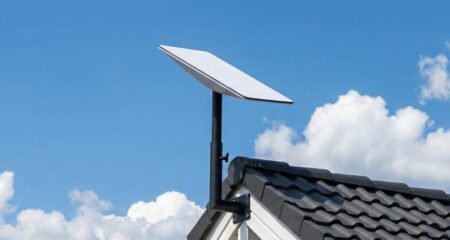
    In a world divided between digital haves and have-nots, billionaires Elon Musk and Jeff Bezos are trying to close the gap. The two entrepreneurs separately aim to launch thousands of small satellites to zip around the globe in what’s known as low-Earth orbit, or LEO. Their plan is to offer high-end Internet coverage for clients like governments, mining companies and shipping conglomerates, as well as providing it to regions too remote or poor to install it on the ground. Start-up costs are in the billions of dollars.

    1. How low is low?

    LEO satellites operate from 500km to 2 000km above the Earth’s surface. Traditional communication satellites are stationed far higher, at roughly 36 000km, and travel in so-called geosynchronous orbits, moving at the speed of the Earth’s rotation and appearing to float motionless above a fixed point.

    2. What’s the advantage of a lower orbit?

    A shorter trip is a faster trip, so the time needed for data to be sent and returned — what’s known as latency — is lower for LEO satellites than for those further out. And because signals can travel more rapidly through the vacuum of space than through fibre-optic cables, LEO satellites have the potential to rival or possibly exceed the fastest ground-based networks.

    3. How fast is fast?

    OneWeb, a London-based company originally backed by Richard Branson that’s begun launching washing machine-sized LEO satellites, recorded an average latency of 32 milliseconds in July 2019 on transmissions between space and South Korea. Musk, the founder of Space Exploration Technologies Corp., has said that his Starlink satellite system is aiming for a latency of 20ms initially, which he hopes eventually to cut in half. Talk like that has sparked speculation that financial firms could outpace their terrestrial securities trading operations. High-orbit systems, by contrast, have a median latency of nearly 600ms for a round trip. That’s adequate for broadcasting but is a barrier to real-time two-way communication.

    4. What’s the downside of a low orbit?

    The speed needed for stable orbit — achieved by balancing an object’s inertia with the Earth’s gravity — diminishes with distance. High-flying geostationary satellites travel at about 11 000km/h to avoid falling back to Earth, while LEO satellites must travel at about 27 000km/h, completing a full circuit of the planet in 90 to 120 minutes. That means each individual satellite is only in direct contact with a ground transmitter for a brief period and is why LEO projects involve so many satellites: OneWeb says that in its system, receivers are able to get a consistent signal because a new satellite will always fly into range and pre-emptively replace the signal of the satellite which is about to fly beyond the horizon, about every two minutes.

    5. Are LEO satellites new?

    No. Most of the Earth’s approximately 2 700 active satellites are already in LEO, according to a monitoring group called the Union of Concerned Scientists. For instance, a network belonging to US-based Iridium Communications allows voice and data communication from handheld satellite phones, and has been operating since 1998. Previous efforts led to bankruptcies by Iridium and Globalstar, also a US company. What’s new is the sheer scale of recent proposals, with the big firms planning to launch satellites in the thousands. The new ventures are counting on savings from smaller, cheaper satellites and reusable rockets, along with more powerful software capable of tracking all those hand-offs.

    6. When will this start?

    SpaceX has launched more than 480 of a planned 12 000 satellites; in October 2019, the company sought permission for 30 000 more. Both Musk and OneWeb have said that partial networks could go into service in 2021. State-owned China Aerospace Science & Industry is proposing a network of 156 satellites by 2022. Bezos’s Amazon.com has requested permission to launch 3 236 satellites. Meanwhile, traditional operators like ViaSat and Eutelsat Communications are continuing to invest in more powerful geostationary satellites, collaborating with companies such as Facebook to beam broadband to rural areas and aeroplanes.

    7. Are they going to make money?

    Many satellite companies never have. SpaceX has said completing Starlink may cost more than US$10-billion, though Musk estimated in 2019 it could bring in $30-billion to $50-billion/year once fully operational. (He says the satellites will produce the money needed for his ultimate goal of settling Mars.) To reach the four billion people on Earth who now lack high-speed Internet access, the satellite companies aspire to sell their services to governments, nonprofits and telecommunications providers. OneWeb, which had signed contracts it says could lead to Wi-Fi hotspots connected to its satellites, was acquired in July by the UK government and an arm of Indian telecoms tycoon Sunil Mittal’s Bharti Enterprises in an auction after filing for bankruptcy.

    8. Who regulates LEO?

    In a sense, no one. But satellite operators have to get approval for their launch and orbit plans from national communications regulators, and anyone planning to sell services to the US needs to go before the Federal Communications Commission. The International Telecommunication Union coordinates the allocation of frequencies for communications.

    9. Is there room up there for all these satellites?

    No one knows how close existing satellites are to triggering the Kessler Effect — named after Nasa scientist Donald Kessler, who raised the possibility that if space becomes too crowded, there will be collisions that trigger a catastrophic chain reaction of debris, causing yet more collisions. The US Air Force is developing a ground based radar system known as the Space Fence that’s meant to track satellites and debris; in September 2019, the European Space Agency moved a space probe after being warned it could come too close to a Starlink satellite. Another worry is that a more crowded sky will ruin the view. Astronomers complained after the SpaceX launch about sunlight they suspected was reflecting off the satellites, and Musk has asked his team to make them less reflective.  — Reported by Greg Ritchie and Thomas Seal, (c) 2020 Bloomberg LP



    Jeff Bezos Nasa OneWeb Richard Branson SpaceX Starlink top
    WhatsApp YouTube Follow on Google News Add as preferred source on Google
    Share. Facebook Twitter LinkedIn WhatsApp Telegram Email Copy Link
    Previous ArticleEskom plunges South Africa back into darkness
    Next Article Ramaphosa imposes curfew, bans booze sales again

    Related Posts

    Censorship-resistant internet from space - Spacecoin

    Censorship-resistant internet from space

    12 February 2026
    Musk hits brakes on Mars mission

    Musk hits brakes on Mars mission

    9 February 2026
    Starlink considers building its own phone - Elon Musk

    Starlink considers building its own phone

    5 February 2026
    Company News
    How NEC XON tackled identity risk for a major telco - Michael de Neuilly Rice

    How NEC XON tackled identity risk for a major telco

    11 February 2026

    Why Acer is the strategic choice for South Africa’s educational future

    11 February 2026
    Fyndae is building Africa's human verification layer for community security and collaboration

    Fyndae wants to turn lost-item recovery into Africa’s trust infrastructure

    11 February 2026
    Opinion
    South Africa's skills advantage is being overlooked at home - Richard Firth

    South Africa’s skills advantage is being overlooked at home

    29 January 2026
    Why Elon Musk's Starlink is a 'hard no' for me - Songezo Zibi

    Why Elon Musk’s Starlink is a ‘hard no’ for me

    26 January 2026
    South Africa's new fibre broadband battle - Duncan McLeod

    South Africa’s new fibre broadband battle

    20 January 2026

    Subscribe to Updates

    Get the best South African technology news and analysis delivered to your e-mail inbox every morning.

    Latest Posts
    Ramaphosa presses ahead with Eskom break-up - Cyril Ramaphosa

    Ramaphosa presses ahead with Eskom break-up

    13 February 2026
    Cell C cleans up its balance sheet but faces tough trading reality

    Cell C cleans up its balance sheet but faces tough trading reality

    13 February 2026
    The key technology takeaways from Ramaphosa's 2026 Sona - Cyril Ramaphosa

    The key technology takeaways from Ramaphosa’s 2026 Sona

    13 February 2026
    Toyota SA CEO: NEV inaction will cost South Africa its motoring industry - Andrew Kirby

    Toyota SA CEO: NEV inaction will cost South Africa its motoring industry

    12 February 2026
    © 2009 - 2026 NewsCentral Media
    • Cookie policy (ZA)
    • TechCentral – privacy and Popia

    Type above and press Enter to search. Press Esc to cancel.

    Manage consent

    TechCentral uses cookies to enhance its offerings. Consenting to these technologies allows us to serve you better. Not consenting or withdrawing consent may adversely affect certain features and functions of the website.

    Functional Always active
    The technical storage or access is strictly necessary for the legitimate purpose of enabling the use of a specific service explicitly requested by the subscriber or user, or for the sole purpose of carrying out the transmission of a communication over an electronic communications network.
    Preferences
    The technical storage or access is necessary for the legitimate purpose of storing preferences that are not requested by the subscriber or user.
    Statistics
    The technical storage or access that is used exclusively for statistical purposes. The technical storage or access that is used exclusively for anonymous statistical purposes. Without a subpoena, voluntary compliance on the part of your Internet Service Provider, or additional records from a third party, information stored or retrieved for this purpose alone cannot usually be used to identify you.
    Marketing
    The technical storage or access is required to create user profiles to send advertising, or to track the user on a website or across several websites for similar marketing purposes.
    • Manage options
    • Manage services
    • Manage {vendor_count} vendors
    • Read more about these purposes
    View preferences
    • {title}
    • {title}
    • {title}