Close Menu
TechCentralTechCentral

    Subscribe to the newsletter

    Get the best South African technology news and analysis delivered to your e-mail inbox every morning.

    Facebook X (Twitter) YouTube LinkedIn
    WhatsApp Facebook X (Twitter) LinkedIn YouTube
    TechCentralTechCentral
    • News
      Vuyani Jarana: Mobile coverage masks a deeper broadband failure

      Vuyani Jarana: Mobile coverage masks a deeper broadband failure

      30 January 2026
      SABC Plus to flight Microsoft AI training videos

      SABC Plus to flight Microsoft AI training videos

      30 January 2026
      Fibre ducts

      Fibre industry consolidation in KZN

      30 January 2026
      Watts & Wheels S1E3: 'BYD's Corolla Cross challenger'

      Watts & Wheels S1E3: ‘BYD’s Corolla Cross challenger’

      30 January 2026
      What ordinary South Africans really think of AI

      What ordinary South Africans really think of AI

      30 January 2026
    • World
      Apple acquires audio AI start-up Q.ai

      Apple acquires audio AI start-up Q.ai

      30 January 2026
      SpaceX IPO may be largest in history

      SpaceX IPO may be largest in history

      28 January 2026
      Nvidia throws AI at the weather

      Nvidia throws AI at weather forecasting

      27 January 2026
      Debate erupts over value of in-flight Wi-Fi

      Debate erupts over value of in-flight Wi-Fi

      26 January 2026
      Intel takes another hit - Intel CEO Lip-Bu Tan. Laure Andrillon/Reuters

      Intel takes another hit

      23 January 2026
    • In-depth
      How liberalisation is rewiring South Africa's power sector

      How liberalisation is rewiring South Africa’s power sector

      21 January 2026
      The top-performing South African tech shares of 2025

      The top-performing South African tech shares of 2025

      12 January 2026
      Digital authoritarianism grows as African states normalise internet blackouts

      Digital authoritarianism grows as African states normalise internet blackouts

      19 December 2025
      TechCentral's South African Newsmakers of 2025

      TechCentral’s South African Newsmakers of 2025

      18 December 2025
      Black Friday goes digital in South Africa as online spending surges to record high

      Black Friday goes digital in South Africa as online spending surges to record high

      4 December 2025
    • TCS
      TCS+ | How Cloud On Demand is helping SA businesses succeed in the cloud - Xhenia Rhode, Dion Kalicharan

      TCS+ | Cloud On Demand and Consnet: inside a real-world AWS partner success story

      30 January 2026
      Watts & Wheels S1E3: 'BYD's Corolla Cross challenger'

      Watts & Wheels S1E2: ‘China attacks, BMW digs in, Toyota’s sublime supercar’

      23 January 2026

      TCS+ | Why cybersecurity is becoming a competitive advantage for SA businesses

      20 January 2026
      Watts & Wheels S1E3: 'BYD's Corolla Cross challenger'

      Watts & Wheels: S1E1 – ‘William, Prince of Wheels’

      8 January 2026
      TCS+ | Africa's digital transformation - unlocking AI through cloud and culture - Cliff de Wit Accelera Digital Group

      TCS+ | Cloud without culture won’t deliver AI: Accelera’s Cliff de Wit

      12 December 2025
    • Opinion
      South Africa's skills advantage is being overlooked at home - Richard Firth

      South Africa’s skills advantage is being overlooked at home

      29 January 2026
      Why Elon Musk's Starlink is a 'hard no' for me - Songezo Zibi

      Why Elon Musk’s Starlink is a ‘hard no’ for me

      26 January 2026
      South Africa's new fibre broadband battle - Duncan McLeod

      South Africa’s new fibre broadband battle

      20 January 2026
      AI moves from pilots to production in South African companies - Nazia Pillay SAP

      AI moves from pilots to production in South African companies

      20 January 2026
      South Africa's new fibre broadband battle - Duncan McLeod

      ANC’s attack on Solly Malatsi shows how BEE dogma trumps economic reality

      14 December 2025
    • Company Hubs
      • Africa Data Centres
      • AfriGIS
      • Altron Digital Business
      • Altron Document Solutions
      • Altron Group
      • Arctic Wolf
      • AvertITD
      • Braintree
      • CallMiner
      • CambriLearn
      • CYBER1 Solutions
      • Digicloud Africa
      • Digimune
      • Domains.co.za
      • ESET
      • Euphoria Telecom
      • Incredible Business
      • iONLINE
      • IQbusiness
      • Iris Network Systems
      • LSD Open
      • NEC XON
      • Netstar
      • Network Platforms
      • Next DLP
      • Ovations
      • Paracon
      • Paratus
      • Q-KON
      • SevenC
      • SkyWire
      • Solid8 Technologies
      • Telit Cinterion
      • Tenable
      • Vertiv
      • Videri Digital
      • Vodacom Business
      • Wipro
      • Workday
      • XLink
    • Sections
      • AI and machine learning
      • Banking
      • Broadcasting and Media
      • Cloud services
      • Contact centres and CX
      • Cryptocurrencies
      • Education and skills
      • Electronics and hardware
      • Energy and sustainability
      • Enterprise software
      • Financial services
      • Information security
      • Internet and connectivity
      • Internet of Things
      • Investment
      • IT services
      • Lifestyle
      • Motoring
      • Public sector
      • Retail and e-commerce
      • Satellite communications
      • Science
      • SMEs and start-ups
      • Social media
      • Talent and leadership
      • Telecoms
    • Events
    • Advertise
    TechCentralTechCentral
    Home » Opinion » Liza Zouabi » McLeod is wrong about Telkom

    McLeod is wrong about Telkom

    By Liza Zouabi19 August 2021
    Twitter LinkedIn Facebook WhatsApp Email Telegram Copy Link
    News Alerts
    WhatsApp

    Telkom would like to take up the offer to publish a reply to TechCentral editor Duncan McLeod’s column of 16 August on the company’s opposition to the MTN and Vodacom duopoly in South Africa.

    We believe that McLeod has overlooked key aspects of Telkom’s argument for a fair playing field in the telecommunications sector and a pro-consumer approach to regulation and oversight.

    At the same time, we respect his commitment to a healthy and functional marketplace, as evidenced by his joining the Capitalist Party of South Africa (the “Purple Cow”), which flopped in the last national election. Better luck next time!

    For the record, we share his views on free and fair markets. However, we wish to raise some points in this regard.

    Distinguish between the old and new Telkom

    Telkom is a vastly different business to the one it was in 1994 when it was a state-owned enterprise and the only telecommunications operator in town. Today Telkom is highly diversified, profitable, competitive, efficient and – if we say so ourselves – well led. Capitalists should be cheering!

    McLeod’s column suggests that because Telkom was once the monopoly — prior to democracy — that somehow regulation of our business should be based on retribution, not fair market practice. So-called “light-touch” regulation has entrenched the duopoly, rather than allowing new entrants a fair chance.

    Consider that mobile services were launched in 1994, granting MTN and Vodacom a head-start. Yet, despite the regulator allowing entry by other operators, their dominance has persisted. Together, MTN and Vodacom account for about 75% of subscribers – and an even larger slice of revenue. Vodacom’s share has hovered around 42% for the past 10 years, whereas MTN, the largest African mobile network’s share, has decreased, but not significantly. The number of subscribers attributable to MTN is substantially higher than Telkom’s (the third largest mobile operator).

    No country for new entrants

    Vodacom and MTN were able to benefit from regulatory support during the early years, but this support has not been forthcoming to later entrants.

    All the while, the termination-rate regime continues to favour the two largest operators, who continue to benefit from higher mobile termination rates compared to fixed termination rates. This despite their size and the fact that Telkom’s termination rate out-payments subsidised their entry and continue to benefit these giants. We gave them a helping hand up, so to speak.

    On the mobile broadband front, there has been little regulatory support for newer entrants, like Telkom, to compete on equivalent terms. This is despite Telkom’s attempts to disrupt the market with lower prices and better value propositions. Rather, through a lack of regulatory intervention, the duopoly structure has persisted, with Vodacom and MTN continuing to dominate the mobile-services market. Cell C has yet to turn a profit after 20 years in the market, posting an improved loss this year of R5-billion. Capitalists should be weeping!

    Remember the data services market inquiry?

    Data costs remain high in comparison to many other, less-developed markets in Africa.

    Vodacom and MTN have been able to ignore Telkom’s aggressive mobile data prices for years. This took place for so long that the Competition Commission eventually forced them to reduce retail prices through settlement agreements following its data services market inquiry.

    It pointed out that “the fact that the challenger networks hold a much higher share of actual data traffic relative to their share of data revenue indicates that revenue per gigabyte for the dominant two networks is considerably higher than that of the challenger networks”. This is despite the economies of scale and regulatory interventions that advantaged Vodacom and MTN. If that doesn’t define “duopoly”, we don’t know what does.

    The inquiry revealed that the prices and margins of Vodacom and MTN in South Africa were higher than in other countries in which they operate – a clear indication of market failure.

    Evidence of domination

    Both the Competition Commission and Icasa found, in their inquiries, that Vodacom and MTN are dominant across the supply chain. Their dominance is even more entrenched by the spectrum-sharing deals that they have entered into with Cell C, Liquid Intelligent Technologies and Rain. Cell C is wholly reliant on MTN and Vodacom to provide mobile services, and Liquid and Rain are disincentivised from competing aggressively in the mobile market due to the lucrative deals they have struck to provide capacity to either Vodacom or MTN, or both. This has limited their ability to compete independently – leaving Telkom as the only entity in the position to be able to challenge the “cosy” market structure head-on.
    Not all spectrum frequency is equal

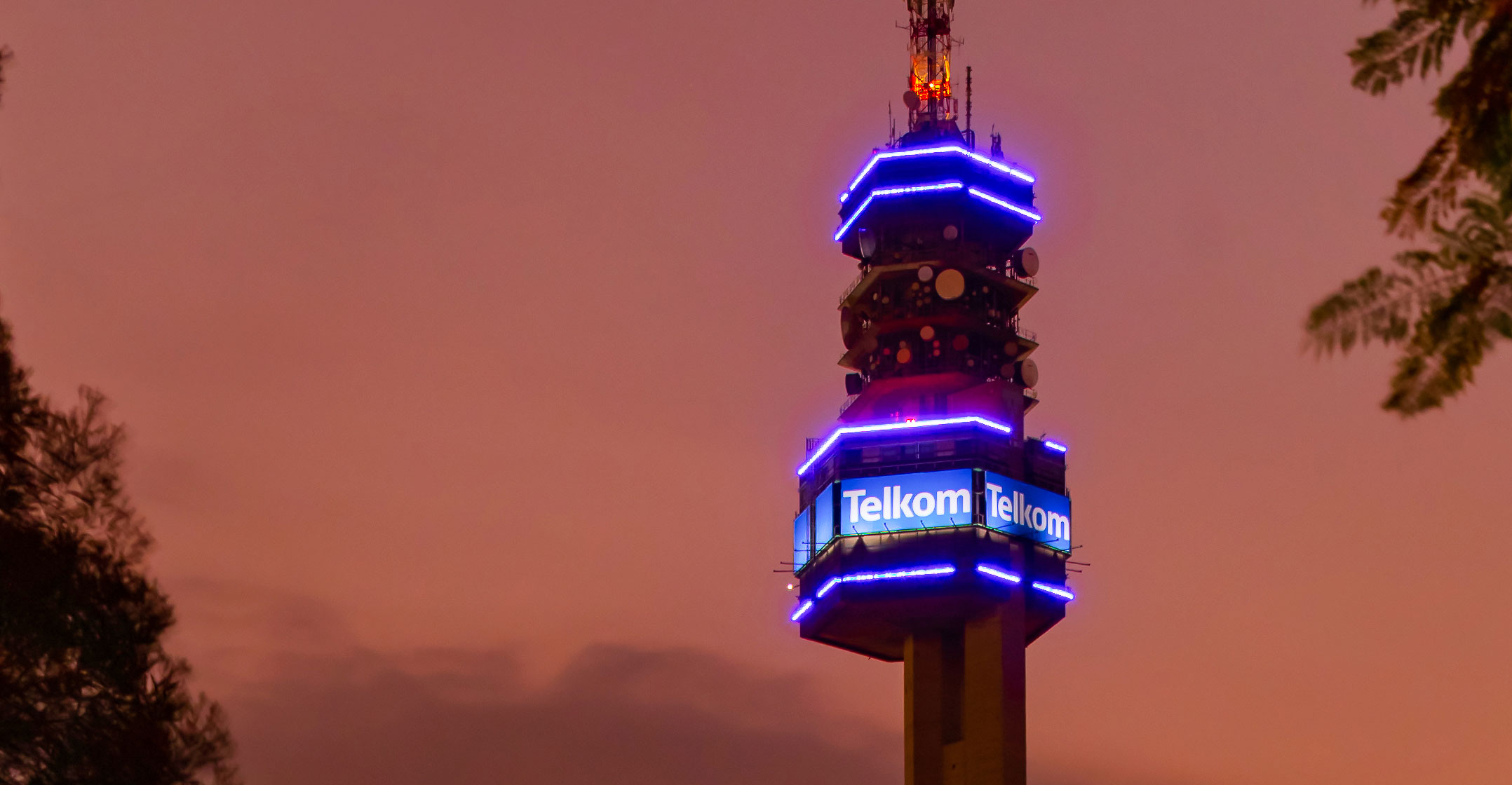
    The point is often made that Telkom has the largest spectrum allocation in the market. That is true. However, not all spectrum frequencies are as efficient for mobile purposes. Having a greater share of inferior spectrum is not an advantage.

    The problem is then compounded by communications regulator Icasa wanting Telkom to bid on the sub-1GHz spectrum currently being utilised by e.tv and SABC for their broadcasts. It effectively amounts to buying something you cannot use – at least not for a very long time.

    Pushing the boundaries of regulation is a slippery slope

    The regulator also needs to consider that Vodacom and MTN have circumvented the ban on spectrum trading through their deals with Rain, Liquid and Cell C. They have thus effectively gained access to significant amounts of spectrum without having to face the necessary regulatory scrutiny. Without any analysis of the impact of these deals on competition and regulatory intervention, the market will continue to be dominated by Vodacom and MTN, which have a history of charging above competitive mobile prices.

    McLeod suggests that Telkom should by now have “pushing the legal and regulatory envelope” in a similar manner to MTN and Vodacom. It is a sad day for the market when “pushing the envelope” is required to remain competitive. Capitalists should be concerned.

    Pro-competitive spectrum licensing would be the first step in the right direction, but Icasa must not stop there. It needs to level the playing field across the board by addressing the market failures in the wholesale markets that it has itself identified in its mobile broadband services inquiry. It can only do this by introducing appropriate and effective regulation.

    • Liza Zouabi is executive for competition regulation and group pricing at Telkom

    Now read: Telkom is wrong – there is no market failure in mobile


    Cell C Competition Commission e.tv Icasa Liza Zouabi MTN SABC Telkom top Vodacom
    WhatsApp YouTube Follow on Google News Add as preferred source on Google
    Share. Facebook Twitter LinkedIn WhatsApp Telegram Email Copy Link
    Previous Article‘Pathetic!’: JSE gets a tongue-lashing over downtime
    Next Article In pictures | Teraco completes massive new data centre

    Related Posts

    Starlink hype vs reality in South Africa

    Starlink hype vs reality in South Africa

    26 January 2026
    Mobile operators face tougher rules on data and billing

    Mobile operators face tougher rules on data and billing

    26 January 2026
    South African digital radio trial is about to go live - Aldred Dreyer

    South African digital radio trial is about to go live

    21 January 2026
    Company News
    Huawei turns 25 in South Africa, celebrates with major device discounts

    Huawei turns 25 in South Africa, celebrates with major device discounts

    30 January 2026
    Phishing has not disappeared, but it has grown up - KnowBe4

    Phishing has not disappeared, but it has grown up

    30 January 2026
    Smartphone affordability: South Africa's new economic divide - PayJoy

    Smartphone affordability: South Africa’s new economic divide

    29 January 2026
    Opinion
    South Africa's skills advantage is being overlooked at home - Richard Firth

    South Africa’s skills advantage is being overlooked at home

    29 January 2026
    Why Elon Musk's Starlink is a 'hard no' for me - Songezo Zibi

    Why Elon Musk’s Starlink is a ‘hard no’ for me

    26 January 2026
    South Africa's new fibre broadband battle - Duncan McLeod

    South Africa’s new fibre broadband battle

    20 January 2026

    Subscribe to Updates

    Get the best South African technology news and analysis delivered to your e-mail inbox every morning.

    Latest Posts
    Vuyani Jarana: Mobile coverage masks a deeper broadband failure

    Vuyani Jarana: Mobile coverage masks a deeper broadband failure

    30 January 2026
    TCS+ | How Cloud On Demand is helping SA businesses succeed in the cloud - Xhenia Rhode, Dion Kalicharan

    TCS+ | Cloud On Demand and Consnet: inside a real-world AWS partner success story

    30 January 2026
    Huawei turns 25 in South Africa, celebrates with major device discounts

    Huawei turns 25 in South Africa, celebrates with major device discounts

    30 January 2026
    SABC Plus to flight Microsoft AI training videos

    SABC Plus to flight Microsoft AI training videos

    30 January 2026
    © 2009 - 2026 NewsCentral Media
    • Cookie policy (ZA)
    • TechCentral – privacy and Popia

    Type above and press Enter to search. Press Esc to cancel.

    Manage consent

    TechCentral uses cookies to enhance its offerings. Consenting to these technologies allows us to serve you better. Not consenting or withdrawing consent may adversely affect certain features and functions of the website.

    Functional Always active
    The technical storage or access is strictly necessary for the legitimate purpose of enabling the use of a specific service explicitly requested by the subscriber or user, or for the sole purpose of carrying out the transmission of a communication over an electronic communications network.
    Preferences
    The technical storage or access is necessary for the legitimate purpose of storing preferences that are not requested by the subscriber or user.
    Statistics
    The technical storage or access that is used exclusively for statistical purposes. The technical storage or access that is used exclusively for anonymous statistical purposes. Without a subpoena, voluntary compliance on the part of your Internet Service Provider, or additional records from a third party, information stored or retrieved for this purpose alone cannot usually be used to identify you.
    Marketing
    The technical storage or access is required to create user profiles to send advertising, or to track the user on a website or across several websites for similar marketing purposes.
    • Manage options
    • Manage services
    • Manage {vendor_count} vendors
    • Read more about these purposes
    View preferences
    • {title}
    • {title}
    • {title}