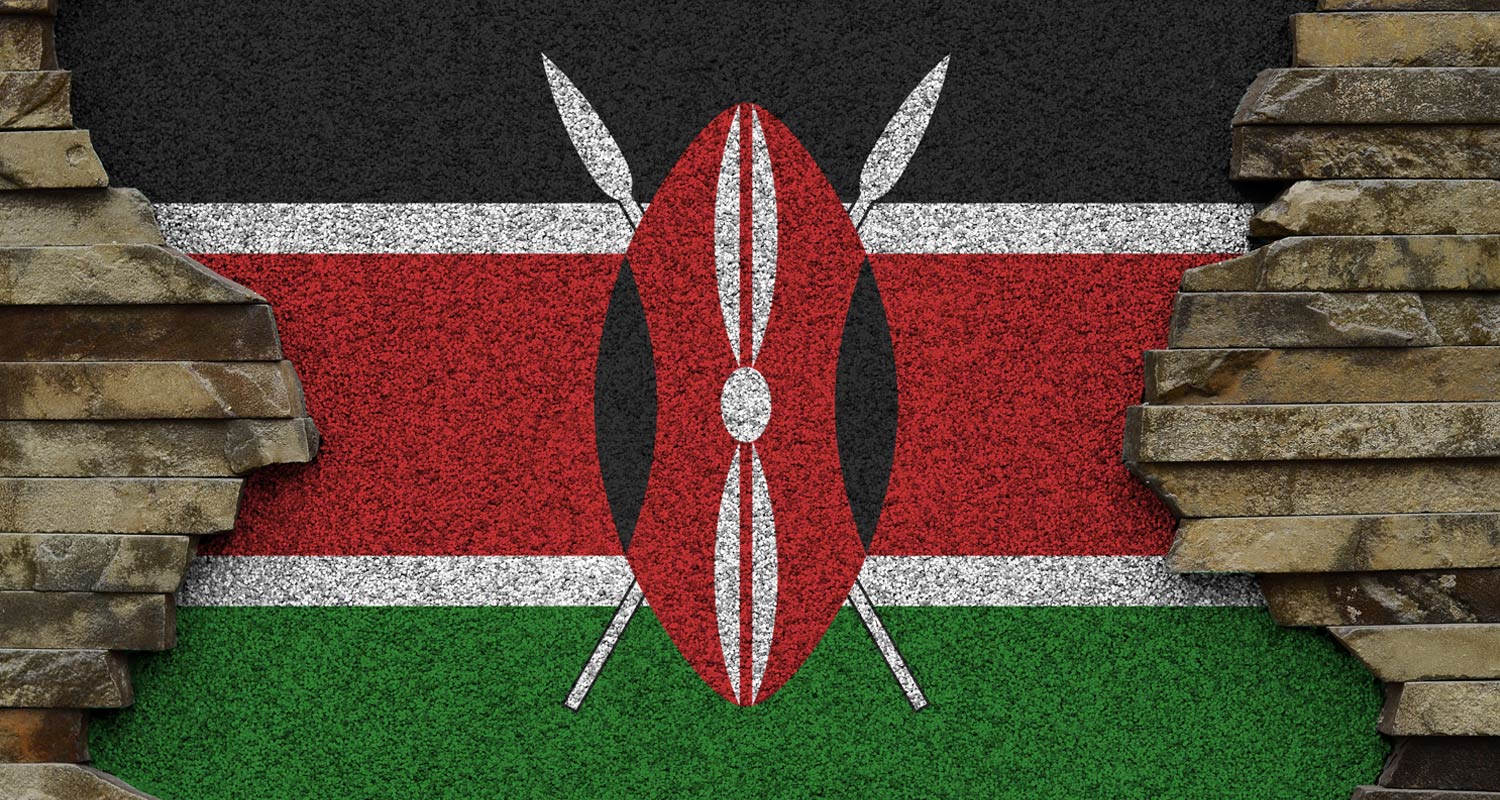
 In May, Microsoft and G42, the United Arab Emirates artificial intelligence firm, announced plans to spend US$1-billion on projects in Kenya, including a massive geothermal-powered data centre. The deal was negotiated with input from the US and UAE governments and coincided with a summit meeting in Washington between President Joe Biden and Kenyan President William Ruto.
Proponents of the Kenya project see it as a potential blueprint for similar government-business partnerships that could help the US expand its political and economic clout in the Global South — emerging markets in Africa and Central Asia where China is already firmly entrenched. Microsoft and G42 have pledged to team up on multiple projects in coming years, leveraging the UAE’s regional ties.
But already there’s growing concern in Washington that relying on Microsoft, G42 and the Emirati government could imperil national security — and without US officials on board, the firms won’t be able to get the technology they need to make their partnership a success.
The linchpin of the two companies’ relationship is an agreement, blessed earlier this year by the Biden administration, for Microsoft to invest $1.5-billion in the UAE firm in exchange for G42’s agreement to cut ties with Chinese companies. Pentagon officials are sceptical G42 will entirely uncouple from China, according to people familiar with the situation.
Microsoft’s chronic cybersecurity failures, enumerated recently in a scathing government report, also have stoked fears that foreign powers could access sensitive US networks. Other officials wonder if it’s a good idea shipping advanced AI to Gulf states with questionable human rights records.
The most immediate question is whether to approve shipments to the Middle East of Nvidia’s H100 chips, semiconductors used in AI data centres. Some officials have come to see the issue as tantamount to nuclear proliferation, with Nvidia chips as the most desired weapon in an AI arms race.
Resistance
While the Biden administration hashes out a broader regional strategy, it has slowed licence approvals for high-volume AI chip shipments to the entire Gulf. It’s unclear whether those approvals will be granted, but US officials are hoping to reach a consensus in the coming months, according to people familiar with the matter.
The resistance to the G42-Microsoft deal could hinder the administration’s efforts to help US companies grab a global lead in the development of artificial intelligence, which is already emerging as the next front in Washington’s Cold War with Beijing. US officials want to make sure that American firms — not their Chinese rivals — benefit from Gulf states’ ambitions to fund and build big AI projects. By dangling the promise of access to American technology, they hope to persuade Middle Eastern states to sever ties to Beijing.
“We’re working closely with the National Security Council and department of commerce, and US national security will continue to be a principal priority,” Microsoft spokesman David Cuddy said in an e-mailed statement.
The Pentagon, the commerce department and G42 declined to comment. The NSC didn’t respond to requests for comment.
The US government has long partnered with big business to extend America’s geopolitical reach. And the Biden administration is no exception — touting a series of so-called economic corridors that promise local jobs and investment.
 So far, these efforts mostly pale in comparison to Chinese investments in developing countries. Since the 7 October Hamas attacks, US officials have gone all but silent on the India-Middle East-Europe Economic Corridor — an effort to link the emerging industrial powers of South Asia with Europe. Biden also has trumpeted the Lobito Corridor, a rail project through the Democratic Republic of Congo, Zambia and Angola, but the policy has been criticised for echoing Chinese efforts and focusing on resource extraction rather than sustainable business.
Of the various efforts so far, the deal that commerce secretary Gina Raimondo worked on with the Emiratis, Microsoft and G42 holds the most promise — if Washington can find a way to get comfortable with it. The UAE has the money and ties to the Global South. Microsoft has the technology and, in president Brad Smith, a kind of corporate secretary of state who has developed relationships around the globe. G42’s Khazna division, a subsidiary that has built data centres in the UAE, is now expanding across Africa and Asia.
Kenya is a logical place to establish a foothold. With its fast-growing, youthful and increasingly tech-savvy population, the East African nation has emerged as a rival tech hub to Nigeria and South Africa. Nicknamed Silicon Savannah, Kenya has a vibrant start-up ecosystem and is home to M-Pesa, a thriving fintech company that provides mobile financial services.
Microsoft’s Smith says the nation reminds him of Southeast Asia in the early 1990s. “You see this enormous potential,” he said. “I think that’s important to the United States. China recognises that as well.”
In 2022, Biden named veteran tech executive Meg Whitman as US ambassador to Kenya. The former Hewlett-Packard chief quickly established herself as a bridge between Kenyan officials and US tech leaders, last year accompanying President Ruto on a tour of Silicon Valley, with stops at Google and Apple.
Still, operating in Kenya is challenging. Last month, protests forced Ruto to withdraw a law that would have raised taxes to help stabilise the country’s finances. Kenyans stormed the national assembly, chanting “Ruto must go”, and as many as two dozen people were killed when the police opened fire. Ruto’s reversal means Kenya will now struggle to balance its budget and pay its creditors.
Digital Silk Road
Corruption is endemic. Money laundering is an issue. And the US treasury recently sanctioned a number of Kenyan entities for their links to terrorist funding. The country is also struggling to build out its physical infrastructure, including adequate roads and transport systems, water and power capacity. A US state department spokesman said the US is working closely with the Kenyan government to “create a business-friendly environment”, and encourages companies to embrace opportunities there.
Competing with China, let alone dislodging it, won’t be easy. As part of Beijing’s Digital Silk Road effort, Chinese companies like Huawei Technologies and ZTE have long targeted the Global South, dangling state-backed loans, discounted hardware, training and technical help. Huawei has played a key role in helping to build and fund a $14.5-billion “smart city” in Kenya called Konza Technopolis.
Many African nations have based their IT systems on Chinese standards for digital data, a regulatory environment Microsoft could struggle to navigate, according to Olena Borodyna, a senior geopolitical risk advisor for ODI, a global affairs think-tank. The company also could be outmanoeuvred by Chinese firms that have spent years doing business there. “It’s a bit like selling a Tesla in Kenya or Uzbekistan,” she said. “You see Chinese cars. You don’t see many Teslas. It’s the same story in digital infrastructure.”
The key advantage the US has over China — for the moment — is a distinct lead in cloud computing and the large language models undergirding AI. But much will depend on Washington’s willingness to deploy the technology.

“In a place like the UAE, where you have G42 working very closely with Huawei, for example, we have an interest in changing that picture,” Tarun Chhabra, the National Security Council’s senior director for technology, said at a Council on Foreign Relations event in late June. “We see the effort to work with Microsoft as an alternative to Huawei as generally a positive development — and one that we want to encourage.” However, he also said it will take time to transition from “an untrusted vendor”.
The US curbed the sale of advanced chips and semiconductor equipment to China in 2022, and added much of the Gulf region to that framework last year. CommercedDepartment officials have been talking with their counterparts in the UAE and other affected countries about the export licence process for high-end chips including Nvidia’s, as well as strategies to safeguard sensitive technology, people familiar with the situation have said. G42’s chairman, UAE national security adviser Sheikh Tahnoon bin Zayed Al Nahyan, discussed the matter during a visit to Washington and Seattle in early June, other people said.
The US government’s licensing decision hinges in part on how well Microsoft and G42 can secure the chips once they’re in the data centres. One possibility is that Microsoft will put the most sensitive technology in a restricted-access area, something the company has done before. Others have thrown out ideas like putting a kill switch on the Nvidia chips, according to several people familiar with the conversations, or having the entire operation remotely controlled from the US. Microsoft has also pledged to follow so-called know-your-customer rules to determine who is using its data centres, and won’t allow Chinese customers to train their models.
All of this is predicated on G42 removing Chinese gear from its supply chains. In recent months, the company hired a third-party auditor to determine whether it’s abiding by those terms, several people said, prompting some US officials to worry that the large sum G42 is paying amounts to a conflict of interest. Asked how the US will enforce such agreements, the NSC’s Chhabra said it will “vary by context”. That could mean direct diplomatic talks, he said, or it might include a push from a “US vendor that itself is going to want those assurances — because they generally want to continue working with the US government”.
Growing concerns
There’s a growing feeling on Capitol Hill that the Microsoft-G42 deal needs congressional oversight. Several bipartisan staff delegations have visited the UAE in recent weeks, according to a house foreign affairs committee Republican staffer who was briefed on the trips, with more outreach to come. The goal, the staffer said, is to make the UAE cognisant of growing concerns in Washington — and make clear that they need to honor their commitments, whatever they may be. — Mark Bergen, Mackenzie Hawkins, Dina Bass and Ben Bartenstein, with Loni Prinsloo, Michelle Jamrisko, Kate O’Keeffe and Olivia Solon, (c) 2024 Bloomberg LP