
Close Menu
TechCentralTechCentral

    Subscribe to the newsletter

    Get the best South African technology news and analysis delivered to your e-mail inbox every morning.

    Facebook X (Twitter) YouTube LinkedIn
    WhatsApp Facebook X (Twitter) LinkedIn YouTube
    TechCentralTechCentral
    • News
      The fragile joint in the Capitec machine

      The fragile joint in the Capitec machine

      9 July 2026
      Ministerial churn hollowed out Sita, PSC probe finds

      Ministerial churn hollowed out Sita, PSC probe finds

      9 July 2026
      Quantum computers are coming for bitcoin

      Quantum computers are coming for bitcoin

      9 July 2026
      Rain's boldest - and strangest - deal yet - Conrad Leigh

      Rain’s boldest – and strangest – deal yet

      8 July 2026
      Netflix, e.tv look to fill the gap Showmax left behind

      Netflix, e.tv look to fill the gap Showmax left behind

      8 July 2026
    • World
      Swingeing jobs cuts at Microsoft's Xbox unit

      Swingeing jobs cuts at Microsoft’s Xbox unit

      6 July 2026

      SK Hynix ends Samsung’s 26-year reign at the top

      22 June 2026
      Google on the hook for what its AI tells users, court rules

      Google on the hook for what its AI tells users, court rules

      15 June 2026
      How Russians juggle VPNs to outwit the Kremlin

      How Russians juggle VPNs to outwit the Kremlin

      15 June 2026
      Amazon CEO flagged Anthropic AI risks to Washington - Andy Jassy

      Amazon CEO flagged Anthropic AI risks to Washington

      14 June 2026
    • In-depth
      AI boom sparks rally, frenzy and fear

      AI boom sparks rally, frenzy and fear

      11 June 2026
      Every plug-in hybrid on sale in South Africa, ranked by price - Lamborghini Temerario

      Every plug-in hybrid on sale in South Africa, ranked by price

      7 June 2026
      What Wi-Fi 8 will mean for wireless networks

      What Wi-Fi 8 will mean for wireless networks

      1 June 2026
      Alfa's electric rebel - Alfa Romeo Junior Elettrica Veloce

      Alfa’s electric rebel

      29 April 2026
      Africa switches on as Europe dims the lights

      Africa switches on as Europe dims the lights

      9 April 2026
    • TCS
      Watts & Wheels S1E7: 'Ferrari's EV breaks the internet'

      Watts & Wheels S1E7: ‘Ferrari’s EV breaks the internet’

      8 July 2026
      TCS+ | How Tracker is turning vehicle data into business strategy - Silvia Schollenberger

      TCS+ | How Tracker is turning vehicle data into business strategy

      1 July 2026
      TCS+ | IBM Bob: an AI-powered 'development partner' for the enterprise - David Spurway

      TCS+ | IBM Bob: an AI-powered development partner for the enterprise

      30 June 2026
      Watts & Wheels S1E6: 'A flawless Alfa and a bakkie that divides'

      Watts & Wheels S1E6: ‘A flawless Alfa and a bakkie that divides’

      17 June 2026
      Watts & Wheels S1E6: 'A flawless Alfa and a bakkie that divides'

      Watts & Wheels S1E5: ‘A Bentley of the bush and a car that swims’

      8 June 2026
    • Opinion
      The author, Fanie van Rooyen

      South Africa can still catch the AI wave – here’s how

      7 July 2026
      The author, Fanie van Rooyen

      The AI utopia South Africa can’t afford

      1 July 2026
      The author, Jannie van Zyl

      South Africa’s broadband future is being decided in orbit, not in Pretoria

      30 June 2026
      The author, Pambos Soteriades

      The pivot South Africa’s MVNOs cannot afford to miss

      23 June 2026
      Brazil's online gambling crackdown is a lesson for South Africa

      Brazil’s online gambling crackdown is a lesson for South Africa

      22 June 2026
    • Company Hubs
      • 1Stream
      • Africa Data Centres
      • AfriGIS
      • Altron Digital Business
      • Altron Document Solutions
      • Altron Group
      • Arctic Wolf
      • Ascent Technology
      • AvertITD
      • BBD
      • Braintree
      • CallMiner
      • CambriLearn
      • CM Telecom
      • Contactable
      • CYBER1 Solutions
      • Digicloud Africa
      • Digimune
      • Domains.co.za
      • ESET
      • Euphoria Telecom
      • HOSTAFRICA
      • Incredible Business
      • iONLINE
      • IQbusiness
      • Iris Network Systems
      • Kaspersky
      • LSD Open
      • Mitel
      • NEC XON
      • Netstar
      • Network Platforms
      • Next DLP
      • Ovations
      • Paracon
      • Paratus
      • Q-KON
      • SevenC
      • SkyWire
      • Solid8 Technologies
      • Telit Cinterion
      • Telviva
      • Tenable
      • Vertiv
      • Videri Digital
      • Vodacom Business
      • Wipro
      • Workday
      • XLink
    • Sections
      • AI and machine learning
      • Banking
      • Broadcasting and Media
      • Cloud services
      • Contact centres and CX
      • Cryptocurrencies
      • Education and skills
      • Electronics and hardware
      • Energy and sustainability
      • Enterprise software
      • Financial services
      • HealthTech
      • Information security
      • Internet and connectivity
      • Internet of Things
      • Investment
      • IT services
      • Lifestyle
      • Policy and regulation
      • Public sector
      • Retail and e-commerce
      • Satellite communications
      • Science
      • SMEs and start-ups
      • Social media
      • Talent and leadership
      • Telecoms
      • Watts & Wheels
    • Events
    • Advertise
    TechCentralTechCentral
    Home » Sections » Banking » No more cheques in South Africa as Reserve Bank pulls the plug

    No more cheques in South Africa as Reserve Bank pulls the plug

    By Adriaan Kruger23 November 2020
    Twitter LinkedIn Facebook WhatsApp Email Telegram Copy Link
    News Alerts
    WhatsApp

    Cheques won’t be celebrating New Year 2021. The South African Reserve Bank has announced that cheques will not be supported by the country’s national payment system from 1 January.

    The Bank, which is ultimately responsible for the management, administration, operation, regulation and supervision of all payment, clearing and settlement systems in the banking sector, concluded after a consultation process with stakeholders that cheques have no future in modern payment systems.

    South Africa’s national payment system (NPS) encompasses the entire payment process from payer to beneficiary, including settlement between banks. The Reserve Bank polices the process and all the tools, systems, mechanisms, institutions, agreements, procedures, rules or laws applied or utilised to effect payment.

    Cheques are one of the oldest recognised payment instruments globally, as well as in South Africa

    The consultation paper issued earlier in 2020 stated that the NPS enables the circulation of money to enable parties to enter into transactions and exchange value. As such, the NPS contributes to the economy and the applicable regulations ensure financial stability in South Africa.

    Cheques are one of the oldest recognised payment instruments globally, as well as in South Africa. The cheque, as an instruction to a bank to pay the bearer cash on presentation, developed a few hundred years after coins became an acceptable form of payment.

    In his book The Ascent of Money, author Niall Ferguson states that the first coins appeared in 600BC. Cheques followed within 300 years, spontaneously in different parts of the world, as they presented a much safer way to carry large amounts of cash.

    Even safer methods of exchanging money have only developed within the last 40 years or so.

    Declined

    The Reserve Bank says in its consultation paper that although cheques were a popular form of payment, their use has declined over the years “with the growing usage, cost-effectiveness, efficiency and convenience of electronic payments such as cards and electronic funds transfers (EFTs)”.

    Thus, the Bank, the Financial Sector Conduct Authority, the Payments Association of South Africa and the Banking Association South Africa jointly announced that the issuing and the acceptance of cheques will cease at the end of December.

    This decision was taken due to the numerous challenges associated with cheques, namely:

    • A lengthy processing period;
    • Fraud perpetrated through the issuing of cheques;
    • Cheques are an expensive payment instrument;
    • The restricted acceptance of cheques;
    • Declining usage;
    • Limited education and protection for the consumer;
    • Ageing interbank cheque processing infrastructure; and
    • The impact of the coronavirus pandemic.

    The Reserve Bank notes that the declining use of cheques, fraud and the ageing cheque-processing infrastructure were the main reasons for the decision to phase them out.

    “Between September 2019 and September 2020, the usage of cheques continued to decline at a faster rate, with volumes decreasing from 185 358 to 88 219 (-52%) and values decreasing from R4.78-billion to R842-million,” according to the Bank.

    It mentions that in 2019, less than half a percent of the value of total retail sales was paid for with cheques. Cards were used for 12% of the transaction value, with EFTs the most popular (80%).

    “Although the cheque volume is low, the prevalence of fraud in this payment instrument exposes consumers to unnecessary risks and losses,” say South Africa’s financial and monetary authorities in the announcement.

    The Covid-19 pandemic seemed to accelerate the cheque’s death “with consumers increasingly opting for faster, convenient and cheaper digital or electronic” payment methods.

    Most banks have already informed their clients that they will no longer issue new cheque books and that they will no longer be able to deposit cheques after 31 December.

    Nedbank stopped printing and issuing cheque books (and bank cheques) on 1 September, and also stopped offering special clearances and the returning of cheques with statements.

    Parties that have been paid with a cheque will have to deposit the cheque before 1 January 2021 for the payment to be processed

    Aart Jurriaanse, divisional executive of transactional information solutions at Nedbank CIB, says from 1 January Nedbank clients will no longer be able to make payments by means of a cheque.

    “Parties that have been paid with a cheque will have to deposit the cheque before 1 January 2021 for the payment to be processed. Clients that have a Nedbank-issued cheque after 1 January 2021 will not be able to deposit the cheque and will have to contact the person or entity that issued the cheque and request an alternative payment, as the cheque will no longer be accepted at any bank,” says Jurriaanse.

    Anton de Wet, chief client officer at Nedbank retail and business banking, says the decision to stop offering cheques was not taken lightly, but it has become clear that cheques have become obsolete and can no longer be supported. “Nedbank embarked on the journey to stop offering cheques in 2019 when engagements began with clients to help them migrate to suitable alternatives,” says De Wet.

    Limits reduced

    Standard Bank says the use of cheques has declined sharply over the last few years, with the reductions in limits introduced by the Reserve Bank have played a major role in their reduced use.

    “Historically, clients would have been able to pay up to R5-million using a cheque. This limit has reduced over time driven by overall usage. The last limit reduction came into effect on 1 May, which now only allows for payments of up to R50 000,” says Kuben Chetty, head of client solutions, business and commercial banking at Standard Bank.

    “During the Covid-19 lockdown period, the volumes of cheques reduced by around 80%,” says Chetty.

    In October Standard Bank discontinued the issuing of new cheque books and “reinforced customer communications and information on alternative offerings”.
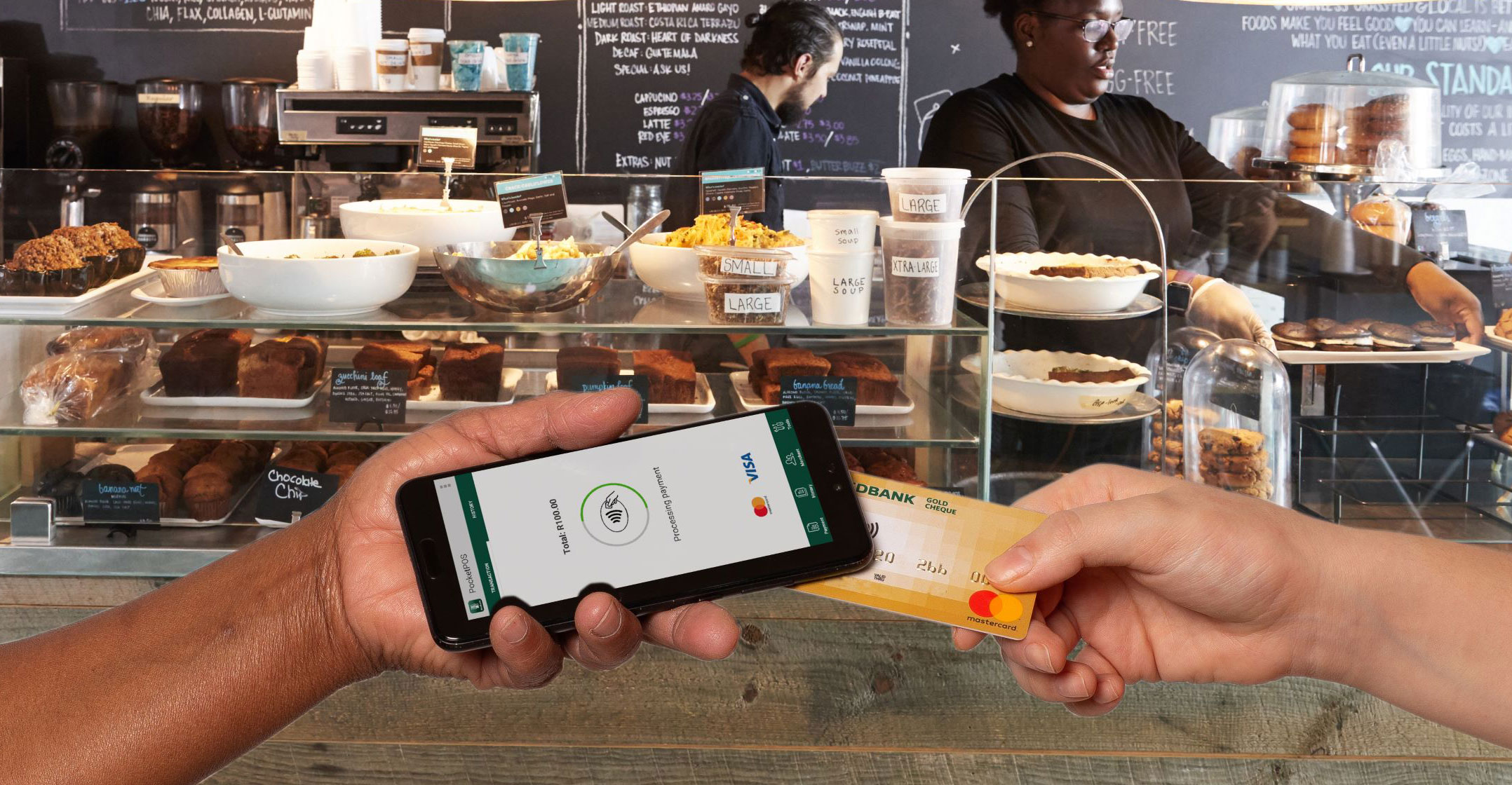
    A long way from cheque books

    That electronic payments are cheaper, more secure, and that the money is available almost instantly, raises the question of who still uses cheques.

    “Across the industry and aligned with the Standard Bank client base, mostly public sector clients (schools, local municipalities and universities), motor vehicle dealerships, churches, NGOs, small retailers, scrapyards and some individuals still make use of cheques,” says Chetty.

    He says the reasons for cheque-issuing or acceptances range from the entities’ business practices requiring multiple authorisation or signatories, to the cost of the service being known only at that point, to the sense that one has received payment for goods immediately.

    Covid-19 forced a lot of people to look for and accept modern payment alternatives, ultimately contributing to the end of cheques

    However, cheques take up to seven days to be cleared due to a long settlement procedure.

    Chetty says the reduction in the volumes of cheques being used contributes to higher per-unit processing costs associated with the maintenance of the cheque-processing infrastructure.

    “Cheques are certainly a more expensive payment instrument given their physical nature, considering the unique printing of cheque books, the processing of cheques and the overall transportation of cheques through a long chain.”

    He says Covid-19 forced a lot of people to look for and accept modern payment alternatives, ultimately contributing to the end of cheques.

    • This article was originally published on Moneyweb and is used here with permission

    Follow TechCentral on Google News Add TechCentral as your preferred source on Google


    Absa Nedbank Reserve Bank Standard Bank top
    WhatsApp YouTube
    Share. Facebook Twitter LinkedIn WhatsApp Telegram Email Copy Link
    Previous ArticleWatch | EOH CEO Van Coller testifies at Zondo commission
    Next Article Vodacom’s network falls over for the second time in 10 days

    Related Posts

    The fragile joint in the Capitec machine

    The fragile joint in the Capitec machine

    9 July 2026
    Standard Bank deal cuts the dollar out of China trade

    Standard Bank deal cuts the dollar out of China trade

    26 June 2026
    Absa's silence and the MVNO move no bank has made

    Absa’s silence and the banking MVNO move no one has tried

    24 June 2026
    Company News
    Africa's data centres: AI, edge computing and new energy demands - Vertiv OADC Open Access Data Centres

    Africa’s data centres: AI, edge computing and new energy demands

    9 July 2026
    The best way to automate customer engagement using AI and WhatsApp - CM.com

    The best way to automate customer engagement using AI and WhatsApp

    9 July 2026
    When the internet goes down, who picks up the phone? - Vox Business Fibre

    When the internet goes down, who picks up the phone?

    9 July 2026
    Opinion
    The author, Fanie van Rooyen

    South Africa can still catch the AI wave – here’s how

    7 July 2026
    The author, Fanie van Rooyen

    The AI utopia South Africa can’t afford

    1 July 2026
    The author, Jannie van Zyl

    South Africa’s broadband future is being decided in orbit, not in Pretoria

    30 June 2026

    Subscribe to Updates

    Get the best South African technology news and analysis delivered to your e-mail inbox every morning.

    Latest Posts
    The fragile joint in the Capitec machine

    The fragile joint in the Capitec machine

    9 July 2026
    Ministerial churn hollowed out Sita, PSC probe finds

    Ministerial churn hollowed out Sita, PSC probe finds

    9 July 2026
    Quantum computers are coming for bitcoin

    Quantum computers are coming for bitcoin

    9 July 2026
    Africa's data centres: AI, edge computing and new energy demands - Vertiv OADC Open Access Data Centres

    Africa’s data centres: AI, edge computing and new energy demands

    9 July 2026
    © 2009 - 2026 NewsCentral Media
    Built and maintained by Chronon
    • Cookie policy (ZA)
    • TechCentral – privacy and Popia

    Type above and press Enter to search. Press Esc to cancel.

    Manage consent

    TechCentral uses cookies to enhance its offerings. Consenting to these technologies allows us to serve you better. Not consenting or withdrawing consent may adversely affect certain features and functions of the website.

    Functional Always active
    The technical storage or access is strictly necessary for the legitimate purpose of enabling the use of a specific service explicitly requested by the subscriber or user, or for the sole purpose of carrying out the transmission of a communication over an electronic communications network.
    Preferences
    The technical storage or access is necessary for the legitimate purpose of storing preferences that are not requested by the subscriber or user.
    Statistics
    The technical storage or access that is used exclusively for statistical purposes. The technical storage or access that is used exclusively for anonymous statistical purposes. Without a subpoena, voluntary compliance on the part of your Internet Service Provider, or additional records from a third party, information stored or retrieved for this purpose alone cannot usually be used to identify you.
    Marketing
    The technical storage or access is required to create user profiles to send advertising, or to track the user on a website or across several websites for similar marketing purposes.
    • Manage options
    • Manage services
    • Manage {vendor_count} vendors
    • Read more about these purposes
    View preferences
    • {title}
    • {title}
    • {title}