Government has pitched offshore wind as a way to power Cape Town’s growing AI data centre industry, but the laws and regulations required do not yet exist and the costs are enormous.
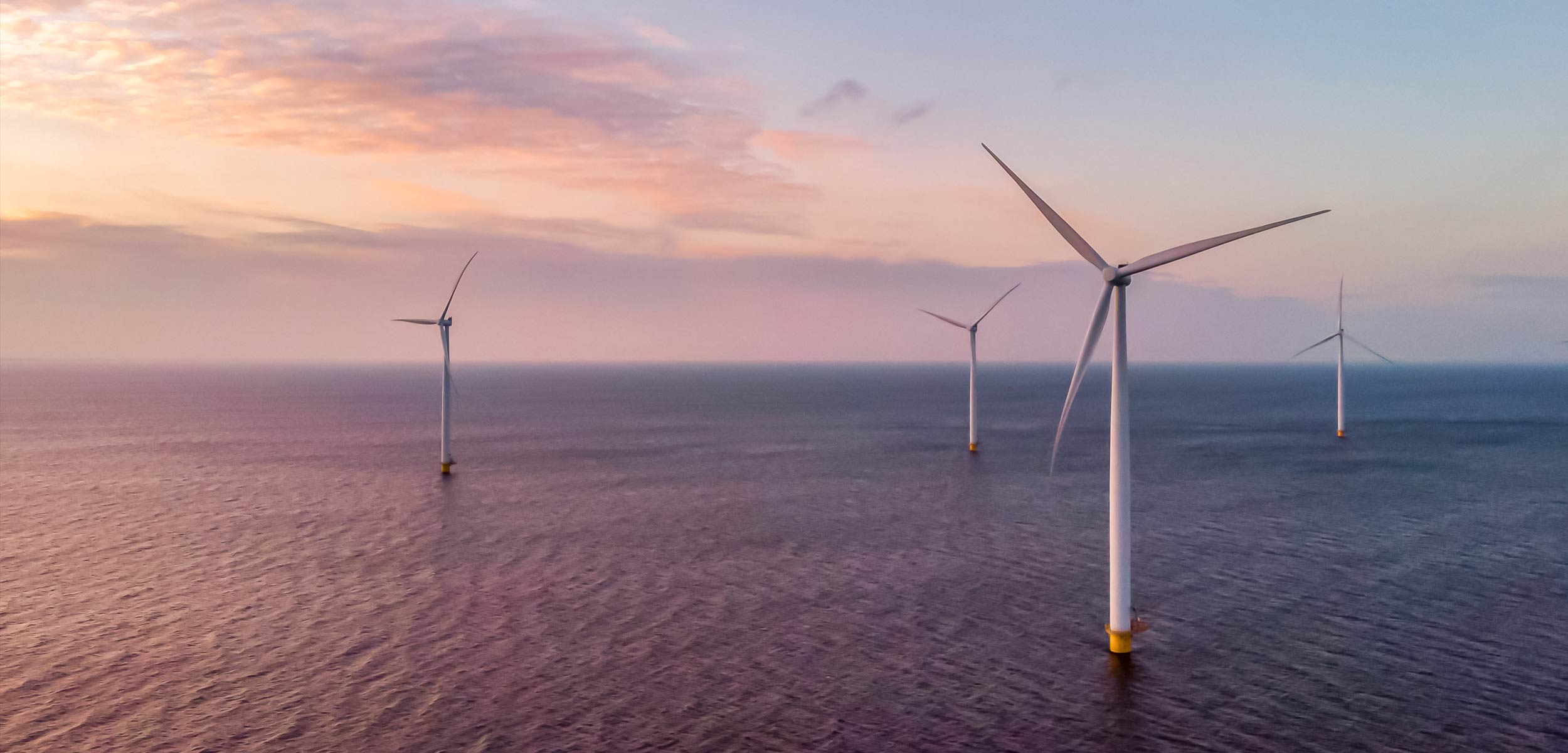
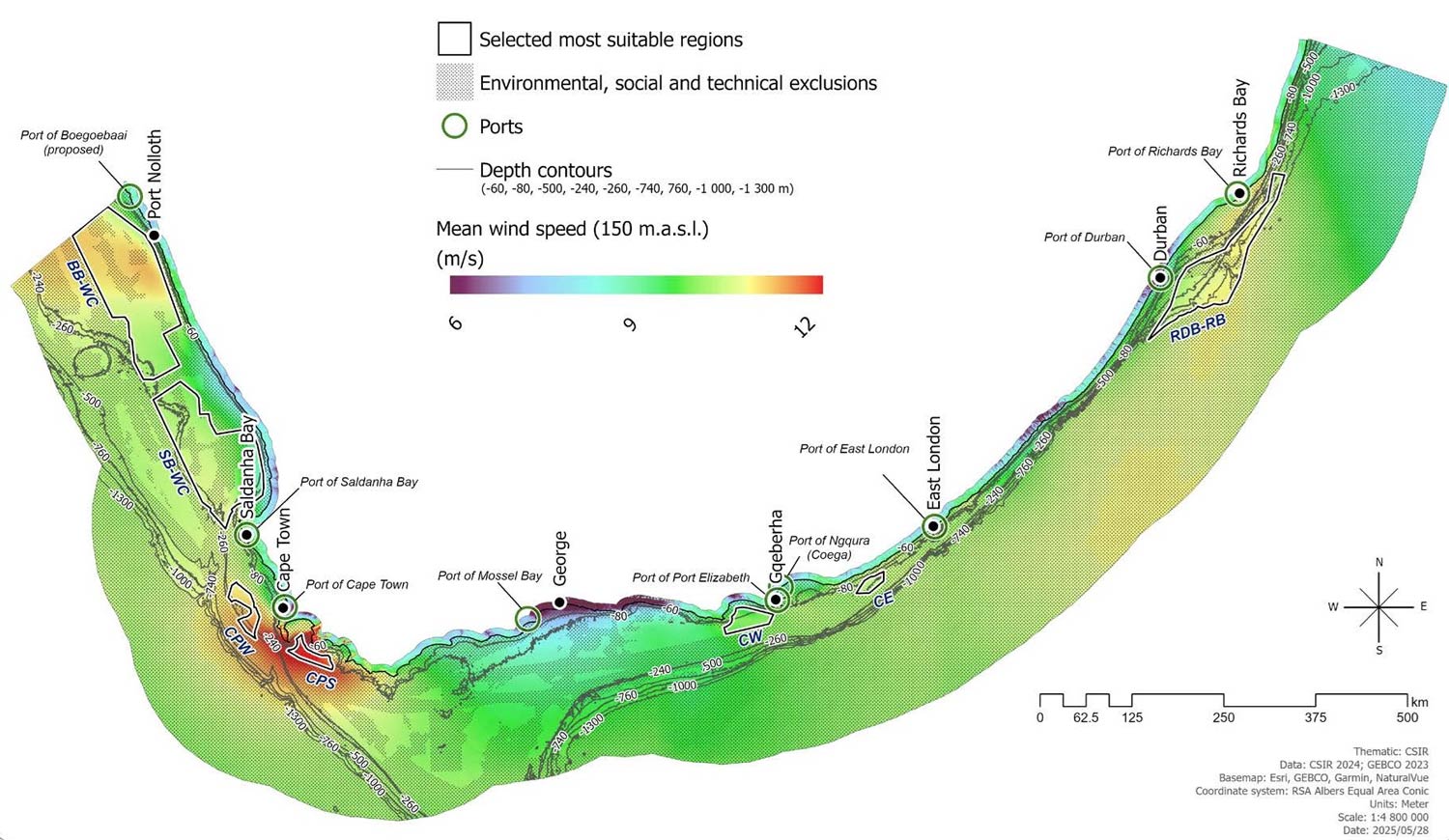
The department of electricity & energy on Thursday published a strategic framework for offshore wind development, identifying about 95GW of technical potential along South Africa’s 2 800km coastline and singling out energy-hungry coastal users, data centres among them, as the customers that could justify building it.
The framework identifies 6.4GW of floating offshore wind potential off Cape Town, against a municipal peak demand of roughly 2GW, and 17.4GW off Durban against eThekwini’s peak of about 1.7GW. Cape Town, the report notes, has “already attracted a large data centre operator by guaranteeing access to clean energy, currently powered by the Northern Cape’s solar PV capacity”. Add offshore generation to that mix and the city could “develop as a clean energy data centre hub”.
Deputy minister of energy Alexandra Abrahams launched the document at the Africa Green Hydrogen Summit in Cape Town. It was prepared by the Carbon Trust under contract to the World Bank, in collaboration with the department, with input from the CSIR, Meridian Economics and The Biodiversity Consultancy. The World Bank’s Energy Sector Management Assistance Programme funded it. It is the ninth country-level report in the bank’s offshore wind series.
The opportunity is there but the obstacles are clearly considerable.
No legal route to the seabed
For one, South Africa has no mechanism for granting a developer exclusive rights to an area of ocean. “Site exclusivity regulations for OSW (offshore wind) have not been enacted,” the report states, and there is “a lack of legislation and regulation allowing OSW site leasing and exclusivity”.
The Marine Spatial Planning Act of 2018 “does not explicitly mention how planning should be carried out to designate OSW development areas”. The national marine spatial plan is still being drafted, and offshore wind was left out of the National Coastal and Marine Spatial Biodiversity Plan entirely.
Nor has government decided who is in charge. The framework’s second recommendation asks the energy department and the department of forestry, fisheries & the environment to “determine and designate clear roles and responsibilities” for designating development areas, granting site exclusivity and leasing seabed. Elsewhere it notes that regulatory changes in South Africa “have been known to take up to two years”, before public participation and parliamentary oversight are counted.
Offshore wind also appears nowhere in national electricity planning. The draft Integrated Resource Plan 2023 “makes no specific reference to OSW”, according to the report, and the framework’s opening recommendation is that the department fix this by setting explicit offshore wind targets in the IRP.
Energy minister Kgosientsho Ramokgopa is careful about what the document is not. “This report is not a procurement plan, a policy determination, a capacity allocation or a commitment of public funds,” he writes in the foreword, adding that decisions will continue to be guided by the IRP, affordability, system need, bankability, environmental authorisation and grid readiness.
Abrahams was more bullish, saying investors “need transparency and a reasonable amount of predictability” and that the department “remains focused on advancing structural market reforms to foster open competition”.
A steep price premium
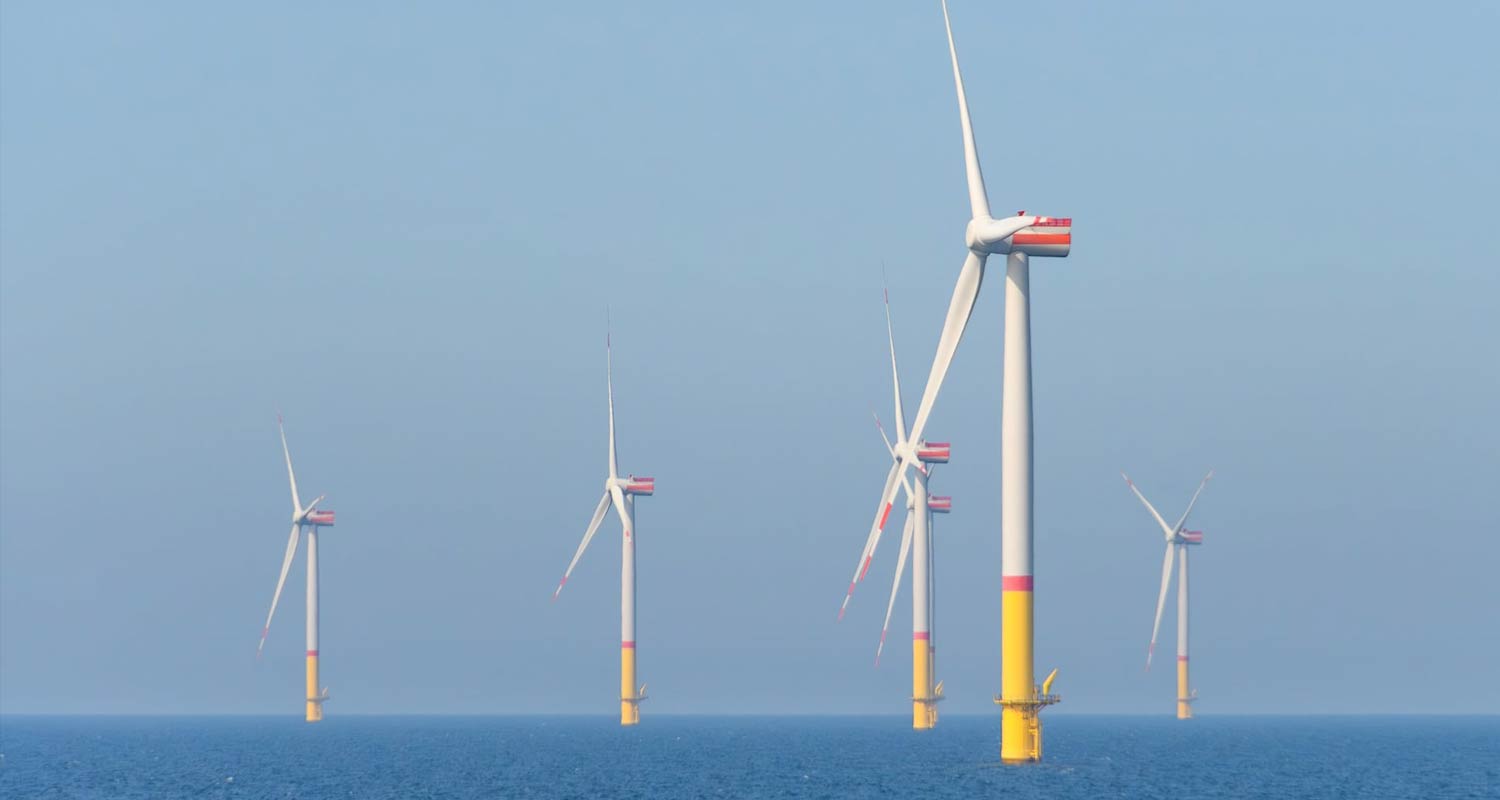
The second problem is cost. Under every scenario modelled, the first offshore project would be commissioned in 2035 at the earliest, given development lead times. The cheapest fixed-foundation sites, off Saldanha Bay and Coega, are projected at US$94/MWh to $116/MWh in that year. Floating turbines, which account for the overwhelming majority of the 95GW because the continental shelf falls away sharply, start at $97/MWh to $126/MWh.
Onshore wind procured in bid window 5 of the renewable energy independent power producer programme averaged $32/MWh in 2021, or R0.49/kWh at the exchange rate of the day. The comparison is not like for like – the offshore figures are modelled in 2023 dollars for delivery in 2035, and REIPPPP tariffs are indexed to inflation – but the gap is wide by any measure.
Costs fall sharply only if real volume arrives.
The framework models three paths to 2050: 5GW, 15GW or 40GW, supplying roughly 6%, 16% and 26% of national demand, respectively. Only the 40GW case, which means building 2.5GW to 3GW every year through the 2040s, brings floating wind down to $47/MWh to $60/MWh by 2050. It is also the only case that produces the benefit government has been quoting: more than 300 000 full-time equivalent job-years and $6.7-billion in wages between 2030 and 2050. Job-years are not jobs, and the figure accumulates across two decades.
The report concedes the point, saying offshore wind “may currently not be fully competitive with other renewable energy technologies in terms of price alone” and justifying it instead on industrialisation and job creation.
Two further constraints sit behind these. Only the port of Saldanha Bay is close to ready, needing little more than extra crane capacity, but the medium and high scenarios require two to three ports each handling 1GW/year, meaning quay extensions and dredging at Richards Bay or Durban, or the still-unbuilt port of Boegoebaai. The framework does not cost transmission upgrades at all, recommending instead that the National Transmission Company South Africa conduct the study.
Environmental and social constraints are also a big issue. Marine protected areas, core bird habitat for the African penguin, Cape gannet and Cape cormorant, shipping lanes and a 10km coastal buffer are treated as hard exclusions, while fisheries, offshore petroleum rights, subsea broadband cables and naval areas are flagged for further assessment.
As a case in point, the environmental impact study for South Africa’s first proposed offshore wind farm, on the east coast, has stalled pending new technical information from developers. The 800MW Gagasi project off Richards Bay was launched in 2022 by GenesisHexicon. Acer (Africa) Environmental Consultants, which was appointed to conduct the assessment, said the environmental authorisation application was withdrawn last year and that it was unsure of the project’s status. “The application was withdrawn to redesign from floating to anchored wind turbines, that is for technical and not environmental reasons,” said Acer MD Dieter Heinsohn.
Read: Solar, wind and smart grids – the tech transforming SA’s mining sector
The framework also assumes low social licence for anything visible from Cape Town and calls for “fair strategic compensation for displaced fisheries”.
This does not make offshore wind implausible for South Africa. It does mean the 95GW headline describes a potential resource rather than a practical pipeline, and that the work of turning one into the other has barely begun. — © 2026 NewsCentral Media, with additional reporting (c) 2026 Reuters