Close Menu
TechCentralTechCentral

    Subscribe to the newsletter

    Get the best South African technology news and analysis delivered to your e-mail inbox every morning.

    Facebook X (Twitter) YouTube LinkedIn
    WhatsApp Facebook X (Twitter) LinkedIn YouTube
    TechCentralTechCentral
    • News
      Vula Medical named as South Africa's 2025 app of the year

      Vula Medical named as South Africa’s 2025 app of the year

      5 December 2025
      Netflix, Warner Bros talks raise fresh headaches for MultiChoice

      Netflix, Warner Bros talks raise fresh headaches for MultiChoice

      5 December 2025
      Big Microsoft 365 price increases coming next year

      Big Microsoft price increases coming next year

      5 December 2025
      Vodacom to take control of Safaricom in R36-billion deal - Shameel Joosub

      Vodacom to take control of Safaricom in R36-billion deal

      4 December 2025
      Black Friday goes digital in South Africa as online spending surges to record high

      Black Friday goes digital in South Africa as online spending surges to record high

      4 December 2025
    • World
      Amazon and Google launch multi-cloud service for faster connectivity

      Amazon and Google launch multi-cloud service for faster connectivity

      1 December 2025
      Google makes final court plea to stop US breakup

      Google makes final court plea to stop US breakup

      21 November 2025
      Bezos unveils monster rocket: New Glenn 9x4 set to dwarf Saturn V

      Bezos unveils monster rocket: New Glenn 9×4 set to dwarf Saturn V

      21 November 2025
      Tech shares turbocharged by Nvidia's stellar earnings

      Tech shares turbocharged by stellar Nvidia earnings

      20 November 2025
      Config file blamed for Cloudflare meltdown that disrupted the web

      Config file blamed for Cloudflare meltdown that disrupted the web

      19 November 2025
    • In-depth
      Jensen Huang Nvidia

      So, will China really win the AI race?

      14 November 2025
      Valve's Linux console takes aim at Microsoft's gaming empire

      Valve’s Linux console takes aim at Microsoft’s gaming empire

      13 November 2025
      iOCO's extraordinary comeback plan - Rhys Summerton

      iOCO’s extraordinary comeback plan

      28 October 2025
      Why smart glasses keep failing - no, it's not the tech - Mark Zuckerberg

      Why smart glasses keep failing – it’s not the tech

      19 October 2025
      BYD to blanket South Africa with megawatt-scale EV charging network - Stella Li

      BYD to blanket South Africa with megawatt-scale EV charging network

      16 October 2025
    • TCS
      TCS+ | How Cloud on Demand helps partners thrive in the AWS ecosystem - Odwa Ndyaluvane and Xenia Rhode

      TCS+ | How Cloud On Demand helps partners thrive in the AWS ecosystem

      4 December 2025
      TCS | MTN Group CEO Ralph Mupita on competition, AI and the future of mobile

      TCS | Ralph Mupita on competition, AI and the future of mobile

      28 November 2025
      TCS | Dominic Cull on fixing South Africa's ICT policy bottlenecks

      TCS | Dominic Cull on fixing South Africa’s ICT policy bottlenecks

      21 November 2025
      TCS | BMW CEO Peter van Binsbergen on the future of South Africa's automotive industry

      TCS | BMW CEO Peter van Binsbergen on the future of South Africa’s automotive industry

      6 November 2025
      TCS | Why Altron is building an AI factory - Bongani Andy Mabaso

      TCS | Why Altron is building an AI factory in Johannesburg

      28 October 2025
    • Opinion
      Your data, your hardware: the DIY AI revolution is coming - Duncan McLeod

      Your data, your hardware: the DIY AI revolution is coming

      20 November 2025
      Zero Carbon Charge founder Joubert Roux

      The energy revolution South Africa can’t afford to miss

      20 November 2025
      It's time for a new approach to government IT spend in South Africa - Richard Firth

      It’s time for a new approach to government IT spend in South Africa

      19 November 2025
      How South Africa's broken Rica system fuels murder and mayhem - Farhad Khan

      How South Africa’s broken Rica system fuels murder and mayhem

      10 November 2025
      South Africa's AI data centre boom risks overloading a fragile grid - Paul Colmer

      South Africa’s AI data centre boom risks overloading a fragile grid

      30 October 2025
    • Company Hubs
      • Africa Data Centres
      • AfriGIS
      • Altron Digital Business
      • Altron Document Solutions
      • Altron Group
      • Arctic Wolf
      • AvertITD
      • Braintree
      • CallMiner
      • CambriLearn
      • CYBER1 Solutions
      • Digicloud Africa
      • Digimune
      • Domains.co.za
      • ESET
      • Euphoria Telecom
      • Incredible Business
      • iONLINE
      • IQbusiness
      • Iris Network Systems
      • LSD Open
      • NEC XON
      • Netstar
      • Network Platforms
      • Next DLP
      • Ovations
      • Paracon
      • Paratus
      • Q-KON
      • SevenC
      • SkyWire
      • Solid8 Technologies
      • Telit Cinterion
      • Tenable
      • Vertiv
      • Videri Digital
      • Vodacom Business
      • Wipro
      • Workday
      • XLink
    • Sections
      • AI and machine learning
      • Banking
      • Broadcasting and Media
      • Cloud services
      • Contact centres and CX
      • Cryptocurrencies
      • Education and skills
      • Electronics and hardware
      • Energy and sustainability
      • Enterprise software
      • Financial services
      • Information security
      • Internet and connectivity
      • Internet of Things
      • Investment
      • IT services
      • Lifestyle
      • Motoring
      • Public sector
      • Retail and e-commerce
      • Satellite communications
      • Science
      • SMEs and start-ups
      • Social media
      • Talent and leadership
      • Telecoms
    • Events
    • Advertise
    TechCentralTechCentral
    Home » Opinion » Greg Mahlknecht » On the future of computing

    On the future of computing

    By Editor30 June 2010
    Twitter LinkedIn Facebook WhatsApp Email Telegram Copy Link
    News Alerts
    WhatsApp

    [By Greg Mahlknecht]

    The elements of the future of the desktop are slowly falling into place. No one company has a comprehensive set of products and services that will deliver the future of computing, but the shape of things to come is getting clearer.

    The key driver behind it all is convergence — convergence onto a single productivity device, and convergence in the “cloud”.

    In hardware, desktops are losing market share to notebooks, which in turn are being eroded by netbooks, a market which itself is being diversified into tablets like the Apple iPad.

    And devices like the BlackBerry and other smartphones have blurred the lines for the device of choice for a number of tasks such as e-mail and calendaring.

    The iPad offers a great form factor for casual use. And it doesn’t take much to see how the much trumped and apparently now shelved Hewlett-Packard Slate could entirely replace a PC, especially when used in conjunction with a docking station.

    In software, things are even more complex.

    In operating systems, a three-way battle is emerging between Apple (with iOS used on the iPad and iPhone), Google’s Android, and the various flavours of Microsoft’s Windows.

    And applications are shifting to the Web, or into the “cloud”, to use industry parlance.

    Classic desktop applications like e-mail now use cloud-based storage. Full applications, such as Salesforce.com and Google Docs, are even offered online using the software as a service (Saas) model.

    Then there’s the enabling technology that binds all this together. The two approaches here are Saas and the proprietary application store model, where apps are tied to the operating system and the data is stored on the Internet — in the cloud.

    The guys who make operating systems — not to mention most users — love the idea of using native apps. Developers, on the other hand, love the idea of Saas.

    Both camps will play a large part in the future of computing, but more non-core products and services will be based on Saas due to the enormous time involved in developing myriad native apps for multiple operating systems.

    Once again, there are three main players in this game: Google, Apple and Microsoft. And they are all desperately trying to cover all the bases with varying degrees of success.

    Google
    The first company that springs to mind for cutting-edge, next-generation technology is Google. Ironically, this is the company struggling the most to carve a profitable niche into the future.

    Hardware-wise, Google has nothing to offer. But their Android operating system is proving wildly successful.

    Google's Android was mediocre at first release but has improved quickly

    In typical Google fashion, the company stormed out of the starting blocks with a mediocre product and improved it incrementally, but did so very quickly. This approach worked very well on the Web, but it has proven somewhat troublesome with Android, as we are left with a fragmented set of devices beyond Google’s direct control.

    Microsoft’s Windows Mobile suffered from this fragmentation and it eventually became impractical to maintain. One hopes Google recognises this threat sooner rather than later.

    Chrome OS, though still unreleased, is Google’s obvious play for the Saas market. It sees the operating system as a way to lock users into their ecosystem on cheap devices, most likely tablets.

    Being just a glorified browser, they are banking on everyone doing everything online and optimising it to make the Google cloud-services experience better. This suits them just because instead of venturing out their online safety zone, they are trying to pull everyone into the place they consider themselves king.

    But therein lies the problem for Google. Though it has a rich set of cloud apps — Gmail, Google Docs, Maps — none is really good enough to replace its desktop counterpart. Sure, Gmail is a great Web app, but it falls woefully short when compared to the native mail readers on devices such as the BlackBerry, the iPhone and the iPad. And this generally holds true for just about any Saas application.

    Apple
    At the other end of the spectrum is Apple, which rabidly clings to its closed ecosystem, making the user do as much as possible on its devices.

    Apple has wet its toes in online services with MobileMe, but has more or less backed the client-server model.

    CEO Steve Jobs talks up HTML5 and Webkit a lot, but he either doesn’t understand the technology, or knows that not many people do, and so can pull the wool over their eyes.
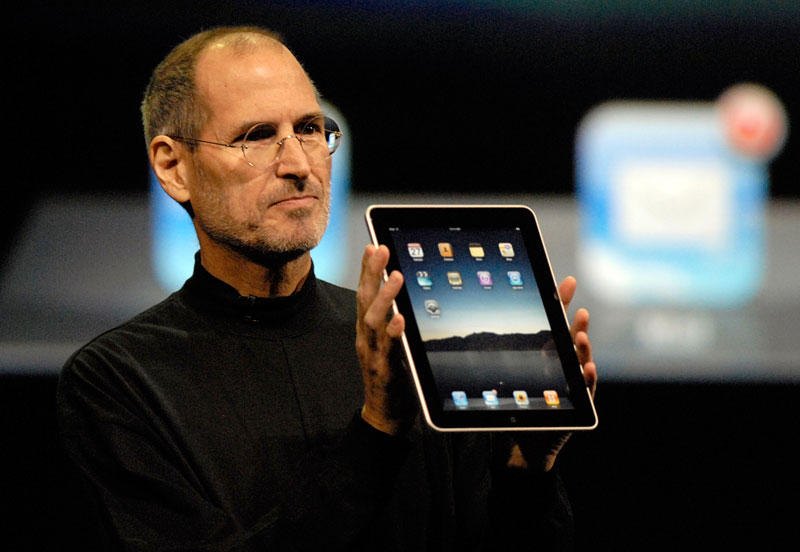
    Apple CEO Steve Jobs unveils the iPad

    The state of browsers on modern smartphones is in total disarray. There’s the awful Windows Mobile browser, the almost-as-bad BlackBerry browser, with most of the rest using Webkit.

    A little research shows that every Webkit implementation on every platform has its own special quirks and shortcomings, so much so that it’s not an option to “write for Webkit” and assume it’ll work across all devices. The Webkit mobile branches have been forked and modified beyond recognition.

    Even though Apple is the most secretive of the companies, it’s also the easiest to predict. It’s simple to see its long-term strategy, which is to keep developing iOS into its iPhone/iPad product ranges, and incrementally update the hardware. I don’t think anyone will be surprised if next year’s iPad looks like a big iPhone 4 with a Retina™ display.

    What would be a big surprise is if Apple were to unveil a cloud offering that works on all browsers across all operating systems. That’s not Apple rolls – its happy pumping its niche in the market for repeat business.

    Instead of starting with a clean slate and building an iPad that runs Mac OS X in a bid to expand its share of the desktop applications market, Apple will keep trying to get its users to “make do” with iOS and convince them it’s the way they want to work. (Incidentally, this Apple mindset was highlighted last week when Steve Jobs told the iPhone 4 users the way to fix an antenna problem was to hold their phones differently, rather than admit there was an issue with the device.)

    Microsoft
    This brings us to Microsoft, a sleeping giant that’s just awoken.

    And, in typical Microsoft fashion, it’s decided to take on everyone with just about everything. A few years ago this would have spelt disaster, but in the past few years, Redmond hasn’t put a foot wrong.

    Microsoft CEO Steve Ballmer with Hewlett-Packard's Slate tablet PC

    Its server range is eroding other vendors’ market share, Windows 7 is an unquestionable success, Xbox 360 has erased the commercial embarrassment of the original Xbox, its revamp of online services has been well met by most critics, and its push into cloud services and mobile/tablets is looking strong.

    The company has revamped its live.com site to give an online mail reader and office productivity suite that matches Google’s offerings. It’s extended this with its “Wave 4” beta of Windows Live Essentials, to provide cloud-storage versions of mail, photos and general storage.

    The new Office 2010 also tightly integrates with the cloud storage (Skydrive) and the online Office offering to allow a rich set of tools for using your data in the cloud.

    To deliver this, Microsoft is working to provide platforms on smartphones with Windows Phone Series 7 and tablets with Windows CE Embedded and Windows 7. Asus has demonstrated Eee tablets running both Windows CE Embedded and Windows 7, and if anyone has credentials in the ultra-portable low-end field, it’s Asus, the company that invented the netbook.

    Samsung and LG have both thrown their mobile hats into Microsoft’s ring, which is significant as both are known for driving down prices of technology without sacrificing too much quality. A case in point is how Samsung almost singlehandedly halved the price of computer LCD monitors in the last 18 months.

    None of the new generation of Microsoft products use dirty tricks to tie people in; and the company’s cloud-based apps run happily on all leading browsers.

    Microsoft is even embracing third-party phone and tablet manufacturers and has opened up all its important Office and Outlook formats and protocols. All these are a clear indication that the company is looking to compete on the merits of its products rather than using the underhanded tactics it relied on in the past.

    Winners and losers
    If we distil all this information, the picture emerging is of a device, like the Hewlett-Packard Slate (a powerful iPad running a full operating system) at the center of the ecosystem, replacing notebooks, desktops and perhaps even gaming consoles.
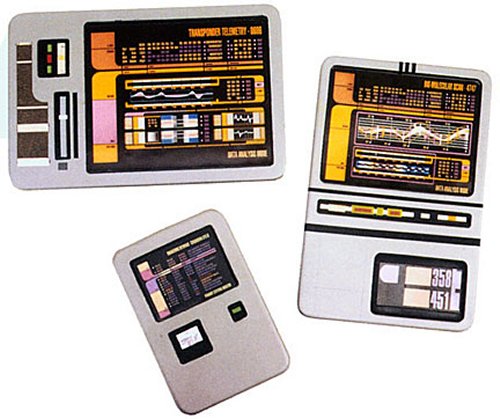
    Gene Roddenberry was first ... the tablets used in Star Trek in the 1970s

    A set of native apps would be needed to provide professionals and power users with core tasks (mail reader, word processor, spreadsheet, computer-aided design tools, photo editing software and games), with everything else — from simple paint applications to weather apps and social networking — offered via the cloud.

    Which company, then, Apple, Microsoft or Google, is best positioned to take seize the opportunity?

    The answer is the decision is out of these companies’ hands. There will be no single winner. Devices will tend towards becoming converged and open and made by third parties using Microsoft Windows.

    App stores will be eroded by Web apps, and Google might win here with plans for an app store for Web apps.

    Apple appears to be chasing short-term profits and its walled garden approach doesn’t seem wise in the longer term. Remember, it almost killed the company once before.

    The real winners are the developers and users who get to enjoy a consolidated experience, one that will be built on foundations laid by Microsoft and Google.

    • Greg Mahlknecht is an entrepreneur and developer with more than 20 years of diverse experience in the IT industry
    • Subscribe to our free daily newsletter
    • Follow us on Twitter or on Facebook


    Apple Google Greg Mahlknecht Hewlett-Packard HP Slate iPad Microsoft Steve Jobs
    Subscribe to TechCentral Subscribe to TechCentral
    Share. Facebook Twitter LinkedIn WhatsApp Telegram Email Copy Link
    Previous ArticleWBS may build rural 3G mobile network
    Next Article Mncube replaces Mashile as chair of Icasa

    Related Posts

    Big Microsoft 365 price increases coming next year

    Big Microsoft price increases coming next year

    5 December 2025
    What South Africans searched for most in 2025

    What South Africans searched for most in 2025, according to Google

    4 December 2025
    Unlock smarter computing with your surface Copilot+ PC

    Unlock smarter computing with your Surface Copilot+ PC

    4 December 2025
    Company News
    Beat the summer heat with Samsung's WindFree air conditioners

    Beat the summer heat with Samsung’s WindFree air conditioners

    5 December 2025
    AI is not a technology problem - iqbusiness

    AI is not a technology problem – iqbusiness

    5 December 2025
    Telcos are sitting on a data gold mine - but few know what do with it - Phillip du Plessis

    Telcos are sitting on a data gold mine – but few know what do with it

    4 December 2025
    Opinion
    Your data, your hardware: the DIY AI revolution is coming - Duncan McLeod

    Your data, your hardware: the DIY AI revolution is coming

    20 November 2025
    Zero Carbon Charge founder Joubert Roux

    The energy revolution South Africa can’t afford to miss

    20 November 2025
    It's time for a new approach to government IT spend in South Africa - Richard Firth

    It’s time for a new approach to government IT spend in South Africa

    19 November 2025

    Subscribe to Updates

    Get the best South African technology news and analysis delivered to your e-mail inbox every morning.

    Latest Posts
    Vula Medical named as South Africa's 2025 app of the year

    Vula Medical named as South Africa’s 2025 app of the year

    5 December 2025
    Beat the summer heat with Samsung's WindFree air conditioners

    Beat the summer heat with Samsung’s WindFree air conditioners

    5 December 2025
    Netflix, Warner Bros talks raise fresh headaches for MultiChoice

    Netflix, Warner Bros talks raise fresh headaches for MultiChoice

    5 December 2025
    Big Microsoft 365 price increases coming next year

    Big Microsoft price increases coming next year

    5 December 2025
    © 2009 - 2025 NewsCentral Media
    • Cookie policy (ZA)
    • TechCentral – privacy and Popia

    Type above and press Enter to search. Press Esc to cancel.

    Manage consent

    TechCentral uses cookies to enhance its offerings. Consenting to these technologies allows us to serve you better. Not consenting or withdrawing consent may adversely affect certain features and functions of the website.

    Functional Always active
    The technical storage or access is strictly necessary for the legitimate purpose of enabling the use of a specific service explicitly requested by the subscriber or user, or for the sole purpose of carrying out the transmission of a communication over an electronic communications network.
    Preferences
    The technical storage or access is necessary for the legitimate purpose of storing preferences that are not requested by the subscriber or user.
    Statistics
    The technical storage or access that is used exclusively for statistical purposes. The technical storage or access that is used exclusively for anonymous statistical purposes. Without a subpoena, voluntary compliance on the part of your Internet Service Provider, or additional records from a third party, information stored or retrieved for this purpose alone cannot usually be used to identify you.
    Marketing
    The technical storage or access is required to create user profiles to send advertising, or to track the user on a website or across several websites for similar marketing purposes.
    • Manage options
    • Manage services
    • Manage {vendor_count} vendors
    • Read more about these purposes
    View preferences
    • {title}
    • {title}
    • {title}