
Close Menu
TechCentralTechCentral

    Subscribe to the newsletter

    Get the best South African technology news and analysis delivered to your e-mail inbox every morning.

    Facebook X (Twitter) YouTube LinkedIn
    WhatsApp Facebook X (Twitter) LinkedIn YouTube
    TechCentralTechCentral
    • News
      Vodacom targets satellite-to-phone service in South Africa next year

      Vodacom targets satellite-to-phone service in South Africa next year

      10 November 2026
      Vodacom eyes SA and Kenya for AI data centre hubs after Egypt - Shameel Joosub

      Vodacom eyes SA and Kenya for AI data centre hubs after Egypt

      10 November 2026
      Eskom chairman Mteto Nyati and energy minister Kgosientsho Ramokgopa speak to the media in Irene, Pretoria

      South Africa’s first new nuclear reactors could be online by 2036

      10 November 2026
      Comsol's 5G network pricing comes into view

      Comsol’s 5G network pricing comes into view

      10 November 2026
      Safaricom ruling tripped default clauses in Vodacom's loans

      Safaricom ruling tripped default clauses in Vodacom’s loans

      10 November 2026
    • World
      John Ternus faces first big test as Apple CEO - John Ternus

      John Ternus faces first big test as Apple CEO

      2 November 2026
      Alleged Israeli spy company heavily targeted Starlink users

      How online ads were used to hunt Starlink users

      28 October 2026
      Anthropic's IPO stands alone

      Anthropic’s IPO stands alone

      23 October 2026
      PHP flaws trigger global scramble as hackers pounce

      PHP flaws trigger global scramble as hackers pounce

      22 October 2026
      OpenAI turns the tables on Apple in trade secrets fight

      OpenAI turns the tables on Apple in trade secrets fight

      15 October 2026
    • In-depth
      Ducking hell: inside Apple's hidden list of words the iPhone won't suggest

      Ducking hell: inside Apple’s hidden list of words the iPhone won’t suggest

      6 November 2026
      Why investors are souring on Netflix

      Why investors are souring on Netflix

      22 October 2026

      10 days that changed the course of AI

      21 September 2026
      Meta to the AI industry: slow down without us - Mark Zuckerberg

      Meta to the AI industry: slow down without us

      16 September 2026
      Google DeepMind CEO Demis Hassabis. Image: John Sears

      The plan to stop AI from breaking the world

      16 July 2026
    • TCS
      TCS+ | Old Mutual's Celiwe Ross on leading people through AI - Old Mutual

      TCS+ | Old Mutual’s Celiwe Ross on leading people through AI

      6 November 2026
      TCS+ | How the Apple ecosystem drives productivity for SMEs - Sudesh Pillay iStore and Kevin McLennan

      TCS+ | How the Apple ecosystem drives productivity for SMEs

      6 November 2026
      TCS+ | Vox on AI, data rules and omnichannel communication for SMEs

      TCS+ | Vox on AI, data rules and omnichannel communication for SMEs

      26 October 2026
      TCS | The Cape Town firm quietly connecting Eskom, Pep and 6 000 ATMs - Réan van Niekerk, Metacom

      TCS | The Cape Town firm quietly connecting Eskom, Pep and 6 000 ATMs

      23 October 2026
      TCS+ | Boards are underestimating the cost of a cyberattack, says Arctic Wolf - Jason Oehley and Andre Den Hond

      TCS+ | Boards are underestimating the cost of a cyberattack, says Arctic Wolf

      22 October 2026
    • Opinion
      Icasa's Sim rules need a privacy backstop - Lloyd Matthew and Heinz Vollmer

      Icasa’s Sim rules need a privacy backstop

      5 November 2026
      AI's boardroom honeymoon is over - Gary Stocks

      AI’s boardroom honeymoon is over

      22 October 2026
      Before South Africa licenses Starlink, it should look at Ukraine - Duncan McLeod

      Before South Africa licenses Starlink, it should look at Ukraine

      21 October 2026
      Nonkqubela Thathakahle Jordan-Dyani

      Why cybersecurity is now a national security issue for South Africa

      15 October 2026
      When a machine can choose, who does it become? Fanie van Rooyen

      When a machine can choose, who does it become?

      9 October 2026
    • Company News
      • 1Stream
      • Africa Data Centres
      • AfriGIS
      • Altron Digital Business
      • Altron Document Solutions
      • Altron Group
      • Arctic Wolf
      • Ascent Technology
      • AvertITD
      • BBD
      • Braintree
      • CallMiner
      • CambriLearn
      • CM.com
      • Contactable
      • CYBER1 Solutions
      • Digicloud Africa
      • Digimune
      • Domains.co.za
      • ESET
      • Euphoria Telecom
      • HOSTAFRICA
      • Incredible Business
      • iONLINE
      • IQbusiness
      • Iris Network Systems
      • Kaspersky
      • LSD Open
      • Mitel
      • NEC XON
      • Netstar
      • Network Platforms
      • Next DLP
      • Ovations
      • Paracon
      • Paratus
      • Publishared
      • Q-KON
      • SevenC
      • SkyWire
      • Solid8 Technologies
      • Telit Cinterion
      • Telviva
      • Tenable
      • Vertiv
      • Videri Digital
      • Vodacom Business
      • Vox
      • Wipro
      • Workday
      • XLink
    • Sections
      • AI and machine learning
      • Banking
      • Broadcasting and media
      • Cloud services
      • Contact centres and CX
      • Cryptocurrencies
      • Education and skills
      • Electronics and hardware
      • Energy and sustainability
      • Enterprise software
      • Fintech and payments
      • HealthTech
      • Information security
      • Internet and connectivity
      • Internet of things
      • Investment
      • IT services
      • Lifestyle
      • Policy and regulation
      • Public sector
      • Retail and e-commerce
      • Satellite communications
      • Science
      • SMEs and start-ups
      • Social media
      • Talent and leadership
      • Telecoms
      • Watts & Wheels
    • Events
    • Advertise
    TechCentralTechCentral
    Home » Sections » AI and machine learning » OpenAI readies its own silicon to challenge Nvidia

    OpenAI readies its own silicon to challenge Nvidia

    OpenAI is pushing ahead with a plan to reduce its reliance on Nvidia by developing its first in-house AI silicon.
    By Agency Staff10 February 2025
    Twitter LinkedIn Facebook WhatsApp Email Telegram Copy Link
    Get breaking news on WhatsApp

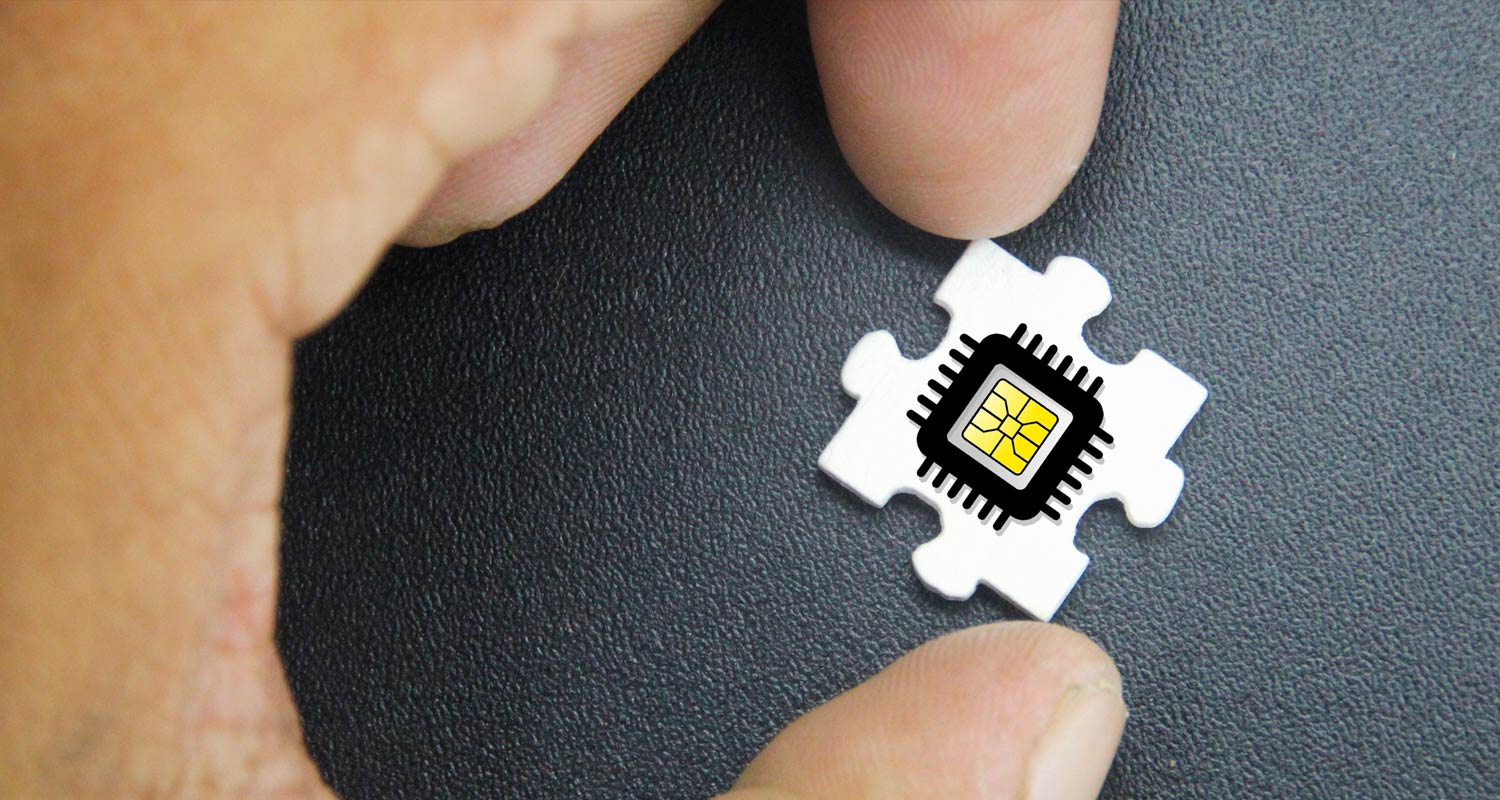
    OpenAI readies its own silicon to challenge NvidiaOpenAI is pushing ahead with a plan to reduce its reliance on Nvidia for its chip supply by developing its first generation of in-house AI silicon.

    The ChatGPT maker is finalising the design for its first in-house chip in the next few months and plans to send it for fabrication at TSMC, sources said. The process of sending a first design through a chip factory is called “taping out”. OpenAI and TSMC declined to comment.

    The update shows that OpenAI is on track to meet its ambitious goal of mass production at TSMC in 2026. A typical tape-out costs tens of millions of dollars and will take roughly six months to produce a finished chip, unless OpenAI pays substantially more for expedited manufacturing. There is no guarantee the silicon will function on the first tape-out and a failure would require the company to diagnose the problem and repeat the tape-out step.

    OpenAI’s plan to send its design to TSMC this year demonstrates it’s made speedy progress on its first design

    Inside OpenAI, the training-focused chip is viewed as a strategic tool to strengthen OpenAI’s negotiating leverage with other chip suppliers, the sources said. After the initial chip, OpenAI’s engineers plan to develop increasingly advanced processors with broader capabilities with each new iteration.

    If the initial tape-out goes smoothly, it will allow the ChatGPT maker to mass-produce its first in-house AI chip and potentially test an alternative to Nvidia’s chips later this year. OpenAI’s plan to send its design to TSMC this year demonstrates the start-up has made speedy progress on its first design, a process that can take other chip designers years longer.

    Big technology companies such as Microsoft and Meta Platforms have struggled to produce satisfactory chips despite years of effort. The recent market rout triggered by Chinese AI start-up DeepSeek has also raised questions about whether fewer chips will be needed in developing powerful models in the future.

    Steep costs

    The chip is being designed by OpenAI’s in-house team led by Richard Ho, which had doubled in the past months to 40 people, in collaboration with Broadcom. Ho joined OpenAI more than a year ago from Google where he helped lead the search giant’s custom AI chip programme.

    Ho’s team is smaller than the large-scale efforts at tech giants such as Google or Amazon. A new chip design for an ambitious, large-scale programme could cost $500-million for a single version of a chip, according to industry sources with knowledge of chip design budgets. Those costs could double to build the necessary software and peripherals around it.

    Read: OpenAI unveils ‘o3’ reasoning AI models

    Generative AI model makers like OpenAI, Google and Meta have demonstrated that ever-larger numbers of chips strung together in data centres make models smarter, and as a result they have an insatiable demand for the chips.

    Meta has said it will spend $60-billion on AI infrastructure in the next year and Microsoft has said it will spend $80-billion in 2025. Currently, Nvidia’s chips are the most popular and hold a market share of roughly 80%. OpenAI is itself participating in the $500-billion Stargate infrastructure programme announced by US President Donald Trump last month.

    But rising costs and dependence on a single supplier have led major customers such as Microsoft, Meta and now OpenAI to explore in-house or external alternatives to Nvidia’s chips.

    OpenAI’s in-house AI chip, while capable of both training and running AI models, will initially be deployed on a limited scale, and primarily for running AI models, the sources said. The chip will have a limited role within the company’s infrastructure.

    To build out an effort as comprehensive as Google or Amazon’s AI chip programme, OpenAI would have to hire hundreds of engineers.

    Read: Google has made a dangerous U-turn on AI

    TSMC is manufacturing OpenAI’s AI chip using its advanced, 3-nanometre process technology. The chip features a commonly used systolic array architecture with high-bandwidth memory — also used by Nvidia for its chips — and extensive networking capabilities, sources said.  — Anna Tong, Max A Cherney and Krystal Hu, (c) 2025 Reuters

    Get breaking news from TechCentral on WhatsApp. Sign up here.

    Don’t miss:

    Deep Research is OpenAI’s latest push into AI agents

    Add TechCentral as a preferred source on GoogleFollow TechCentral on Google NewsGet breaking news on WhatsApp


    ChatGPT Nvidia OpenAI TSMC
    WhatsApp YouTube
    Share. Facebook Twitter LinkedIn WhatsApp Telegram Email Copy Link
    Previous ArticleStarlink to phones gets a price: $15/month
    Next Article MTN is still king of speed – but Vodacom’s 5G is faster

    Related Posts

    Vodacom eyes SA and Kenya for AI data centre hubs after Egypt - Shameel Joosub

    Vodacom eyes SA and Kenya for AI data centre hubs after Egypt

    10 November 2026
    Egypt's biggest data centre will have Vodacom money behind it

    Egypt’s biggest data centre will have Vodacom money behind it

    10 November 2026
    Jensen Huang's China problem reaches the FBI. Steve Marcus/Reuters

    Jensen Huang’s China problem reaches the FBI

    10 November 2026
    Company News
    The hidden risks of fragmented IT and unenforced SLAs - ITC Systems Durban

    The hidden risks of fragmented IT and unenforced SLAs

    10 November 2026
    Why AI-powered customer experience will decide South Africa's festive retail winners - CM.com

    Why AI-powered customer experience will decide South Africa’s festive retail winners

    10 November 2026
    You do not have a data estate. You have copies of one - Ascent Technology, Johan Lamberts

    You do not have a data estate. You have copies of one

    10 November 2026
    Opinion
    Icasa's Sim rules need a privacy backstop - Lloyd Matthew and Heinz Vollmer

    Icasa’s Sim rules need a privacy backstop

    5 November 2026
    AI's boardroom honeymoon is over - Gary Stocks

    AI’s boardroom honeymoon is over

    22 October 2026
    Before South Africa licenses Starlink, it should look at Ukraine - Duncan McLeod

    Before South Africa licenses Starlink, it should look at Ukraine

    21 October 2026

    Subscribe to Updates

    Get the best South African technology news and analysis delivered to your e-mail inbox every morning.

    Latest Posts
    Vodacom targets satellite-to-phone service in South Africa next year

    Vodacom targets satellite-to-phone service in South Africa next year

    10 November 2026
    Vodacom eyes SA and Kenya for AI data centre hubs after Egypt - Shameel Joosub

    Vodacom eyes SA and Kenya for AI data centre hubs after Egypt

    10 November 2026
    Eskom chairman Mteto Nyati and energy minister Kgosientsho Ramokgopa speak to the media in Irene, Pretoria

    South Africa’s first new nuclear reactors could be online by 2036

    10 November 2026
    Comsol's 5G network pricing comes into view

    Comsol’s 5G network pricing comes into view

    10 November 2026
    © 2009 - 2026 NewsCentral Media
    Built and maintained by Chronon
    • Cookie policy (ZA)
    • TechCentral – privacy and Popia

    Type above and press Enter to search. Press Esc to cancel.

    Manage consent

    TechCentral uses cookies to enhance its offerings. Consenting to these technologies allows us to serve you better. Not consenting or withdrawing consent may adversely affect certain features and functions of the website.

    Functional Always active
    The technical storage or access is strictly necessary for the legitimate purpose of enabling the use of a specific service explicitly requested by the subscriber or user, or for the sole purpose of carrying out the transmission of a communication over an electronic communications network.
    Preferences
    The technical storage or access is necessary for the legitimate purpose of storing preferences that are not requested by the subscriber or user.
    Statistics
    The technical storage or access that is used exclusively for statistical purposes. The technical storage or access that is used exclusively for anonymous statistical purposes. Without a subpoena, voluntary compliance on the part of your Internet Service Provider, or additional records from a third party, information stored or retrieved for this purpose alone cannot usually be used to identify you.
    Marketing
    The technical storage or access is required to create user profiles to send advertising, or to track the user on a website or across several websites for similar marketing purposes.
    • Manage options
    • Manage services
    • Manage {vendor_count} vendors
    • Read more about these purposes
    View preferences
    • {title}
    • {title}
    • {title}
    🇿🇦 Sign up to the TechCentral newsletter