Close Menu
TechCentralTechCentral

    Subscribe to the newsletter

    Get the best South African technology news and analysis delivered to your e-mail inbox every morning.

    Facebook X (Twitter) YouTube LinkedIn
    WhatsApp Facebook X (Twitter) LinkedIn YouTube
    TechCentralTechCentral
    • News
      Hold the doom: the case for a South African comeback

      Hold the doom: the case for a South African comeback

      26 February 2026
      Data centre 'critical infrastructure' tag welcomed, but detail still thin

      Data centre ‘critical infrastructure’ tag welcomed, but detail still thin

      26 February 2026
      Under fire, Nvidia goes to war with its critics

      Nvidia beats again – but Wall Street has stopped cheering

      26 February 2026
      Lithium prices soar after Zimbabwe suspends exports

      Lithium prices soar after Zimbabwe suspends exports

      26 February 2026

      Samsung S26 launch – rand helps shield South Africans from bigger price hikes

      26 February 2026
    • World

      Stripe mulling bid for PayPal: report

      25 February 2026
      Xbox chief Phil Spencer retires from Microsoft

      Xbox chief Phil Spencer retires from Microsoft

      22 February 2026
      Prominent Southern African journalist targeted with Predator spyware

      Prominent Southern African journalist targeted with Predator spyware

      18 February 2026
      More drama in Warner Bros tug of war

      More drama in Warner Bros tug of war

      17 February 2026
      Russia bans WhatsApp

      Russia bans WhatsApp

      12 February 2026
    • In-depth
      The last generation of coders

      The last generation of coders

      18 February 2026
      Sentech is in dire straits

      Sentech is in dire straits

      10 February 2026
      How liberalisation is rewiring South Africa's power sector

      How liberalisation is rewiring South Africa’s power sector

      21 January 2026
      The top-performing South African tech shares of 2025

      The top-performing South African tech shares of 2025

      12 January 2026
      Digital authoritarianism grows as African states normalise internet blackouts

      Digital authoritarianism grows as African states normalise internet blackouts

      19 December 2025
    • TCS
      Watts & Wheels S1E4: 'We drive an electric Uber'

      Watts & Wheels S1E4: ‘We drive an electric Uber’

      10 February 2026
      TCS+ | How Cloud On Demand is helping SA businesses succeed in the cloud - Xhenia Rhode, Dion Kalicharan

      TCS+ | Cloud On Demand and Consnet: inside a real-world AWS partner success story

      30 January 2026
      Watts & Wheels S1E4: 'We drive an electric Uber'

      Watts & Wheels S1E3: ‘BYD’s Corolla Cross challenger’

      30 January 2026
      Watts & Wheels S1E4: 'We drive an electric Uber'

      Watts & Wheels S1E2: ‘China attacks, BMW digs in, Toyota’s sublime supercar’

      23 January 2026

      TCS+ | Why cybersecurity is becoming a competitive advantage for SA businesses

      20 January 2026
    • Opinion
      The AI fraud crisis your bank is not ready for - Andries Maritz

      The AI fraud crisis your bank is not ready for

      18 February 2026
      A million reasons monopolies don't work - Duncan McLeod

      A million reasons monopolies don’t work

      10 February 2026
      The author, Business Leadership South Africa CEO Busi Mavuso

      Eskom unbundling U-turn threatens to undo hard-won electricity gains

      9 February 2026
      South Africa's skills advantage is being overlooked at home - Richard Firth

      South Africa’s skills advantage is being overlooked at home

      29 January 2026
      Why Elon Musk's Starlink is a 'hard no' for me - Songezo Zibi

      Why Elon Musk’s Starlink is a ‘hard no’ for me

      26 January 2026
    • Company Hubs
      • Africa Data Centres
      • AfriGIS
      • Altron Digital Business
      • Altron Document Solutions
      • Altron Group
      • Arctic Wolf
      • AvertITD
      • Braintree
      • CallMiner
      • CambriLearn
      • CYBER1 Solutions
      • Digicloud Africa
      • Digimune
      • Domains.co.za
      • ESET
      • Euphoria Telecom
      • Incredible Business
      • iONLINE
      • IQbusiness
      • Iris Network Systems
      • LSD Open
      • Mitel
      • NEC XON
      • Netstar
      • Network Platforms
      • Next DLP
      • Ovations
      • Paracon
      • Paratus
      • Q-KON
      • SevenC
      • SkyWire
      • Solid8 Technologies
      • Telit Cinterion
      • Tenable
      • Vertiv
      • Videri Digital
      • Vodacom Business
      • Wipro
      • Workday
      • XLink
    • Sections
      • AI and machine learning
      • Banking
      • Broadcasting and Media
      • Cloud services
      • Contact centres and CX
      • Cryptocurrencies
      • Education and skills
      • Electronics and hardware
      • Energy and sustainability
      • Enterprise software
      • Financial services
      • Information security
      • Internet and connectivity
      • Internet of Things
      • Investment
      • IT services
      • Lifestyle
      • Motoring
      • Public sector
      • Retail and e-commerce
      • Satellite communications
      • Science
      • SMEs and start-ups
      • Social media
      • Talent and leadership
      • Telecoms
    • Events
    • Advertise
    TechCentralTechCentral
    Home » News » Policy indecision stalling 4G in SA

    Policy indecision stalling 4G in SA

    By Editor26 April 2013
    Twitter LinkedIn Facebook WhatsApp Email Telegram Copy Link
    News Alerts
    WhatsApp

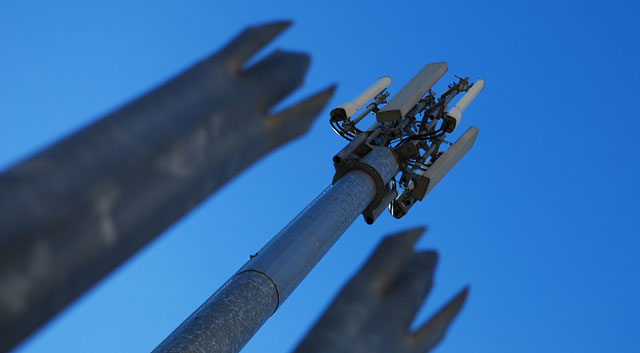
    Cell-tower-640

    Policy direction remains a stumbling block for telecommunications giants such as MTN and Vodacom in the race to fourth-generation (4G) long-term evolution (LTE) technology.

    Wireless Business Solutions (WBS) has a notable head start — it is the only company in the country with the necessary high-demand spectrum. But its 4G fortunes hang in the balance as WBS continues its complex legal dispute with the regulatory authority over its ability to operate legally.

    4G/LTE promises a faster and more efficient data network and means big money for telecoms companies that are anxiously awaiting the outcome of a policy direction from the government.

    Exactly which frequency bands long-term evolution should use is still a matter of debate in the international telecoms community and the decision may only be made in 2015. But Dominic Cull, telecoms expert at Ellipsis, said one could use most of the spectrum below 4GHz — and “the lower you go the better”.

    Mervin Miemoukanda, a technology research analyst at consultants Frost & Sullivan, said the best spectrum bands for LTE are considered to be 800MHz, 2,6GHz and 3,5GHz. WBS, which is the parent of wireless operator iBurst, and Sentech were fortunate enough to have been licensed in this high-demand spectrum before it was identified as such. But this valuable commodity, in light of a new licensing regime recently introduced by the Independent Communications Authority of South Africa (Icasa), has now come at a high cost.

    So high are the new fees that even Sentech, a state-owned broadcasting signal distributor, handed back a large portion of this frequency in April. It returned its full allocation in the 2,6GHz band, which it has not used for years.

    According to TechCentral, Sentech said this was because its licence fee payments would increase 10-fold, to R40m/year. WBS appears to be hanging on to its valuable spectrum — including the 2,6GHz and 1,8GHz bands — but its legal right to operate in these bands, among others, is in dispute.

    As recently as March 2012, it was reported that WBS was in discussions with various parties about a potential partnership for its unused 1,8GHz spectrum, which can be used for LTE. A media report said the deal could even run into a few million rand a month. In July last year, WBS CEO Thami Mtshali said iBurst planned to spend US$400m on rolling out a faster LTE network in South Africa by 2015. But the messy dispute between WBS and Icasa could scuttle these plans.

    In January, Joseph Lebooa, an Icasa councillor, claimed he was hijacked and beaten by thugs he said were sent by WBS to pressure him into dropping an investigation into the company’s alleged illegal radio links and unpaid licence fees. WBS denied any connection with the incident and also said all of its radio links were legal and it was awaiting the invoice for the licence fees to be paid to Icasa. It subsequently opened a case of crimen injuria against Lebooa.

    On 3 April, Icasa inspectors executed a warrant of search and seizure at WBS’s premises and took vital equipment, which resulted in the majority of WBS’s services being disabled for more than two days until the company obtained a court order to have its equipment returned.

    In its application for the warrant, Icasa noted that the telecoms company had contravened the Electronic Communications Act through its “possession and use of radio apparatus to transmit and/or receive a radio signal without a valid radio frequency spectrum licence”.

    In an affidavit, an Icasa inspector explained that many links in these spectrum bands had been rolled out without informing the authority, but also that some licences for access to radio frequency spectrum, such as in 2,6GHz, were no longer validly licensed.

    The affidavit said that on 14 July 2006, the authority issued WBS with a spectrum licence to erect, maintain and operate a 2,6GHz network and the licence would be valid until 31 December of that year and renewable upon payment of the licence fee within the renewal period. But “the last timeous licence fee payment received from WBS was on June 2011 … WBS’s spectrum licence expired on December 31 2011 and has not been renewed within the renewable period, ending 31 December 2012.”

    The affidavit noted that WBS made a partial payment of R2m towards an outstanding licence fee of R3,6m but that such payment “does not revive the expired licence and WBS needs to reapply for another licence to use this frequency”.

    The Icasa affidavit also claimed the last licence fee payment for use of spectrum at 1,8GHz was received on June 1 2011. The licence had thus expired on 31 December 2011 and had not been renewed.

    But in an application to the court, WBS asked that its licence to operate in the contested spectrum bands be declared valid and said the dispute was really about the method of calculation of fees. “WBS has made numerous tenders to settle the outstanding licence fees, but an agreement between the parties has yet to be reached,” it said.

    As part of its court application, WBS supplied the original 2,6GHz station licence certificate and a 1,8GHz network licence certificate, but not the proof of annual renewal, which Icasa claimed had not been done. Amid great pressure to fast-track the process, the department of communications is still in the process of deciding on a policy direction related to high frequency bands and it seems Icasa will also take no action until then.

    “Icasa is sitting with enough spectrum to assign to all mobile operators, but that is simply not happening. That’s been the status for the past seven to 10 years,” said Cull.

    While WBS and Icasa fight it out in court, telecoms giants Vodacom and MTN have overcome slow departmental processes by reallocating their existing telecoms spectrum for the use of LTE, a process described as “refarming”.

    This 1,8GHz spectrum, according to Vodacom spokesman Richard Boorman was traditionally used for voice and 2G services. But experts warn the move could be to the detriment of other services. “It’s not an ideal situation,” Boorman said. “We do our best to make sure the impact is minimised”.

    Kanagaratnam Lambotharan
    Kanagaratnam Lambotharan

    At the last count, Vodacom had 600 live 4G/LTE sites across South Africa, and aims to have a thousand by the end of the year. But Cull believed it would be difficult to roll out LTE by refarming alone. “They [service providers] can go to a certain level by refarming. But it has implications for other services they provide, particularly in terms of voice.”

    Cull said there was no empirical evidence at this stage to support the notion that LTE is interfering with other mobile services, but “plenty of people are saying they are experiencing more problems, like dropped calls, particularly in these areas where LTE has been rolled out”.

    As there is ultimately only a finite amount of spectrum for each provider, the advantage lies with Telkom and Cell C, which have fewer voice users on their networks, he said.

    LTE can certainly become faster if more spectrum is made available, said Boorman. “It is still 10 times faster than 3G, and it is still a massive improvement. We are pouring massive amounts into network capex — more than R6bn/year — and the number of 3G base stations is increasing at annual rate of 25%. All of this stuff is going on, but spectrum is key.”

    Boorman said the spectrum recently handed back by Sentech could be licensed right away and Icasa need not wait for the department of communications to get its house in order before it can proceed.

    “There is a chunk of spectrum available. We are being reasonably vocal in explaining that we are keen for it to be assigned as quickly as possible,” Boorman said.

    But on 17 April, Icasa made it clear to the parliamentary portfolio committee on communications that it would not make a move until the minister said so.

    Kanagaratnam Lambotharan, chief technology officer at MTN South Africa, said the qualification criteria for 4G spectrum were still being finalised by the minister.

    Mervin Miemoukanda, information and communication technologies research analyst at Frost & Sullivan, said there are various reasons for the delay. “One of them is the uncertainty around the digital migration in the country. Icasa is still busy drafting the framework for LTE. I think the government wants to get it right, but it’s taking too long,” he said.

    “This situation really impedes market development as service providers, such as MTN and Vodacom, won’t be able to launch certain products in the market or invest heavily in their current long-term evolution services.”

    But time means money, according to Cull. “The opportunity cost to South Africa of not finalising this process runs into billions of rands: decisions need to be made now,” he said.  — (c) 2013 Mail & Guardian

    Follow TechCentral on Google News Add TechCentral as your preferred source on Google


    Dominic Cull Icasa Joseph Lebooa Lambo Kanagaratnam Mervin Miemoukanda MTN Sentech Thami Mtshali Vodacom WBS Wireless Business Solutions
    WhatsApp YouTube
    Share. Facebook Twitter LinkedIn WhatsApp Telegram Email Copy Link
    Previous ArticlePromised Land: pastoral polemic
    Next Article New revelations in Pule drama

    Related Posts

    Treasury grants Sentech R700-million special allocation

    Treasury grants Sentech R700-million special allocation

    25 February 2026
    The real reason MTN is bringing its towers back in-house

    The real reason MTN is bringing its towers back in-house

    22 February 2026
    South Africa's dynamic spectrum breakthrough - Paul Colmer

    South Africa’s dynamic spectrum breakthrough

    20 February 2026
    Company News
    The gap between AI hype and CX reality is widening CallMiner

    The gap between AI hype and CX reality is widening

    26 February 2026
    The AI-driven talent and operating model transformation

    The AI-driven talent and operating model transformation

    26 February 2026
    SA businesses: fix your legacy systems or your AI investment will fail - Kim Schulze

    SA businesses: fix your legacy systems or your AI investments will fail

    26 February 2026
    Opinion
    The AI fraud crisis your bank is not ready for - Andries Maritz

    The AI fraud crisis your bank is not ready for

    18 February 2026
    A million reasons monopolies don't work - Duncan McLeod

    A million reasons monopolies don’t work

    10 February 2026
    The author, Business Leadership South Africa CEO Busi Mavuso

    Eskom unbundling U-turn threatens to undo hard-won electricity gains

    9 February 2026

    Subscribe to Updates

    Get the best South African technology news and analysis delivered to your e-mail inbox every morning.

    Latest Posts
    Hold the doom: the case for a South African comeback

    Hold the doom: the case for a South African comeback

    26 February 2026
    Data centre 'critical infrastructure' tag welcomed, but detail still thin

    Data centre ‘critical infrastructure’ tag welcomed, but detail still thin

    26 February 2026
    The gap between AI hype and CX reality is widening CallMiner

    The gap between AI hype and CX reality is widening

    26 February 2026
    The AI-driven talent and operating model transformation

    The AI-driven talent and operating model transformation

    26 February 2026
    © 2009 - 2026 NewsCentral Media
    • Cookie policy (ZA)
    • TechCentral – privacy and Popia

    Type above and press Enter to search. Press Esc to cancel.

    Manage consent

    TechCentral uses cookies to enhance its offerings. Consenting to these technologies allows us to serve you better. Not consenting or withdrawing consent may adversely affect certain features and functions of the website.

    Functional Always active
    The technical storage or access is strictly necessary for the legitimate purpose of enabling the use of a specific service explicitly requested by the subscriber or user, or for the sole purpose of carrying out the transmission of a communication over an electronic communications network.
    Preferences
    The technical storage or access is necessary for the legitimate purpose of storing preferences that are not requested by the subscriber or user.
    Statistics
    The technical storage or access that is used exclusively for statistical purposes. The technical storage or access that is used exclusively for anonymous statistical purposes. Without a subpoena, voluntary compliance on the part of your Internet Service Provider, or additional records from a third party, information stored or retrieved for this purpose alone cannot usually be used to identify you.
    Marketing
    The technical storage or access is required to create user profiles to send advertising, or to track the user on a website or across several websites for similar marketing purposes.
    • Manage options
    • Manage services
    • Manage {vendor_count} vendors
    • Read more about these purposes
    View preferences
    • {title}
    • {title}
    • {title}