


Close Menu
TechCentralTechCentral

    Subscribe to the newsletter

    Get the best South African technology news and analysis delivered to your e-mail inbox every morning.

    Facebook X (Twitter) YouTube LinkedIn
    WhatsApp Facebook X (Twitter) LinkedIn YouTube
    TechCentralTechCentral
    • News
      Big Microsoft 365 price increases coming next year

      Big Microsoft price increases coming next year

      5 December 2025
      Vodacom to take control of Safaricom in R36-billion deal - Shameel Joosub

      Vodacom to take control of Safaricom in R36-billion deal

      4 December 2025
      Black Friday goes digital in South Africa as online spending surges to record high

      Black Friday goes digital in South Africa as online spending surges to record high

      4 December 2025
      BYD takes direct aim at Toyota with launch of sub-R500 000 Sealion 5 PHEV

      BYD takes direct aim at Toyota with launch of sub-R500 000 Sealion 5 PHEV

      4 December 2025
      'Get it now': Takealot in new instant deliveries pilot

      ‘Get it now’: Takealot in new instant deliveries pilot

      4 December 2025
    • World
      Amazon and Google launch multi-cloud service for faster connectivity

      Amazon and Google launch multi-cloud service for faster connectivity

      1 December 2025
      Google makes final court plea to stop US breakup

      Google makes final court plea to stop US breakup

      21 November 2025
      Bezos unveils monster rocket: New Glenn 9x4 set to dwarf Saturn V

      Bezos unveils monster rocket: New Glenn 9×4 set to dwarf Saturn V

      21 November 2025
      Tech shares turbocharged by Nvidia's stellar earnings

      Tech shares turbocharged by stellar Nvidia earnings

      20 November 2025
      Config file blamed for Cloudflare meltdown that disrupted the web

      Config file blamed for Cloudflare meltdown that disrupted the web

      19 November 2025
    • In-depth
      Jensen Huang Nvidia

      So, will China really win the AI race?

      14 November 2025
      Valve's Linux console takes aim at Microsoft's gaming empire

      Valve’s Linux console takes aim at Microsoft’s gaming empire

      13 November 2025
      iOCO's extraordinary comeback plan - Rhys Summerton

      iOCO’s extraordinary comeback plan

      28 October 2025
      Why smart glasses keep failing - no, it's not the tech - Mark Zuckerberg

      Why smart glasses keep failing – it’s not the tech

      19 October 2025
      BYD to blanket South Africa with megawatt-scale EV charging network - Stella Li

      BYD to blanket South Africa with megawatt-scale EV charging network

      16 October 2025
    • TCS
      TCS+ | How Cloud on Demand helps partners thrive in the AWS ecosystem - Odwa Ndyaluvane and Xenia Rhode

      TCS+ | How Cloud On Demand helps partners thrive in the AWS ecosystem

      4 December 2025
      TCS | MTN Group CEO Ralph Mupita on competition, AI and the future of mobile

      TCS | Ralph Mupita on competition, AI and the future of mobile

      28 November 2025
      TCS | Dominic Cull on fixing South Africa's ICT policy bottlenecks

      TCS | Dominic Cull on fixing South Africa’s ICT policy bottlenecks

      21 November 2025
      TCS | BMW CEO Peter van Binsbergen on the future of South Africa's automotive industry

      TCS | BMW CEO Peter van Binsbergen on the future of South Africa’s automotive industry

      6 November 2025
      TCS | Why Altron is building an AI factory - Bongani Andy Mabaso

      TCS | Why Altron is building an AI factory in Johannesburg

      28 October 2025
    • Opinion
      Your data, your hardware: the DIY AI revolution is coming - Duncan McLeod

      Your data, your hardware: the DIY AI revolution is coming

      20 November 2025
      Zero Carbon Charge founder Joubert Roux

      The energy revolution South Africa can’t afford to miss

      20 November 2025
      It's time for a new approach to government IT spend in South Africa - Richard Firth

      It’s time for a new approach to government IT spend in South Africa

      19 November 2025
      How South Africa's broken Rica system fuels murder and mayhem - Farhad Khan

      How South Africa’s broken Rica system fuels murder and mayhem

      10 November 2025
      South Africa's AI data centre boom risks overloading a fragile grid - Paul Colmer

      South Africa’s AI data centre boom risks overloading a fragile grid

      30 October 2025
    • Company Hubs
      • Africa Data Centres
      • AfriGIS
      • Altron Digital Business
      • Altron Document Solutions
      • Altron Group
      • Arctic Wolf
      • AvertITD
      • Braintree
      • CallMiner
      • CambriLearn
      • CYBER1 Solutions
      • Digicloud Africa
      • Digimune
      • Domains.co.za
      • ESET
      • Euphoria Telecom
      • Incredible Business
      • iONLINE
      • IQbusiness
      • Iris Network Systems
      • LSD Open
      • NEC XON
      • Netstar
      • Network Platforms
      • Next DLP
      • Ovations
      • Paracon
      • Paratus
      • Q-KON
      • SevenC
      • SkyWire
      • Solid8 Technologies
      • Telit Cinterion
      • Tenable
      • Vertiv
      • Videri Digital
      • Vodacom Business
      • Wipro
      • Workday
      • XLink
    • Sections
      • AI and machine learning
      • Banking
      • Broadcasting and Media
      • Cloud services
      • Contact centres and CX
      • Cryptocurrencies
      • Education and skills
      • Electronics and hardware
      • Energy and sustainability
      • Enterprise software
      • Financial services
      • Information security
      • Internet and connectivity
      • Internet of Things
      • Investment
      • IT services
      • Lifestyle
      • Motoring
      • Public sector
      • Retail and e-commerce
      • Satellite communications
      • Science
      • SMEs and start-ups
      • Social media
      • Talent and leadership
      • Telecoms
    • Events
    • Advertise
    TechCentralTechCentral
    Home » Opinion » Alistair Fairweather » Reasons to worry about the AI revolution

    Reasons to worry about the AI revolution

    By Alistair Fairweather27 February 2017
    Twitter LinkedIn Facebook WhatsApp Email Telegram Copy Link
    News Alerts
    WhatsApp

    Intelligent robots are poised to take over the world. Sounds like a bad 1950s sci-fi movie, right? Perhaps not. If technology keeps accelerating at the current rate, robots and artificial intelligence will either displace or replace tens of millions of jobs by 2037.

    If this sounds far-fetched, consider the fact that both Bill Gates (co-founder of Microsoft) and Elon Musk (founder of Tesla and SpaceX) have both suggested economic policies to mitigate the coming disruption to the world’s labour markets.

    Gates suggests taxing robot workers in the same way as we do humans. “You can’t just give up that income tax, because that’s part of how you’ve been funding … human workers,” he told Quartz.

    Musk goes a step further, calling for a universal basic income to counterbalance the replacement of human workers. “I’m not sure what else one would do,” he said in an interview with CNBC.

    When technology billionaires start suggesting policies straight out of a socialist manifesto, you know that the change is both imminent and tangible. And this isn’t just theory — several large companies are already employing robots at scale.

    For example, Amazon employs over 45 000 robots in 20 of its vast fulfilment centres. This is 50% more than just a year ago. Amazon’s management team tends to play these numbers down, at least in public, viewing the programme as a work in progress. But there’s no doubt that these 45 000 robots have replaced at least some human workers.

    Both Amazon and UPS (a major US courier) are trialling automated package delivery drones. Musk’s newest venture — an enormous battery factory in the Nevada desert — will be nearly 100% automated soon. The first phase of this “Gigafactory” opened in July 2016.

    If you broaden the definition of robot very slightly, then you can include the self-driving cars that Waymo (owned by Google) and Uber are trialling in major American cities, as well the self-driving trucks being developed by Otto.

    And this isn’t reserved for sexy, hi-tech industries. A Japanese lettuce farm is run entirely by robots. A small hotel chain is using robots to carry guests’ bags and deliver their laundry. Several US retailers are experimenting with robots to check stock levels and lead customers to the items they’re looking for.

    This is possible because of three converging waves of technology: artificial intelligence (in the form of neural networks or “deep learning”), ubiquitous connectivity (the Internet of things) and smart sensors.

    Self-driving cars are a great example of how these technologies interact with and reinforce each other. These cars use Lidar — a laser-based guidance system — as well as arrays of cameras and other sensors to scan the world around them for other cars, pedestrians, obstacles and traffic signals.

    Bill Gates

    As they drive along, they send and receive a stream of data which is crunched, in real time, by powerful computers (called servers) sitting in data centres. The servers send information to the cars — such as how much traffic there is along the route — but also collect everything that a car “sees”.

    The servers then collate data from all the cars and use it to literally learn how humans drive, the best routes to take and how best to avoid accidents. As such, the engineers who build these cars don’t have to program for every single possibility that a car might encounter, they just need to teach it the basic rules and then it (and its fellows) will learn as they go.

    Therefore, it’s possible to say, already, that self-driving cars are better at navigating roads than humans. We tend to be distracted and emotional. We consider ourselves rational, but simple experiments prove both that we are unable to recognise our own irrationality and that we are irrational much of the time. We aren’t great drivers, and we can’t even recognise that fact.

    So, if robots are already able to operating heavy machinery on public roads safely, navigating all the vagaries of city traffic, how big a leap is it to robots that can replace your own job?

    The effects won’t be limited to service and manufacturing jobs. Many professional and administrative functions are ripe for disruption by artificial intelligence. We can already see the beginnings of this in fields like investing and tax preparation.

    Essentially any job that can be broken down into discrete and well understood procedures (or rules) can be done more quickly and accurately by artificially intelligent machines. And because these machines continuously learn and improve, they will only get better over time.

    This will not be a sudden transition. Long before robots are completely self-governing, they will allow people in lower income countries to work remotely in higher income countries. Why import hotel maids from South America or the Philippines when they can drive housekeeping drones from tele-robotics centres in their home countries?

    This trend, which economist Richard Baldwin calls tele-robotics, will set off the first wave of disruption, displacing millions of previously safe jobs in service industries. And Baldwin believes there’s not much we can do about it: “I don’t think you can stop it. There are very likely to be some nasty policies against it, but on the edge, it’s going to happen.”

    This is what the anti-globalisation and anti-immigration movements completely fail to grasp. The daily buffoonery of the Donald Trump administration distracts from a much more serious issue: the very premise of its economic policy platform is not based in reality. The jobs are not coming back and in many cases will soon cease to exist.

    This is the new Industrial Revolution. As with its forebear, it will make future generations richer, healthier and happier. But in the medium term it looks set to cause enormous disruption to global labour markets. We need strategies and policies to deal with those disruptions, or hundreds of millions of people could be plunged into abject suffering (which some only escaped a generation ago).

    And if two decades seems like an unrealistic timeline, consider how much technology has changed the world since 1997. Billions of people are now online every day (in many cases, every hour), most of them using smartphones. We now can not only read but also write (and rewrite) genetic code in living organisms. And the pace of innovation is still accelerating.
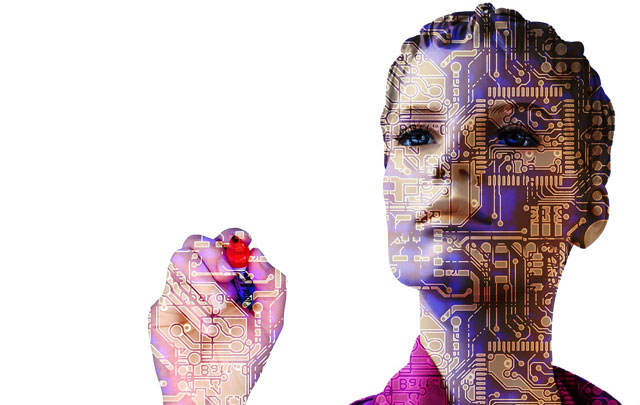
    The long-term implications of this revolution are impossible to predict with any accuracy. The most utopian vision is a world of post-scarcity, where the whole reason for economics (the distribution of scarce resources) disappears. When goods and services are unlimited and require no effort, then poverty ceases to exist. This is the world as people like Musk see it.

    The dystopian view is that robotics will concentrate wealth even further into a ruling tech elite who control most of the world’s resources, with the rest of us relegated to living off the scraps.

    The most likely outcome is somewhere between these two poles. There will be a period of acute, concentrated economic hardship for many workers, but over time the entire population of the world will be lifted to another level of development.

    The challenge is to keep our societies from breaking down in the interim. We need to start planning for this now, or it will soon be too late.  — (c) 2017 NewsCentral Media

    • Alistair Fairweather is the founder of PlainSpeak, a consultancy focused on helping businesses and people to get the most out of technology



    Alistair Fairweather Bill Gates Elon Musk Google Richard Baldwin SpaceX Tesla
    Subscribe to TechCentral Subscribe to TechCentral
    Share. Facebook Twitter LinkedIn WhatsApp Telegram Email Copy Link
    Previous ArticleCwele mangles truth on ICT white paper
    Next Article Millions of traffic fines must be scrapped

    Related Posts

    What South Africans searched for most in 2025

    What South Africans searched for most in 2025, according to Google

    4 December 2025
    Amazon and Google launch multi-cloud service for faster connectivity

    Amazon and Google launch multi-cloud service for faster connectivity

    1 December 2025
    Alphabet races toward $4-trillion valuation - Google

    Alphabet races towards $4-trillion valuation

    25 November 2025
    Company News
    AI is not a technology problem - iqbusiness

    AI is not a technology problem – iqbusiness

    5 December 2025
    Telcos are sitting on a data gold mine - but few know what do with it - Phillip du Plessis

    Telcos are sitting on a data gold mine – but few know what do with it

    4 December 2025
    Unlock smarter computing with your surface Copilot+ PC

    Unlock smarter computing with your Surface Copilot+ PC

    4 December 2025
    Opinion
    Your data, your hardware: the DIY AI revolution is coming - Duncan McLeod

    Your data, your hardware: the DIY AI revolution is coming

    20 November 2025
    Zero Carbon Charge founder Joubert Roux

    The energy revolution South Africa can’t afford to miss

    20 November 2025
    It's time for a new approach to government IT spend in South Africa - Richard Firth

    It’s time for a new approach to government IT spend in South Africa

    19 November 2025

    Subscribe to Updates

    Get the best South African technology news and analysis delivered to your e-mail inbox every morning.

    Latest Posts
    Big Microsoft 365 price increases coming next year

    Big Microsoft price increases coming next year

    5 December 2025
    AI is not a technology problem - iqbusiness

    AI is not a technology problem – iqbusiness

    5 December 2025
    Vodacom to take control of Safaricom in R36-billion deal - Shameel Joosub

    Vodacom to take control of Safaricom in R36-billion deal

    4 December 2025
    Black Friday goes digital in South Africa as online spending surges to record high

    Black Friday goes digital in South Africa as online spending surges to record high

    4 December 2025
    © 2009 - 2025 NewsCentral Media
    • Cookie policy (ZA)
    • TechCentral – privacy and Popia

    Type above and press Enter to search. Press Esc to cancel.

    Manage consent

    TechCentral uses cookies to enhance its offerings. Consenting to these technologies allows us to serve you better. Not consenting or withdrawing consent may adversely affect certain features and functions of the website.

    Functional Always active
    The technical storage or access is strictly necessary for the legitimate purpose of enabling the use of a specific service explicitly requested by the subscriber or user, or for the sole purpose of carrying out the transmission of a communication over an electronic communications network.
    Preferences
    The technical storage or access is necessary for the legitimate purpose of storing preferences that are not requested by the subscriber or user.
    Statistics
    The technical storage or access that is used exclusively for statistical purposes. The technical storage or access that is used exclusively for anonymous statistical purposes. Without a subpoena, voluntary compliance on the part of your Internet Service Provider, or additional records from a third party, information stored or retrieved for this purpose alone cannot usually be used to identify you.
    Marketing
    The technical storage or access is required to create user profiles to send advertising, or to track the user on a website or across several websites for similar marketing purposes.
    • Manage options
    • Manage services
    • Manage {vendor_count} vendors
    • Read more about these purposes
    View preferences
    • {title}
    • {title}
    • {title}