
Close Menu
TechCentralTechCentral

    Subscribe to the newsletter

    Get the best South African technology news and analysis delivered to your e-mail inbox every morning.

    Facebook X (Twitter) YouTube LinkedIn
    WhatsApp Facebook X (Twitter) LinkedIn YouTube
    TechCentralTechCentral
    • News
      Broadband Infraco in limbo

      Broadband Infraco in limbo

      11 February 2026
      Home affairs' R10 ID fee is forcing companies to rethink identity verification

      Standard Bank joins smart ID push with fee-free launch

      11 February 2026
      Zscaler assets seized from South African data centres

      Zscaler assets seized from South African data centres

      11 February 2026
      SA app wants to end guesswork in online grocery shopping - We Need Milk CEO Arjan van den Berg

      SA app wants to end guesswork in online grocery shopping

      11 February 2026
      Absa appoints M-Pesa boss to lead personal and private banking - Sitoyo Lopokoiyit

      Absa appoints M-Pesa boss to lead personal and private banking

      11 February 2026
    • World
      EU regulators take aim at WhatsApp

      EU regulators take aim at WhatsApp

      9 February 2026
      Musk hits brakes on Mars mission

      Musk hits brakes on Mars mission

      9 February 2026
      Crypto firm accidentally sends R700-billion in bitcoin to its users

      Crypto firm accidentally sends R700-billion in bitcoin to its users

      8 February 2026
      AI won't replace software, says Nvidia CEO amid market rout - Jensen Huang

      AI won’t replace software, says Nvidia CEO amid market rout

      4 February 2026
      Apple acquires audio AI start-up Q.ai

      Apple acquires audio AI start-up Q.ai

      30 January 2026
    • In-depth
      How liberalisation is rewiring South Africa's power sector

      How liberalisation is rewiring South Africa’s power sector

      21 January 2026
      The top-performing South African tech shares of 2025

      The top-performing South African tech shares of 2025

      12 January 2026
      Digital authoritarianism grows as African states normalise internet blackouts

      Digital authoritarianism grows as African states normalise internet blackouts

      19 December 2025
      TechCentral's South African Newsmakers of 2025

      TechCentral’s South African Newsmakers of 2025

      18 December 2025
      Black Friday goes digital in South Africa as online spending surges to record high

      Black Friday goes digital in South Africa as online spending surges to record high

      4 December 2025
    • TCS
      Watts & Wheels S1E4: 'We drive an electric Uber'

      Watts & Wheels S1E4: ‘We drive an electric Uber’

      10 February 2026
      TCS+ | How Cloud On Demand is helping SA businesses succeed in the cloud - Xhenia Rhode, Dion Kalicharan

      TCS+ | Cloud On Demand and Consnet: inside a real-world AWS partner success story

      30 January 2026
      Watts & Wheels S1E4: 'We drive an electric Uber'

      Watts & Wheels S1E3: ‘BYD’s Corolla Cross challenger’

      30 January 2026
      Watts & Wheels S1E4: 'We drive an electric Uber'

      Watts & Wheels S1E2: ‘China attacks, BMW digs in, Toyota’s sublime supercar’

      23 January 2026

      TCS+ | Why cybersecurity is becoming a competitive advantage for SA businesses

      20 January 2026
    • Opinion
      South Africa's skills advantage is being overlooked at home - Richard Firth

      South Africa’s skills advantage is being overlooked at home

      29 January 2026
      Why Elon Musk's Starlink is a 'hard no' for me - Songezo Zibi

      Why Elon Musk’s Starlink is a ‘hard no’ for me

      26 January 2026
      South Africa's new fibre broadband battle - Duncan McLeod

      South Africa’s new fibre broadband battle

      20 January 2026
      AI moves from pilots to production in South African companies - Nazia Pillay SAP

      AI moves from pilots to production in South African companies

      20 January 2026
      South Africa's new fibre broadband battle - Duncan McLeod

      ANC’s attack on Solly Malatsi shows how BEE dogma trumps economic reality

      14 December 2025
    • Company Hubs
      • Africa Data Centres
      • AfriGIS
      • Altron Digital Business
      • Altron Document Solutions
      • Altron Group
      • Arctic Wolf
      • AvertITD
      • Braintree
      • CallMiner
      • CambriLearn
      • CYBER1 Solutions
      • Digicloud Africa
      • Digimune
      • Domains.co.za
      • ESET
      • Euphoria Telecom
      • Incredible Business
      • iONLINE
      • IQbusiness
      • Iris Network Systems
      • LSD Open
      • NEC XON
      • Netstar
      • Network Platforms
      • Next DLP
      • Ovations
      • Paracon
      • Paratus
      • Q-KON
      • SevenC
      • SkyWire
      • Solid8 Technologies
      • Telit Cinterion
      • Tenable
      • Vertiv
      • Videri Digital
      • Vodacom Business
      • Wipro
      • Workday
      • XLink
    • Sections
      • AI and machine learning
      • Banking
      • Broadcasting and Media
      • Cloud services
      • Contact centres and CX
      • Cryptocurrencies
      • Education and skills
      • Electronics and hardware
      • Energy and sustainability
      • Enterprise software
      • Financial services
      • Information security
      • Internet and connectivity
      • Internet of Things
      • Investment
      • IT services
      • Lifestyle
      • Motoring
      • Public sector
      • Retail and e-commerce
      • Satellite communications
      • Science
      • SMEs and start-ups
      • Social media
      • Talent and leadership
      • Telecoms
    • Events
    • Advertise
    TechCentralTechCentral
    Home » Opinion » Luke Muller » SA’s mobile industry is under threat

    SA’s mobile industry is under threat

    By Luke Muller23 January 2017
    Twitter LinkedIn Facebook WhatsApp Email Telegram Copy Link
    News Alerts
    WhatsApp

    South Africa has leapfrogged into the information age with extensive wireless communications services and speedy smartphone adoption. PricewaterhouseCoopers recently reported that mobile Internet penetration is expected to exceed 70% in South Africa by 2020. Communication costs in South Africa have been falling in recent decades and more can be done to ensure that progress continues.

    This was the motive behind the parliamentary portfolio committee on telecommunications & postal services’ “cost to communicate” report. Some of the proposed interventions, though, will have the opposite of intended effects and instead push communication costs upward.

    The committee’s report follows a two-day hearing on mobile and data costs in September 2016. One of the strongest recommendations is that communications regulator Icasa should prevent vertical integration by investigating ways to split the wholesale network functions of mobile operators from their retail service operations. This spells disaster for competition.

    The recommendation does not seem to differentiate competition and sharing. A split would encourage freeloading by rivals. While this would create a temporary rise in the number of retailers, it would also destroy competition in network creation. The separation of wholesale and retail functions would break down the economic signals which would otherwise steer investment decisions. Technology in the mobile sector advances rapidly and companies need to continuously update and create networks.

    Over the long run, network creation is more important than increasing the number of retailers on the already existing networks. It would be unwise to sabotage the rapid progress that private mobile operators have made in South Africa since the 1990s. A forced split would remove competitive advantages and disincentivise mobile operators from expanding their wholesale network functions. A separation will cause a number of significant regulatory and market structure challenges. It will be difficult for regulators to identify an appropriate boundary between wholesale and retail for the split. There are substantial costs associated with the break-up of the integrated firm, both for regulators and the private sector — costs that South Africa can ill afford to place on a relatively young industry.

    The committee’s report highlights another issue that deserves more attention. The inefficient allocation of radio frequency spectrum is a major bottleneck to the expansion of infrastructure by network operators. It’s a bottleneck that was narrowed even more when telecoms & postal services minister Siyabonga Cwele went to court to stop Icasa from auctioning spectrum licences. The lack of additional spectrum constrains the roll-out of new technologies, including 4G/LTE.
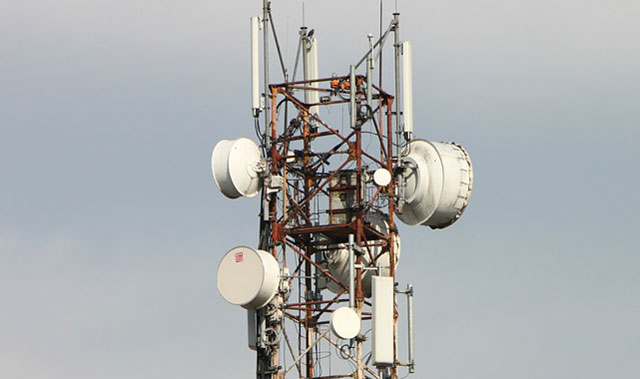
    A widespread and competitive telecoms sector is fostered when private companies can compete without government preference, unnecessary regulation or competition from state-owned enterprises, says the author

    Another crippling blow to the telecoms industry is looming if the government carries out its plans, put forward in the recent ICT policy white paper, to create an open-access national network with unallocated mobile spectrum. It also proposes that operators be made to hand back existing spectrum allocations. The white paper creates huge uncertainty for investors in the mobile network operators. Private companies could not possibly continue to expand and offer new services when competing with a nationalised network.

    Communication networks have progressed far since the days of having Telkom as the single monopolistic telecoms provider. Telkom still hinders competition in fixed-line broadband provision because state ownership does not promote competition. Policy makers and regulators should be celebrating the success of private network operators, not looking to reduce their user base or hinder them. A strong telecoms sector is the backbone of information industries and a modern economy.

    If parliament is serious about lowering communication costs, it will remove regulatory and licensing hurdles, allow Icasa to auction spectrum, move to fully privatise Telkom, and abandon ideas of creating new nationalised networks.

    A widespread and competitive telecoms sector is fostered when private companies can compete without government preference, unnecessary regulation or competition from state-owned enterprises. South Africa’s operators have already reached tens of millions of subscribers. User growth trends are continuing across all mobile networks and should be applauded and supported, not sabotaged.

    • Luke Muller is an independent economist


    Luke Muller Siyabonga Cwele Telkom
    WhatsApp YouTube Follow on Google News Add as preferred source on Google
    Share. Facebook Twitter LinkedIn WhatsApp Telegram Email Copy Link
    Previous ArticleTime for a blockchain reality check
    Next Article Cellphones crucial to digital radio in SA

    Related Posts

    A million reasons monopolies don't work

    A million reasons monopolies don’t work

    10 February 2026
    Vumatel tops a million subscribers in South African broadband milestone - Dietlof Mare

    Vumatel tops a million subscribers in South African broadband milestone

    9 February 2026
    Mobile operators face tougher rules on data and billing

    Mobile operators face tougher rules on data and billing

    26 January 2026
    Company News

    Why Acer is the strategic choice for South Africa’s educational future

    11 February 2026
    Fyndae is building Africa's human verification layer for community security and collaboration

    Fyndae wants to turn lost-item recovery into Africa’s trust infrastructure

    11 February 2026
    How NEC XON tackled identity risk for a major telco - Michael de Neuilly Rice

    How NEC XON tackled identity risk for a major telco

    11 February 2026
    Opinion
    South Africa's skills advantage is being overlooked at home - Richard Firth

    South Africa’s skills advantage is being overlooked at home

    29 January 2026
    Why Elon Musk's Starlink is a 'hard no' for me - Songezo Zibi

    Why Elon Musk’s Starlink is a ‘hard no’ for me

    26 January 2026
    South Africa's new fibre broadband battle - Duncan McLeod

    South Africa’s new fibre broadband battle

    20 January 2026

    Subscribe to Updates

    Get the best South African technology news and analysis delivered to your e-mail inbox every morning.

    Latest Posts
    Broadband Infraco in limbo

    Broadband Infraco in limbo

    11 February 2026

    Why Acer is the strategic choice for South Africa’s educational future

    11 February 2026
    Home affairs' R10 ID fee is forcing companies to rethink identity verification

    Standard Bank joins smart ID push with fee-free launch

    11 February 2026
    Zscaler assets seized from South African data centres

    Zscaler assets seized from South African data centres

    11 February 2026
    © 2009 - 2026 NewsCentral Media
    • Cookie policy (ZA)
    • TechCentral – privacy and Popia

    Type above and press Enter to search. Press Esc to cancel.

    Manage consent

    TechCentral uses cookies to enhance its offerings. Consenting to these technologies allows us to serve you better. Not consenting or withdrawing consent may adversely affect certain features and functions of the website.

    Functional Always active
    The technical storage or access is strictly necessary for the legitimate purpose of enabling the use of a specific service explicitly requested by the subscriber or user, or for the sole purpose of carrying out the transmission of a communication over an electronic communications network.
    Preferences
    The technical storage or access is necessary for the legitimate purpose of storing preferences that are not requested by the subscriber or user.
    Statistics
    The technical storage or access that is used exclusively for statistical purposes. The technical storage or access that is used exclusively for anonymous statistical purposes. Without a subpoena, voluntary compliance on the part of your Internet Service Provider, or additional records from a third party, information stored or retrieved for this purpose alone cannot usually be used to identify you.
    Marketing
    The technical storage or access is required to create user profiles to send advertising, or to track the user on a website or across several websites for similar marketing purposes.
    • Manage options
    • Manage services
    • Manage {vendor_count} vendors
    • Read more about these purposes
    View preferences
    • {title}
    • {title}
    • {title}