Close Menu
TechCentralTechCentral

    Subscribe to the newsletter

    Get the best South African technology news and analysis delivered to your e-mail inbox every morning.

    Facebook X (Twitter) YouTube LinkedIn
    WhatsApp Facebook X (Twitter) LinkedIn YouTube
    TechCentralTechCentral
    • News
      Vula Medical named as South Africa's 2025 app of the year

      Vula Medical named as South Africa’s 2025 app of the year

      5 December 2025
      Netflix, Warner Bros talks raise fresh headaches for MultiChoice

      Netflix, Warner Bros talks raise fresh headaches for MultiChoice

      5 December 2025
      Big Microsoft 365 price increases coming next year

      Big Microsoft price increases coming next year

      5 December 2025
      Vodacom to take control of Safaricom in R36-billion deal - Shameel Joosub

      Vodacom to take control of Safaricom in R36-billion deal

      4 December 2025
      Black Friday goes digital in South Africa as online spending surges to record high

      Black Friday goes digital in South Africa as online spending surges to record high

      4 December 2025
    • World
      Amazon and Google launch multi-cloud service for faster connectivity

      Amazon and Google launch multi-cloud service for faster connectivity

      1 December 2025
      Google makes final court plea to stop US breakup

      Google makes final court plea to stop US breakup

      21 November 2025
      Bezos unveils monster rocket: New Glenn 9x4 set to dwarf Saturn V

      Bezos unveils monster rocket: New Glenn 9×4 set to dwarf Saturn V

      21 November 2025
      Tech shares turbocharged by Nvidia's stellar earnings

      Tech shares turbocharged by stellar Nvidia earnings

      20 November 2025
      Config file blamed for Cloudflare meltdown that disrupted the web

      Config file blamed for Cloudflare meltdown that disrupted the web

      19 November 2025
    • In-depth
      Jensen Huang Nvidia

      So, will China really win the AI race?

      14 November 2025
      Valve's Linux console takes aim at Microsoft's gaming empire

      Valve’s Linux console takes aim at Microsoft’s gaming empire

      13 November 2025
      iOCO's extraordinary comeback plan - Rhys Summerton

      iOCO’s extraordinary comeback plan

      28 October 2025
      Why smart glasses keep failing - no, it's not the tech - Mark Zuckerberg

      Why smart glasses keep failing – it’s not the tech

      19 October 2025
      BYD to blanket South Africa with megawatt-scale EV charging network - Stella Li

      BYD to blanket South Africa with megawatt-scale EV charging network

      16 October 2025
    • TCS
      TCS+ | How Cloud on Demand helps partners thrive in the AWS ecosystem - Odwa Ndyaluvane and Xenia Rhode

      TCS+ | How Cloud On Demand helps partners thrive in the AWS ecosystem

      4 December 2025
      TCS | MTN Group CEO Ralph Mupita on competition, AI and the future of mobile

      TCS | Ralph Mupita on competition, AI and the future of mobile

      28 November 2025
      TCS | Dominic Cull on fixing South Africa's ICT policy bottlenecks

      TCS | Dominic Cull on fixing South Africa’s ICT policy bottlenecks

      21 November 2025
      TCS | BMW CEO Peter van Binsbergen on the future of South Africa's automotive industry

      TCS | BMW CEO Peter van Binsbergen on the future of South Africa’s automotive industry

      6 November 2025
      TCS | Why Altron is building an AI factory - Bongani Andy Mabaso

      TCS | Why Altron is building an AI factory in Johannesburg

      28 October 2025
    • Opinion
      Your data, your hardware: the DIY AI revolution is coming - Duncan McLeod

      Your data, your hardware: the DIY AI revolution is coming

      20 November 2025
      Zero Carbon Charge founder Joubert Roux

      The energy revolution South Africa can’t afford to miss

      20 November 2025
      It's time for a new approach to government IT spend in South Africa - Richard Firth

      It’s time for a new approach to government IT spend in South Africa

      19 November 2025
      How South Africa's broken Rica system fuels murder and mayhem - Farhad Khan

      How South Africa’s broken Rica system fuels murder and mayhem

      10 November 2025
      South Africa's AI data centre boom risks overloading a fragile grid - Paul Colmer

      South Africa’s AI data centre boom risks overloading a fragile grid

      30 October 2025
    • Company Hubs
      • Africa Data Centres
      • AfriGIS
      • Altron Digital Business
      • Altron Document Solutions
      • Altron Group
      • Arctic Wolf
      • AvertITD
      • Braintree
      • CallMiner
      • CambriLearn
      • CYBER1 Solutions
      • Digicloud Africa
      • Digimune
      • Domains.co.za
      • ESET
      • Euphoria Telecom
      • Incredible Business
      • iONLINE
      • IQbusiness
      • Iris Network Systems
      • LSD Open
      • NEC XON
      • Netstar
      • Network Platforms
      • Next DLP
      • Ovations
      • Paracon
      • Paratus
      • Q-KON
      • SevenC
      • SkyWire
      • Solid8 Technologies
      • Telit Cinterion
      • Tenable
      • Vertiv
      • Videri Digital
      • Vodacom Business
      • Wipro
      • Workday
      • XLink
    • Sections
      • AI and machine learning
      • Banking
      • Broadcasting and Media
      • Cloud services
      • Contact centres and CX
      • Cryptocurrencies
      • Education and skills
      • Electronics and hardware
      • Energy and sustainability
      • Enterprise software
      • Financial services
      • Information security
      • Internet and connectivity
      • Internet of Things
      • Investment
      • IT services
      • Lifestyle
      • Motoring
      • Public sector
      • Retail and e-commerce
      • Satellite communications
      • Science
      • SMEs and start-ups
      • Social media
      • Talent and leadership
      • Telecoms
    • Events
    • Advertise
    TechCentralTechCentral
    Home » In-depth » Song sings on spectrum and the value of white spaces

    Song sings on spectrum and the value of white spaces

    By Editor22 September 2011
    Twitter LinkedIn Facebook WhatsApp Email Telegram Copy Link
    News Alerts
    WhatsApp
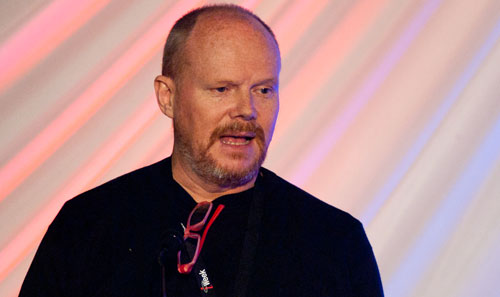
    Steve Song

    “White spaces.” These chunks of radio frequency spectrum allocated to broadcasters but not used could hold the solution to SA’s electronic communications challenges.

    Steve Song, founder of Village Telco — a social enterprise that uses open-source telecommunications software and low-cost wireless mesh networking technology to deliver more affordable telephony — says SA needs to ensure spectrum is suitably allocated to encourage newcomers.

    White spaces could play a crucial role in this regard, he says.

    Song says that when one compares Internet service providers (ISPs) to telecoms operators, the group is ruthlessly competitive. Operators, on the other hand — and particularly the mobile providers — are relatively slow to innovate and reduce prices.

    “The big difference between them is access to spectrum,” Song says. “It’s difficult to get competition going between operators without giving them access to spectrum.”

    He says that until recently the most interesting portion of spectrum for service providers was in the 900MHz to 3GHz range, but that this is changing with the pending release of the so-called “digital dividend” — spectrum that will become available when TV broadcasts move from analogue to digital, the deadline for which is just over two years away.

    “The lower down the spectrum you go, the better the propagation, hence the excitement about 900MHz and lower,” Song explains. The longer wavelengths of lower frequencies carry information further and through obstacles in a way shorter wavelengths can’t. However, there is a trade-off: lower throughput in terms of how much data can be carried.

    Song says that although a great deal is understood about the technology of spectrum, “we don’t understand the economics of it quite as well”. He says the pressing question is whether regulators should treat spectrum as a common resource or private property.

    “Is it like a stretch of land that we want to get maximum value out of, or risk the so-called ‘tragedy of the commons’ by opening it up to everyone and ending up with overuse?”

    Song says some people subscribe to the school of thought that there is a hard limit to how much use can be gained from available spectrum. It’s an argument put forward by mathematician Claude Shannon.

    Others people agree with the theories of Martin Cooper — who is largely credited with inventing the mobile phone — who considered spectrum to be like data: flexible and reusable. Cooper’s Law, much like Moore’s Law that concerns processing power, suggests that spectrum efficiency doubles every 30 months.

    “As with all complex things, the truth is somewhere in between.”

    According to Song, while a single transmitter with a particular configuration may have limits, as hardware evolves, greater efficiency becomes possible via power, antennae and other component developments. “So there’s neither a hard limit nor infinite flexibility.”

    Song says the primary motivation for spectrum regulation is “to banish interference”. He says spectrum interference mustn’t be misconstrued as interference in the sense of obstruction.

    “Waves don’t disappear, they bounce into each other.” Song says as technology improves, it can better deal with interference. “It’s like speaking a different language at a party and hearing someone else speaking your language; you can hear them over the noise of the room.”

    Song says that until 20 years ago, spectrum was assigned on a first come, first served basis. Then, as demand increased, it became a “beauty contest” where regulators attempted to find the best-positioned parties via “qualitative analysis”.

    “The problem with this approach is that it’s completely subjective and prone to influence and the weighting of the answer.”

    Song says one of the big surprises of recent years has been the explosion of unlicensed spectrum use, particularly for Wi-Fi. Next year, 1bn Wi-Fi chipsets will be sold globally, which is more than the number of mobile phones expected to ship in the same period.

    “There assertion that there is a mobile phone ‘miracle’ underway in Africa is true, but what isn’t talked about is Wi-Fi.” Song says every operator should have a “complementary Wi-Fi strategy” because the technology is the “premier offload option” to ease network congestion.

    The auctioning of spectrum is a complex issue that “works well when done right, but when done badly, you may as well have given the spectrum away”.

    He says a potential solution, or at least an alternative that deserves further investigation from SA regulators is “serendipitous spectrum re-use” where primary spectrum owners allow secondary users to access spectrum when it’s not in use.

    The prime example, he says, is white spaces spectrum in the broadcasting bands.

    “When TV licenses were first granted in the 1930s in the US, the crudeness of the technology meant broadcasting was the equivalent of shouting because of the ‘deafness’ of TVs.”

    The result was that regulators guaranteed broadcasters space between channels, or empty spectrum, so that there would be no overlaps or interference. “Now we can serendipitously re-use it to deliver broadband.”

    Song says the process of opening up the white spaces has gone ahead in the US via the Federal Communications Commission, that country’s telecoms regulator.

    Despite huge resistance from makers of wireless products and broadcasters, a compromise was reached whereby a geo-location-based database has been created and has to be checked to ensure devices don’t attempt to use the same spectrum.

    “Looking at SA, there’s lots of space that can be reused and it doesn’t require reallocation or refarming of spectrum. It’s the low-hanging fruit of regulation, and it’s ripe [for the picking].”

    Song cites the allocation to state-owned company Sentech of a portion of spectrum at 2,6GHz, which it has failed to use, as how a regulator shouldn’t assign spectrum. “It’s a case of ownership retarding the process and wasting potential. Once you give away spectrum, it’s hard to move the incumbent and reclaim it.”

    That is precisely what has happened with Sentech, which was assigned spectrum that is well suited to technologies like long-term evolution, the next generation mobile data services system.

    Song says author Tim Harford, in his book Adapt, writes that “with increasing complexity we’re more likely to get things wrong” and that this theory is particularly applicable to spectrum allocation.

    “When we think about spectrum, we need systems that ‘fail well’. So, if we give spectrum away and the recipient fails to use it, that’s a catastrophic failure. Rather, we need to place small bets and regulate to ensure this happens.”

    Song says the digital dividend is “another potential space for catastrophic failure”. He says long delays deny others access to useful spectrum that will be made available when the migration to digital broadcasting is completed.

    He suggests using “set asides” for auctions — that is, guaranteeing a portion of spectrum will be allocated to newcomers. “We can be remedial and try to correct bad behaviour, or we can introduce new entrants,” says Song. “The latter is always more successful.”  — Craig Wilson, TechCentral

    • Song was presenting at the Internet Service Providers’ Association’s annual iWeek conference
    • Subscribe to our free daily newsletter
    • Follow us on Twitter or on Facebook
    • Visit our sister website, SportsCentral (still in beta)


    Claude Shannon Martin Cooper Sentech Steve Song Village Telco
    Subscribe to TechCentral Subscribe to TechCentral
    Share. Facebook Twitter LinkedIn WhatsApp Telegram Email Copy Link
    Previous Article‘Airtime scam’ led to MTN arrests
    Next Article China’s ZTE wins giant FibreCo contract

    Related Posts

    MPs question communications department over bureaucratic delays 

    MPs question communications department over bureaucratic delays 

    6 November 2025
    15 months in, Malatsi defends his record as critical ICT reforms stall - Solly Malatsi

    15 months in, Solly Malatsi defends his record as critical ICT reforms stall

    13 October 2025
    South Africa is rapidly becoming a hyperconnected country

    South Africa is rapidly becoming a hyperconnected country

    2 October 2025
    Company News
    Beat the summer heat with Samsung's WindFree air conditioners

    Beat the summer heat with Samsung’s WindFree air conditioners

    5 December 2025
    AI is not a technology problem - iqbusiness

    AI is not a technology problem – iqbusiness

    5 December 2025
    Telcos are sitting on a data gold mine - but few know what do with it - Phillip du Plessis

    Telcos are sitting on a data gold mine – but few know what do with it

    4 December 2025
    Opinion
    Your data, your hardware: the DIY AI revolution is coming - Duncan McLeod

    Your data, your hardware: the DIY AI revolution is coming

    20 November 2025
    Zero Carbon Charge founder Joubert Roux

    The energy revolution South Africa can’t afford to miss

    20 November 2025
    It's time for a new approach to government IT spend in South Africa - Richard Firth

    It’s time for a new approach to government IT spend in South Africa

    19 November 2025

    Subscribe to Updates

    Get the best South African technology news and analysis delivered to your e-mail inbox every morning.

    Latest Posts
    Vula Medical named as South Africa's 2025 app of the year

    Vula Medical named as South Africa’s 2025 app of the year

    5 December 2025
    Beat the summer heat with Samsung's WindFree air conditioners

    Beat the summer heat with Samsung’s WindFree air conditioners

    5 December 2025
    Netflix, Warner Bros talks raise fresh headaches for MultiChoice

    Netflix, Warner Bros talks raise fresh headaches for MultiChoice

    5 December 2025
    Big Microsoft 365 price increases coming next year

    Big Microsoft price increases coming next year

    5 December 2025
    © 2009 - 2025 NewsCentral Media
    • Cookie policy (ZA)
    • TechCentral – privacy and Popia

    Type above and press Enter to search. Press Esc to cancel.

    Manage consent

    TechCentral uses cookies to enhance its offerings. Consenting to these technologies allows us to serve you better. Not consenting or withdrawing consent may adversely affect certain features and functions of the website.

    Functional Always active
    The technical storage or access is strictly necessary for the legitimate purpose of enabling the use of a specific service explicitly requested by the subscriber or user, or for the sole purpose of carrying out the transmission of a communication over an electronic communications network.
    Preferences
    The technical storage or access is necessary for the legitimate purpose of storing preferences that are not requested by the subscriber or user.
    Statistics
    The technical storage or access that is used exclusively for statistical purposes. The technical storage or access that is used exclusively for anonymous statistical purposes. Without a subpoena, voluntary compliance on the part of your Internet Service Provider, or additional records from a third party, information stored or retrieved for this purpose alone cannot usually be used to identify you.
    Marketing
    The technical storage or access is required to create user profiles to send advertising, or to track the user on a website or across several websites for similar marketing purposes.
    • Manage options
    • Manage services
    • Manage {vendor_count} vendors
    • Read more about these purposes
    View preferences
    • {title}
    • {title}
    • {title}