South Africa risks losing future vehicle production to Asian rivals as global car makers decide where to build the next generation of electric vehicles, despite a new government tax incentive aimed at attracting investment, executives say.
The industry, which exports about two-thirds of its output, is seeking a place in global EV supply chains as rivals in Asia and South America attract investment.
A 150% tax deduction aimed at spurring electric and hydrogen vehicle production, signed into law by President Cyril Ramaphosa, took effect in March 2026. But executives and analysts say the industry’s future will depend on factors the incentive cannot directly address, such as reliable electricity supply, charging infrastructure, consumer demand, policy certainty and export competitiveness.
The automotive industry is a cornerstone of South Africa’s economy, contributing 23.8% of manufacturing output in 2025, directly employing about 113 000 people and supporting a further 498 000 jobs.
Around 67% of locally manufactured vehicles are exported, with the EU and UK accounting for 63% of those shipments. Both markets are rapidly tightening emissions standards and accelerating the shift to lower-emission vehicles.
Industry leaders warn the country risks losing future model allocations and investment unless it secures a place in global EV supply chains.
“What we’ve got to be very careful of is that South Africa doesn’t get left behind because the global framework is moving so quickly,” said Neale Hill, president of Ford Motor Company Africa.
How the incentive works
The incentive allows car makers to deduct 150% of qualifying investments in buildings, machinery and equipment used to produce electric and hydrogen-powered vehicles.
South Africa’s domestic new-energy vehicle (NEV) market remains small, accounting for just 2.8% of new vehicle sales, although the arrival of more affordable electric and plug-in hybrid models has helped drive growth.
De Wet Taljaard, technical adviser at Investec Sustainable Solutions, described the measure as one of South Africa’s strongest incentives for EV manufacturing, but cautioned that tax breaks alone rarely determine where original equipment manufacturers (OEMs) invest.
“OEMs consider a range of factors, including market access, production costs, logistics performance, electricity reliability, labour skills, localisation potential, exchange rate risk, trade agreements and regulatory certainty,” he said.
Car makers have welcomed the incentive but say long-term policy certainty and consumer support will also be important.

Ford South Africa, which makes the Ranger plug-in hybrid, described the tax break as a positive first step but said supply-side support alone would not accelerate EV adoption.
“There’s a combination of a production incentive and a consumer incentive, and we’ve seen those working together to drive EV adoption,” said Hill.
South Africa offers no incentives for EV buyers, while the industry has called for the removal of luxury taxes that can push total import duties on electric vehicles to as much as 30%, depending on their value.
Hill said policy stability would be critical as countries compete for investment.
“When we’re competing for capital allocation, it’s a competition between countries within Ford Motor Company. It comes down to the cost and competitiveness of your production base relative to others around the world.”
Ford’s head of tax, Carla Terblanche, added that grants may be more effective than tax incentives because benefits are realised more quickly. “Cash is immediate and helps fund your business.”
Toyota South Africa CEO Andrew Kirby said the industry’s challenge extends beyond electrification, pointing to rising import competition and the erosion of South Africa’s traditional cost advantages.
Moving towards Asia
“We used to rely on low energy costs, affordable labour, taxes and logistics. All of these have risen significantly over the last decade,” Kirby said.
Executives say infrastructure failures and a weakening supplier base are eroding South Africa’s competitiveness as global automakers decide where to allocate future production. “Production allocation is moving towards Asia. We need to benchmark against their cost competitiveness,” Kirby said.
China’s dominance in key parts of the EV value chain has helped attract investment from both Chinese and Western car makers seeking lower-cost production platforms.
Toyota, South Africa’s largest car maker, chose Thailand rather than South Africa as the production base for the electric version of its Hilux bakkie, while Nissan this year exited local vehicle manufacturing after production there ran below capacity.
Isuzu Motors South Africa said infrastructure would remain central to the industry’s transition, requiring reliable electricity supply, grid capacity and gas infrastructure to support multiple technologies.
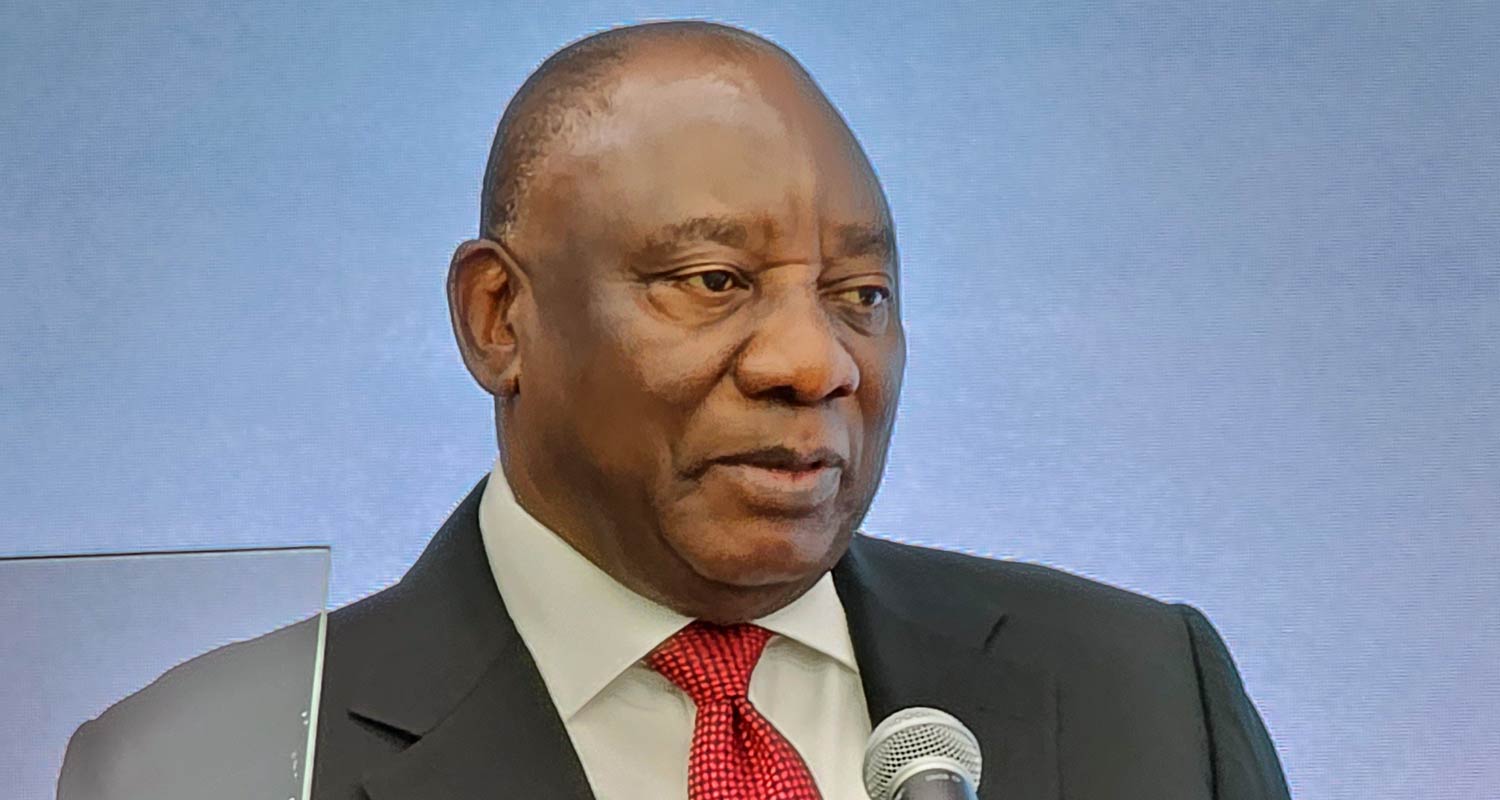
Executives say finalising the review of South Africa’s main automotive manufacturing incentive programme, the second phase of the Automotive Production and Development Programme (APDP2), is increasingly urgent as car makers make decisions on production programmes extending into the next decade.
Ramaphosa said in August that the government was committed to concluding the reviews “as a priority”, and the government has pointed to improved electricity supply and reforms at state-owned logistics group Transnet.
While no car maker has announced an EV manufacturing investment linked to the new incentive, existing APDP support has attracted billions of rand in investment from established manufacturers and newer entrants such as China’s BAIC and Chery, which plans to begin local production next year.
“The risk is not that existing production disappears overnight,” Taljaard said. “The risk is that the next generation of vehicle platforms, technologies and manufacturing investments goes elsewhere.” — (c) 2026 Reuters