The renewed conflict in the Middle East has once again placed geopolitical risk firmly back on the global agenda and through it all, the resilience shown by the South African economy has been impressive in relation to most economies, with the rand holding up far better than it has during past global shocks.
This resilience is a direct result of a deliberate build-up of policy credibility, including a lower inflation target, a primary budget surplus that has been widening since 2023/2024 after 15 years of deficits and a planned fiscal trajectory that will see government debt peak at 78.9% of GDP this year before falling towards 75% by the end of the decade.
The Reserve Bank’s newly appointed head of economic research, Konstantin Makrelov, also highlighted the country’s improved fiscal metrics for the resilience at the African Economic Conference in Abidjan last week. He said that South Africa is far better placed to absorb a shock with sound fiscal and monetary policy than with a rising debt-to-GDP ratio or high inflation, and pointed to the market’s punishing reaction to the 2015 removal of finance minister Nhlanhla Nene as proof that credibility, once lost, is costly to win back.
The fiscal discipline has also brought credit rating upgrades: S&P upgraded South Africa’s long-term foreign currency credit rating by one notch in November 2025 – its first upgrade in two decades – while Moody’s revised its outlook from stable to positive in late May 2026, and Fitch upgraded South Africa’s long-term credit rating on 5 June, its first upgrade in 21 years.
Reforms in the financial sector have added to this resilience, particularly those related to the FATF (Financial Action Task Force) requirements. Deposit insurance is now operational through the Corporation for Deposit Insurance, and the country has built out its emergency liquidity and resolution frameworks. These reforms have strengthened an already sophisticated and well-respected financial services sector with strong companies and institutions, including the Reserve Bank, national treasury and Prudential Authority.
Toyota investment
Prudential Authority CEO Fundzi Tshazibana has said this strength acted as a buffer during the Iran war, and that South Africa is now more resilient to external shocks than it was during the Covid-19 pandemic or the market turmoil that followed Russia’s invasion of Ukraine.
This resilience is now being extended to fuel security. Minister of mineral & petroleum resources Gwede Mantashe has published a draft strategic petroleum stocks policy that is meant to end South Africa’s voluntary approach to fuel stockholding, requiring the state to hold 60 days of strategic crude and refined product reserves and private wholesalers to hold a further 21 days at their own cost, the country’s first increase in strategic reserves since the 1970s.
Read: The city that wowed the world in 2010 is now bankrupt
Mantashe’s proposed intervention is a welcome one. It will also finally address a historic sin: the 2015/2016 sale of 10 million barrels of the country’s strategic oil reserves, at bargain prices, in a deal the Western Cape high court later declared unlawful. Nobody has been criminally charged for this.
In another piece of very good news for South Africa, Toyota launched the ninth-generation Hilux at its Prospecton plant in Durban last week, backed by a R10.4bn investment to retool the plant for the new model – the largest single-product investment in the company’s South African history. That is a reflection of confidence: plenty of other markets are competing for such investment.
But President Cyril Ramaphosa’s message, in a recorded address at the launch, was particularly heartening. He said South Africa’s critical minerals, combined with advanced manufacturing and local beneficiation, could make the country “a leading global hub for future mobility”, and “to unlock that opportunity fully, we must continue improving the efficiency of our logistics system. Reliable ports. Efficient railways. Modern infrastructure. These … determine our global competitiveness.”
While he may be accused of over-optimism, he is right that unlocking these opportunities depends on pushing hard on the reforms that make them possible. On that front, we will be releasing the results of the BLSA Reform Tracker for April-June, and while there is some good news, there are areas of concern.
A real difficulty with South Africa’s ambitious reform programme, particularly in the key areas of energy, transport, water and local government, is that they are complex, often involving multiple layers which take time to implement fully, and the results will therefore be felt only over the longer term. Whenever setbacks occur, I always remind myself that this process is more for our children and grandchildren than for my generation. That’s why it’s so encouraging that we are already starting to see some of the fruits of this difficult process.
The more parts of the wide reform programme that are successfully implemented, the further along we’ll be in developing an efficient backbone to the economy, on which businesses can operate efficiently and drive faster economic growth. That, in the end, is the best way to create jobs and make a meaningful impact on the unemployment rate.
Read: Beijing’s AI master plan has South Africa in its sights
We cannot control global events and more external shocks will come our way. What we can control is how prepared we are when the next shock arrives. We are on the right path in the fiscal space and heading in the right direction with reforms. The more we work together as a country, the more successful we will be in addressing problem areas and setting the foundations from which future generations can prosper.
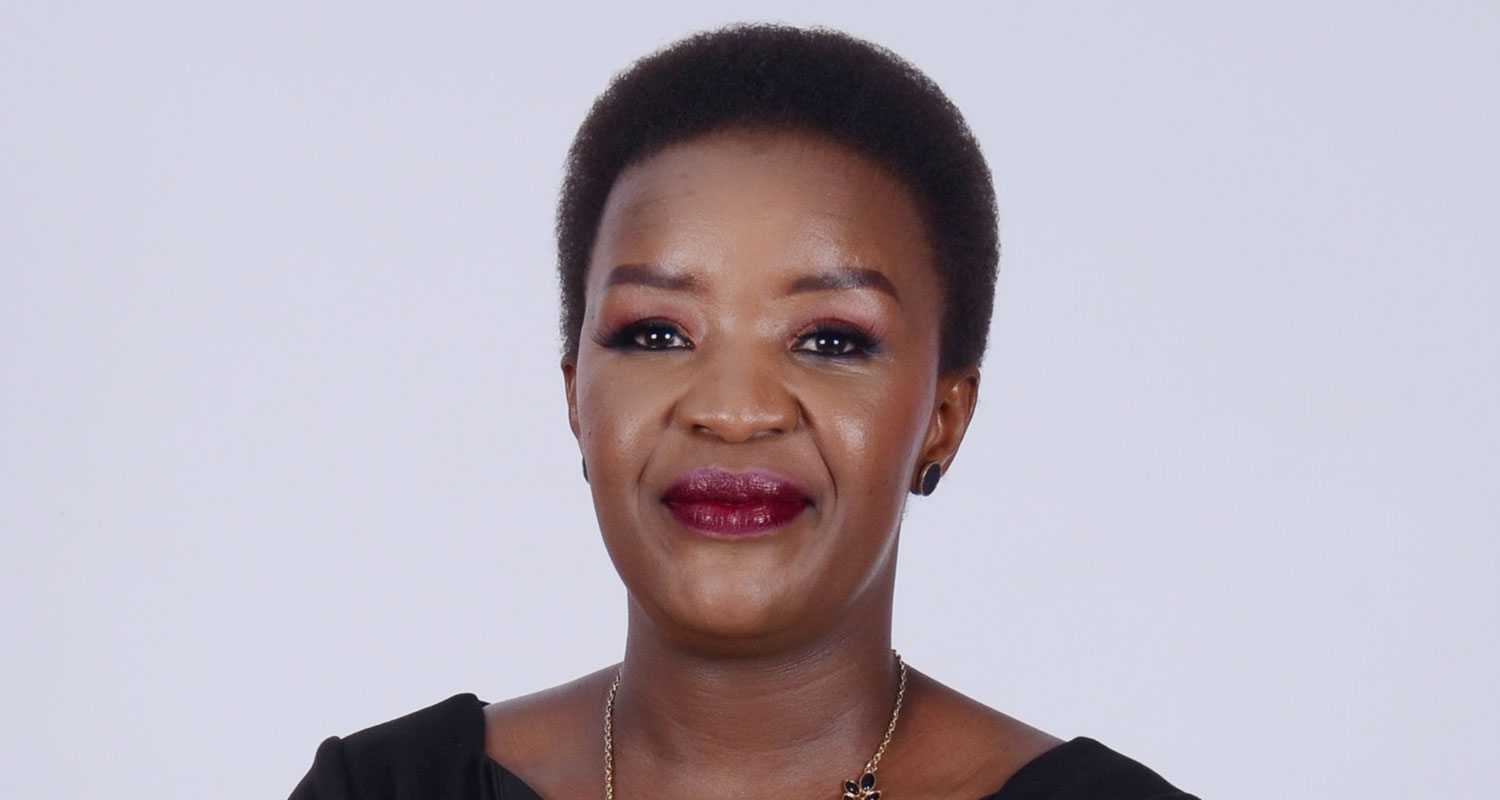
- The author, Busi Mavuso, is CEO of Business Leadership South Africa
- Read more articles by Mavuso on TechCentral
- Subscribe to TechCentral’s daily newsletter
- Get breaking news alerts on WhatsApp