Close Menu
TechCentralTechCentral

    Subscribe to the newsletter

    Get the best South African technology news and analysis delivered to your e-mail inbox every morning.

    Facebook X (Twitter) YouTube LinkedIn
    WhatsApp Facebook X (Twitter) LinkedIn YouTube
    TechCentralTechCentral
    • News
      Why Telkom is pouring capex into IT - Serame Taukobong

      Why Telkom is pouring capital spending into IT

      2 June 2026
      Telkom's data growth story still has years to run: CEO

      Telkom’s data growth story still has years to run: CEO

      2 June 2026
      Reserve Bank draws a line on inflation - Lesetja Kganyago. Siphiwe Sibeko/Reuters

      Reserve Bank draws a line on inflation

      2 June 2026

      Clashing judgments leave South Africa’s crypto law unsettled

      2 June 2026
      Telkom's four-year SIU standoff awaits a final ruling

      Telkom’s four-year SIU standoff awaits a final ruling

      2 June 2026
    • World
      Astronomers discover exoplanets with magnetic fields

      Strange winds reveal magnetic fields on distant ‘hot Jupiters’

      2 June 2026
      Nvidia's first CPUs to debut in Windows laptops this week

      Nvidia CPUs to debut in Windows laptops this week

      31 May 2026
      Watch: Bezos rocket erupts in fireball during ground test

      Watch: Bezos rocket erupts in fireball during ground test

      29 May 2026
      AI boom hands Samsung chip workers life-changing bonuses

      AI boom hands Samsung chip workers life-changing bonuses

      27 May 2026
      Luce lit: Ferrari unveils its first electric car

      Luce lit: Ferrari unveils its first electric car

      26 May 2026
    • In-depth
      Alfa's electric rebel - Alfa Romeo Junior Elettrica Veloce

      Alfa’s electric rebel

      29 April 2026
      Africa switches on as Europe dims the lights

      Africa switches on as Europe dims the lights

      9 April 2026
      The biggest untapped EV market on Earth is hiding in plain sight

      The biggest untapped EV market on Earth is hiding in plain sight

      1 April 2026
      AI, cybersecurity power standout year for Datatec - Jens Montanana

      The R16-billion tech giant hiding in plain sight

      26 March 2026
      The last generation of coders

      The last generation of coders

      18 February 2026
    • TCS
      TCS | Charge's R1.8-billion bet on an off-grid EV future - Charge chairman Joubert Roux

      TCS | Charge’s R1.8-billion bet on an off-grid EV future

      18 May 2026
      TCS+ | The Up&Up Group on the hidden cost of AI - Jason Harrison

      TCS+ | The Up&Up Group on the hidden cost of AI

      13 May 2026
      Michael Rossouw

      TCS+ | The retirement decision most South Africans get wrong

      6 May 2026
      TCS | The Cape Town start-up listening for TB with AI - Braden van Breda

      TCS | The Cape Town start-up listening for TB with AI

      4 May 2026

      TCS+ | ‘The ISP for ISPs’: Vox’s shift to wholesale aggregator

      20 April 2026
    • Opinion
      Treasury's crypto crackdown is a betrayal of Mandela's promise - Duncan McLeod

      Treasury’s crypto crackdown is a betrayal of Mandela’s promise

      22 May 2026
      South Africa is sleepwalking into another AI policy failure - Celeste Labuschagne

      South Africa is sleepwalking into another AI policy failure

      20 May 2026
      AI won't fix your culture - it will expose it - Jackie Kennedy

      AI won’t fix your culture – it will expose it

      19 May 2026
      Treasury's crypto crackdown is a betrayal of Mandela's promise - Duncan McLeod

      Free calls, dead voice and Shameel Joosub’s Spanish ghost

      22 April 2026
      The conflict of interest at the heart of PayShap's slow adoption - Cheslyn Jacobs

      The conflict of interest at the heart of PayShap’s slow adoption

      26 March 2026
    • Company Hubs
      • 1Stream
      • Africa Data Centres
      • AfriGIS
      • Altron Digital Business
      • Altron Document Solutions
      • Altron Group
      • Arctic Wolf
      • Ascent Technology
      • AvertITD
      • BBD
      • Braintree
      • CallMiner
      • CambriLearn
      • CM Telecom
      • Contactable
      • CYBER1 Solutions
      • Digicloud Africa
      • Digimune
      • Domains.co.za
      • ESET
      • Euphoria Telecom
      • HOSTAFRICA
      • Incredible Business
      • iONLINE
      • IQbusiness
      • Iris Network Systems
      • Kaspersky
      • LSD Open
      • Mitel
      • NEC XON
      • Netstar
      • Network Platforms
      • Next DLP
      • Ovations
      • Paracon
      • Paratus
      • Q-KON
      • SevenC
      • SkyWire
      • Solid8 Technologies
      • Telit Cinterion
      • Telviva
      • Tenable
      • Vertiv
      • Videri Digital
      • Vodacom Business
      • Wipro
      • Workday
      • XLink
    • Sections
      • AI and machine learning
      • Banking
      • Broadcasting and Media
      • Cloud services
      • Contact centres and CX
      • Cryptocurrencies
      • Education and skills
      • Electronics and hardware
      • Energy and sustainability
      • Enterprise software
      • Financial services
      • HealthTech
      • Information security
      • Internet and connectivity
      • Internet of Things
      • Investment
      • IT services
      • Lifestyle
      • Motoring
      • Policy and regulation
      • Public sector
      • Retail and e-commerce
      • Satellite communications
      • Science
      • SMEs and start-ups
      • Social media
      • Talent and leadership
      • Telecoms
    • Events
    • Advertise
    TechCentralTechCentral
    Home » In-depth » Space billionaires stir alarm with absence of safety oversight

    Space billionaires stir alarm with absence of safety oversight

    By Agency Staff13 August 2021
    Twitter LinkedIn Facebook WhatsApp Email Telegram Copy Link
    News Alerts
    WhatsApp
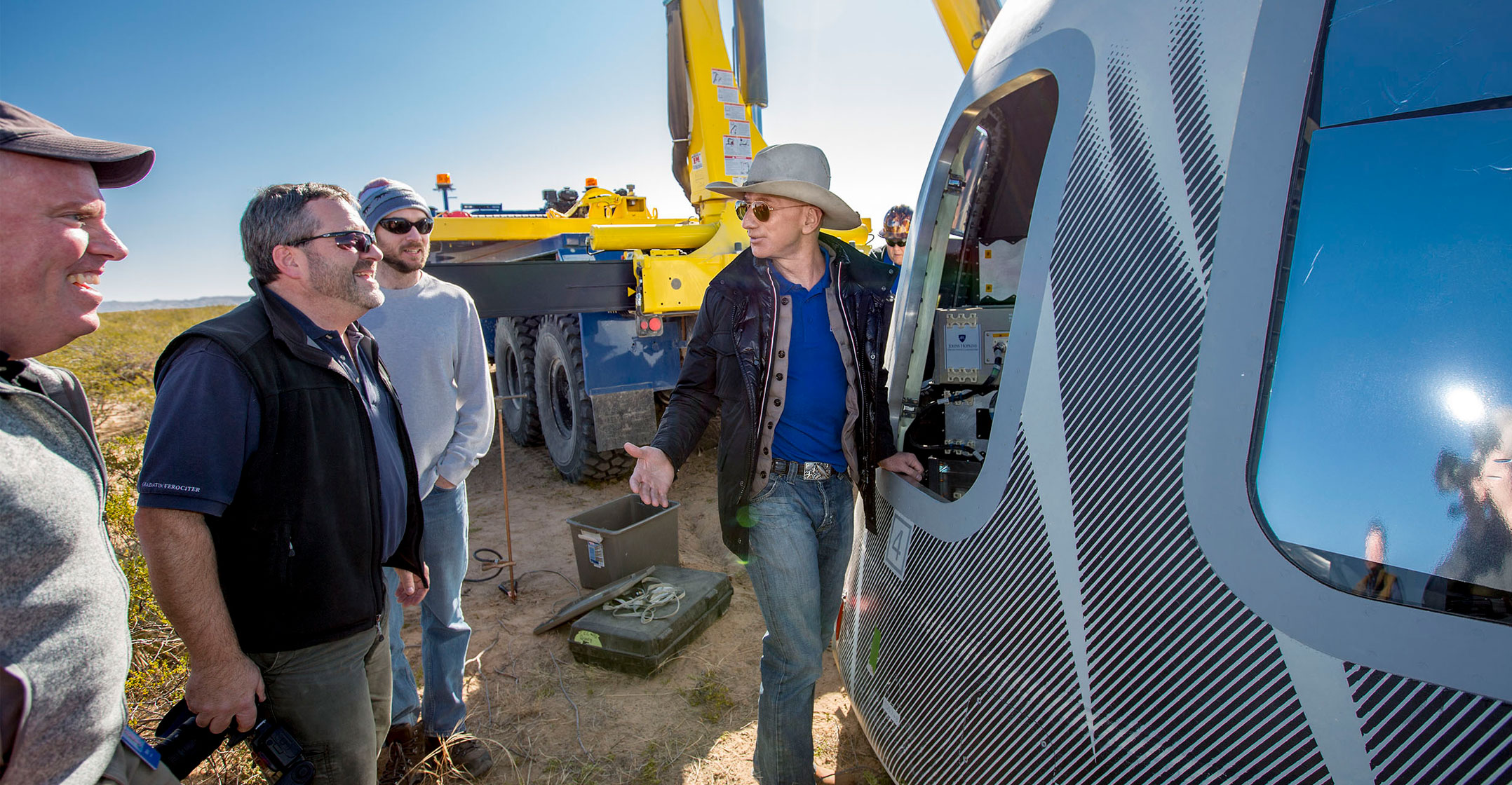
    Jeff Bezos, blue shirt and hat, checking out a Blue Origin crew capsule after touchdown

    The billionaires who blasted into space in recent weeks did so with style. Blue Origin’s Jeff Bezos sported a cowboy hat after landing and Richard Branson wore a blue Virgin Galactic jumpsuit he’d called “sexy”.

    To some of the world’s leading experts in space-travel safety, something else stood out: Neither company equipped the passengers of their spacecraft with pressure suits to protect them from a rapid decompression outside Earth’s atmosphere.

    Such suits are required by Nasa and other nations as a result of hard-earned lessons from fatal accidents, but no such standards apply to the companies racing to commercialise space, including tourist flights. The US congress has exempted such ventures in the US from any federal safety oversight for crews.

    The reality is when you go to space, you don’t dress with nice stuff, you dress with the right stuff

    “The reality is when you go to space, you don’t dress with nice stuff, you dress with the right stuff,” said Tommaso Sgobba, a former European Space Agency official who is executive director of the International Association for the Advancement of Space Safety.

    The success of two privately funded human-space launches last month has supercharged the US commercial launch industry, and advocates say the lack of rules is a key component to the rapid pace of innovation and should be extended.

    Early days

    The industry “is in its early days, and more time is needed to have informed discussions on what regulatory framework should look like in the future to support human spaceflight”, Mike Moses, president of space missions and safety at Virgin Galactic, told lawmakers at a hearing earlier this year.

    But Sgobba and others say it’s time to end the restriction on government oversight of an enterprise that is notoriously risky. Rockets are akin to giant bombs that have proved difficult to harness with high reliability, and the harsh environment of space leaves little margin for error.

    There have been 379 human flights to space by the US since the early 1960s, four of which ended in fatal accidents, according to George Nield, an industry consultant who directed the Federal Aviation Administration’s office overseeing commercial launches for 10 years until 2018. That means there was about a 1% chance of failure.
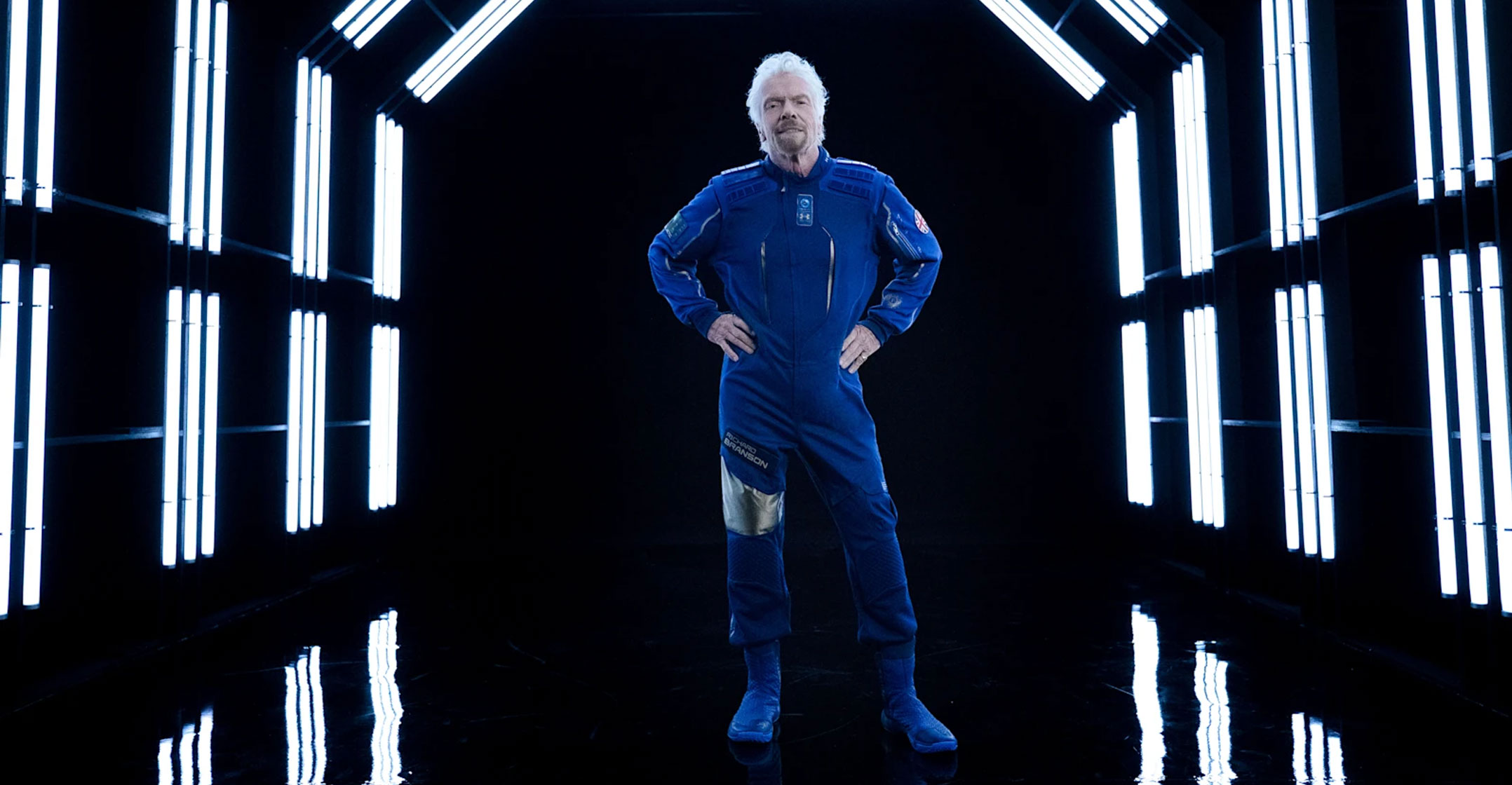
    Richard Branson. Image: Virgin Galactic

    The FAA scrutinises launch applications to ensure a mishap won’t harm the public on the ground or in passing aircraft. As part of that, it reviews the reliability of rockets and spacecraft, but congress has forbidden the agency from establishing any rules to protect occupants.

    Virgin and Blue Origin didn’t respond to requests for comment. The moratorium on safety oversight, which began in 2004 and was spurred by millions of dollars in lobbying, extends at least through to 2023.

    Sgobba, Nield and others say the moratorium has outlived its usefulness. What’s more, they fear a catastrophe on one the flights could cripple the burgeoning industry for years. “It is time, I believe, to update our human spaceflight regulatory framework,” Nield said.

    With space tourism taking off, I believe we should no longer tie the hands of the agency responsible for safety oversight

    Sgobba, Nield and several other leading government and private-industry officials authored a proposal two years ago calling for creation of a quasi-government institute to set minimum standards based on the lessons learned during decades of space travel.

    Lawmakers haven’t hesitated to extend the moratorium on safety in the past and the industry has powerful allies in congress, but some are calling for change. “With space tourism taking off, I believe we should no longer tie the hands of the agency responsible for safety oversight,” said representative Peter DeFazio, a Democrat who is chairman of the house transportation and infrastructure committee.

    ‘Learning period’

    Commercial space companies are adamant that what they call a “learning period” has been critical to rapid expansion and should be extended. Companies follow extensive safety measures and imposing rules would be too restrictive and hinder innovation, they say.

    “If all vehicles are meant to be regulated the same way, that basically limits the design features of those vehicles,” said Karina Drees, president of the Commercial Spaceflight Federation. The group’s members include Blue Origin, Virgin Galactic and dozens of other companies.

    The companies have begun to develop their own minimum voluntary standards, the federation said. The companies and the trade group that represents them have spent US$9.8-million on lobbying since 2011, according to the OpenSecrets website.

    Blue Origin on its 20 July flight carried an 18-year-old Dutch man whose father paid an undisclosed sum to the company at an auction and Virgin Galactic has announced it had boosted prices for its brief forays to the fringes of space to $450 000. Elon Musk’s SpaceX is planning its own commercial ventures carrying people.

    For decades, only Nasa and the military oversaw space launches. The US government created an office to review commercial operations in 1984, first under the department of transportation and later with the Federal Aviation Administration.

    The FAA has published “recommended practices” that companies can follow for safety measures. The agency also requires that all participants sign a waiver before flying saying they understand the spacecraft’s risks and that it isn’t certified by the government.

    There’s no denying the technological achievements of recent rocket launches, but the long-term safety record is sobering

    The commercial launch industry has grown exponentially in recent years. In May, the FAA oversaw the 400th launch. After only one in 2011, there were a record 39 in 2020 and the agency is on pace to shatter that record this year with 37 already.

    The vast majority have been used to expand satellite networks and carry other goods into space, and those create minimal risks to humans. But commercial flights carrying people are poised for a leap.

    SpaceX, too

    In addition to Blue Origin and Virgin Galactic, SpaceX’s Dragon capsule has carried Nasa astronauts to the space station and the company has sold seats to billionaire Jared Isaacman for a launch as soon as 15 September. Axiom Space of Texas has contracted with SpaceX to carry private crews as soon as January with other flights to follow.

    Boeing and Sierra Nevada Corp are also developing spacecraft that could be used to carry people for hire.

    There’s no denying the technological achievements of recent rocket launches, but the long-term safety record is sobering. Two of the deadliest accidents occurred on the Space Shuttle, killing 14 people, out of its 135 missions.

    One commercial flight accident occurred on a test flight on 31 October 2014, of what would become the Virgin Galactic VSS Unity. As the ship was accelerating, a test pilot accidentally flipped a switch activating a device used to slow and stabilise it on descent, prompting the ship to break apart.

    The US National Transportation Safety Board, which investigates civilian space accidents, found widespread lapses in safety at the company then building the ship. The designers hadn’t anticipated basic human errors could occur, the NTSB said.

    Branson said the investigation had made his company “safer and better”, and Virgin took over the construction of the vehicle. The industry “responded immediately and comprehensively” to NTSB’s recommendations, Drees said.

    Because there are no safety standards and the private companies design their vehicles largely behind a veil of secrecy, it’s hard to know what protections exist, Sgobba said.

    SpaceX and Boeing, which are launching Nasa astronauts, are both using pressure suits.

    He cited the lack of pressure suits in recent launches as the only indication of the practices they’re following. Nasa, Russia and Europe all require that astronauts wear pressurised suits for risky phases of flight as a backup in case a ship loses air pressure. Three Russian crew members died in 1971 when Soyuz 11 lost pressure.

    Designers have layers of protections to prevent such mishaps, but the consequences of failure are so dire that veteran space operators believe the suits make sense during launch and reentry, Sgobba said.

    Basic safety

    SpaceX and Boeing, which are launching Nasa astronauts and have to follow the agency’s extensive safety standards, are both using pressure suits.

    Nield said it may be possible for companies to justify flying without pressure suits. Using them requires extensive training and they could create their own risks, he said.

    The key is for the companies to follow basic safety measures learnt from more than six decades of human space travel, he said. That includes such measures as rigorous safety reviews, independent audits and sharing of safety lessons.

    “To sit back and hope that things go well is probably not a reasonable strategy for the long term,” Nield said. “Let’s figure out how to do this so the industry can be safe and successful.”  — Reported by Alan Levin, (c) 2021 Bloomberg LP

    Follow TechCentral on Google News Add TechCentral as your preferred source on Google


    Blue Origin Boeing Jeff Bezos SpaceX top Virgin Galactic
    WhatsApp YouTube
    Share. Facebook Twitter LinkedIn WhatsApp Telegram Email Copy Link
    Previous ArticleHealth minister wants SA to stay at level-3 lockdown
    Next Article Let’s bust some myths about ethereum

    Related Posts

    AI giant Anthropic files for landmark US listing

    AI giant Anthropic files for landmark US listing

    1 June 2026
    Watch: Bezos rocket erupts in fireball during ground test

    Watch: Bezos rocket erupts in fireball during ground test

    29 May 2026
    Starlink satellites being blasted into space aboard a SpaceX Falcon 9 rocket in a file photograph

    SpaceX wants to fly a rocket every 53 minutes

    21 May 2026
    Company News
    The hidden infrastructure behind AI - Open Access Data Centres OADC

    The hidden infrastructure behind AI

    2 June 2026
    Addressing the 57% blind spot: Kaspersky on measuring SOC effectiveness

    Addressing the 57% blind spot: Kaspersky on measuring SOC effectiveness

    2 June 2026
    Strike48 report: security leaders wary of AI agents - Maidar Secure

    Strike48 report: security leaders wary of AI agents

    2 June 2026
    Opinion
    Treasury's crypto crackdown is a betrayal of Mandela's promise - Duncan McLeod

    Treasury’s crypto crackdown is a betrayal of Mandela’s promise

    22 May 2026
    South Africa is sleepwalking into another AI policy failure - Celeste Labuschagne

    South Africa is sleepwalking into another AI policy failure

    20 May 2026
    AI won't fix your culture - it will expose it - Jackie Kennedy

    AI won’t fix your culture – it will expose it

    19 May 2026

    Subscribe to Updates

    Get the best South African technology news and analysis delivered to your e-mail inbox every morning.

    Latest Posts
    Why Telkom is pouring capex into IT - Serame Taukobong

    Why Telkom is pouring capital spending into IT

    2 June 2026
    Telkom's data growth story still has years to run: CEO

    Telkom’s data growth story still has years to run: CEO

    2 June 2026
    Reserve Bank draws a line on inflation - Lesetja Kganyago. Siphiwe Sibeko/Reuters

    Reserve Bank draws a line on inflation

    2 June 2026
    Astronomers discover exoplanets with magnetic fields

    Strange winds reveal magnetic fields on distant ‘hot Jupiters’

    2 June 2026
    © 2009 - 2026 NewsCentral Media
    • Cookie policy (ZA)
    • TechCentral – privacy and Popia

    Type above and press Enter to search. Press Esc to cancel.

    Manage consent

    TechCentral uses cookies to enhance its offerings. Consenting to these technologies allows us to serve you better. Not consenting or withdrawing consent may adversely affect certain features and functions of the website.

    Functional Always active
    The technical storage or access is strictly necessary for the legitimate purpose of enabling the use of a specific service explicitly requested by the subscriber or user, or for the sole purpose of carrying out the transmission of a communication over an electronic communications network.
    Preferences
    The technical storage or access is necessary for the legitimate purpose of storing preferences that are not requested by the subscriber or user.
    Statistics
    The technical storage or access that is used exclusively for statistical purposes. The technical storage or access that is used exclusively for anonymous statistical purposes. Without a subpoena, voluntary compliance on the part of your Internet Service Provider, or additional records from a third party, information stored or retrieved for this purpose alone cannot usually be used to identify you.
    Marketing
    The technical storage or access is required to create user profiles to send advertising, or to track the user on a website or across several websites for similar marketing purposes.
    • Manage options
    • Manage services
    • Manage {vendor_count} vendors
    • Read more about these purposes
    View preferences
    • {title}
    • {title}
    • {title}