
Close Menu
TechCentralTechCentral

    Subscribe to the newsletter

    Get the best South African technology news and analysis delivered to your e-mail inbox every morning.

    Facebook X (Twitter) YouTube LinkedIn
    WhatsApp Facebook X (Twitter) LinkedIn YouTube
    TechCentralTechCentral
    • News
      Why Telkom is pouring capex into IT - Serame Taukobong

      Why Telkom is pouring capital spending into IT

      2 June 2026
      Telkom's data growth story still has years to run: CEO

      Telkom’s data growth story still has years to run: CEO

      2 June 2026
      Reserve Bank draws a line on inflation - Lesetja Kganyago. Siphiwe Sibeko/Reuters

      Reserve Bank draws a line on inflation

      2 June 2026

      Clashing judgments leave South Africa’s crypto law unsettled

      2 June 2026
      Telkom's four-year SIU standoff awaits a final ruling

      Telkom’s four-year SIU standoff awaits a final ruling

      2 June 2026
    • World
      Astronomers discover exoplanets with magnetic fields

      Strange winds reveal magnetic fields on distant ‘hot Jupiters’

      2 June 2026
      Nvidia's first CPUs to debut in Windows laptops this week

      Nvidia CPUs to debut in Windows laptops this week

      31 May 2026
      Watch: Bezos rocket erupts in fireball during ground test

      Watch: Bezos rocket erupts in fireball during ground test

      29 May 2026
      AI boom hands Samsung chip workers life-changing bonuses

      AI boom hands Samsung chip workers life-changing bonuses

      27 May 2026
      Luce lit: Ferrari unveils its first electric car

      Luce lit: Ferrari unveils its first electric car

      26 May 2026
    • In-depth
      Alfa's electric rebel - Alfa Romeo Junior Elettrica Veloce

      Alfa’s electric rebel

      29 April 2026
      Africa switches on as Europe dims the lights

      Africa switches on as Europe dims the lights

      9 April 2026
      The biggest untapped EV market on Earth is hiding in plain sight

      The biggest untapped EV market on Earth is hiding in plain sight

      1 April 2026
      AI, cybersecurity power standout year for Datatec - Jens Montanana

      The R16-billion tech giant hiding in plain sight

      26 March 2026
      The last generation of coders

      The last generation of coders

      18 February 2026
    • TCS
      TCS | Charge's R1.8-billion bet on an off-grid EV future - Charge chairman Joubert Roux

      TCS | Charge’s R1.8-billion bet on an off-grid EV future

      18 May 2026
      TCS+ | The Up&Up Group on the hidden cost of AI - Jason Harrison

      TCS+ | The Up&Up Group on the hidden cost of AI

      13 May 2026
      Michael Rossouw

      TCS+ | The retirement decision most South Africans get wrong

      6 May 2026
      TCS | The Cape Town start-up listening for TB with AI - Braden van Breda

      TCS | The Cape Town start-up listening for TB with AI

      4 May 2026

      TCS+ | ‘The ISP for ISPs’: Vox’s shift to wholesale aggregator

      20 April 2026
    • Opinion
      Treasury's crypto crackdown is a betrayal of Mandela's promise - Duncan McLeod

      Treasury’s crypto crackdown is a betrayal of Mandela’s promise

      22 May 2026
      South Africa is sleepwalking into another AI policy failure - Celeste Labuschagne

      South Africa is sleepwalking into another AI policy failure

      20 May 2026
      AI won't fix your culture - it will expose it - Jackie Kennedy

      AI won’t fix your culture – it will expose it

      19 May 2026
      Treasury's crypto crackdown is a betrayal of Mandela's promise - Duncan McLeod

      Free calls, dead voice and Shameel Joosub’s Spanish ghost

      22 April 2026
      The conflict of interest at the heart of PayShap's slow adoption - Cheslyn Jacobs

      The conflict of interest at the heart of PayShap’s slow adoption

      26 March 2026
    • Company Hubs
      • 1Stream
      • Africa Data Centres
      • AfriGIS
      • Altron Digital Business
      • Altron Document Solutions
      • Altron Group
      • Arctic Wolf
      • Ascent Technology
      • AvertITD
      • BBD
      • Braintree
      • CallMiner
      • CambriLearn
      • CM Telecom
      • Contactable
      • CYBER1 Solutions
      • Digicloud Africa
      • Digimune
      • Domains.co.za
      • ESET
      • Euphoria Telecom
      • HOSTAFRICA
      • Incredible Business
      • iONLINE
      • IQbusiness
      • Iris Network Systems
      • Kaspersky
      • LSD Open
      • Mitel
      • NEC XON
      • Netstar
      • Network Platforms
      • Next DLP
      • Ovations
      • Paracon
      • Paratus
      • Q-KON
      • SevenC
      • SkyWire
      • Solid8 Technologies
      • Telit Cinterion
      • Telviva
      • Tenable
      • Vertiv
      • Videri Digital
      • Vodacom Business
      • Wipro
      • Workday
      • XLink
    • Sections
      • AI and machine learning
      • Banking
      • Broadcasting and Media
      • Cloud services
      • Contact centres and CX
      • Cryptocurrencies
      • Education and skills
      • Electronics and hardware
      • Energy and sustainability
      • Enterprise software
      • Financial services
      • HealthTech
      • Information security
      • Internet and connectivity
      • Internet of Things
      • Investment
      • IT services
      • Lifestyle
      • Motoring
      • Policy and regulation
      • Public sector
      • Retail and e-commerce
      • Satellite communications
      • Science
      • SMEs and start-ups
      • Social media
      • Talent and leadership
      • Telecoms
    • Events
    • Advertise
    TechCentralTechCentral
    Home » Sections » Satellite communications » Starlink in race with Chinese rivals to dominate satellite internet

    Starlink in race with Chinese rivals to dominate satellite internet

    By Agency Staff24 February 2025

    Space is about to get more crowded for Elon Musk. The billionaire’s Starlink communications network is facing increasingly stiff challenges to its dominance of high-speed satellite internet, including from a Chinese state-backed rival and another service financed by Amazon.com founder Jeff Bezos.

    Shanghai-based SpaceSail in November signed an agreement to enter Brazil and announced it was in talks with over 30 countries. Two months later, it began work in Kazakhstan, according to the Kazakh embassy in Beijing.

    Separately, Brasília is in talks with Bezos’s Project Kuiper internet service and Canada’s Telesat, according to a Brazilian official involved in the negotiations, who spoke on condition of anonymity to freely discuss ongoing talks. News of those discussions is being reported for the first time.

    Starlink has since 2020 launched more satellites into low-Earth orbit than all its competitors combined

    Starlink has since 2020 launched more satellites into low-Earth orbit (LEO) — an altitude of less than 2 000km — than all its competitors combined. Satellites operating at such low altitudes transmit data extremely efficiently, providing high-speed internet for remote communities, seafaring vessels and militaries at war.

    Musk’s primacy in space is seen as a threat by Beijing, which is both investing heavily in rivals and funding military research into tools that track satellite constellations, according to Chinese corporate filings and academic papers whose details have not been previously reported.

    China launched a record 263 LEO satellites last year, according to data from astrophysicist Jonathan McDowell analysed by tech consultancy Analysys Mason.

    SpaceSail

    The emergence of competition to Starlink has been welcomed by Brazil’s government, which wants high-speed internet for communities in far-flung areas but has previously faced off with Musk over commerce and politics.

    SpaceSail declined to comment when presented questions about its expansion plans. A newspaper controlled by China’s telecoms regulator last year praised it as “capable of transcending national boundaries, penetrating sovereignty and unconditionally covering the whole world … a strategic capability that our country must master”.

    Kuiper, Telesat, Starlink and Brazil’s communications ministry did not respond to requests for comment.

    Read: Vodafone in world’s first satellite video call using standard smartphone

    Few of Musk’s international rivals have the same ambition as SpaceSail, which is controlled by the Shanghai municipal government. It has announced plans to deploy 648 LEO satellites this year and as many as 15 000 by 2030; Starlink currently has about 7 000 satellites, according to McDowell, and has set itself a target of operating 42 000 by the end of the decade.

    SpaceSail’s launches will eventually comprise the Qianfan, or “Thousand Sails”, constellation that marks China’s first international push into satellite broadband. Three other Chinese constellations are also in development, with Beijing planning to launch 43 000 LEO satellites in the coming decades and investing in rockets that can carry multiple satellites.

    A woman connected via a Starlink terminal

    “The endgame is to occupy as many orbital slots as possible,” said Chaitanya Giri, a space technology expert at India’s Observer Research Foundation.

    China’s rush to occupy more of lower-Earth orbit has raised concerns among Western policymakers, who worry that it could extend the reach of Beijing’s internet censorship regime. Researchers at the American Foreign Policy Council think-tank said in a February paper that Washington should increase cooperation with Global South nations if it wanted to “seriously contest China’s growing foray into digital dominance”.

    The researchers also described Qianfan as a crucial part of the space component of China’s Belt and Road Initiative. The US$1-trillion global infrastructure development plan is a signature policy of Chinese leader Xi Jinping, but has been accused by critics of being primarily a tool to expand Beijing’s geopolitical influence.

    Chinese researchers, including many affiliated with the People’s Liberation Army, have also turned their attention to the field

    China’s commerce ministry and telecoms regulator did not respond to requests for comment. China’s foreign ministry said in response to questions that while it was not aware of the specifics surrounding SpaceSail and Chinese LEO satellites expanding overseas, Beijing pursues space cooperation with other countries for the benefit of their peoples.

    SpaceSail has said it aims to supply reliable internet to more users, particularly those in remote areas and during recovery from emergencies and natural disasters.

    Starlink’s rapid expansion and its use in the war in Ukraine has caught the attention of military researchers like those at China’s National University of Defence Technology, prompting significant state funding for rival satellite networks.

    Hongqing Technology, which was founded in 2017 and is developing a 10 000-satellite constellation, this month raised C¥340-million from mostly state-affiliated investors.

    ‘Moving fast’

    Last year, SpaceSail secured C¥6.7-billion ($930-million) in a financing round led by a state-owned investment fund focused on upgrading China’s manufacturing capabilities.

    Chinese researchers, including many affiliated with the People’s Liberation Army, have also turned their attention to the field. China published a record 2 449 patents related to LEO satellite technology in 2023, up from 162 in 2019, according to Anaqua’s AcclaimIP database.

    Many focus on cost-efficient satellite networks and low-latency communication systems, underscoring China’s push to close the technology gap.

    Read: South Africa is said to halt Starlink talks as US tensions escalate

    “The space world is moving fast and busy experimenting,” said Antoine Grenier, global head of space at the Analysys Mason consultancy. “Pioneers are enjoying this relative freedom and are shaping it to their advantage to claim key positions before rules become more stringent – like the Wild West.”

    Some of the Chinese research appears to be targeted at Starlink, with one PLA-linked patent application describing the US system as critical to reconnaissance and military communications while posing “threats to network, data, and military security”.
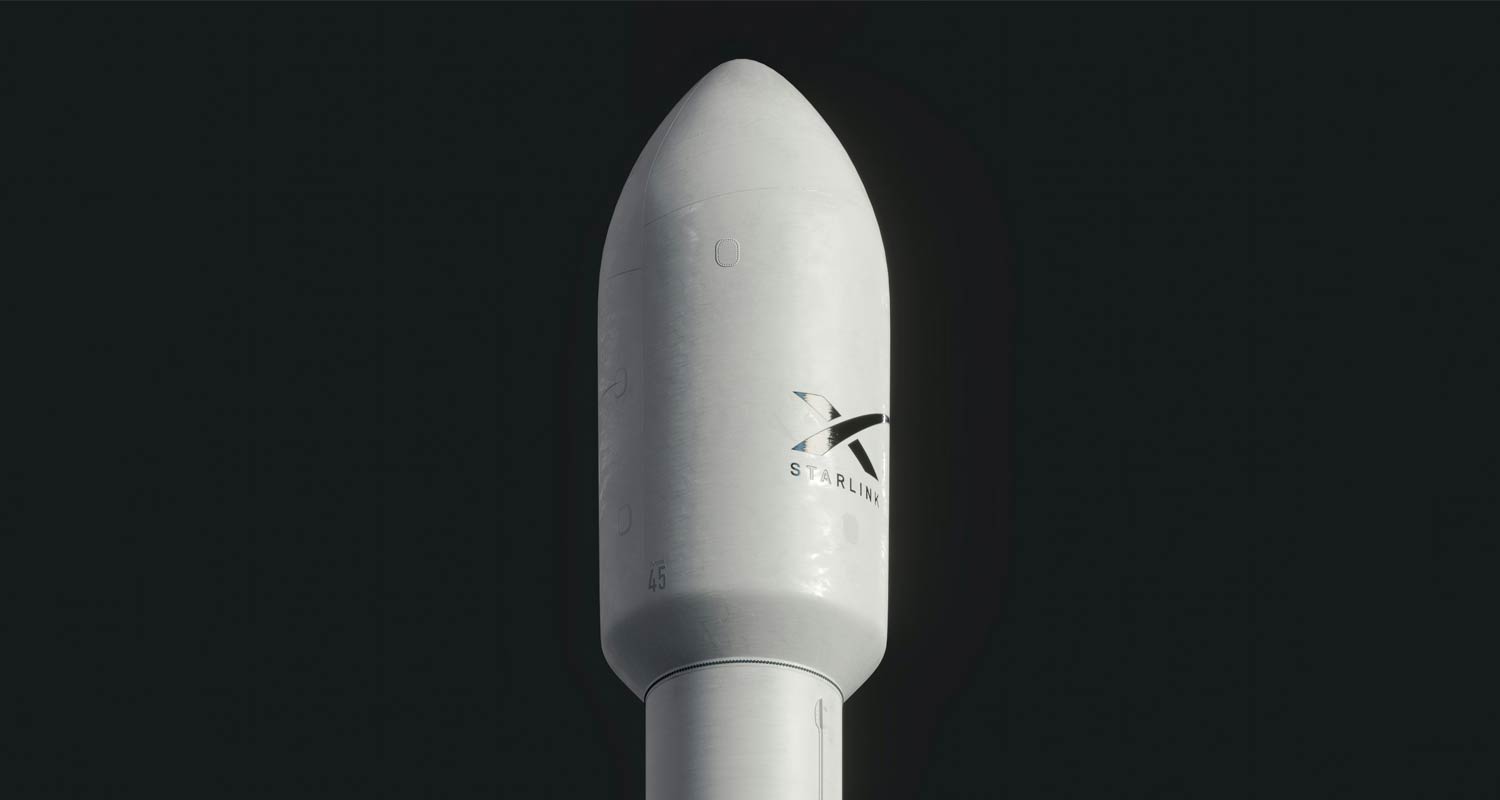
    Beijing is also developing tools to track and monitor Starlink’s constellation. Researchers from two PLA-affiliated institutes said in a January study published in a Chinese engineering journal that they had designed a system and algorithm for tracking megaconstellations like Starlink’s, which was inspired by how humpback whales trap their prey by circling them and creating spiralling bubbles.

    “With the growing trend of space militarisation, developing tools to monitor and track these megaconstellations is critically important,” the researchers wrote.  — Nivedita Bhattacharjee, Eduardo Baptista, Lisandra Paraguassu and Ricardo Brito, (c) 2025 Reuters

    Get breaking news from TechCentral on WhatsApp. Sign up here

    Don’t miss:

    Starlink to phones gets a price: $15/month

    Follow TechCentral on Google News Add TechCentral as your preferred source on Google


    Elon Musk SpaceSail SpaceX Starlink
    WhatsApp YouTube
    Share. Facebook Twitter LinkedIn WhatsApp Telegram Email Copy Link
    Previous ArticleThe dark side of social media – exploring the evolving threat landscape
    Next Article Hijackings are outpacing vehicle theft in South Africa – and tech is to blame

    Related Posts

    AI giant Anthropic files for landmark US listing

    AI giant Anthropic files for landmark US listing

    1 June 2026
    Watch: Bezos rocket erupts in fireball during ground test

    Watch: Bezos rocket erupts in fireball during ground test

    29 May 2026
    Starlink satellites being blasted into space aboard a SpaceX Falcon 9 rocket in a file photograph

    SpaceX wants to fly a rocket every 53 minutes

    21 May 2026
    Company News
    The hidden infrastructure behind AI - Open Access Data Centres OADC

    The hidden infrastructure behind AI

    2 June 2026
    Addressing the 57% blind spot: Kaspersky on measuring SOC effectiveness

    Addressing the 57% blind spot: Kaspersky on measuring SOC effectiveness

    2 June 2026
    Strike48 report: security leaders wary of AI agents - Maidar Secure

    Strike48 report: security leaders wary of AI agents

    2 June 2026
    Opinion
    Treasury's crypto crackdown is a betrayal of Mandela's promise - Duncan McLeod

    Treasury’s crypto crackdown is a betrayal of Mandela’s promise

    22 May 2026
    South Africa is sleepwalking into another AI policy failure - Celeste Labuschagne

    South Africa is sleepwalking into another AI policy failure

    20 May 2026
    AI won't fix your culture - it will expose it - Jackie Kennedy

    AI won’t fix your culture – it will expose it

    19 May 2026

    Subscribe to Updates

    Get the best South African technology news and analysis delivered to your e-mail inbox every morning.

    Latest Posts
    Why Telkom is pouring capex into IT - Serame Taukobong

    Why Telkom is pouring capital spending into IT

    2 June 2026
    Telkom's data growth story still has years to run: CEO

    Telkom’s data growth story still has years to run: CEO

    2 June 2026
    Reserve Bank draws a line on inflation - Lesetja Kganyago. Siphiwe Sibeko/Reuters

    Reserve Bank draws a line on inflation

    2 June 2026
    Astronomers discover exoplanets with magnetic fields

    Strange winds reveal magnetic fields on distant ‘hot Jupiters’

    2 June 2026
    © 2009 - 2026 NewsCentral Media
    • Cookie policy (ZA)
    • TechCentral – privacy and Popia

    Type above and press Enter to search. Press Esc to cancel.

    Manage consent

    TechCentral uses cookies to enhance its offerings. Consenting to these technologies allows us to serve you better. Not consenting or withdrawing consent may adversely affect certain features and functions of the website.

    Functional Always active
    The technical storage or access is strictly necessary for the legitimate purpose of enabling the use of a specific service explicitly requested by the subscriber or user, or for the sole purpose of carrying out the transmission of a communication over an electronic communications network.
    Preferences
    The technical storage or access is necessary for the legitimate purpose of storing preferences that are not requested by the subscriber or user.
    Statistics
    The technical storage or access that is used exclusively for statistical purposes. The technical storage or access that is used exclusively for anonymous statistical purposes. Without a subpoena, voluntary compliance on the part of your Internet Service Provider, or additional records from a third party, information stored or retrieved for this purpose alone cannot usually be used to identify you.
    Marketing
    The technical storage or access is required to create user profiles to send advertising, or to track the user on a website or across several websites for similar marketing purposes.
    • Manage options
    • Manage services
    • Manage {vendor_count} vendors
    • Read more about these purposes
    View preferences
    • {title}
    • {title}
    • {title}