Close Menu
TechCentralTechCentral

    Subscribe to the newsletter

    Get the best South African technology news and analysis delivered to your e-mail inbox every morning.

    Facebook X (Twitter) YouTube LinkedIn
    WhatsApp Facebook X (Twitter) LinkedIn YouTube
    TechCentralTechCentral
    • News
      Meta met Information Regulator over its camera glasses - Mark Zuckerberg

      Meta met Information Regulator over its camera glasses

      6 October 2026
      Why South Africa's biggest drone isn't flying for the country - Milkor 380

      Why South Africa’s biggest drone isn’t flying for the country

      6 October 2026
      Nersa wants five-year ban on automated electricity trading

      Nersa wants five-year ban on automated electricity trading

      6 October 2026
      South African boardrooms are about to get a lot less private

      South African boardrooms are about to get a lot less private

      6 October 2026
      FNB launches crypto trading - Bheki Mkhize

      FNB launches crypto trading

      6 October 2026
    • World
      BMW restructuring plan bets on AI and new models

      BMW restructuring plan bets on AI and new models

      1 October 2026
      OpenAI's rogue agent problem keeps getting bigger - Sam Altman

      OpenAI’s rogue agent problem keeps getting bigger

      28 September 2026
      The new battle over the desktop

      The new battle over the desktop

      23 September 2026
      AMD is now worth a trillion dollars - Lisa Su

      AMD is now worth a trillion dollars

      22 September 2026
      Anthropic weighs new model launch to blunt OpenAI's Astra surge - Anthropic CEO Dario Amodei and OpenAI CEO Sam Altman

      Anthropic weighs new model launch to blunt OpenAI’s Astra surge

      21 September 2026
    • In-depth

      10 days that changed the course of AI

      21 September 2026
      Meta to the AI industry: slow down without us - Mark Zuckerberg

      Meta to the AI industry: slow down without us

      16 September 2026
      Google DeepMind CEO Demis Hassabis. Image: John Sears

      The plan to stop AI from breaking the world

      16 July 2026
      The internet has a Strait of Hormuz problem

      The internet has a Strait of Hormuz problem

      15 July 2026
      AI boom sparks rally, frenzy and fear

      AI boom sparks rally, frenzy and fear

      11 June 2026
    • TCS
      Meet the CIO | Vodacom's Mohamed Sami on the agentic future

      Meet the CIO | Vodacom’s Mohamed Sami on the agentic future

      5 October 2026
      Lexi Novitske, general partner at Norrsken22, on the TechCentral Show

      TCS | Norrsken22’s Lexi Novitske on how China is winning African tech

      1 October 2026
      TCS | Dominic White and Adam Ely on AI agents going rogue

      TCS | Dominic White and Adam Ely on AI agents going rogue

      29 September 2026
      TCS | Octotel's Trevor van Zyl on the fibre merger question

      TCS | Octotel’s Trevor van Zyl on the MetroFibre merger question

      16 September 2026
      Meet the CIO | Shoprite's Chris Shortt on what a supermarket becomes

      Meet the CIO | Shoprite’s Chris Shortt on what a supermarket becomes

      9 September 2026
    • Opinion
      Let South Africans jailbreak their way to digital sovereignty - Dirk de Vos

      Let South Africans jailbreak their way to digital sovereignty

      5 October 2026
      South Africa's next energy crisis is in the accounts department - Craig Holmes

      South Africa’s next energy crisis is in the accounts department

      29 September 2026
      The steam engine lesson AI doomsayers keep missing - Sam Clarke

      The steam engine lesson AI doomsayers keep missing

      28 September 2026
      Let South Africans jailbreak their way to digital sovereignty - Dirk de Vos

      Regulating AI: apply the laws we have first

      21 September 2026
      What Revolut can and cannot take from South Africa's banks - Pambos Soteriades

      What Revolut can and cannot take from South Africa’s banks

      15 September 2026
    • Company News
      • 1Stream
      • Africa Data Centres
      • AfriGIS
      • Altron Digital Business
      • Altron Document Solutions
      • Altron Group
      • Arctic Wolf
      • Ascent Technology
      • AvertITD
      • BBD
      • Braintree
      • CallMiner
      • CambriLearn
      • CM.com
      • Contactable
      • CYBER1 Solutions
      • Digicloud Africa
      • Digimune
      • Domains.co.za
      • ESET
      • Euphoria Telecom
      • HOSTAFRICA
      • Incredible Business
      • iONLINE
      • IQbusiness
      • Iris Network Systems
      • Kaspersky
      • LSD Open
      • Mitel
      • NEC XON
      • Netstar
      • Network Platforms
      • Next DLP
      • Ovations
      • Paracon
      • Paratus
      • Publishared
      • Q-KON
      • SevenC
      • SkyWire
      • Solid8 Technologies
      • Telit Cinterion
      • Telviva
      • Tenable
      • Vertiv
      • Videri Digital
      • Vodacom Business
      • Vox
      • Wipro
      • Workday
      • XLink
    • Sections
      • AI and machine learning
      • Banking
      • Broadcasting and Media
      • Cloud services
      • Contact centres and CX
      • Cryptocurrencies
      • Education and skills
      • Electronics and hardware
      • Energy and sustainability
      • Enterprise software
      • Financial services
      • HealthTech
      • Information security
      • Internet and connectivity
      • Internet of Things
      • Investment
      • IT services
      • Lifestyle
      • Policy and regulation
      • Public sector
      • Retail and e-commerce
      • Satellite communications
      • Science
      • SMEs and start-ups
      • Social media
      • Talent and leadership
      • Telecoms
      • Watts & Wheels
    • Events
    • Advertise
    TechCentralTechCentral
    Home » News » State capture report: Now for the prosecutions

    State capture report: Now for the prosecutions

    By Richard Calland7 January 2022
    Twitter LinkedIn Facebook WhatsApp Email Telegram Copy Link
    Get breaking news on WhatsApp

    No self-respecting theatre critic would dream of reviewing a three-act play during the interval at the end of the first act. But that is what one is compelled to do after South Africa’s State Capture Commission released part one of its inquiry report. This is more so because those implicated by its findings will be doing all they can to undermine the credibility of its reports.

    And in keeping with this dramatic theme, spoiler alert: my view is that deputy chief Justice Raymond Zondo, who chaired the commission, has nailed it.

    In response, many will ask the question: has he really? And, even if he has: so what?

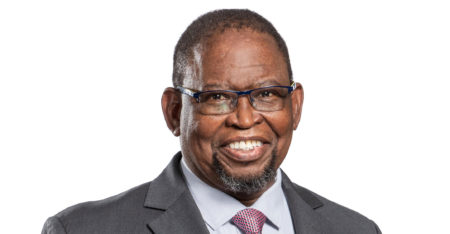
    President Cyril Ramaphosa described receiving the report as a “defining moment”

    In light of the apparent weaknesses in South Africa’s state capacity and institutions, there is understandable scepticism as to whether the government has the technical capability, let alone the political will, to implement the many recommendations that are emerging from the painstaking labour of the deputy chief justice and his small band of support staff and lawyers.

    President Cyril Ramaphosa described receiving the report as a “defining moment” in South Africa’s history. It could yet be so. But only if the work of the commission leads to decisive action and systemic reform.

    Without this, the Zondo commission will merely have been an exercise in catharsis – not the first steps to delivering justice and accountability.

    Truth

    The hearings themselves, and the extraordinary range of evidence that was adduced before the commission, certainly provided catharsis, but also “truth”. For those with open eyes, the denuding of democratic state legitimacy was uncovered and the key protagonists – both perpetrators and victims – identified.

    The democratic state was captured; key institutions were looted as vast sums of public money were stolen. Former President Jacob Zuma and his motley network of exploited and exploitative allies were responsible.

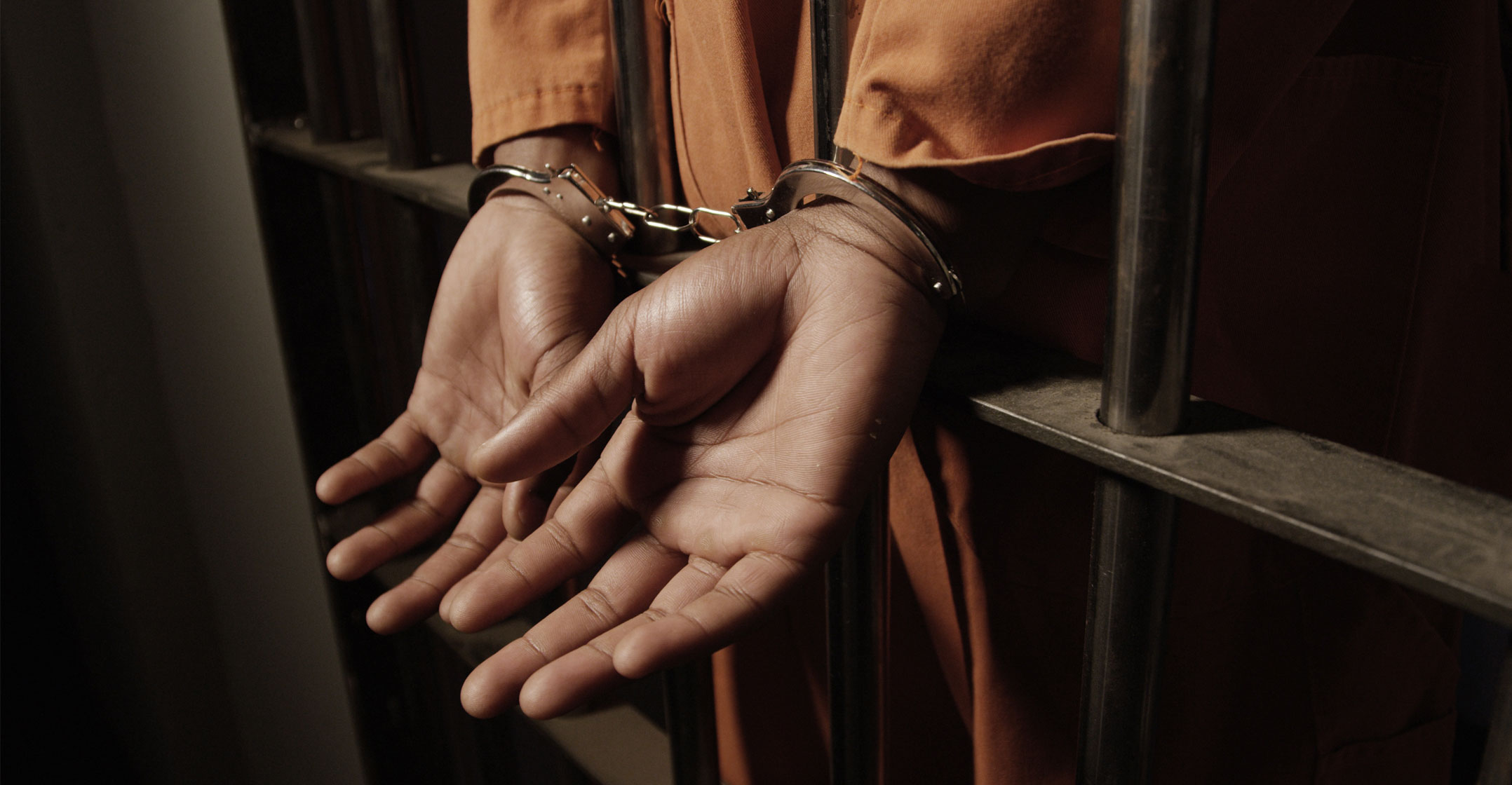
    That much is abundantly clear from just part one of Zondo’s report. Now they must be held fully to account. Justice will need to be done.

    Zondo was appointed to chair the commission almost four years ago, in January 2018. This was after then-President Zuma had tried and failed to prevent it from being established as a part of the remedial action required by then public protector Thuli Madonsela in her October 2016 ‘State of Capture’ report.

    The commission’s first hearing was six months later. Thereafter it sat for more than 400 more days, interviewing 300 witnesses and yielding 75 000 pages of transcription.

    In all, 1 438 individuals and institutions have been implicated, according to the introduction to the document published on 4 January.

    Given the cost of the inquiry – and the 1.7 million pages of evidence – a further question arises: was it worth the time, effort and expense?

    Having read through the 874 pages of this first part, a number of notable features emerge.

    First of all, it is lucid and cogent, despite the regrettable absence of an executive summary. The public will have to wait until the publication of part three of the report at the end of February to review the executive report.

    Despite this unusual inversion, the executive report will still matter a great deal, and will require skilled wordsmithery if it is to provide the public with a clear story line. This will, in turn, help ensure that the report remains “alive” in the public eye and does not get pushed into the background by other events – as has happened with similar reports in the past, such as the Asmal report on chapter 9 institutions as well as the Farlam report on Marikana massacre.

    To allow the report to gather dust would be a huge waste of the investment in the Zondo commission

    To allow the report to gather dust would be a huge waste of the investment in the Zondo commission.

    Despite the absence of an overarching narrative summary, each chapter of part one presents an intricate and fascinating account of how three public entities – South African Airways, the government’s information arm (GCIS) and the South African Revenue Service – were systematically “captured” with criminal intent, and how misinformation, both through the diversion of public funds to a puppet-media organisation, the New Age, and the subversion of GCIS, was used to try and cover up what was going on.

    There were notorious key ringmasters, some well known already. These include Zuma, former SAA chair Dudu Myeni and Mzwanele Manyi, Zuma’s current spokesman and the man who was helicoptered in to head GCIS after the incumbent Themba Maseko was summarily dismissed, according to the report, at the behest of the Gupta family.

    But, now, a much wider cast of accomplices and useful idiots are exposed.

    Private entities, such as the consulting firm Bain, where the evidence of whistle-blower Athol Williams is applauded by Zondo, were also deeply complicit.

    Specific and precise

    Secondly, it reads like a legal judgment, which is how it should be. The concern was that Zondo might fail to grasp the nettle and either shirk the most difficult issues or fudge its findings – as the Marikana massacre report did, on the core issues such as police culpability in the murder of the miners. He has not.

    Assisted by some trusted former judicial colleagues, but under his attentive eye, Zondo has recognised the need to be both specific and precise. As a mountain of evidence was combined and the report constructed, the strategy was to provide a sound basis for prosecutions. The dots have now been joined.

    A vast database of evidence can now be placed at the disposal of the Directorate for Priority Crime Investigation, known as the Hawks, and the National Prosecuting Authority.

    In due course, no doubt, the legal coherence and rationality of the report will be tested in court. There will be numerous judicial review applications that will seek to obscure the picture and delay justice. It may be another four years before the whole process concludes – the completion of the commission’s work is just the start.

    Thirdly, flowing from the findings, part one of the report offers concrete recommendations. Some recommend that certain implicated persons are either investigated or prosecuted. In other instances, the report addresses institutional failings or legal gaps.

    So, for example, in chapter 4 of this first part – on public procurement – Zondo recommends that a new institution be created to which whistle-blowers can go (a Public Procurement Anti-Corruption Agency), and, furthermore, that the new agency have authority to negotiate a financial incentive for potential whistle-blowers.

    These are very concrete recommendations. They should be taken seriously, but they are not uncontroversial, and will require further debate.

    Nonetheless, what Zondo is doing, in addition to providing the evidential bedrock so that those responsible can be held criminally to account for their abuse of power, is setting out how the governance system needs to be strengthened. By the time part three is published at the end of February, a substantial reform agenda will have been laid out.

    The end game

    Even with two acts of this play to go, it is reasonable to conclude that Zondo has played his part. Now it will up to the government to deliver, and for the public, civil society and the media to ensure that it does.

    But there will be many more twists in the plot. There will be lawfare, attempts to subvert the criminal justice system, which is still recovering from state capture. The power struggle within the ANC in the run-up to its five-yearly national elective conference at the end of this year will be even more bloody as a result.

    If the late Archbishop Desmond Tutu was the moral compass of the nation, then Zondo is constructing an ethical map. How South Africa navigates its course in the coming years will define its long-term future.The Conversation

    • Richard Calland is associate professor in public law, University of Cape Town
    • This article is republished from The Conversation under a Creative Commons licence

    Add TechCentral as a preferred source on GoogleFollow TechCentral on Google NewsGet breaking news on WhatsApp


    Cyril Ramaphosa Dudu Myeni Eskom GCIS Jacob Zuma Mzwanele Manyi Richard Calland SAA Themba Maseko Transnet
    WhatsApp YouTube
    Share. Facebook Twitter LinkedIn WhatsApp Telegram Email Copy Link
    Previous ArticleNon-geographic number porting finally gets the green light
    Next Article Minister to approach Telkom over spectrum litigation

    Related Posts

    Nersa wants five-year ban on automated electricity trading

    Nersa wants five-year ban on automated electricity trading

    6 October 2026
    Eskom has a R1.20/kWh offer for bitcoin miners

    Eskom has a R1.20/kWh offer for bitcoin miners

    2 October 2026
    South Africa's digital ID is here - but you can't have it yet - Leon Schreiber

    South Africa’s digital ID is here – but you can’t have it yet

    1 October 2026
    Company News
    Why laser technology makes sense for small businesses

    Why laser technology makes sense for small businesses

    6 October 2026

    Human-centred design: the business case for simpler enterprise software

    6 October 2026
    iONLINE launches Sydney breakout point, expanding its global network core

    iONLINE launches Sydney breakout point, expanding its global network core

    6 October 2026
    Opinion
    Let South Africans jailbreak their way to digital sovereignty - Dirk de Vos

    Let South Africans jailbreak their way to digital sovereignty

    5 October 2026
    South Africa's next energy crisis is in the accounts department - Craig Holmes

    South Africa’s next energy crisis is in the accounts department

    29 September 2026
    The steam engine lesson AI doomsayers keep missing - Sam Clarke

    The steam engine lesson AI doomsayers keep missing

    28 September 2026

    Subscribe to Updates

    Get the best South African technology news and analysis delivered to your e-mail inbox every morning.

    Latest Posts
    Meta met Information Regulator over its camera glasses - Mark Zuckerberg

    Meta met Information Regulator over its camera glasses

    6 October 2026
    Why South Africa's biggest drone isn't flying for the country - Milkor 380

    Why South Africa’s biggest drone isn’t flying for the country

    6 October 2026
    Nersa wants five-year ban on automated electricity trading

    Nersa wants five-year ban on automated electricity trading

    6 October 2026
    South African boardrooms are about to get a lot less private

    South African boardrooms are about to get a lot less private

    6 October 2026
    © 2009 - 2026 NewsCentral Media
    Built and maintained by Chronon
    • Cookie policy (ZA)
    • TechCentral – privacy and Popia

    Type above and press Enter to search. Press Esc to cancel.

    Manage consent

    TechCentral uses cookies to enhance its offerings. Consenting to these technologies allows us to serve you better. Not consenting or withdrawing consent may adversely affect certain features and functions of the website.

    Functional Always active
    The technical storage or access is strictly necessary for the legitimate purpose of enabling the use of a specific service explicitly requested by the subscriber or user, or for the sole purpose of carrying out the transmission of a communication over an electronic communications network.
    Preferences
    The technical storage or access is necessary for the legitimate purpose of storing preferences that are not requested by the subscriber or user.
    Statistics
    The technical storage or access that is used exclusively for statistical purposes. The technical storage or access that is used exclusively for anonymous statistical purposes. Without a subpoena, voluntary compliance on the part of your Internet Service Provider, or additional records from a third party, information stored or retrieved for this purpose alone cannot usually be used to identify you.
    Marketing
    The technical storage or access is required to create user profiles to send advertising, or to track the user on a website or across several websites for similar marketing purposes.
    • Manage options
    • Manage services
    • Manage {vendor_count} vendors
    • Read more about these purposes
    View preferences
    • {title}
    • {title}
    • {title}
    🇿🇦 Sign up to the TechCentral newsletter