Close Menu
TechCentralTechCentral

    Subscribe to the newsletter

    Get the best South African technology news and analysis delivered to your e-mail inbox every morning.

    Facebook X (Twitter) YouTube LinkedIn
    WhatsApp Facebook X (Twitter) LinkedIn YouTube
    TechCentralTechCentral
    • News
      Cabinet hands the Post Office a board, but not a bailout

      Cabinet hands the Post Office a board, but not a bailout

      5 June 2026
      In South Africa, the bundle is the new battleground

      In South Africa, the bundle is the new battleground

      5 June 2026
      Bash powers TFG online sales as group profit tumbles

      Bash powers TFG online sales as group profit tumbles

      5 June 2026
      Surplus groceries, straight from the browser - Still Good co-founders Lorenzo Parisi and Nabeel Gool

      Surplus groceries, straight from the browser

      5 June 2026
      What happens when AI no longer needs us to improve

      What happens when AI no longer needs us to improve

      5 June 2026
    • World
      Meta takes on OpenAI and Anthropic in enterprise AI

      Meta takes on OpenAI and Anthropic in enterprise AI

      4 June 2026
      AI demand sparks 'chipflation' warning

      AI demand sparks ‘chipflation’ warning

      4 June 2026
      Astronomers discover exoplanets with magnetic fields

      Strange winds reveal magnetic fields on distant ‘hot Jupiters’

      2 June 2026
      AI giant Anthropic files for landmark US listing

      AI giant Anthropic files for landmark US listing

      1 June 2026
      Dell guns for MacBook Neo with low-cost laptop

      Dell guns for MacBook Neo with low-cost laptop

      1 June 2026
    • In-depth
      What Wi-Fi 8 will mean for wireless networks

      What Wi-Fi 8 will mean for wireless networks

      1 June 2026
      Alfa's electric rebel - Alfa Romeo Junior Elettrica Veloce

      Alfa’s electric rebel

      29 April 2026
      Africa switches on as Europe dims the lights

      Africa switches on as Europe dims the lights

      9 April 2026
      The biggest untapped EV market on Earth is hiding in plain sight

      The biggest untapped EV market on Earth is hiding in plain sight

      1 April 2026
      AI, cybersecurity power standout year for Datatec - Jens Montanana

      The R16-billion tech giant hiding in plain sight

      26 March 2026
    • TCS
      TCS | Charge's R1.8-billion bet on an off-grid EV future - Charge chairman Joubert Roux

      TCS | Charge’s R1.8-billion bet on an off-grid EV future

      18 May 2026
      TCS+ | The Up&Up Group on the hidden cost of AI - Jason Harrison

      TCS+ | The Up&Up Group on the hidden cost of AI

      13 May 2026
      Michael Rossouw

      TCS+ | The retirement decision most South Africans get wrong

      6 May 2026
      TCS | The Cape Town start-up listening for TB with AI - Braden van Breda

      TCS | The Cape Town start-up listening for TB with AI

      4 May 2026

      TCS+ | ‘The ISP for ISPs’: Vox’s shift to wholesale aggregator

      20 April 2026
    • Opinion

      Clashing judgments leave South Africa’s crypto law unsettled

      2 June 2026
      The author, Pambos Soteriades

      The trap inside South Africa’s banking MVNO boom

      1 June 2026
      The hidden cost of social media age bans is everyone's privacy - Petrus Potgieter

      The hidden cost of social media age bans is everyone’s privacy

      29 May 2026
      Treasury's crypto crackdown is a betrayal of Mandela's promise - Duncan McLeod

      Treasury’s crypto crackdown is a betrayal of Mandela’s promise

      22 May 2026
      South Africa is sleepwalking into another AI policy failure - Celeste Labuschagne

      South Africa is sleepwalking into another AI policy failure

      20 May 2026
    • Company Hubs
      • 1Stream
      • Africa Data Centres
      • AfriGIS
      • Altron Digital Business
      • Altron Document Solutions
      • Altron Group
      • Arctic Wolf
      • Ascent Technology
      • AvertITD
      • BBD
      • Braintree
      • CallMiner
      • CambriLearn
      • CM Telecom
      • Contactable
      • CYBER1 Solutions
      • Digicloud Africa
      • Digimune
      • Domains.co.za
      • ESET
      • Euphoria Telecom
      • HOSTAFRICA
      • Incredible Business
      • iONLINE
      • IQbusiness
      • Iris Network Systems
      • Kaspersky
      • LSD Open
      • Mitel
      • NEC XON
      • Netstar
      • Network Platforms
      • Next DLP
      • Ovations
      • Paracon
      • Paratus
      • Q-KON
      • SevenC
      • SkyWire
      • Solid8 Technologies
      • Telit Cinterion
      • Telviva
      • Tenable
      • Vertiv
      • Videri Digital
      • Vodacom Business
      • Wipro
      • Workday
      • XLink
    • Sections
      • AI and machine learning
      • Banking
      • Broadcasting and Media
      • Cloud services
      • Contact centres and CX
      • Cryptocurrencies
      • Education and skills
      • Electronics and hardware
      • Energy and sustainability
      • Enterprise software
      • Financial services
      • HealthTech
      • Information security
      • Internet and connectivity
      • Internet of Things
      • Investment
      • IT services
      • Lifestyle
      • Motoring
      • Policy and regulation
      • Public sector
      • Retail and e-commerce
      • Satellite communications
      • Science
      • SMEs and start-ups
      • Social media
      • Talent and leadership
      • Telecoms
    • Events
    • Advertise
    TechCentralTechCentral
    Home » In-depth » Stereotypes keep women from tech careers

    Stereotypes keep women from tech careers

    By The Conversation20 February 2017
    Twitter LinkedIn Facebook WhatsApp Email Telegram Copy Link
    News Alerts
    WhatsApp

    Children’s ideas about what their gender means for their intellectual capacity are formed before they have even turned six. One idea that’s particularly pervasive and dangerous is that, only boys are good at maths and science.

    Popular media only exacerbates the problem. Research has shown that girls hardly ever see adult women doing jobs that involve science, technology, engineering and maths on television programmes. Children’s programmes also rarely feature women doing anything scientific.

    These early stereotypes may lead to young girls developing a “fear” of these subjects throughout their schooling. This ultimately limits their career aspirations. They become afraid to enter fields that are based on science, technology, engineering and mathematics (Stem).

    Statistics compiled by Unesco reveal that, globally, women make up less than 30% of the people working in Stem careers. The situation is worse in some countries in sub-Saharan Africa.

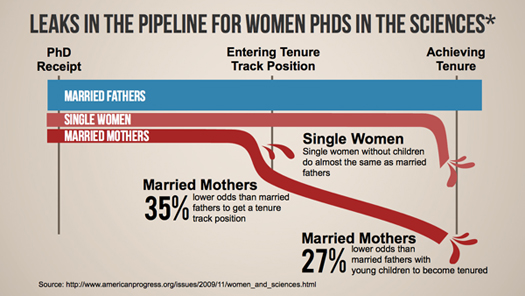
    In South Africa, the problem is worsened by the country’s apartheid history. Today black women are still struggling to access scientific careers at all. Those who do may fall victim to the “leaky pipeline” syndrome: they start degrees in science, but don’t continue to postgraduate level or go on to work in Stem fields. There are many reasons for this, including gender bias.

    It’s a complex problem. So, how can it be tackled? For starters, there should be a concerted effort to raise girls in a way that encourages them to ignore stereotypical norms. The country’s basic education system also needs massive improvement when it comes to teaching maths and science so that they become attractive subject choices for more pupils.

    But it will also require funding for bursaries, improved science communication and, linked to this, boosting scientists’ visibility so that young people — and especially girls — realise that they, too, could become scientists. Interventions with just this aim have been successful elsewhere in the world, and there’s no reason they can’t work in Africa, too.

    There have been some positive steps towards getting more young people, particularly women, involved in studying Stem subjects.

    In recent years, South Africa has unveiled several undergraduate and postgraduate programmes to encourage women to enrol for Stem subjects. For example, black women held the largest share of National Research Foundation (NRF) bursary support in 2016 overall. In the areas of engineering and computer science, NRF funding was increased more for women, though men still get the lion’s share of funding in these important subjects. The funders are trying, but because of the leaky pipeline, among other factors, there aren’t always women to take up these opportunities.

    So, while money is important, it’s not enough. Retention levels are low.

    Almost equal numbers of men to women are entering undergraduate science-based degrees. At the postgraduate level, though, the number of men is higher in many science-based degrees, suggesting that their female peers have left the system.

    This isn’t a uniquely South African problem, but what drives it is different — the fact that apartheid, for the most part, kept black people out of universities.

    As elsewhere, patriarchy is a common global factor in holding girls (and especially black girls) back. In many cultures, women are expected to be subservient to “show respect” for men and the idea that a “woman’s place is in the kitchen” persists.

    There’s another issue at play: young people in Africa very rarely know any scientists. They don’t see scientists at work, learn about local scientists in school or, often, understand what it is that scientists do. The role of scientists is still a mystery to many even though there have been a number of great initiatives, both global and regional, to improve science communication and engagement.

    To fix this problem, more science communication and public engagement of society in science is needed.

    Possible solutions

    All media, whether it’s print, radio, television or social platforms, should be geared to breaking stereotypes linked to science and technology. With clever campaigns, girls will realise that they can become scientists and work in technology and innovation environments — and thrive.

    The lack of role models is often a resounding theme for young women entering Stem careers. Stem-based content, whether it’s on TV fiction series or contained in journalism, is urgently needed. This can be developed to reach all South Africans, ideally through the SABC’s radio and TV channels because these have incredible reach and represent all 11 of the country’s official languages.

    Mentorship is another possible approach. Research has shown just how valuable it is for women in Stem to work with mentors. Doing so increases their access to role models, helps them to acquire and refine career development skills, allows them to set goals more effectively and provides a supportive network. All of this wards off women’s feelings of being isolated and underrepresented in their Stem fields.

    A word of caution, though: individuals shouldn’t feel forced into mentorship. It must be a matter of personal choice. If universities offer mandatory mentorship programmes, these might do more harm than good by suggesting that women need more help than men to succeed.

    Finally, society needs more messages that counter stereotypes. Schools, for instance, could teach pupils about the important contributions made by women scientists, especially those in Africa, in all fields. This would improve the visibility of women in Stem — a good way to start untangling age-old stereotypes so that Africa’s future women in science don’t remain forever hidden.The Conversation

    • Nox Makunga is associate professor: medicinal plant biotechnology, Stellenbosch University
    • This article was originally published on The Conversation

    Follow TechCentral on Google News Add TechCentral as your preferred source on Google


    WhatsApp YouTube
    Share. Facebook Twitter LinkedIn WhatsApp Telegram Email Copy Link
    Previous ArticleKim Dotcom faces extradition to US
    Next Article Backspace: ‘Gone shopping’

    Related Posts

    Cabinet hands the Post Office a board, but not a bailout

    Cabinet hands the Post Office a board, but not a bailout

    5 June 2026
    In South Africa, the bundle is the new battleground

    In South Africa, the bundle is the new battleground

    5 June 2026
    Bash powers TFG online sales as group profit tumbles

    Bash powers TFG online sales as group profit tumbles

    5 June 2026
    Company News
    The real hurdle for South Africa's AI voicebots isn't the AI - 1Stream

    The real hurdle for South Africa’s AI voicebots isn’t the AI

    5 June 2026
    The real cloud challenge isn't adoption – it's doing it well

    The real cloud challenge isn’t adoption – it’s doing it well

    5 June 2026
    Payments Live returns to Johannesburg for 2nd edition

    Payments Live returns to Johannesburg for 2nd edition

    4 June 2026
    Opinion

    Clashing judgments leave South Africa’s crypto law unsettled

    2 June 2026
    The author, Pambos Soteriades

    The trap inside South Africa’s banking MVNO boom

    1 June 2026
    The hidden cost of social media age bans is everyone's privacy - Petrus Potgieter

    The hidden cost of social media age bans is everyone’s privacy

    29 May 2026

    Subscribe to Updates

    Get the best South African technology news and analysis delivered to your e-mail inbox every morning.

    Latest Posts
    Cabinet hands the Post Office a board, but not a bailout

    Cabinet hands the Post Office a board, but not a bailout

    5 June 2026
    In South Africa, the bundle is the new battleground

    In South Africa, the bundle is the new battleground

    5 June 2026
    Bash powers TFG online sales as group profit tumbles

    Bash powers TFG online sales as group profit tumbles

    5 June 2026
    Surplus groceries, straight from the browser - Still Good co-founders Lorenzo Parisi and Nabeel Gool

    Surplus groceries, straight from the browser

    5 June 2026
    © 2009 - 2026 NewsCentral Media
    • Cookie policy (ZA)
    • TechCentral – privacy and Popia

    Type above and press Enter to search. Press Esc to cancel.

    Manage consent

    TechCentral uses cookies to enhance its offerings. Consenting to these technologies allows us to serve you better. Not consenting or withdrawing consent may adversely affect certain features and functions of the website.

    Functional Always active
    The technical storage or access is strictly necessary for the legitimate purpose of enabling the use of a specific service explicitly requested by the subscriber or user, or for the sole purpose of carrying out the transmission of a communication over an electronic communications network.
    Preferences
    The technical storage or access is necessary for the legitimate purpose of storing preferences that are not requested by the subscriber or user.
    Statistics
    The technical storage or access that is used exclusively for statistical purposes. The technical storage or access that is used exclusively for anonymous statistical purposes. Without a subpoena, voluntary compliance on the part of your Internet Service Provider, or additional records from a third party, information stored or retrieved for this purpose alone cannot usually be used to identify you.
    Marketing
    The technical storage or access is required to create user profiles to send advertising, or to track the user on a website or across several websites for similar marketing purposes.
    • Manage options
    • Manage services
    • Manage {vendor_count} vendors
    • Read more about these purposes
    View preferences
    • {title}
    • {title}
    • {title}