

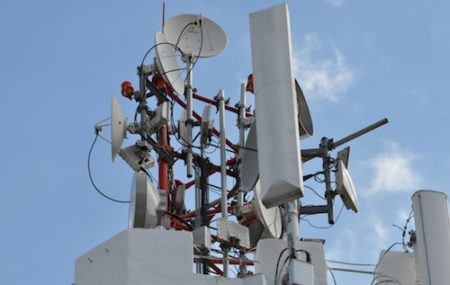
SA’s cellular network operators have been found wanting over service quality levels by their regulator, the Independent Communications Authority of SA (Icasa). On Friday, Icasa announced the results of a quality-of-service survey
SA’s cellular network operators have been found wanting over service quality levels by their regulator, the Independent Communications Authority of SA (Icasa). On Friday, Icasa announced the results of a quality-of-service survey

Too little, too late.” This was the general reaction of Internet service providers, telecommunications companies and telecommunications analysts last week after the regulator released its discussion document

Telkom’s new mobile operator, 8ta, last week introduced a mobile broadband special offer that deeply undercuts its parent’s own fixed-line broadband prices. It’s a bizarre situation that underscores Telkom’s lack of a coherent long-term

Telkom will not comment at this stage on the publication by the Independent Communications Authority of SA (Icasa) on Wednesday of a discussion document on how the authority plans to proceed with local-loop unbundling

The Independent Communications Authority of SA (Icasa) has proposed four separate models for unbundling the fixed-line local loop, which would give Telkom’s rivals access to the company’s “last mile” of copper cable infrastructure
The Independent Communications Authority of SA (Icasa) thinks revenues in the telecommunications industry could grow by more than R1bn through local-loop unbundling. This can be used to retain jobs in the sector and fund
The Independent Communications Authority of South Africa (Icasa) will present a discussion document on local-loop unbundling (LLU) to the telecommunications industry on Wednesday morning. TechCentral rounded up the views of a few key industry leaders

SA’s telecommunications industry regulator, the Independent Communications Authority of SA (Icasa), will outline the first steps it intends taking to unbundle Telkom’s local loop at a briefing at its offices in Sandton this Wednesday. Icasa will take the wraps

Local-loop unbundling poses a “major risk” to Telkom, says its group CEO, Nombulelo Moholi. Unbundling will allow rival operators access to Telkom’s last mile of copper-cable infrastructure in businesses and homes. Moholi says

Telkom’s new CEO, Nombulelo Moholi, has called on industry regulator, the Independent Communications Authority of SA (Icasa), to review the need for the company to be subject to retail price controls. She argues the market is now