
Close Menu
TechCentralTechCentral

    Subscribe to the newsletter

    Get the best South African technology news and analysis delivered to your e-mail inbox every morning.

    Facebook X (Twitter) YouTube LinkedIn
    WhatsApp Facebook X (Twitter) LinkedIn YouTube
    TechCentralTechCentral
    • News
      Mastercard bets billions on the tech that could eat its lunch - Prakriti Singh

      Mastercard bets billions on the tech that could eat its lunch

      21 July 2026
      From care homes to production lines, the robots are coming

      From care homes to production lines, the robots are coming

      21 July 2026
      Remote work in South Africa hits record high

      Remote work in South Africa hits record high

      21 July 2026
      China weighs blocking the West from its best AI

      China weighs blocking the West from its best AI

      21 July 2026
      Openserve hits back in fibre ISP row

      Openserve hits back in fibre ISP row

      20 July 2026
    • World
      Meta AI will now tell parents if their teen is in crisis

      Meta AI will now tell parents if their teen is in crisis

      17 July 2026
      IBM shares crash 25% as AI upends software spending - Arvind Krishna

      IBM shares crash 25% as AI upends software spending

      15 July 2026
      Jony Ive's first OpenAI device: an AI smart speaker - Jony Ive and Sam Altman

      Jony Ive’s first OpenAI device: an AI smart speaker

      15 July 2026
      Stripe, Advent in talks to buy PayPal for $53-billion

      Stripe, Advent in talks to buy PayPal for $53-billion

      15 July 2026
      Memory crisis sends smartphone market into steep decline

      Memory crisis sends smartphone market into steep decline

      13 July 2026
    • In-depth
      The plan to stop AI from breaking the world - Google DeepMind CEO Demis Hassabis. Image: John Sears

      The plan to stop AI from breaking the world

      16 July 2026
      The internet has a Strait of Hormuz problem

      The internet has a Strait of Hormuz problem

      15 July 2026
      AI boom sparks rally, frenzy and fear

      AI boom sparks rally, frenzy and fear

      11 June 2026
      Every plug-in hybrid on sale in South Africa, ranked by price - Lamborghini Temerario

      Every plug-in hybrid on sale in South Africa, ranked by price

      7 June 2026
      What Wi-Fi 8 will mean for wireless networks

      What Wi-Fi 8 will mean for wireless networks

      1 June 2026
    • TCS
      Watts & Wheels S1E7: 'Ferrari's EV breaks the internet'

      Watts & Wheels S1E7: ‘Ferrari’s EV breaks the internet’

      8 July 2026
      TCS+ | How Tracker is turning vehicle data into business strategy - Silvia Schollenberger

      TCS+ | How Tracker is turning vehicle data into business strategy

      1 July 2026
      TCS+ | IBM Bob: an AI-powered 'development partner' for the enterprise - David Spurway

      TCS+ | IBM Bob: an AI-powered development partner for the enterprise

      30 June 2026
      Watts & Wheels S1E6: 'A flawless Alfa and a bakkie that divides'

      Watts & Wheels S1E6: ‘A flawless Alfa and a bakkie that divides’

      17 June 2026
      Watts & Wheels S1E6: 'A flawless Alfa and a bakkie that divides'

      Watts & Wheels S1E5: ‘A Bentley of the bush and a car that swims’

      8 June 2026
    • Opinion
      Selling vapour is corporate suicide in slow motion - Jannie van Zyl

      Selling vapour is corporate suicide in slow motion

      16 July 2026
      Brazil's online gambling crackdown is a lesson for South Africa

      How Amazon outmanoeuvred Starlink in South Africa

      15 July 2026
      The Popia problem with agentic AI - Herman Haasbroek

      The Popia problem with agentic AI

      14 July 2026
      The author, Fanie van Rooyen

      South Africa can still catch the AI wave – here’s how

      7 July 2026
      The author, Fanie van Rooyen

      The AI utopia South Africa can’t afford

      1 July 2026
    • Company Hubs
      • 1Stream
      • Africa Data Centres
      • AfriGIS
      • Altron Digital Business
      • Altron Document Solutions
      • Altron Group
      • Arctic Wolf
      • Ascent Technology
      • AvertITD
      • BBD
      • Braintree
      • CallMiner
      • CambriLearn
      • CM Telecom
      • Contactable
      • CYBER1 Solutions
      • Digicloud Africa
      • Digimune
      • Domains.co.za
      • ESET
      • Euphoria Telecom
      • HOSTAFRICA
      • Incredible Business
      • iONLINE
      • IQbusiness
      • Iris Network Systems
      • Kaspersky
      • LSD Open
      • Mitel
      • NEC XON
      • Netstar
      • Network Platforms
      • Next DLP
      • Ovations
      • Paracon
      • Paratus
      • Q-KON
      • SevenC
      • SkyWire
      • Solid8 Technologies
      • Telit Cinterion
      • Telviva
      • Tenable
      • Vertiv
      • Videri Digital
      • Vodacom Business
      • Wipro
      • Workday
      • XLink
    • Sections
      • AI and machine learning
      • Banking
      • Broadcasting and Media
      • Cloud services
      • Contact centres and CX
      • Cryptocurrencies
      • Education and skills
      • Electronics and hardware
      • Energy and sustainability
      • Enterprise software
      • Financial services
      • HealthTech
      • Information security
      • Internet and connectivity
      • Internet of Things
      • Investment
      • IT services
      • Lifestyle
      • Policy and regulation
      • Public sector
      • Retail and e-commerce
      • Satellite communications
      • Science
      • SMEs and start-ups
      • Social media
      • Talent and leadership
      • Telecoms
      • Watts & Wheels
    • Events
    • Advertise
    TechCentralTechCentral
    Home » Opinion » Alistair Fairweather » Tech giants chase VR, AI riches

    Tech giants chase VR, AI riches

    By Alistair Fairweather1 February 2016
    Twitter LinkedIn Facebook WhatsApp Email Telegram Copy Link
    News Alerts
    WhatsApp

    alistair-fairweather-180What do Apple, Facebook, Google, Amazon, Microsoft and Samsung all have in common? Sure, all six are technology companies, but the similarity runs much deeper. All six are now battling with each other to dominate the next wave of technology innovation.

    At the turn of the last century, no one would have conceived of Samsung and Microsoft as possible competitors. The idea of Apple, an ailing computer company, competing with Google, a snot-nosed Internet start-up, would have seemed laughable. And Facebook did not even exist yet.

    And yet today, all six companies compete directly with each other in everything from mobile phones to operating systems to cloud services. The market for mobile payment methods alone has attracted tens of billions of dollars in spending from the gang of six.

    But the really exciting stuff is in two almost pristine markets: virtual reality (VR) and artificial intelligence (AI). After decades of false starts and disappointments (remember The Lawnmower Man?), these two holy grails of technology finally look not only possible but may soon be ready for mass-market adoption.

    Let’s start with VR. Both Facebook and Microsoft were early movers in this field. Facebook acquired Oculus Rift, a market leading VR start-up, back in March 2014. The first consumer-ready headsets will be available in the next two months.

    Microsoft’s HoloLens will only be ready for prime time in 2017, but live demonstrations of the platform in October 2015 were impressive. Technically this is augmented reality (AR) rather than true VR, but the power and possibilities of these platforms are comparable.

    Not to be outdone, Google announced on 12 January that Clay Bavor, a seasoned product manager, would be leading its new VR division. Google has been flirting with VR and AR for a while with its Glass and Cardboard projects, but this appointment makes it clear that the software giant intends to fight hard for this new market.

    Now rumours are flying that Apple is starting its own VR division, and that Amazon filed a patent for “virtual reality glasses or goggles” in October last year.

    But only Samsung, the only non-US company in the gang, has a product actually in the market at the moment. Granted it piggy-backs on Oculus’s technology (the two are partners on the build), but you can buy a Samsung Gear VR right now for US$99. Of course you need one of Samsung’s latest top-of-the-line phones to actually use the headset.

    The AI market, meanwhile, is equally crowded. Apple and Google have early toeholds in the market with “virtual personal assistant” services like Siri and Google Now, and Facebook recently entered the fray with Facebook M.

    Amazon now sells a creepy little device called the Echo, a kind of voice-activated clock radio crossed with a personal assistant.

    Projects like TensorFlow, Google’s open-source machine learning engine, and Microsoft’s equivalent, Project Oxford, signal that the market is beginning to mature beyond novelty applications.

    Earlier this month, Apple acquired Emotient, a start-up that uses AI to recognise people’s emotions by analysing facial expressions. In August last year, Samsung invested “millions” in Vacarious, one of the hottest AI start-ups in the market.

    But why are these technology giants all jostling for space in these unproven new markets? Innovation is usually inversely proportional to company size. As a company grows in headcount and market power, it normally becomes slower and more risk averse.

    The first 30 years of Microsoft’s existence is a great case in point. It won the battle to control the operating system for the majority of PCs, and this bought it nearly three decades of unopposed market dominance.
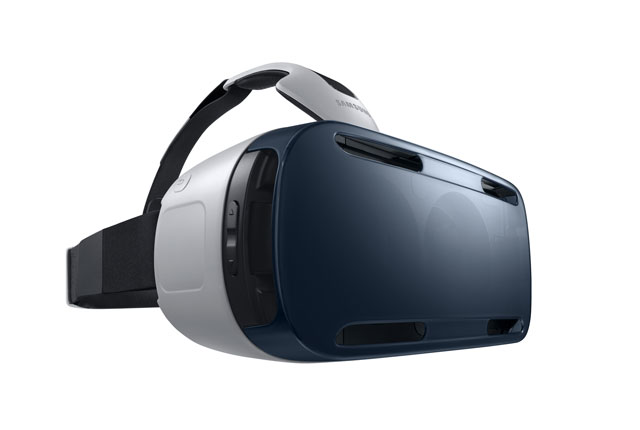
    Samsung Gear VR
    Samsung Gear VR

    But that cheese has now moved. As the pace of innovation has increased, the cost of falling behind has grown. Nokia and BlackBerry both enjoyed a brief decade in the limelight before crashing and burning. Companies must keep innovating or risk the same fate.

    Another factor is the sheer size of these companies. All of them have at least 500m customers; some have well over a billion. When you’re that big, you tend to run out of new customers in your primary market. In order to continue to grow, you need to diversify.

    The Internet is another powerful force driving this relentless innovation. Gadget-hungry customers are easier to reach and market to, regardless of which country they live in.

    And the ability to link a device to this global network makes each device exponentially more useful. This radical interconnectedness has created an unprecedented global market for consumer technology.

    Of course, none of this guarantees success in these markets, or even that any given technology will take off. Amazon has failed miserably in the mobile phone market. Samsung is unable to write a popular operating system. Facebook’s attempts to enable mobile payments have been derisory. Just being big and rich doesn’t mean you’ll win every fight.

    And, for all its promise, VR may not be ready for prime time. We may be jumping the gun about AI as well. People were talking about flying machines in 1800, but that didn’t make the Wright brothers succeed any earlier.

    Cynicism aside, it’s incredibly exciting that such big companies are investing is such potentially disruptive technologies. True AI could revolutionise every aspect of our societies and our economies. VR could disrupt everything from education to medicine to online dating. These are big, scary, amazing possibilities. We should welcome them.  — © 2016 NewsCentral Media

    Follow TechCentral on Google News Add TechCentral as your preferred source on Google


    Alistair Fairweather Amazon Apple Clay Bavor Facebook Google Microsoft Oculus Samsung
    WhatsApp YouTube
    Share. Facebook Twitter LinkedIn WhatsApp Telegram Email Copy Link
    Previous ArticleTelkom moves to get users off copper
    Next Article Mobile profits proving elusive for Telkom

    Related Posts

    Apple knocks Nvidia off its perch - John Ternus

    Apple knocks Nvidia off its perch

    19 July 2026
    Core opens Microsoft Surface reseller programme to South African SMEs - John Press

    Core opens Microsoft Surface reseller programme to South African SMEs

    17 July 2026
    The plan to stop AI from breaking the world - Google DeepMind CEO Demis Hassabis. Image: John Sears

    The plan to stop AI from breaking the world

    16 July 2026
    Company News
    Cloud adoption is done. Execution is the new frontier - Cloud on Demand

    Cloud adoption is done. Execution is the new frontier

    21 July 2026
    Data poisoning in AI models: what businesses need to know - Domains.co.za

    Data poisoning in AI models: what businesses need to know

    21 July 2026
    The AI-led industrial revolution has begun - CallMiner Bruce McMahon

    The AI-led industrial revolution has begun

    20 July 2026
    Opinion
    Selling vapour is corporate suicide in slow motion - Jannie van Zyl

    Selling vapour is corporate suicide in slow motion

    16 July 2026
    Brazil's online gambling crackdown is a lesson for South Africa

    How Amazon outmanoeuvred Starlink in South Africa

    15 July 2026
    The Popia problem with agentic AI - Herman Haasbroek

    The Popia problem with agentic AI

    14 July 2026

    Subscribe to Updates

    Get the best South African technology news and analysis delivered to your e-mail inbox every morning.

    Latest Posts
    Mastercard bets billions on the tech that could eat its lunch - Prakriti Singh

    Mastercard bets billions on the tech that could eat its lunch

    21 July 2026
    From care homes to production lines, the robots are coming

    From care homes to production lines, the robots are coming

    21 July 2026
    Cloud adoption is done. Execution is the new frontier - Cloud on Demand

    Cloud adoption is done. Execution is the new frontier

    21 July 2026
    Data poisoning in AI models: what businesses need to know - Domains.co.za

    Data poisoning in AI models: what businesses need to know

    21 July 2026
    © 2009 - 2026 NewsCentral Media
    Built and maintained by Chronon
    • Cookie policy (ZA)
    • TechCentral – privacy and Popia

    Type above and press Enter to search. Press Esc to cancel.

    Manage consent

    TechCentral uses cookies to enhance its offerings. Consenting to these technologies allows us to serve you better. Not consenting or withdrawing consent may adversely affect certain features and functions of the website.

    Functional Always active
    The technical storage or access is strictly necessary for the legitimate purpose of enabling the use of a specific service explicitly requested by the subscriber or user, or for the sole purpose of carrying out the transmission of a communication over an electronic communications network.
    Preferences
    The technical storage or access is necessary for the legitimate purpose of storing preferences that are not requested by the subscriber or user.
    Statistics
    The technical storage or access that is used exclusively for statistical purposes. The technical storage or access that is used exclusively for anonymous statistical purposes. Without a subpoena, voluntary compliance on the part of your Internet Service Provider, or additional records from a third party, information stored or retrieved for this purpose alone cannot usually be used to identify you.
    Marketing
    The technical storage or access is required to create user profiles to send advertising, or to track the user on a website or across several websites for similar marketing purposes.
    • Manage options
    • Manage services
    • Manage {vendor_count} vendors
    • Read more about these purposes
    View preferences
    • {title}
    • {title}
    • {title}