
Close Menu
TechCentralTechCentral

    Subscribe to the newsletter

    Get the best South African technology news and analysis delivered to your e-mail inbox every morning.

    Facebook X (Twitter) YouTube LinkedIn
    WhatsApp Facebook X (Twitter) LinkedIn YouTube
    TechCentralTechCentral
    • News
      Cisco hands Africa business to partner veteran Ossama Eldeeb

      Cisco hands Africa business to partner veteran Ossama Eldeeb

      30 July 2026
      Meta cash flow collapses as AI bill hits $145-billion - Mark Zuckerberg

      Meta cash flow collapses as AI bill hits $145-billion

      30 July 2026
      South African IT spending surging as AI boom lands locally

      South African IT spending surging as AI boom lands locally

      29 July 2026
      Radical rethink for South Africa's national AI policy

      Radical rethink for South Africa’s national AI policy

      29 July 2026
      South African tech's compounding debt problem

      South African tech’s compounding debt problem

      29 July 2026
    • World
      Meta AI will now tell parents if their teen is in crisis

      Meta AI will now tell parents if their teen is in crisis

      17 July 2026
      IBM shares crash 25% as AI upends software spending - Arvind Krishna

      IBM shares crash 25% as AI upends software spending

      15 July 2026
      Jony Ive's first OpenAI device: an AI smart speaker - Jony Ive and Sam Altman

      Jony Ive’s first OpenAI device: an AI smart speaker

      15 July 2026
      Stripe, Advent in talks to buy PayPal for $53-billion

      Stripe, Advent in talks to buy PayPal for $53-billion

      15 July 2026
      Memory crisis sends smartphone market into steep decline

      Memory crisis sends smartphone market into steep decline

      13 July 2026
    • In-depth
      The plan to stop AI from breaking the world - Google DeepMind CEO Demis Hassabis. Image: John Sears

      The plan to stop AI from breaking the world

      16 July 2026
      The internet has a Strait of Hormuz problem

      The internet has a Strait of Hormuz problem

      15 July 2026
      AI boom sparks rally, frenzy and fear

      AI boom sparks rally, frenzy and fear

      11 June 2026
      Every plug-in hybrid on sale in South Africa, ranked by price - Lamborghini Temerario

      Every plug-in hybrid on sale in South Africa, ranked by price

      7 June 2026
      What Wi-Fi 8 will mean for wireless networks

      What Wi-Fi 8 will mean for wireless networks

      1 June 2026
    • TCS
      TCS+ | A smarter approach to cloud for South African businesses - Joel Chacko and Jonathan Oaker

      TCS+ | A smarter approach to cloud for South African businesses

      28 July 2026
      TCS | How Optasia lends billions to people banks can't see - Salvador Anglada

      TCS | How Optasia lends billions to people banks can’t see

      23 July 2026
      The rands-and-cents case for electric trucks - William Kelly Watts & Wheels with Wills

      The rands-and-cents case for electric trucks

      20 July 2026
      Watts & Wheels S1E7: 'Ferrari's EV breaks the internet'

      Watts & Wheels S1E7: ‘Ferrari’s EV breaks the internet’

      8 July 2026
      TCS | Pick n Pay's Enrico Ferigolli on Penny, the AI that shops for you

      TCS | Pick n Pay’s Enrico Ferigolli on Penny, the AI that shops for you

      2 July 2026
    • Opinion
      The author, Jannie van Zyl

      Selling vapour is corporate suicide in slow motion

      16 July 2026
      Brazil's online gambling crackdown is a lesson for South Africa

      How Amazon outmanoeuvred Starlink in South Africa

      15 July 2026
      The Popia problem with agentic AI - Herman Haasbroek

      The Popia problem with agentic AI

      14 July 2026
      The author, Fanie van Rooyen

      South Africa can still catch the AI wave – here’s how

      7 July 2026
      The author, Fanie van Rooyen

      The AI utopia South Africa can’t afford

      1 July 2026
    • Company Hubs
      • 1Stream
      • Africa Data Centres
      • AfriGIS
      • Altron Digital Business
      • Altron Document Solutions
      • Altron Group
      • Arctic Wolf
      • Ascent Technology
      • AvertITD
      • BBD
      • Braintree
      • CallMiner
      • CambriLearn
      • CM Telecom
      • Contactable
      • CYBER1 Solutions
      • Digicloud Africa
      • Digimune
      • Domains.co.za
      • ESET
      • Euphoria Telecom
      • HOSTAFRICA
      • Incredible Business
      • iONLINE
      • IQbusiness
      • Iris Network Systems
      • Kaspersky
      • LSD Open
      • Mitel
      • NEC XON
      • Netstar
      • Network Platforms
      • Next DLP
      • Ovations
      • Paracon
      • Paratus
      • Q-KON
      • SevenC
      • SkyWire
      • Solid8 Technologies
      • Telit Cinterion
      • Telviva
      • Tenable
      • Vertiv
      • Videri Digital
      • Vodacom Business
      • Vox
      • Wipro
      • Workday
      • XLink
    • Sections
      • AI and machine learning
      • Banking
      • Broadcasting and Media
      • Cloud services
      • Contact centres and CX
      • Cryptocurrencies
      • Education and skills
      • Electronics and hardware
      • Energy and sustainability
      • Enterprise software
      • Financial services
      • HealthTech
      • Information security
      • Internet and connectivity
      • Internet of Things
      • Investment
      • IT services
      • Lifestyle
      • Policy and regulation
      • Public sector
      • Retail and e-commerce
      • Satellite communications
      • Science
      • SMEs and start-ups
      • Social media
      • Talent and leadership
      • Telecoms
      • Watts & Wheels
    • Events
    • Advertise
    TechCentralTechCentral
    Home » World » Tencent in Chinese battle royale over videogame censorship

    Tencent in Chinese battle royale over videogame censorship

    By Agency Staff24 August 2018
    Twitter LinkedIn Facebook WhatsApp Email Telegram Copy Link
    News Alerts
    WhatsApp
    A screenshot from the battle royale game Fortnite

    Tencent, the world’s biggest games company, needs some help from Fortnite, the world’s hottest game.

    Just a few months ago, Tencent reigned as the most valuable company in Asia, but it has since suffered a record stock plunge that has wiped more than US$140-billion off its market value. The primary reason: the Chinese government unexpectedly froze the approval of new games, including Fortnite, stunning investors and even Tencent’s management.

    The move was a shock because no other major market operates with such unpredictable, opaque oversight — the US and Japan don’t require any government sign-off for games. Yet China has grown into the largest games market in the world with $38-billion in estimated revenue. The industry is watching Tencent and its Fortnite dilemma to understand what comes next in a market central to everyone’s fate.

    Among the biggest gaming markets, China is the most difficult market to do business in from a regulatory perspective

    “China is by far the strictest in the world,” says Serkan Toto, founder of the Tokyo-based game consultancy Kantan Games. “Among the biggest gaming markets, China is the most difficult market to do business in from a regulatory perspective.”

    China’s regulators haven’t given any explanation for the freeze. That’s set off heated debate over whether this is a temporary halt due to a regulatory reshuffling or whether the government is preparing a broader crackdown on games, which have been widely criticised in state-owned media.

    Tencent shares fell 1.5% on Friday and are off about 13% this year.

    Tencent and founder Pony Ma long benefited from their ability to navigate this regulatory maze. The company, based in the manufacturing hub of Shenzhen, operates the ubiquitous messaging service WeChat and uses the platform to promote games and other products. Tencent develops games and also licenses titles — like Fortnite — from developers for the Chinese market.

    Foreign companies need a politically savvy partner. All games go through a two-step approval process in China. First, they need to be registered with the ministry of culture & tourism and checked for sensitive content. Then a second agency — the one going through a restructuring and name change — decides whether to grant a licence and allow commercialisation. The agencies bar content they deem too violent, sexual or otherwise inappropriate. The US and Japanese governments, by contrast, let game makers introduce titles on their own, and industry-backed trade groups bestow ratings based on language or violence.

    No chicken dinners

    Tencent got stuck with one game, PlayerUnknown’s Battlegrounds, part way through this process. It had the first approval so it let millions of customers download the mobile version of PUBG, but then it couldn’t charge any money because it didn’t have the second approval. In a conference call with investors last week, president Martin Lau blamed Tencent’s profit shortfall on such snafus.

    “If there are certain games that are popular but can’t be monetised, then the revenue is gone,” said Victoria Mio, co-head of Asia Pacific Equities at Robeco, which manages $195-billion in assets.

    Tencent is trying to avoid a similar fate with Fortnite. The title, a Hunger Games-style competition where 100 players fight to the death, has become the most popular in the world with an estimated $2-billion in revenue this year. Its reputation overseas stoked demand in China, where 10 million people have pre-registered to get it.

    “I would spend money on this game, 100%,” said Chen Feng, a 17-year-old gamer in Guangdong province.
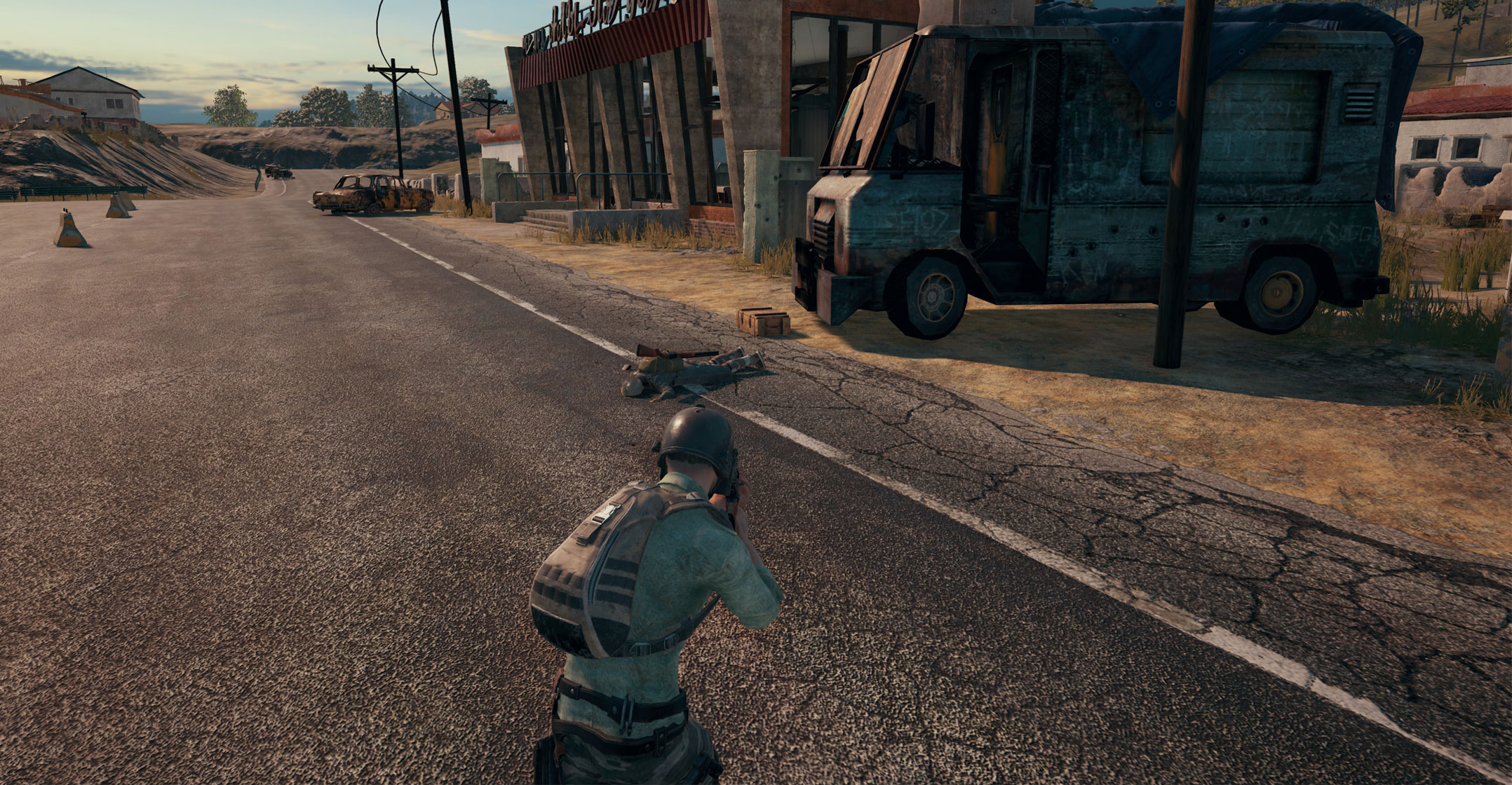
    In-game footage from the desktop version of PUBG

    Tencent’s position is tricky though. It has approval to run trials with the desktop version of Fortnite, but is still waiting for the right to monetise it. The agency in charge hasn’t issued any licences since March, but this month introduced a so-called “green channel” which allows publishers to run a one-month monetisation trial for certain games. Tencent’s Lau said last week that it’s applying through the new process to start charging for Fortnite desktop.

    It’s not clear how the new process will work. Some analysts believe game makers will be able to keep cashing in after the one-month trial. Others urge caution.

    “It’s unclear how many games are going through this channel and how many will come out,” said Daniel Ahmad, an analyst at Chinese game researcher Niko Partners. “It’s not wise to speculate because it’s the Chinese government and anything can change.”

    It’s unclear how many games are going through this channel and how many will come out. It’s not wise to speculate because it’s the Chinese government and anything can change

    Tencent is still at square one with the mobile version of Fortnite, the most popular version globally. Lau has said the government is aware its halt on game approvals is affecting business. But he doesn’t know when things will return to normal.

    Greg Pilarowski, former general counsel for a Chinese games company, says the big question on everyone’s mind is whether the Communist Party will take over game approvals given their growing popularity. The State Administration of Press, Publication, Radio, Films and Television that had been in charge of licences and commercialisation was split into three agencies earlier this year, with the Party taking away from the state oversight of the press, publications and films.

    That left videogames — which don’t cleanly fall into any of the named categories — in limbo. No approvals have been granted for months, with no public indication of who’s in charge of game. If the Party takes charge, it may well tighten its grip over games like it has with the Internet and other media.

    “The Party has been very, very focused on maintaining control over the Internet, and all the regulations for the Internet happen to catch games,” said Pilarowski, who now runs the San Francisco law firm Pillar Legal. “Even though games are arguably not as risky or controversial from a party security perspective as, say, books, movies or news, it falls into the same exact regulatory framework.”

    Some analysts are optimistic the freeze is temporary. Nomura analyst Jialong Shi, for example, said regulators are likely to start approving games as soon as September. Tencent shares have rallied in recent days on hopes of such a recovery.

    Still, Tencent or any other games company have a limited ability to push the government. “There’s no question about where authority lies; the party has an iron grip,” said Pilarowski. ‘‘It’s not the kind of relationship a Google or an Apple has with Washington. Tencent needs to lay low and encourage a resolution behind the scenes.”

    Tencent doesn’t have forever. The games industry is notoriously cyclical and titles like Fortnite inevitably give way to the next big hit.

    “Tencent needs to monetise Fortnite as soon as possible,” said Toto. “Who knows what’s going to be hot six months down the road?”  — Reported by Lulu Yilun Chen and Yuji Nakamura, with assistance from Edwin Chan, (c) 2018 Bloomberg LP


    Follow TechCentral on Google News Add TechCentral as your preferred source on Google


    Fortnite PUBG Tencent top
    WhatsApp YouTube
    Share. Facebook Twitter LinkedIn WhatsApp Telegram Email Copy Link
    Previous ArticleJapan in big push to develop flying cars
    Next Article Cars & Gadgets podcast | Jabra’s Elite 65t earpods

    Related Posts

    Prosus CEO Bloisi's $100-million moonshot is slipping away - Fabricio Bloisi

    Prosus CEO Bloisi’s $100-million moonshot is slipping away

    29 June 2026
    M-Net pioneer Cobus Stofberg steps down from Naspers, Prosus boards

    M-Net pioneer Cobus Stofberg steps down from Naspers, Prosus boards

    20 August 2025
    Huawei claims chip design breakthrough

    China is behind in AI chips – but for how much longer?

    13 June 2025
    Company News
    Why Netstar is tracking your favourite sporting event

    Why Netstar is tracking your favourite sporting event

    30 July 2026
    Huawei Connect 2026: taking South African AI beyond pilots

    Huawei Connect 2026: taking South African AI beyond pilots

    29 July 2026
    Apple at Work: business technology that works as one

    Apple at Work: business technology that works as one

    29 July 2026
    Opinion
    The author, Jannie van Zyl

    Selling vapour is corporate suicide in slow motion

    16 July 2026
    Brazil's online gambling crackdown is a lesson for South Africa

    How Amazon outmanoeuvred Starlink in South Africa

    15 July 2026
    The Popia problem with agentic AI - Herman Haasbroek

    The Popia problem with agentic AI

    14 July 2026

    Subscribe to Updates

    Get the best South African technology news and analysis delivered to your e-mail inbox every morning.

    Latest Posts
    Cisco hands Africa business to partner veteran Ossama Eldeeb

    Cisco hands Africa business to partner veteran Ossama Eldeeb

    30 July 2026
    Meta cash flow collapses as AI bill hits $145-billion - Mark Zuckerberg

    Meta cash flow collapses as AI bill hits $145-billion

    30 July 2026
    Why Netstar is tracking your favourite sporting event

    Why Netstar is tracking your favourite sporting event

    30 July 2026
    South African IT spending surging as AI boom lands locally

    South African IT spending surging as AI boom lands locally

    29 July 2026
    © 2009 - 2026 NewsCentral Media
    Built and maintained by Chronon
    • Cookie policy (ZA)
    • TechCentral – privacy and Popia

    Type above and press Enter to search. Press Esc to cancel.

    Manage consent

    TechCentral uses cookies to enhance its offerings. Consenting to these technologies allows us to serve you better. Not consenting or withdrawing consent may adversely affect certain features and functions of the website.

    Functional Always active
    The technical storage or access is strictly necessary for the legitimate purpose of enabling the use of a specific service explicitly requested by the subscriber or user, or for the sole purpose of carrying out the transmission of a communication over an electronic communications network.
    Preferences
    The technical storage or access is necessary for the legitimate purpose of storing preferences that are not requested by the subscriber or user.
    Statistics
    The technical storage or access that is used exclusively for statistical purposes. The technical storage or access that is used exclusively for anonymous statistical purposes. Without a subpoena, voluntary compliance on the part of your Internet Service Provider, or additional records from a third party, information stored or retrieved for this purpose alone cannot usually be used to identify you.
    Marketing
    The technical storage or access is required to create user profiles to send advertising, or to track the user on a website or across several websites for similar marketing purposes.
    • Manage options
    • Manage services
    • Manage {vendor_count} vendors
    • Read more about these purposes
    View preferences
    • {title}
    • {title}
    • {title}