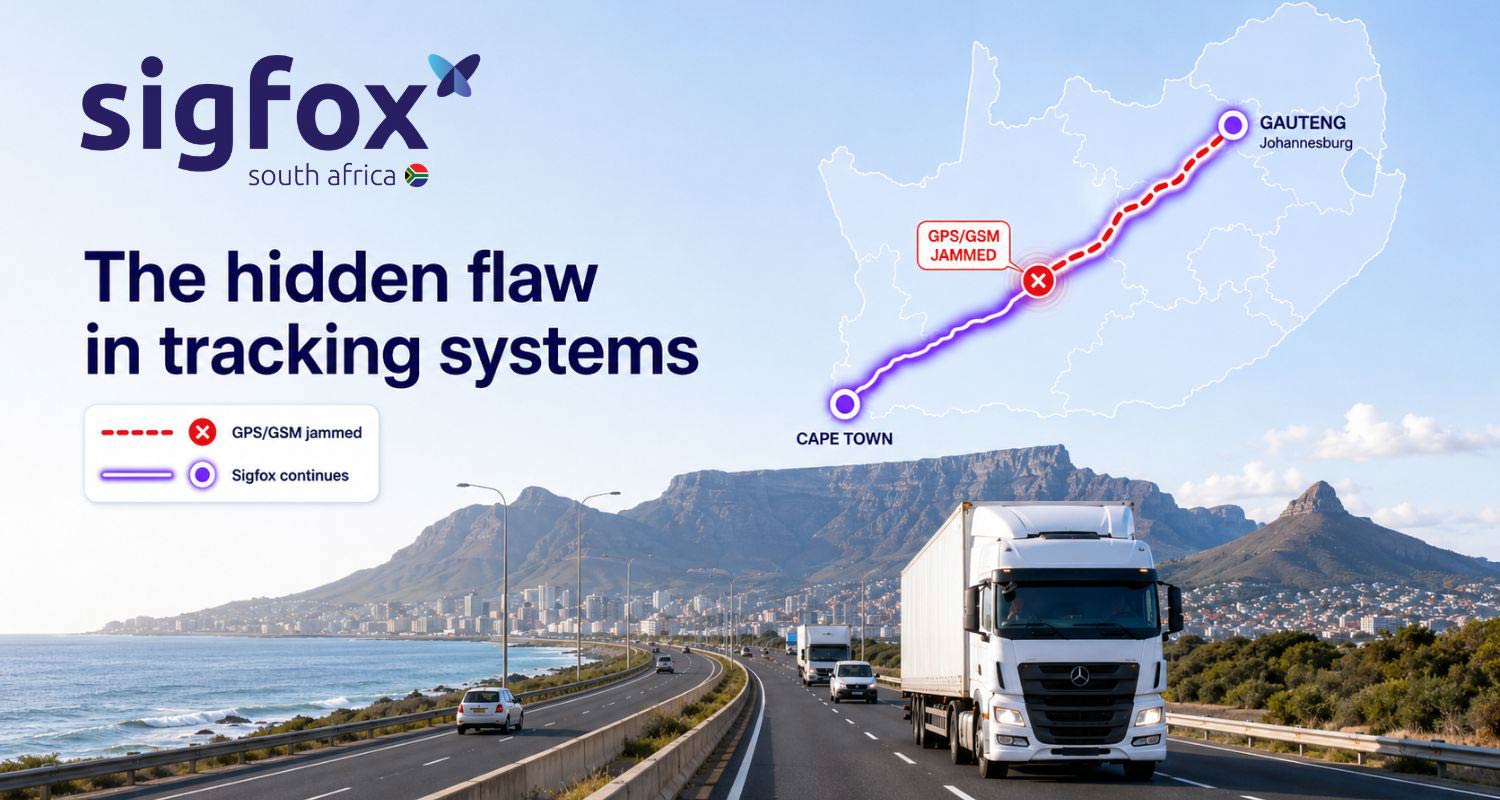
Most tracking systems are designed to operate in stable environments, where connectivity is assumed and visibility is continuous. That assumption no longer holds.
In South Africa, the communication layer that underpins asset tracking is increasingly being targeted as part of the attack itself. What was designed as an enabler of visibility has become a point of vulnerability.
Connectivity loss is often not incidental. In many high-risk scenarios, it is engineered. – Gregory Rood, CEO, Sigfox South Africa
This fundamentally shifts the role of the system. It is no longer positioned outside the risk environment. It is embedded within it.
In a traditional model, theft or tampering occurs in the physical world and the system reports on it. Once signal jamming is introduced, that model breaks down. The attacker is no longer just targeting the asset, but the mechanism that makes the asset visible.
When that mechanism is disrupted, the system does not degrade. It simply stops.
The real design flaw
Most tracking systems have been optimised for performance. Accuracy has improved, update frequency has increased and data has become more accessible. However, these improvements are built on a critical assumption: that connectivity remains available.
In environments where connectivity is deliberately disrupted, that assumption becomes a liability.
The system is no longer measured by how much data it produces, but by whether it can continue to communicate at all.
What engineers are doing differently
This is where the shift is happening, particularly at an engineering level.
Traditional tracking solutions are often built around a single, high-capability device responsible for positioning, communication and data transmission. While efficient under normal conditions, this approach creates a single point of failure.
Resilient systems are designed differently.
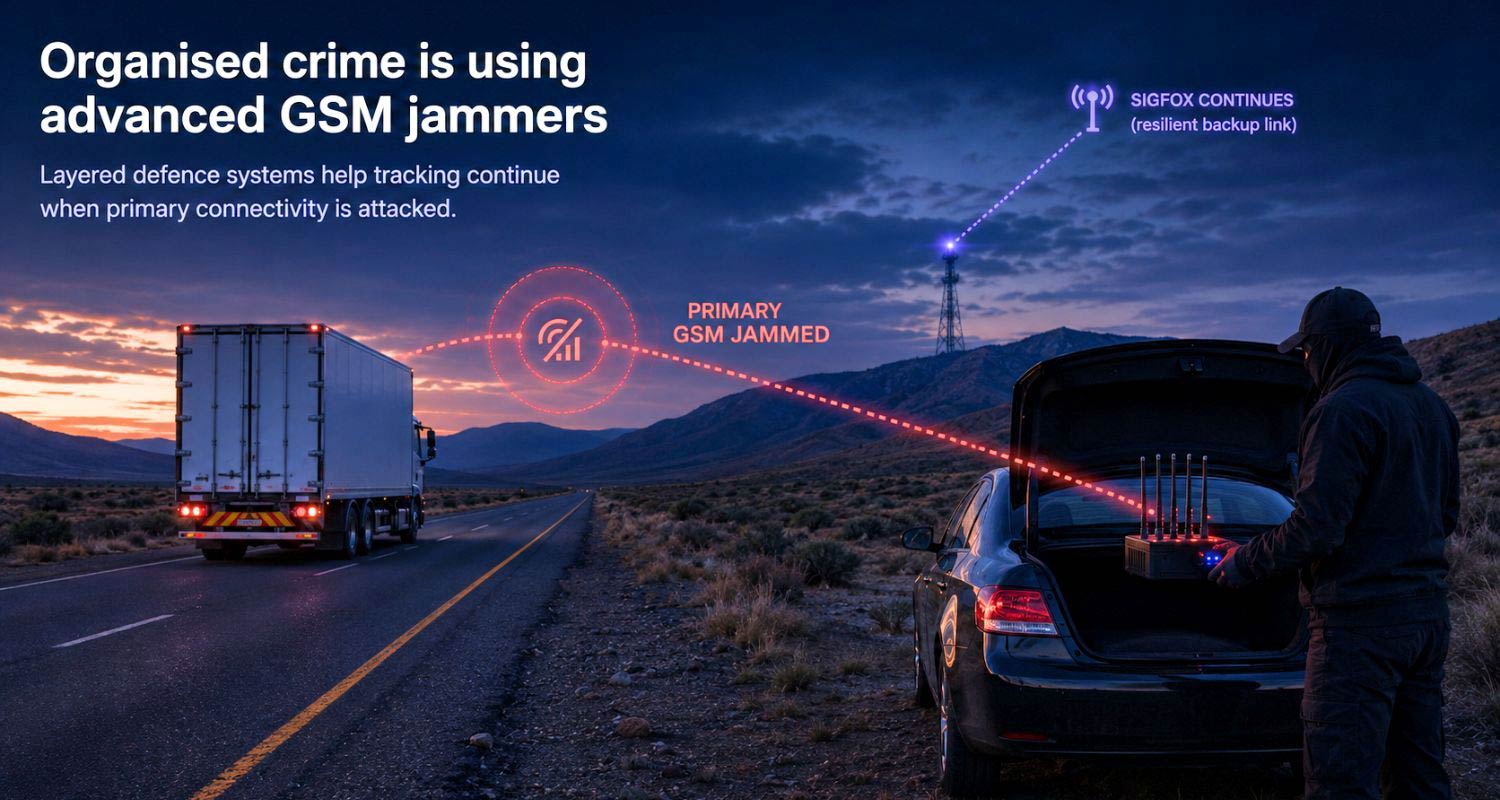
Instead of relying on one device or one network, engineers are building layered architectures that combine multiple communication paths and device types, each with a defined role.
In a typical logistics deployment, this may include:
- A primary GPS tracker for real-time visibility;
- A secondary low-bandwidth device that continues transmitting independently of GSM; and
- Event-driven sensors that trigger alerts based on tampering or route deviation.
This ensures that when one layer is disrupted, the system continues to function.
You don’t design these systems to avoid failure. You design them so they keep communicating when failure happens.
The same principle applies to infrastructure. Instead of relying on periodic checks or high-bandwidth monitoring, deployments are shifting towards distributed, low-power devices that can operate independently and transmit signals under constrained conditions.
The result is not a perfect system. It is a persistent one.
The role of a resilience layer
This is where Sigfox’s 0G network plays a distinct role.
Unlike traditional networks, it is not designed for high throughput or continuous data transmission. It is designed for predictable, low-energy communication that continues when other networks do not.
Because it operates independently of cellular infrastructure, it provides a separate communication path. When primary networks are disrupted, devices can still transmit critical signals.
This changes how systems behave under pressure.
Resilient systems are not defined by how much data they produce, but by whether they can still communicate when it matters.
Resilience first, intelligence second
There is often strong focus on advanced capabilities such as real-time analytics and high-precision tracking. These features are valuable, but they depend entirely on the presence of a signal. Without that, even the most sophisticated system becomes ineffective.
This is where Sigfox Bloodhound adds value.
Sigfox Bloodhound introduces network-based location estimation, allowing position to be inferred from signal behaviour rather than relying solely on GPS. This enhances visibility in environments where traditional tracking methods are compromised.
However, its effectiveness depends on the system’s ability to continue transmitting signals in the first place.
Resilience is the foundation. Intelligence builds on top of it.
A different way to evaluate systems
The shift required is not purely technological. It is conceptual.
Tracking systems can no longer be evaluated solely on performance metrics such as accuracy or data frequency. These describe how a system behaves under ideal conditions.
What matters in practice is how the system behaves when conditions deteriorate:
- Can it still communicate?
- Can it still provide useful signals?
- Can it still support decision-making?
In South Africa, those are not edge cases. They are the operating environment.
Because the defining moment for any tracking system is not when everything is working, it is when something is trying to make sure it does not.
If your system depends on a single communication path, it is already exposed.
Explore how resilient IoT systems are being designed.
- Read more articles by Sigfox South Africa on TechCentral
- This promoted content was paid for by the party concerned