
Close Menu
TechCentralTechCentral

    Subscribe to the newsletter

    Get the best South African technology news and analysis delivered to your e-mail inbox every morning.

    Facebook X (Twitter) YouTube LinkedIn
    WhatsApp Facebook X (Twitter) LinkedIn YouTube
    TechCentralTechCentral
    • News
      Vuyani Jarana: Mobile coverage masks a deeper broadband failure

      Vuyani Jarana: Mobile coverage masks a deeper broadband failure

      30 January 2026
      SABC Plus to flight Microsoft AI training videos

      SABC Plus to flight Microsoft AI training videos

      30 January 2026
      Fibre ducts

      Fibre industry consolidation in KZN

      30 January 2026
      Watts & Wheels S1E3: 'BYD's Corolla Cross challenger'

      Watts & Wheels S1E3: ‘BYD’s Corolla Cross challenger’

      30 January 2026
      What ordinary South Africans really think of AI

      What ordinary South Africans really think of AI

      30 January 2026
    • World
      Apple acquires audio AI start-up Q.ai

      Apple acquires audio AI start-up Q.ai

      30 January 2026
      SpaceX IPO may be largest in history

      SpaceX IPO may be largest in history

      28 January 2026
      Nvidia throws AI at the weather

      Nvidia throws AI at weather forecasting

      27 January 2026
      Debate erupts over value of in-flight Wi-Fi

      Debate erupts over value of in-flight Wi-Fi

      26 January 2026
      Intel takes another hit - Intel CEO Lip-Bu Tan. Laure Andrillon/Reuters

      Intel takes another hit

      23 January 2026
    • In-depth
      How liberalisation is rewiring South Africa's power sector

      How liberalisation is rewiring South Africa’s power sector

      21 January 2026
      The top-performing South African tech shares of 2025

      The top-performing South African tech shares of 2025

      12 January 2026
      Digital authoritarianism grows as African states normalise internet blackouts

      Digital authoritarianism grows as African states normalise internet blackouts

      19 December 2025
      TechCentral's South African Newsmakers of 2025

      TechCentral’s South African Newsmakers of 2025

      18 December 2025
      Black Friday goes digital in South Africa as online spending surges to record high

      Black Friday goes digital in South Africa as online spending surges to record high

      4 December 2025
    • TCS
      TCS+ | How Cloud On Demand is helping SA businesses succeed in the cloud - Xhenia Rhode, Dion Kalicharan

      TCS+ | Cloud On Demand and Consnet: inside a real-world AWS partner success story

      30 January 2026
      Watts & Wheels S1E3: 'BYD's Corolla Cross challenger'

      Watts & Wheels S1E2: ‘China attacks, BMW digs in, Toyota’s sublime supercar’

      23 January 2026

      TCS+ | Why cybersecurity is becoming a competitive advantage for SA businesses

      20 January 2026
      Watts & Wheels S1E3: 'BYD's Corolla Cross challenger'

      Watts & Wheels: S1E1 – ‘William, Prince of Wheels’

      8 January 2026
      TCS+ | Africa's digital transformation - unlocking AI through cloud and culture - Cliff de Wit Accelera Digital Group

      TCS+ | Cloud without culture won’t deliver AI: Accelera’s Cliff de Wit

      12 December 2025
    • Opinion
      South Africa's skills advantage is being overlooked at home - Richard Firth

      South Africa’s skills advantage is being overlooked at home

      29 January 2026
      Why Elon Musk's Starlink is a 'hard no' for me - Songezo Zibi

      Why Elon Musk’s Starlink is a ‘hard no’ for me

      26 January 2026
      South Africa's new fibre broadband battle - Duncan McLeod

      South Africa’s new fibre broadband battle

      20 January 2026
      AI moves from pilots to production in South African companies - Nazia Pillay SAP

      AI moves from pilots to production in South African companies

      20 January 2026
      South Africa's new fibre broadband battle - Duncan McLeod

      ANC’s attack on Solly Malatsi shows how BEE dogma trumps economic reality

      14 December 2025
    • Company Hubs
      • Africa Data Centres
      • AfriGIS
      • Altron Digital Business
      • Altron Document Solutions
      • Altron Group
      • Arctic Wolf
      • AvertITD
      • Braintree
      • CallMiner
      • CambriLearn
      • CYBER1 Solutions
      • Digicloud Africa
      • Digimune
      • Domains.co.za
      • ESET
      • Euphoria Telecom
      • Incredible Business
      • iONLINE
      • IQbusiness
      • Iris Network Systems
      • LSD Open
      • NEC XON
      • Netstar
      • Network Platforms
      • Next DLP
      • Ovations
      • Paracon
      • Paratus
      • Q-KON
      • SevenC
      • SkyWire
      • Solid8 Technologies
      • Telit Cinterion
      • Tenable
      • Vertiv
      • Videri Digital
      • Vodacom Business
      • Wipro
      • Workday
      • XLink
    • Sections
      • AI and machine learning
      • Banking
      • Broadcasting and Media
      • Cloud services
      • Contact centres and CX
      • Cryptocurrencies
      • Education and skills
      • Electronics and hardware
      • Energy and sustainability
      • Enterprise software
      • Financial services
      • Information security
      • Internet and connectivity
      • Internet of Things
      • Investment
      • IT services
      • Lifestyle
      • Motoring
      • Public sector
      • Retail and e-commerce
      • Satellite communications
      • Science
      • SMEs and start-ups
      • Social media
      • Talent and leadership
      • Telecoms
    • Events
    • Advertise
    TechCentralTechCentral
    Home » World » US takes aim at Qualcomm ‘monopoly’

    US takes aim at Qualcomm ‘monopoly’

    By Agency Staff18 January 2017
    Twitter LinkedIn Facebook WhatsApp Email Telegram Copy Link
    News Alerts
    WhatsApp

    Qualcomm forced Apple to use its chips exclusively in return for lower licensing fees, unfairly cutting out competitors, the US said in a lawsuit against the biggest maker of mobile phone chips.

    Qualcomm’s exclusive deal with Apple was detailed in a Federal Trade Commission lawsuit accusing the chip maker of illegally maintaining a monopoly for semiconductors used in mobile phones and pocketing elevated royalties from customers.

    “Qualcomm recognised that any competitor that won Apple’s business would become stronger, and used exclusivity to prevent Apple from working with and improving the effectiveness of Qualcomm’s competitors,” the FTC said in the lawsuit filed Tuesday.

    The lawsuit presents yet another regulatory challenge to Qualcomm’s most lucrative business, technology licensing. The chip maker gets most of its profits from selling the rights to use patents that are essential to all modern mobile phone systems. Qualcomm has argued that its licensing follows industry standards that have been in place for more than 20 years and are used by other companies.

    Last month, South Korea, home to two of Qualcomm’s largest customers, fined the San Diego-based company 1,03 trillion won (US$890m) and described its practices as monopolistic. Qualcomm has said it would appeal that decision. The chip maker is also the subject of investigations by the European Union and Taiwanese authorities. Its shares fell as much as 5,6% on Tuesday, before closing down 4% at $64,19.

    Qualcomm said in a statement that it would fight the FTC’s complaint, which it said is based on flawed legal theory and seeks to advance the interests and bargaining power of mobile phone manufacturers. The company also criticised the timing of the case just before President-elect Donald Trump takes office on Friday and FTC chairwoman Edith Ramirez is slated to step down on 10 February.

    “This is an extremely disappointing decision to rush to file a complaint on the eve of chairwoman Ramirez’s departure and the transition to a new administration, which reflects a sharp break from FTC practice,” said Qualcomm general counsel Don Rosenberg.
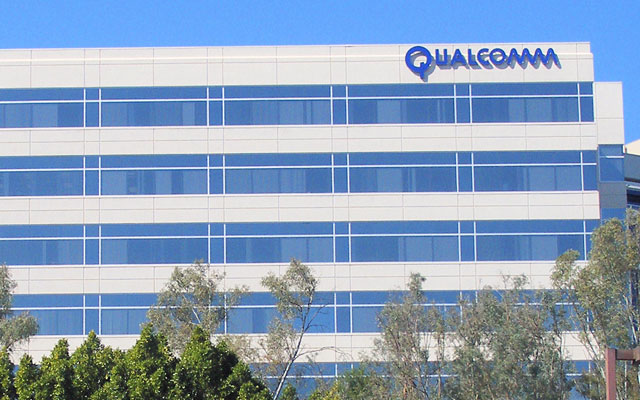
    Qualcomm’s head office in San Diego, California

    Qualcomm is the biggest developer of the technology that underlies how mobile devices communicate. The company has been heavily criticised for its high royalty-rate demands and licensing conditions, which have led to a slew of regulatory investigations worldwide.

    The chip maker has argued that the beneficiaries of regulatory action — phone makers — have struck new deals that acknowledge the validity of Qualcomm’s patents. The company contends users of its technology benefit from its heavy spending on research and development.

    Profit centre

    Qualcomm has two businesses, selling the right to use patents on the fundamentals of cellular technology and designing and selling chips. Underlining the importance of those patents, it brought in $7,7bn of licensing revenue in its most recent financial year. That translated to $6,5bn of pretax profit. Chip revenue of $15,4bn contributed only $1,8bn to its profit.

    Tuesday’s FTC case in federal court in San Jose, California stems from a process in which companies get together to develop industry standards so devices from different manufacturers can interoperate — so, for instance, data sent from an Apple phone can be received and understood by one made by Samsung Electronics.

    Since the companies that develop those standards have an advantage in ensuring their patented inventions get included in the new specifications, they pledge to license the patents on “reasonable and non-discriminatory” terms.

    That phrase has been left undefined. As a result, courts and regulators have been struggling to interpret what’s fair and reasonable, and it has been a key issue during the legal wars among smartphone manufacturers.

    The crux of the FTC’s case against Qualcomm is the claim that it offered Apple rebates on licensing fees in return for it exclusively using Qualcomm modem chips in the iPhone from 2011 to 2016. Citing agreements between the two companies, the FTC said in its complaint that Qualcomm intended to create “de facto exclusive deals that were as effective as express purchase requirements and that effectively foreclosed Qualcomm’s competitors from gaining processor business at Apple”.

    Qualcomm said in its statement that it has never withheld or threatened to withhold chip supply in order to obtain unfair or unreasonable licensing terms.

    Qualcomm recognised that any competitor that won Apple’s business would become stronger, and used exclusivity to prevent Apple from working with and improving the effectiveness of Qualcomm’s competitors

    “The FTC’s allegation to the contrary — the central thesis of the complaint — is wrong,” the company said.

    Apple spokesman Josh Rosenstock declined to comment on the case.

    The FTC lawsuit marks a new front in the agency’s challenges to anticompetitive conduct in patent licensing, said Michael Carrier, a professor at Rutgers Law School who specialises in antitrust and intellectual property law. Unlike past cases, the agency is targeting royalties collected by Qualcomm as excessive.

    “This is a more aggressive complaint than we’ve seen in the past,” Carrier said. “Once you say higher royalties are a problem, the FTC is wading a little more in the details of what the royalties should be.”

    The FTC seeks a court order stopping Qualcomm’s alleged misconduct. Possible remedies could include disgorgement of unjust profits from past licences or a requirement to obtain pre-approval for licence terms in the future, said Mark Lemley, a professor at Stanford Law School.

    The FTC voted 2-1 to bring the case with commissioner Maureen K Ohlhausen dissenting. Ohlhausen, a Republican, said the lawsuit is based on a flawed legal theory that “lacks economic and evidentiary support” and will undermine US intellectual property rights.  — (c) 2017 Bloomberg LP



    Apple Federal Trade Commission FTC Qualcomm
    WhatsApp YouTube Follow on Google News Add as preferred source on Google
    Share. Facebook Twitter LinkedIn WhatsApp Telegram Email Copy Link
    Previous ArticleChelsea Manning to be released from jail
    Next Article Amazon ‘quits talks’ with Naspers’s Souq.com

    Related Posts

    Apple acquires audio AI start-up Q.ai

    Apple acquires audio AI start-up Q.ai

    30 January 2026
    Chip shortage will get worse, Samsung warns

    Chip shortage will get worse, Samsung warns

    29 January 2026
    Reports of the smartphone's impending death are greatly exaggerated

    Reports of the smartphone’s impending death are greatly exaggerated

    28 January 2026
    Company News
    Huawei turns 25 in South Africa, celebrates with major device discounts

    Huawei turns 25 in South Africa, celebrates with major device discounts

    30 January 2026
    Phishing has not disappeared, but it has grown up - KnowBe4

    Phishing has not disappeared, but it has grown up

    30 January 2026
    Smartphone affordability: South Africa's new economic divide - PayJoy

    Smartphone affordability: South Africa’s new economic divide

    29 January 2026
    Opinion
    South Africa's skills advantage is being overlooked at home - Richard Firth

    South Africa’s skills advantage is being overlooked at home

    29 January 2026
    Why Elon Musk's Starlink is a 'hard no' for me - Songezo Zibi

    Why Elon Musk’s Starlink is a ‘hard no’ for me

    26 January 2026
    South Africa's new fibre broadband battle - Duncan McLeod

    South Africa’s new fibre broadband battle

    20 January 2026

    Subscribe to Updates

    Get the best South African technology news and analysis delivered to your e-mail inbox every morning.

    Latest Posts
    Vuyani Jarana: Mobile coverage masks a deeper broadband failure

    Vuyani Jarana: Mobile coverage masks a deeper broadband failure

    30 January 2026
    TCS+ | How Cloud On Demand is helping SA businesses succeed in the cloud - Xhenia Rhode, Dion Kalicharan

    TCS+ | Cloud On Demand and Consnet: inside a real-world AWS partner success story

    30 January 2026
    Huawei turns 25 in South Africa, celebrates with major device discounts

    Huawei turns 25 in South Africa, celebrates with major device discounts

    30 January 2026
    SABC Plus to flight Microsoft AI training videos

    SABC Plus to flight Microsoft AI training videos

    30 January 2026
    © 2009 - 2026 NewsCentral Media
    • Cookie policy (ZA)
    • TechCentral – privacy and Popia

    Type above and press Enter to search. Press Esc to cancel.

    Manage consent

    TechCentral uses cookies to enhance its offerings. Consenting to these technologies allows us to serve you better. Not consenting or withdrawing consent may adversely affect certain features and functions of the website.

    Functional Always active
    The technical storage or access is strictly necessary for the legitimate purpose of enabling the use of a specific service explicitly requested by the subscriber or user, or for the sole purpose of carrying out the transmission of a communication over an electronic communications network.
    Preferences
    The technical storage or access is necessary for the legitimate purpose of storing preferences that are not requested by the subscriber or user.
    Statistics
    The technical storage or access that is used exclusively for statistical purposes. The technical storage or access that is used exclusively for anonymous statistical purposes. Without a subpoena, voluntary compliance on the part of your Internet Service Provider, or additional records from a third party, information stored or retrieved for this purpose alone cannot usually be used to identify you.
    Marketing
    The technical storage or access is required to create user profiles to send advertising, or to track the user on a website or across several websites for similar marketing purposes.
    • Manage options
    • Manage services
    • Manage {vendor_count} vendors
    • Read more about these purposes
    View preferences
    • {title}
    • {title}
    • {title}