Close Menu
TechCentralTechCentral

    Subscribe to the newsletter

    Get the best South African technology news and analysis delivered to your e-mail inbox every morning.

    Facebook X (Twitter) YouTube LinkedIn
    WhatsApp Facebook X (Twitter) LinkedIn YouTube
    TechCentralTechCentral
    • News
      Eskom to go to market for 5.2GW of new nuclear within a year

      Eskom to go to market for 5.2GW of new nuclear within a year

      20 May 2026
      South Africa is sleepwalking into another AI policy failure - Celeste Labuschagne

      South Africa is sleepwalking into another AI policy failure

      20 May 2026
      The Mythos hacking threat is looking overblown

      The Mythos hacking threat is looking overblown

      20 May 2026
      Inflation spikes higher - and the worst is still to come

      Inflation spikes higher – and the worst is still to come

      20 May 2026
      MTN to work with police to fight E Cape base station crime - Charles Molapisi MTN South Africa CEO

      MTN to turn its African towers into an AI inference grid

      20 May 2026
    • World
      Vatican confronts the age of artificial intelligence. Edgar Beltrán/The Pillar 

      Vatican confronts the age of artificial intelligence

      19 May 2026
      The walkout that could hit every laptop and AI server - Samsung

      The walkout that could hit every laptop and AI server

      18 May 2026
      Pop star sues Samsung for $15-million - Dua Lipa

      Pop star sues Samsung for $15-million

      11 May 2026
      OpenAI's new audio APIs aim for conversational voice agents

      OpenAI’s new audio APIs aim for conversational voice agents

      8 May 2026
      'It was my idea': Musk claims paternity of OpenAI - Elon Musk

      ‘It was my idea’: Musk claims paternity of OpenAI

      29 April 2026
    • In-depth
      Alfa's electric rebel - Alfa Romeo Junior Elettrica Veloce

      Alfa’s electric rebel

      29 April 2026
      Africa switches on as Europe dims the lights

      Africa switches on as Europe dims the lights

      9 April 2026
      The biggest untapped EV market on Earth is hiding in plain sight

      The biggest untapped EV market on Earth is hiding in plain sight

      1 April 2026
      Datatec is firing on all cylinders - Jens Montanana

      The R16-billion tech giant hiding in plain sight

      26 March 2026
      The last generation of coders

      The last generation of coders

      18 February 2026
    • TCS
      TCS+ | The Up&Up Group on the hidden cost of AI - Jason Harrison

      TCS+ | The Up&Up Group on the hidden cost of AI

      13 May 2026
      Michael Rossouw

      TCS+ | The retirement decision most South Africans get wrong

      6 May 2026
      TCS | The Cape Town start-up listening for TB with AI - Braden van Breda

      TCS | The Cape Town start-up listening for TB with AI

      4 May 2026

      TCS+ | ‘The ISP for ISPs’: Vox’s shift to wholesale aggregator

      20 April 2026
      TCS | Werner Lindemann on how AI is rewriting the infosec rulebook

      TCS | Werner Lindemann on how AI is rewriting the infosec rulebook

      15 April 2026
    • Opinion
      AI won't fix your culture - it will expose it - Jackie Kennedy

      AI won’t fix your culture – it will expose it

      19 May 2026
      Free calls, dead voice and Shameel Joosub's Spanish ghost - Duncan McLeod

      Free calls, dead voice and Shameel Joosub’s Spanish ghost

      22 April 2026
      The conflict of interest at the heart of PayShap's slow adoption - Cheslyn Jacobs

      The conflict of interest at the heart of PayShap’s slow adoption

      26 March 2026
      South Africa's energy future hinges on getting wheeling right - Aishah Gire

      South Africa’s energy future hinges on getting wheeling right

      10 March 2026
      Free calls, dead voice and Shameel Joosub's Spanish ghost - Duncan McLeod

      Apple just dropped a bomb on the Windows world

      5 March 2026
    • Company Hubs
      • 1Stream
      • Africa Data Centres
      • AfriGIS
      • Altron Digital Business
      • Altron Document Solutions
      • Altron Group
      • Arctic Wolf
      • Ascent Technology
      • AvertITD
      • BBD
      • Braintree
      • CallMiner
      • CambriLearn
      • CM Telecom
      • Contactable
      • CYBER1 Solutions
      • Digicloud Africa
      • Digimune
      • Domains.co.za
      • ESET
      • Euphoria Telecom
      • HOSTAFRICA
      • Incredible Business
      • iONLINE
      • IQbusiness
      • Iris Network Systems
      • Kaspersky
      • LSD Open
      • Mitel
      • NEC XON
      • Netstar
      • Network Platforms
      • Next DLP
      • Ovations
      • Paracon
      • Paratus
      • Q-KON
      • SevenC
      • SkyWire
      • Solid8 Technologies
      • Telit Cinterion
      • Telviva
      • Tenable
      • Vertiv
      • Videri Digital
      • Vodacom Business
      • Wipro
      • Workday
      • XLink
    • Sections
      • AI and machine learning
      • Banking
      • Broadcasting and Media
      • Cloud services
      • Contact centres and CX
      • Cryptocurrencies
      • Education and skills
      • Electronics and hardware
      • Energy and sustainability
      • Enterprise software
      • Financial services
      • HealthTech
      • Information security
      • Internet and connectivity
      • Internet of Things
      • Investment
      • IT services
      • Lifestyle
      • Motoring
      • Policy and regulation
      • Public sector
      • Retail and e-commerce
      • Satellite communications
      • Science
      • SMEs and start-ups
      • Social media
      • Talent and leadership
      • Telecoms
    • Events
    • Advertise
    TechCentralTechCentral
    Home » Science » What does the solar system sound like?

    What does the solar system sound like?

    By The Conversation31 July 2016
    Twitter LinkedIn Facebook WhatsApp Email Telegram Copy Link
    News Alerts
    WhatsApp

    solar-system-640

    “In space, no one can hear you scream.” That was the tagline of the 1979 box office film success Alien. And it’s true. Sound waves propagate mechanically as a vibration and therefore need a medium — solid, liquid or gas — to travel through. Although interplanetary (and interstellar) space is not completely empty, gas molecules and dust grains are so sparsely distributed that they do not form a continuous medium that would enable sound waves to be transmitted directly.

    But there are many locations in the solar system where it might actually be quite noisy. Such places will have a medium through which sound waves can be transmitted — for example, an atmosphere or an ocean. And we have only started to explore what they sound like.

    Nasa announced that its next mission to Mars, the Mars 2020 lander, will carry a microphone so that the soundscape of the planet can be recorded. This is not the first time that a microphone has been sent to Mars — the US Planetary Society sponsored a microphone on the Mars Polar Lander mission in 1999. Unfortunately, the spacecraft crashed before any recordings could be transmitted. A microphone was also part of one of the instruments on the Phoenix Lander of 2008, but because of concerns about an interface problem with the landing system, the instrument was not switched on.

    We do have some recordings of space sound already — when the European Space Agency’s (ESA) Huygens spacecraft landed on Saturn’s giant moon Titan in January 2005, the probe recorded its journey down through Titan’s atmosphere. When you listen to the recording, you get a real impression of the capsule being buffeted by winds as it floated to the surface.

    The point of an experiment like this is to use the sound to infer how the pressure of Titan’s atmosphere changes with depth. This can then be used to build a circulation model for Titan, similar to the ones we use on Earth to forecast the weather and understand changes in climate.

    Speeding through Titan’s haze.
    ESA443 KB (download)

    And, at a time when ESA’s Rosetta mission is drawing to a close, we should remember that its target comet, 67P Churyumov-Gerasimenko, was singing out into the void as it approached the sun. We also heard the thud of the comet lander Philae’s arrival when it touched down on the comet in November 2014.

    There are soundscapes of other solar system bodies including Jupiter and the rings of Saturn. But these are not direct audio recordings — they are a conversion of electromagnetic vibrations into audio signals. They sound pretty weird.

    The music of Mars

    You only have to imagine being in a desert to realise the variety of sounds a microphone on the surface of Mars could record — and how they can be interpreted. First of all, the wind, whistling across the planetary landscape — how fast is it travelling? How often does it vary in speed or direction? What does a dust devil sound like? Or a dust storm? What about the crack of thunder associated with a lightning bolt? Or the variation in pressure during an electric storm? Once the wind drops, the gentle sounds that break the silence can be heard: the settling of dust grains disturbed by the wind.

    There are several engineering advantages to having a microphone carried by a rover on Mars. As the vehicle trundles across the landscape, we might hear the noise of crashing gears, and realise that sand had clogged the wheels. This would allow engineers to diagnose problems more efficiently, and work out strategies to ameliorate or avoid them.
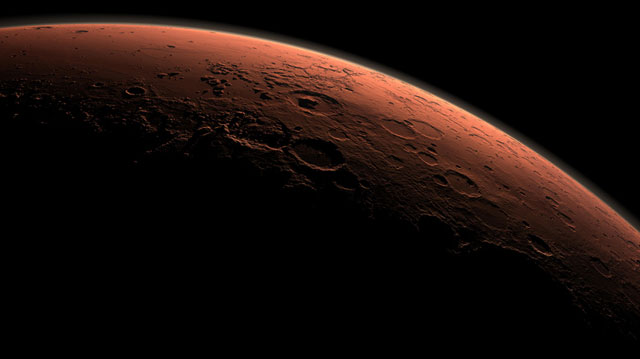
    We will soon get to hear the winds on Mars. NASA/JPL-Caltech/MSSS
    We will soon get to hear the winds on Mars. NASA/JPL-Caltech/MSSS

    We have heard some sounds of a rover on Mars already: Nasa released audio from the Opportunity rover’s 11-year marathon. But like the sounds of Jupiter and Saturn’s rings, these sounds were not recorded directly — they are a conversion of the vibrations of the rover into audio as it travelled across the surface. The microphone on the Mars 2020 mission will be the first to pick up the sounds of Mars directly and transmit them to Earth.

    What is interesting about the proposal for the microphone is the instrument into which it will be incorporated. It’s not an accelerometer, as on Titan and the previous Mars microphones, but on an instrument that is designed to measure the chemical composition of the rocks and soil by vapourising them: a laser-induced breakdown spectrometer. This works by firing a laser at a target, which “explodes” as a plasma and creates a very sharp pressure wave — the acoustic signal of which is proportional to the mass of sample being destroyed. Using the microphone to set up, calibrate and focus the laser will help improve the instrument. But at the same time, a whole raft of new sounds from the surface of the red planet will be picked up.

    So where else might it be interesting to listen? I’d like to hear Europa or Enceladus, the respective moons of Jupiter and Saturn. They both have an ice-covered surface, below which is a deep ocean. Imagine what a microphone might pick up as a spacecraft penetrated the ice. The groaning of the icebergs as they moved against each other. The suck and pluck of more mushy ice as it percolated up through the cracks. The sudden whoosh of an ice geyser. And then into the ocean below. Waves slapping against the base of the ice sheet. Water of different temperatures mixing — what does that sound like? Will there be bubbles? And perhaps as the penetrator settles onto the ocean floor, we might hear an unexpected crab scuttle past.The Conversation

    • Monica Grady is professor of planetary and space sciences, The Open University
    • This article was originally published on The Conversation

    Follow TechCentral on Google News Add TechCentral as your preferred source on Google


    WhatsApp YouTube
    Share. Facebook Twitter LinkedIn WhatsApp Telegram Email Copy Link
    Previous ArticleMeet Nigeria’s undergraduate Internet conmen
    Next Article Tech’s super rich just got richer still

    Related Posts

    Eskom to go to market for 5.2GW of new nuclear within a year

    Eskom to go to market for 5.2GW of new nuclear within a year

    20 May 2026

    Best payment processing providers in Africa

    20 May 2026
    South Africa is sleepwalking into another AI policy failure - Celeste Labuschagne

    South Africa is sleepwalking into another AI policy failure

    20 May 2026
    Company News

    Best payment processing providers in Africa

    20 May 2026
    Network with industry leaders at Pan African DataCentres event

    Network with industry leaders at Pan African DataCentres event

    20 May 2026
    Why online learning is the future of education - Mweb

    Why online learning is the future of education

    20 May 2026
    Opinion
    AI won't fix your culture - it will expose it - Jackie Kennedy

    AI won’t fix your culture – it will expose it

    19 May 2026
    Free calls, dead voice and Shameel Joosub's Spanish ghost - Duncan McLeod

    Free calls, dead voice and Shameel Joosub’s Spanish ghost

    22 April 2026
    The conflict of interest at the heart of PayShap's slow adoption - Cheslyn Jacobs

    The conflict of interest at the heart of PayShap’s slow adoption

    26 March 2026

    Subscribe to Updates

    Get the best South African technology news and analysis delivered to your e-mail inbox every morning.

    Latest Posts
    Eskom to go to market for 5.2GW of new nuclear within a year

    Eskom to go to market for 5.2GW of new nuclear within a year

    20 May 2026

    Best payment processing providers in Africa

    20 May 2026
    South Africa is sleepwalking into another AI policy failure - Celeste Labuschagne

    South Africa is sleepwalking into another AI policy failure

    20 May 2026
    The Mythos hacking threat is looking overblown

    The Mythos hacking threat is looking overblown

    20 May 2026
    © 2009 - 2026 NewsCentral Media
    • Cookie policy (ZA)
    • TechCentral – privacy and Popia

    Type above and press Enter to search. Press Esc to cancel.

    Manage consent

    TechCentral uses cookies to enhance its offerings. Consenting to these technologies allows us to serve you better. Not consenting or withdrawing consent may adversely affect certain features and functions of the website.

    Functional Always active
    The technical storage or access is strictly necessary for the legitimate purpose of enabling the use of a specific service explicitly requested by the subscriber or user, or for the sole purpose of carrying out the transmission of a communication over an electronic communications network.
    Preferences
    The technical storage or access is necessary for the legitimate purpose of storing preferences that are not requested by the subscriber or user.
    Statistics
    The technical storage or access that is used exclusively for statistical purposes. The technical storage or access that is used exclusively for anonymous statistical purposes. Without a subpoena, voluntary compliance on the part of your Internet Service Provider, or additional records from a third party, information stored or retrieved for this purpose alone cannot usually be used to identify you.
    Marketing
    The technical storage or access is required to create user profiles to send advertising, or to track the user on a website or across several websites for similar marketing purposes.
    • Manage options
    • Manage services
    • Manage {vendor_count} vendors
    • Read more about these purposes
    View preferences
    • {title}
    • {title}
    • {title}