
Close Menu
TechCentralTechCentral

    Subscribe to the newsletter

    Get the best South African technology news and analysis delivered to your e-mail inbox every morning.

    Facebook X (Twitter) YouTube LinkedIn
    WhatsApp Facebook X (Twitter) LinkedIn YouTube
    TechCentralTechCentral
    • News
      China nets a falling rocket in reusability race with SpaceX

      China nets a falling rocket in reusability race with SpaceX

      10 July 2026
      Battlefield tech could save lives on South Africa's roads - Dithoto Modungwa

      Battlefield tech could save lives on South Africa’s roads

      10 July 2026
      Customers prefer ChatGPT to your company's AI chatbot

      Customers prefer ChatGPT to your company’s AI chatbot

      10 July 2026
      South Africans warm to AI doing their shopping: DHL

      South Africans warm to AI doing their shopping: DHL

      10 July 2026
      OpenAI debuts ChatGPT Work - and GPT-5.6 - in enterprise push

      OpenAI debuts ChatGPT Work – and GPT-5.6 – in enterprise push

      10 July 2026
    • World
      Swingeing jobs cuts at Microsoft's Xbox unit

      Swingeing jobs cuts at Microsoft’s Xbox unit

      6 July 2026

      SK Hynix ends Samsung’s 26-year reign at the top

      22 June 2026
      Google on the hook for what its AI tells users, court rules

      Google on the hook for what its AI tells users, court rules

      15 June 2026
      How Russians juggle VPNs to outwit the Kremlin

      How Russians juggle VPNs to outwit the Kremlin

      15 June 2026
      Amazon CEO flagged Anthropic AI risks to Washington - Andy Jassy

      Amazon CEO flagged Anthropic AI risks to Washington

      14 June 2026
    • In-depth
      AI boom sparks rally, frenzy and fear

      AI boom sparks rally, frenzy and fear

      11 June 2026
      Every plug-in hybrid on sale in South Africa, ranked by price - Lamborghini Temerario

      Every plug-in hybrid on sale in South Africa, ranked by price

      7 June 2026
      What Wi-Fi 8 will mean for wireless networks

      What Wi-Fi 8 will mean for wireless networks

      1 June 2026
      Alfa's electric rebel - Alfa Romeo Junior Elettrica Veloce

      Alfa’s electric rebel

      29 April 2026
      Africa switches on as Europe dims the lights

      Africa switches on as Europe dims the lights

      9 April 2026
    • TCS
      Watts & Wheels S1E7: 'Ferrari's EV breaks the internet'

      Watts & Wheels S1E7: ‘Ferrari’s EV breaks the internet’

      8 July 2026
      TCS+ | How Tracker is turning vehicle data into business strategy - Silvia Schollenberger

      TCS+ | How Tracker is turning vehicle data into business strategy

      1 July 2026
      TCS+ | IBM Bob: an AI-powered 'development partner' for the enterprise - David Spurway

      TCS+ | IBM Bob: an AI-powered development partner for the enterprise

      30 June 2026
      Watts & Wheels S1E6: 'A flawless Alfa and a bakkie that divides'

      Watts & Wheels S1E6: ‘A flawless Alfa and a bakkie that divides’

      17 June 2026
      Watts & Wheels S1E6: 'A flawless Alfa and a bakkie that divides'

      Watts & Wheels S1E5: ‘A Bentley of the bush and a car that swims’

      8 June 2026
    • Opinion
      The author, Fanie van Rooyen

      South Africa can still catch the AI wave – here’s how

      7 July 2026
      The author, Fanie van Rooyen

      The AI utopia South Africa can’t afford

      1 July 2026
      The author, Jannie van Zyl

      South Africa’s broadband future is being decided in orbit, not in Pretoria

      30 June 2026
      The author, Pambos Soteriades

      The pivot South Africa’s MVNOs cannot afford to miss

      23 June 2026
      Brazil's online gambling crackdown is a lesson for South Africa

      Brazil’s online gambling crackdown is a lesson for South Africa

      22 June 2026
    • Company Hubs
      • 1Stream
      • Africa Data Centres
      • AfriGIS
      • Altron Digital Business
      • Altron Document Solutions
      • Altron Group
      • Arctic Wolf
      • Ascent Technology
      • AvertITD
      • BBD
      • Braintree
      • CallMiner
      • CambriLearn
      • CM Telecom
      • Contactable
      • CYBER1 Solutions
      • Digicloud Africa
      • Digimune
      • Domains.co.za
      • ESET
      • Euphoria Telecom
      • HOSTAFRICA
      • Incredible Business
      • iONLINE
      • IQbusiness
      • Iris Network Systems
      • Kaspersky
      • LSD Open
      • Mitel
      • NEC XON
      • Netstar
      • Network Platforms
      • Next DLP
      • Ovations
      • Paracon
      • Paratus
      • Q-KON
      • SevenC
      • SkyWire
      • Solid8 Technologies
      • Telit Cinterion
      • Telviva
      • Tenable
      • Vertiv
      • Videri Digital
      • Vodacom Business
      • Wipro
      • Workday
      • XLink
    • Sections
      • AI and machine learning
      • Banking
      • Broadcasting and Media
      • Cloud services
      • Contact centres and CX
      • Cryptocurrencies
      • Education and skills
      • Electronics and hardware
      • Energy and sustainability
      • Enterprise software
      • Financial services
      • HealthTech
      • Information security
      • Internet and connectivity
      • Internet of Things
      • Investment
      • IT services
      • Lifestyle
      • Policy and regulation
      • Public sector
      • Retail and e-commerce
      • Satellite communications
      • Science
      • SMEs and start-ups
      • Social media
      • Talent and leadership
      • Telecoms
      • Watts & Wheels
    • Events
    • Advertise
    TechCentralTechCentral
    Home » In-depth » Whoever controls the OS directs the future

    Whoever controls the OS directs the future

    By Agency Staff5 October 2017
    Twitter LinkedIn Facebook WhatsApp Email Telegram Copy Link
    News Alerts
    WhatsApp

    My thoughts tend to go to dark places these days. And so when I watched Google on Wednesday trot out one after another of its homegrown computing devices for every task and every nook of our homes, I went straight to dystopia: RIP digital competition.

    Today most people experience computing through devices controlled by a handful of companies: principally Microsoft and Apple for traditional computers and Google and Apple (and increasingly Chinese companies with customised versions of Google’s Android) for smartphones. Feel free to throw in Amazon.com, too, for tablets and TV sets.

    The companies that have owned the software foundation of those devices benefited from the proliferation of PCs and smartphones and other Internet-connected hardware, but so did many others. Facebook, Amazon, Netflix, Uber, WeChat in China and many more were able to flourish even though other companies owned the gateways people use to arrive at those Internet hangouts. The Internet-connected world has been more or less open to business for everyone.

    Amazon, Google parent company Alphabet and others are trying to establish a future of computers everywhere, without screens and perhaps controlled primarily by voices

    I’m not sure that will continue to be true. Amazon, Google parent company Alphabet and others are trying to establish a future of computers everywhere, without screens and perhaps controlled primarily by voices. It’s easy to imagine this mode of computing will deliver disproportionate power to the owners of the digital gateways. The companies that own the operating system will control the future.

    Sure, you may be able to tell a Google Home Internet-connected speaker or Apple’s Siri voice assistant to “send Mom a message with Facebook Messenger” or “play Imagine Dragons on Spotify”, but odds are many people will just use whatever Google or Apple options are the default. And yes, people can order an Uber ride with their Amazon home speakers, but they have to know to ask for Uber. How will a future Uber or Netflix get discovered in the first place if people get out of the habit of searching or going to a central app store to find new tasks?

    It’s true that many of today’s technology superpowers got that way because they controlled operating systems. Microsoft’s ownership of the software brains for nearly all personal computers gave it a foothold to build one of the world’s dominant companies. Apple’s ability to re-imagine a pocket supercomputer tied to its operating system made it the most valuable corporation in the world. It’s debatable how much Google has benefited directly from its control of Android, but at the very least Google’s Internet search dominance has been aided by Android’s position as the foundation for more than 85% of the world’s smartphones.
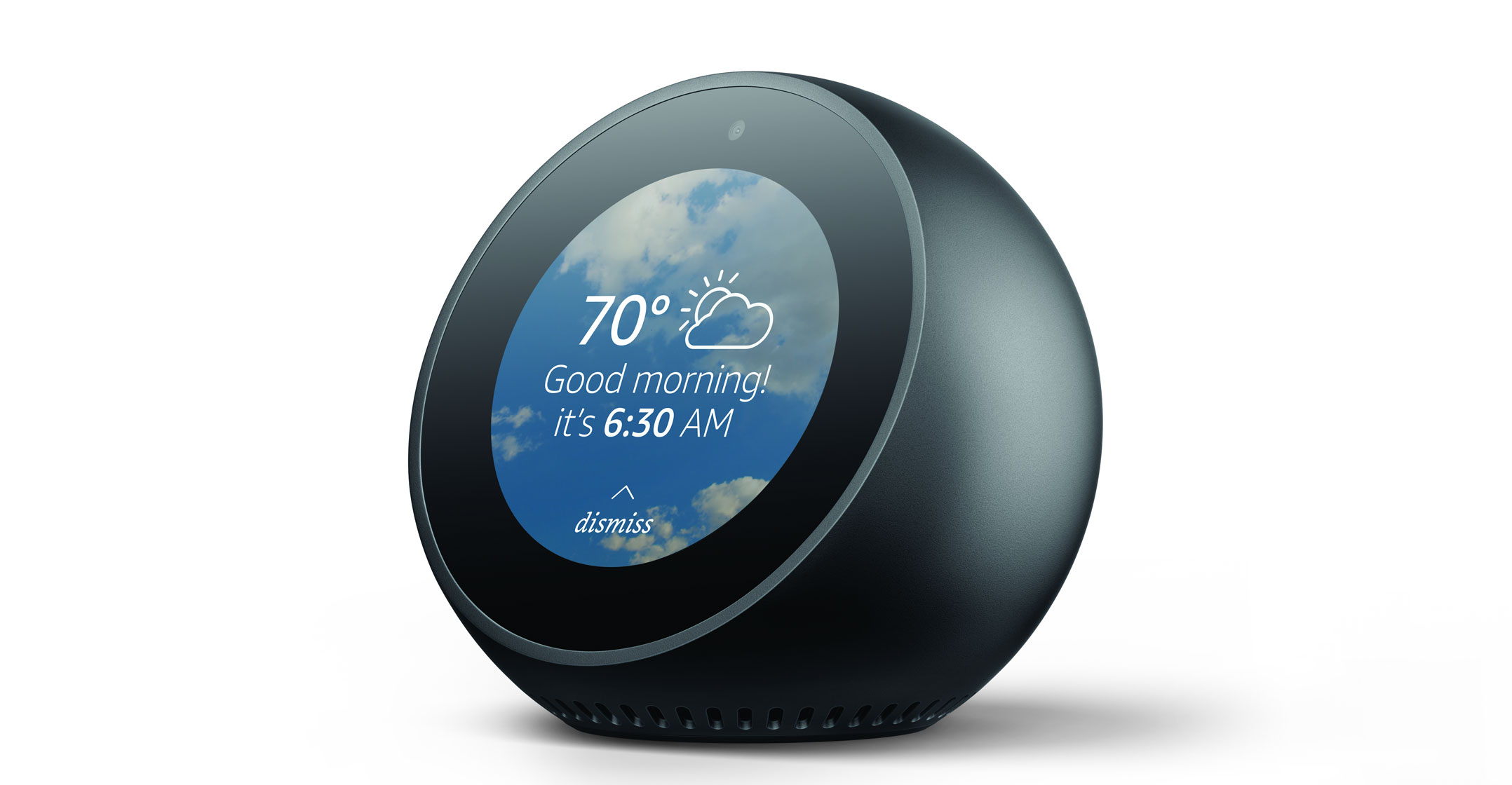
    The new Amazon Connect Echo

    But it was also true that the owners of the dominant operating systems didn’t take all the spoils. Software programs made for Windows and then the Web made PCs useful. Later, apps made by companies other than Apple or Google made smartphones useful. An iPhone is not so handy without Google Maps, Snapchat, Pandora and a Web browser open to the wide Internet.

    But a Google Home speaker or an army of Amazon-powered access points in the house can be self-contained worlds. It is getting harder to imagine this emerging model of computing will produce neutral platforms that offer all comers equal footing.  — Analysis by Shira Ovide, (c) 2017 Bloomberg LP

    Follow TechCentral on Google News Add TechCentral as your preferred source on Google


    Amazon Apple Google top
    WhatsApp YouTube
    Share. Facebook Twitter LinkedIn WhatsApp Telegram Email Copy Link
    Previous ArticleVodacom faces probe into ‘abuse of dominance’
    Next Article Vodacom competition probe ‘unusual’

    Related Posts

    Quantum computers are coming for bitcoin

    Quantum computers are coming for bitcoin

    9 July 2026
    The author, Fanie van Rooyen

    South Africa can still catch the AI wave – here’s how

    7 July 2026
    World's first teen social media ban is failing

    World’s first teen social media ban is failing

    7 July 2026
    Company News
    Rain supercharges 5G with Huawei

    Rain supercharges 5G with Huawei

    10 July 2026
    Africa's data centres: AI, edge computing and new energy demands - Vertiv OADC Open Access Data Centres

    Africa’s data centres: AI, edge computing and new energy demands

    9 July 2026
    The best way to automate customer engagement using AI and WhatsApp - CM.com

    The best way to automate customer engagement using AI and WhatsApp

    9 July 2026
    Opinion
    The author, Fanie van Rooyen

    South Africa can still catch the AI wave – here’s how

    7 July 2026
    The author, Fanie van Rooyen

    The AI utopia South Africa can’t afford

    1 July 2026
    The author, Jannie van Zyl

    South Africa’s broadband future is being decided in orbit, not in Pretoria

    30 June 2026

    Subscribe to Updates

    Get the best South African technology news and analysis delivered to your e-mail inbox every morning.

    Latest Posts
    China nets a falling rocket in reusability race with SpaceX

    China nets a falling rocket in reusability race with SpaceX

    10 July 2026
    Battlefield tech could save lives on South Africa's roads - Dithoto Modungwa

    Battlefield tech could save lives on South Africa’s roads

    10 July 2026
    Customers prefer ChatGPT to your company's AI chatbot

    Customers prefer ChatGPT to your company’s AI chatbot

    10 July 2026
    Rain supercharges 5G with Huawei

    Rain supercharges 5G with Huawei

    10 July 2026
    © 2009 - 2026 NewsCentral Media
    Built and maintained by Chronon
    • Cookie policy (ZA)
    • TechCentral – privacy and Popia

    Type above and press Enter to search. Press Esc to cancel.

    Manage consent

    TechCentral uses cookies to enhance its offerings. Consenting to these technologies allows us to serve you better. Not consenting or withdrawing consent may adversely affect certain features and functions of the website.

    Functional Always active
    The technical storage or access is strictly necessary for the legitimate purpose of enabling the use of a specific service explicitly requested by the subscriber or user, or for the sole purpose of carrying out the transmission of a communication over an electronic communications network.
    Preferences
    The technical storage or access is necessary for the legitimate purpose of storing preferences that are not requested by the subscriber or user.
    Statistics
    The technical storage or access that is used exclusively for statistical purposes. The technical storage or access that is used exclusively for anonymous statistical purposes. Without a subpoena, voluntary compliance on the part of your Internet Service Provider, or additional records from a third party, information stored or retrieved for this purpose alone cannot usually be used to identify you.
    Marketing
    The technical storage or access is required to create user profiles to send advertising, or to track the user on a website or across several websites for similar marketing purposes.
    • Manage options
    • Manage services
    • Manage {vendor_count} vendors
    • Read more about these purposes
    View preferences
    • {title}
    • {title}
    • {title}