Close Menu
TechCentralTechCentral

    Subscribe to the newsletter

    Get the best South African technology news and analysis delivered to your e-mail inbox every morning.

    Facebook X (Twitter) YouTube LinkedIn
    WhatsApp Facebook X (Twitter) LinkedIn YouTube
    TechCentralTechCentral
    • News

      Africa’s start-ups are building on Chinese AI

      23 September 2026
      London's IPO drought could be broken by an African fintech - Airtel Money

      London’s IPO drought could be broken by an African fintech

      23 September 2026
      Altron earnings climb as platforms carry the group

      Altron earnings climb as platforms carry the group

      23 September 2026
      The new battle over the desktop

      The new battle over the desktop

      23 September 2026
      Cell C boss buys into his own turnaround - Jorge Mendes

      Cell C boss buys into his own turnaround

      22 September 2026
    • World
      Anthropic weighs new model launch to blunt OpenAI's Astra surge - Anthropic CEO Dario Amodei and OpenAI CEO Sam Altman

      Anthropic weighs new model launch to blunt OpenAI’s Astra surge

      21 September 2026
      Hackers hack hackers: ShinyHunters seizes cl0p's dark web site

      Hackers hack hackers as dark web feud erupts

      21 September 2026
      Film piracy malware is reaching corporate machines

      Film piracy malware is reaching corporate machines

      21 September 2026
      Crypto's big bet fails as US senate sinks Clarity Act

      Crypto’s big bet fails as US senate sinks Clarity Act

      16 September 2026
      'This is not circular': Jensen Huang defends $3.5-billion MediaTek deal

      ‘This is not circular’: Jensen Huang defends $3.5-billion MediaTek deal

      2 September 2026
    • In-depth
      Meta to the AI industry: slow down without us - Mark Zuckerberg

      Meta to the AI industry: slow down without us

      16 September 2026
      Google DeepMind CEO Demis Hassabis. Image: John Sears

      The plan to stop AI from breaking the world

      16 July 2026
      The internet has a Strait of Hormuz problem

      The internet has a Strait of Hormuz problem

      15 July 2026
      AI boom sparks rally, frenzy and fear

      AI boom sparks rally, frenzy and fear

      11 June 2026
      Every plug-in hybrid on sale in South Africa, ranked by price - Lamborghini Temerario

      Every plug-in hybrid on sale in South Africa, ranked by price

      7 June 2026
    • TCS
      TCS | Octotel's Trevor van Zyl on the fibre merger question

      TCS | Octotel’s Trevor van Zyl on the MetroFibre merger question

      16 September 2026
      Meet the CIO | Shoprite's Chris Shortt on what a supermarket becomes

      Meet the CIO | Shoprite’s Chris Shortt on what a supermarket becomes

      9 September 2026
      Rubicon's EV charging network is profitable - and growing fast - Watts & Wheels

      Rubicon’s EV charging network is profitable – and growing fast

      8 September 2026
      Winstone Jordaan on building a national EV charging network

      Winstone Jordaan on building a national EV charging network

      2 September 2026
      Watts & Wheels S1E8: 'Tesla lands in Africa, just not here'

      Watts & Wheels S1E8: ‘Tesla lands in Africa, just not here’

      24 August 2026
    • Opinion
      Regulating AI: apply the laws we have first - Dirk de Vos

      Regulating AI: apply the laws we have first

      21 September 2026
      The end is nigh, and the shares go on sale in October - Duncan McLeod

      The end is nigh, and the shares go on sale in October

      14 September 2026
      The fragile joint in the Capitec machine - Pambos Soteriades

      The R197-billion market the banks can’t reach

      25 August 2026
      South African tech's compounding debt problem - Jannie van Zyl

      Management consulting as we know it is over

      21 August 2026
      South African tech's compounding debt problem - Jannie van Zyl

      The most dangerous customer is the quiet one

      10 August 2026
    • Company Hubs
      • 1Stream
      • Africa Data Centres
      • AfriGIS
      • Altron Digital Business
      • Altron Document Solutions
      • Altron Group
      • Arctic Wolf
      • Ascent Technology
      • AvertITD
      • BBD
      • Braintree
      • CallMiner
      • CambriLearn
      • CM.com
      • Contactable
      • CYBER1 Solutions
      • Digicloud Africa
      • Digimune
      • Domains.co.za
      • ESET
      • Euphoria Telecom
      • HOSTAFRICA
      • Incredible Business
      • iONLINE
      • IQbusiness
      • Iris Network Systems
      • Kaspersky
      • LSD Open
      • Mitel
      • NEC XON
      • Netstar
      • Network Platforms
      • Next DLP
      • Ovations
      • Paracon
      • Paratus
      • Q-KON
      • SevenC
      • SkyWire
      • Solid8 Technologies
      • Telit Cinterion
      • Telviva
      • Tenable
      • Vertiv
      • Videri Digital
      • Vodacom Business
      • Vox
      • Wipro
      • Workday
      • XLink
    • Sections
      • AI and machine learning
      • Banking
      • Broadcasting and Media
      • Cloud services
      • Contact centres and CX
      • Cryptocurrencies
      • Education and skills
      • Electronics and hardware
      • Energy and sustainability
      • Enterprise software
      • Financial services
      • HealthTech
      • Information security
      • Internet and connectivity
      • Internet of Things
      • Investment
      • IT services
      • Lifestyle
      • Policy and regulation
      • Public sector
      • Retail and e-commerce
      • Satellite communications
      • Science
      • SMEs and start-ups
      • Social media
      • Talent and leadership
      • Telecoms
      • Watts & Wheels
    • Events
    • Advertise
    TechCentralTechCentral
    Home » Sections » Telecoms » Why 2G will outlast 3G in South Africa

    Why 2G will outlast 3G in South Africa

    The sequencing reflects how stubbornly low-end devices and machine-to-machine sensors remain tied to legacy connectivity.
    By Nkosinathi Ndlovu4 May 2026
    Twitter LinkedIn Facebook WhatsApp Email Telegram Copy Link
    Get breaking news on WhatsApp

    Why 2G will outlast 3G in South Africa

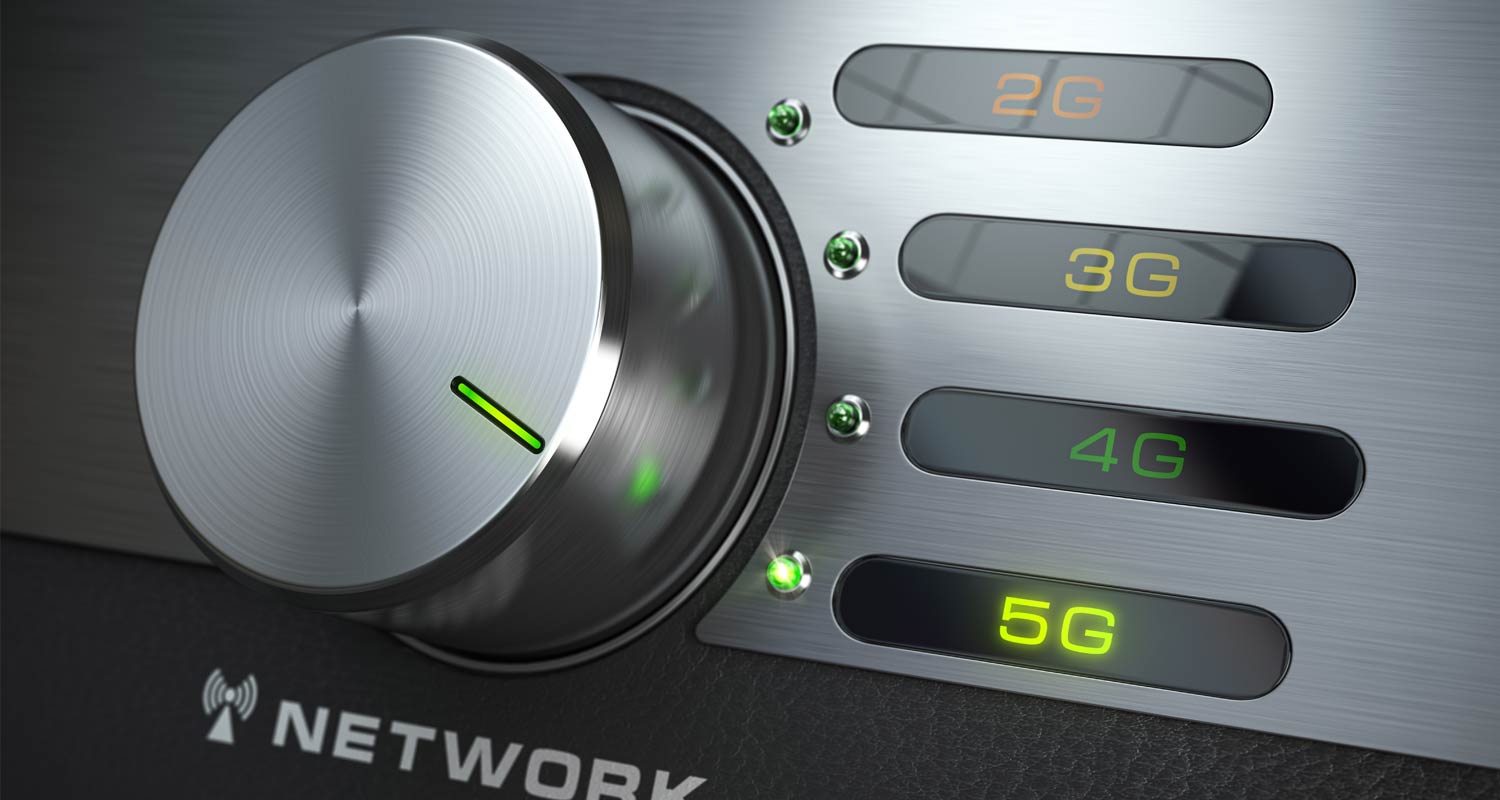
    Vodacom expects to switch off its 3G mobile network before its 2G one, in a counterintuitive sequencing that reflects how stubbornly the cheapest end of the device market remains tied to legacy connectivity.

    “The current subscriber trajectory suggests that demand for 3G device network support is lower than the demand for 2G devices on our network,” Vodacom spokesman Byron Kennedy told TechCentral. “In addition, most 3G devices are capable of falling back to the 2G network. If this trend is sustained, then it is more likely that the 3G network will be sunset first.”

    2G mobile technology was first introduced commercially in 1991, when Finland’s Radiolinja launched the world’s first GSM network. It was a watershed moment, marking the shift from analogue (1G) to digital cellular communications and bringing with it SMS, encrypted calls and basic data services.

    Over the next five to 10 years, the network will become increasingly data-centric, anchored on 4G and 5G

    3G followed roughly a decade later, with Japan’s NTT DoCoMo launching the first commercial wideband CDMA-based 3G network in October 2001, ushering in mobile internet access at speeds that made services like video calling and mobile web browsing viable for the first time. South Africa’s mobile operators launched 2G GSM networks in 1994 and rolled out 3G from 2004 onwards.

    The signal from Vodacom about its 3G shutdown plans comes nearly a year after communications minister Solly Malatsi scrapped the regulatory deadline for switching off 2G and 3G, handing the timing back to operators. None of them can turn off legacy networks while millions of customers and machine-to-machine devices still depend on them – and Vodacom said it could not predict how long 2G in particular would remain in service.

    Binding constraint

    The binding constraint is the price of 4G handsets. A recent report commissioned by the Development Bank of Southern Africa found that a “decently capable” 4G smartphone costs more than 16% of South Africa’s basic minimum wage – the equivalent of about R800 at current minimum-wage levels.

    At the report’s launch, Pieter Grootes of consultancy Networks Anonymous said that when consumers must choose between a basic need such as electricity and a more expensive device, the former wins.

    Read: Operators to decide 2G/3G shutdown timeline`

    Both government and industry have moved on price. Following a lobby led by Malatsi, national treasury in February 2025 scrapped the ad valorem (luxury) duty on smartphones costing R2 500 or less. Olebogeng Ramatlhodi, indirect tax leader at Deloitte South Africa, called it a useful first step at the time but argued for the removal of VAT on the same bracket of devices and a subsidy for qualifying buyers.

    Vodacom in September 2024 introduced a low-cost 4G smartphone at R249. MTN followed in May 2025 with a R99 subsidised device aimed at 1.2-million customers – a programme then-MTN South Africa CEO Charles Molapisi told TechCentral was directly tied to migrating subscribers off legacy networks so the operator could simplify its network topology.
    Icasa's infrastructure database plan raises national security alarm

    Handsets are not the only constraint. Although none of the operators queried would give exact numbers, they confirmed a long tail of tracking and telemetry devices reliant on 2G – from wildlife collars to vehicle trackers and factory sensors.

    “2G still supports essential services such as basic voice and SMS at a very affordable device price point and certain legacy machine-to-machine operations,” Cell C said. “These devices are often deployed in remote or hard-to-access locations and are designed to remain in service for extended periods. As a result, migration needs to be managed carefully and on a customer-to-customer basis.”

    2G still supports essential services such as basic voice and SMS at a very affordable price

    MTN South Africa said 2G chipsets remain widely used for their affordability, low power consumption and low data requirements, but that demand in the IoT market is shifting to LTE-based technologies. The operator has deployed a narrowband-IoT coverage layer on its 4G network. Vodacom offers similar NB-IoT support.

    As the number of devices on legacy networks shrinks, operators will re-farm the spectrum for 4G and 5G – and save on power and network management costs in the process. Vodacom said its future network profile was competitor-sensitive but expects 5G terminals to overtake 4G over time. Cell C said it was too early to predict its long-term network shape.

    Read: Telkom to ditch 3G network after dumping 2G

    “MTN operates a multi-generation network today to meet coverage and customer needs,” MTN South Africa said. “Over the next five to 10 years, the network will become increasingly data-centric, anchored on 4G and 5G. As usage declines and customers migrate, legacy networks are expected to be phased out.”  – © 2026 NewsCentral Media

    Get breaking news from TechCentral on WhatsApp. Sign up here.

    Add TechCentral as a preferred source on GoogleFollow TechCentral on Google NewsGet breaking news on WhatsApp


    Cell C Charles Molapisi MTN MTN South Africa Olebogeng Ramatlhodi Vodacom Vodacom South Africa
    WhatsApp YouTube
    Share. Facebook Twitter LinkedIn WhatsApp Telegram Email Copy Link
    Previous ArticleTCS | The Cape Town start-up listening for TB with AI
    Next Article How Panther Lake put Intel back in contention

    Related Posts

    Cell C boss buys into his own turnaround - Jorge Mendes

    Cell C boss buys into his own turnaround

    22 September 2026
    Vumatel operating profit jumps 57% as the Vodacom deal lands

    Vumatel operating profit jumps 57% as the Vodacom deal lands

    18 September 2026
    SA's two biggest MVNOs, two very different strategies - FNB Connect Capitec Connect

    Capitec and FNB are running the same MVNO playbook

    18 September 2026
    Company News
    Pinnacle takes its channel to Mauritius for TechScape 2026

    Pinnacle takes its channel to Mauritius for TechScape 2026

    23 September 2026
    Why true customer enablement starts on the inside - Backspace Technologies COO Graeme Thomson

    Why true customer enablement starts on the inside

    23 September 2026
    Barcode printing: Argox changes the game - Kemtek

    Barcode printing: Argox changes the game

    23 September 2026
    Opinion
    Regulating AI: apply the laws we have first - Dirk de Vos

    Regulating AI: apply the laws we have first

    21 September 2026
    The end is nigh, and the shares go on sale in October - Duncan McLeod

    The end is nigh, and the shares go on sale in October

    14 September 2026
    The fragile joint in the Capitec machine - Pambos Soteriades

    The R197-billion market the banks can’t reach

    25 August 2026

    Subscribe to Updates

    Get the best South African technology news and analysis delivered to your e-mail inbox every morning.

    Latest Posts
    Pinnacle takes its channel to Mauritius for TechScape 2026

    Pinnacle takes its channel to Mauritius for TechScape 2026

    23 September 2026

    Africa’s start-ups are building on Chinese AI

    23 September 2026
    Why true customer enablement starts on the inside - Backspace Technologies COO Graeme Thomson

    Why true customer enablement starts on the inside

    23 September 2026
    London's IPO drought could be broken by an African fintech - Airtel Money

    London’s IPO drought could be broken by an African fintech

    23 September 2026
    © 2009 - 2026 NewsCentral Media
    Built and maintained by Chronon
    • Cookie policy (ZA)
    • TechCentral – privacy and Popia

    Type above and press Enter to search. Press Esc to cancel.

    Manage consent

    TechCentral uses cookies to enhance its offerings. Consenting to these technologies allows us to serve you better. Not consenting or withdrawing consent may adversely affect certain features and functions of the website.

    Functional Always active
    The technical storage or access is strictly necessary for the legitimate purpose of enabling the use of a specific service explicitly requested by the subscriber or user, or for the sole purpose of carrying out the transmission of a communication over an electronic communications network.
    Preferences
    The technical storage or access is necessary for the legitimate purpose of storing preferences that are not requested by the subscriber or user.
    Statistics
    The technical storage or access that is used exclusively for statistical purposes. The technical storage or access that is used exclusively for anonymous statistical purposes. Without a subpoena, voluntary compliance on the part of your Internet Service Provider, or additional records from a third party, information stored or retrieved for this purpose alone cannot usually be used to identify you.
    Marketing
    The technical storage or access is required to create user profiles to send advertising, or to track the user on a website or across several websites for similar marketing purposes.
    • Manage options
    • Manage services
    • Manage {vendor_count} vendors
    • Read more about these purposes
    View preferences
    • {title}
    • {title}
    • {title}