Close Menu
TechCentralTechCentral

    Subscribe to the newsletter

    Get the best South African technology news and analysis delivered to your e-mail inbox every morning.

    Facebook X (Twitter) YouTube LinkedIn
    WhatsApp Facebook X (Twitter) LinkedIn YouTube
    TechCentralTechCentral
    • News
      MultiChoice scraps annual DStv price hikes for 2026 - David Mignot

      MultiChoice scraps annual DStv price hike

      20 February 2026
      What Gen Z really thinks about the tech world it inherited - Tinashe Mazodze

      What Gen Z really thinks about the tech world it inherited

      20 February 2026
      Showmax 'can't continue' in its current form

      Showmax ‘can’t continue’ in its current form

      20 February 2026
      Free Market Foundation slams treasury's proposed gambling tax

      Free Market Foundation slams treasury’s proposed gambling tax

      20 February 2026
      South Africa's dynamic spectrum breakthrough - Paul Colmer

      South Africa’s dynamic spectrum breakthrough

      20 February 2026
    • World
      Prominent Southern African journalist targeted with Predator spyware

      Prominent Southern African journalist targeted with Predator spyware

      18 February 2026
      More drama in Warner Bros tug of war

      More drama in Warner Bros tug of war

      17 February 2026
      Russia bans WhatsApp

      Russia bans WhatsApp

      12 February 2026
      EU regulators take aim at WhatsApp

      EU regulators take aim at WhatsApp

      9 February 2026
      Musk hits brakes on Mars mission

      Musk hits brakes on Mars mission

      9 February 2026
    • In-depth
      How liberalisation is rewiring South Africa's power sector

      How liberalisation is rewiring South Africa’s power sector

      21 January 2026
      The top-performing South African tech shares of 2025

      The top-performing South African tech shares of 2025

      12 January 2026
      Digital authoritarianism grows as African states normalise internet blackouts

      Digital authoritarianism grows as African states normalise internet blackouts

      19 December 2025
      TechCentral's South African Newsmakers of 2025

      TechCentral’s South African Newsmakers of 2025

      18 December 2025
      Black Friday goes digital in South Africa as online spending surges to record high

      Black Friday goes digital in South Africa as online spending surges to record high

      4 December 2025
    • TCS
      Watts & Wheels S1E4: 'We drive an electric Uber'

      Watts & Wheels S1E4: ‘We drive an electric Uber’

      10 February 2026
      TCS+ | How Cloud On Demand is helping SA businesses succeed in the cloud - Xhenia Rhode, Dion Kalicharan

      TCS+ | Cloud On Demand and Consnet: inside a real-world AWS partner success story

      30 January 2026
      Watts & Wheels S1E4: 'We drive an electric Uber'

      Watts & Wheels S1E3: ‘BYD’s Corolla Cross challenger’

      30 January 2026
      Watts & Wheels S1E4: 'We drive an electric Uber'

      Watts & Wheels S1E2: ‘China attacks, BMW digs in, Toyota’s sublime supercar’

      23 January 2026

      TCS+ | Why cybersecurity is becoming a competitive advantage for SA businesses

      20 January 2026
    • Opinion
      A million reasons monopolies don't work - Duncan McLeod

      A million reasons monopolies don’t work

      10 February 2026
      The author, Business Leadership South Africa CEO Busi Mavuso

      Eskom unbundling U-turn threatens to undo hard-won electricity gains

      9 February 2026
      South Africa's skills advantage is being overlooked at home - Richard Firth

      South Africa’s skills advantage is being overlooked at home

      29 January 2026
      Why Elon Musk's Starlink is a 'hard no' for me - Songezo Zibi

      Why Elon Musk’s Starlink is a ‘hard no’ for me

      26 January 2026
      A million reasons monopolies don't work - Duncan McLeod

      South Africa’s new fibre broadband battle

      20 January 2026
    • Company Hubs
      • Africa Data Centres
      • AfriGIS
      • Altron Digital Business
      • Altron Document Solutions
      • Altron Group
      • Arctic Wolf
      • AvertITD
      • Braintree
      • CallMiner
      • CambriLearn
      • CYBER1 Solutions
      • Digicloud Africa
      • Digimune
      • Domains.co.za
      • ESET
      • Euphoria Telecom
      • Incredible Business
      • iONLINE
      • IQbusiness
      • Iris Network Systems
      • LSD Open
      • Mitel
      • NEC XON
      • Netstar
      • Network Platforms
      • Next DLP
      • Ovations
      • Paracon
      • Paratus
      • Q-KON
      • SevenC
      • SkyWire
      • Solid8 Technologies
      • Telit Cinterion
      • Tenable
      • Vertiv
      • Videri Digital
      • Vodacom Business
      • Wipro
      • Workday
      • XLink
    • Sections
      • AI and machine learning
      • Banking
      • Broadcasting and Media
      • Cloud services
      • Contact centres and CX
      • Cryptocurrencies
      • Education and skills
      • Electronics and hardware
      • Energy and sustainability
      • Enterprise software
      • Financial services
      • Information security
      • Internet and connectivity
      • Internet of Things
      • Investment
      • IT services
      • Lifestyle
      • Motoring
      • Public sector
      • Retail and e-commerce
      • Satellite communications
      • Science
      • SMEs and start-ups
      • Social media
      • Talent and leadership
      • Telecoms
    • Events
    • Advertise
    TechCentralTechCentral
    Home » Editor's pick » Why Apple flopped in the living room

    Why Apple flopped in the living room

    By Agency Staff16 February 2017
    Twitter LinkedIn Facebook WhatsApp Email Telegram Copy Link
    News Alerts
    WhatsApp

    Earlier this month, Apple poached the chief of Amazon’s Fire TV unit to run its television operations. Timothy D Twerdhal brings hardware and content experience to his new gig, and his hiring suggests a renewed focus on the Apple TV set-top box.

    Twerdhal’s arrival comes as the company tests a new, fifth-generation Apple TV that it may release as soon as this year. Internally codenamed “J105”, the new box will be capable of streaming ultra-high-definition 4K and more vivid colours, according to people familiar with the plans.

    The features will probably boost Apple TV sales as consumers increasingly upgrade to 4K television sets, but those enhancements alone probably aren’t enough to turn the gadget into a groundbreaking, iPhone-calibre product. Time and again, the people say, Apple engineers have been forced to compromise on Apple’s vision of revolutionising the living room.

    Early on, the Apple TV was going to replace the clunky set-top boxes from the cable companies and stream live television. It never happened. The team debated bundling a gaming controller with the current model to better compete with Microsoft’s Xbox and Sony’s PlayStation. That didn’t happen either. Originally, viewers were going to be able to shout commands from the couch to the Apple TV. Instead they must talk to the remote control.

    Apple TV begs the question: why does Apple do hobbies? Either do it right or don’t do it at all

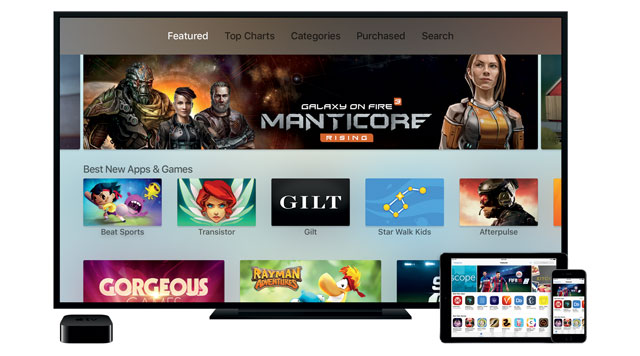
    Apple has essentially settled for turning the television set into a giant iPhone: a cluster of apps with a store. “That’s not what I signed up for,” says one of the people, who requested anonymity to talk freely about internal company matters. “I signed up for revolutionary. We got evolutionary.”

    Gene Munster, who covered Apple for more than a decade as a Piper Jaffray analyst and now runs Loup Ventures, echoes the criticism. “Apple TV begs the question: why does Apple do hobbies?” he says. “Either do it right or don’t do it at all.”

    Apple doesn’t disclose how many Apple TVs it sells, but chief financial officer Luca Maestri acknowledged in a recent interview that sales decreased year over year from the 2015 holiday season to this past 2016 holiday period. The research firm eMarketer says the fourth-generation Apple TV has steadily lost market share since its release in the fall of 2015; in January just 11,9% of connected television customers were using it, the research firm says, down from 12,5% in September. In part, the slide reflects competition from Amazon and Roku, whose boxes do the same and more for less money.

    While the Apple TV itself isn’t critical to Apple’s bottom line, it’s central to the company’s services business because increasingly the living room is where consumers buy, rent and consume media. Services represented almost US$25bn in revenue for Apple in the last fiscal year, making it the company’s second biggest category after the iPhone.

    Apple declined to comment or make Twerdhal available for an interview.

    The Apple TV’s history is a study in gradualism. Previewed by Steve Jobs in 2006, the first box was designed simply to stream iTunes video from a Mac to a TV set. The next version, launched in the fall of 2010, let users stream content from the Internet. The latest box was announced in September 2015, a few months later than originally scheduled. Widely considered an improvement by consumers and product reviewers, the Apple TV features the App Store, voice control and a glass remote that enables motion-controlled gaming, which for example lets players use the remote like a steering wheel for a car-racing title.

    But the latest Apple TV sells for $149, more than twice as much as its predecessor, $60 more than Amazon’s Fire TV and $20 more than the priciest Roku. What’s more, little about the viewing experience has changed. Apple TV users still have to buy an individual episode via the iTunes Store, pay extra for services like Hulu, or download an app tied to a particular channel and log in with an existing cable subscription.

    The current model was originally supposed to replace the cable box altogether. Early prototypes had connectors for a coaxial port, which sends the live cable TV signal to televisions. Under this plan, Apple was to control the interface, collect fees from viewers and then share most of the revenue with the cable and media companies.

    A new TV app was to be the main interface for accessing live shows and sports. But when the app was finally launched in December, it merely let viewers access their iTunes video library and the iTunes Store, functions that already existed on the Apple TV. The key new element is a “Watch Now” panel, a Netflix-style repository of favourite movies or shows and recommendations for new ones.

    Some Apple engineers now regret not making it possible to tailor the opening screen to viewer preferences — classic movies for the family film buff, say, or food shows for the budding teenage chef. The idea never made it onto the engineering roadmap, and adding it now would require a lot of resources.

    That’s not what I signed up for. I signed up for revolutionary. We got evolutionary

    Apple had a backup plan if it wasn’t able to replace the existing cable box — the much-ballyhooed “skinny bundle”, a stripped-down Web service that would let viewers choose channels rather than paying for ones they don’t watch. Apple proposed bundling America’s four main broadcast networks and a handful of cable channels as well as on-demand TV shows and movies for $30-$40/month. The media companies were willing to engage with Apple due to concerns about the rise of online services like Netflix and the cord-cutting phenomenon.

    But the two sides stumbled over cost, the composition of the bundles and negotiating tactics. The media companies blamed Apple’s arrogance; Apple blamed the media companies’ inflexibility. In the end, the talks fell apart, leaving Apple to tout stripped-down bundles from Sony PlayStation and DirecTV. After the negotiations foundered, Apple’s hardware team ditched the coaxial port.

    The Apple TV’s software is also less ambitious than originally envisioned. The current model features an iPhone-like app grid, but designers had prototyped more novel interfaces. One idea, dubbed “Intentions” internally, put the four tabs in the centre of the screen: three for the Apple TV’s main content types (video, music and gaming) and one for everything else. Another idea: letting viewers pull up previews of content by hovering on each icon (a feature currently reserved for only a few of Apple’s bundled apps).

    To a certain extent, the Apple TV is handcuffed by its parent’s addiction to fat margins. Apple is constitutionally allergic to losing money on a product — even if it can make up the difference by selling content. Some engineers initially believed the current set-top box should be capable of streaming 4K video, which offers about twice the resolution as the previous generation of high-definition TV. But 4K requires a faster processor, which would have pushed up manufacturing costs. That would have forced Apple to accept a lower margin or charge more than the market would bear. Apple settled for a lesser chip that debuted back in 2014 — and no 4K. Likewise, not bundling a gaming controller was partially a cost-driven decision.

    The arrival of Twerdhal, the former Amazon Fire TV chief, will free up his predecessor, Pete Distad, to try and hammer out content deals and potentially revive the skinny bundle. Distad joined Apple in 2013 after serving as a senior vice-president of content distribution at video streaming service Hulu. For his part, Twerdhal worked at Netflix and Roku, before joining Amazon.

    “The Amazon hire shows Apple is mixing things up, looking to make improvements,” Munster says. “I think they realise it is drifting sideways at this point.” Unless the company fixes the Apple TV, he says, it risks “losing the living room.”  — (c) 2017 Bloomberg LP

    • Reported with assistance from Lucas Shaw

    Follow TechCentral on Google News Add TechCentral as your preferred source on Google


    Amazon Apple Gene Munster Loup Ventures Luca Maestri Microsoft Pete Distad Piper Jaffary Sony Timothy D Twerdhal
    WhatsApp YouTube
    Share. Facebook Twitter LinkedIn WhatsApp Telegram Email Copy Link
    Previous ArticleWhy the rand is defying gravity
    Next Article Business Connexion rebrands as BCX

    Related Posts

    AI chatbots are coming to Apple CarPlay

    AI chatbots are coming to Apple CarPlay

    8 February 2026
    From stocks to crypto, markets reel as AI doubts grow

    From stocks to crypto, markets reel as AI doubts grow

    6 February 2026
    Google goes from laggard to leader in AI

    Google goes from laggard to leader in AI

    5 February 2026
    Company News
    Service is everyone's problem now - and that's exactly why the Atlassian Service Collection matters

    Service is everyone’s problem now – why the Atlassian Service Collection matters

    20 February 2026
    Customers have new expectations. Is your CX ready? 1Stream

    Customers have new expectations. Is your CX ready?

    19 February 2026
    South Africa's cybersecurity challenge is not a tool problem - Nicholas Applewhite, Trinexia South Africa

    South Africa’s cybersecurity challenge is not a tool problem

    19 February 2026
    Opinion
    A million reasons monopolies don't work - Duncan McLeod

    A million reasons monopolies don’t work

    10 February 2026
    The author, Business Leadership South Africa CEO Busi Mavuso

    Eskom unbundling U-turn threatens to undo hard-won electricity gains

    9 February 2026
    South Africa's skills advantage is being overlooked at home - Richard Firth

    South Africa’s skills advantage is being overlooked at home

    29 January 2026

    Subscribe to Updates

    Get the best South African technology news and analysis delivered to your e-mail inbox every morning.

    Latest Posts
    MultiChoice scraps annual DStv price hikes for 2026 - David Mignot

    MultiChoice scraps annual DStv price hike

    20 February 2026
    What Gen Z really thinks about the tech world it inherited - Tinashe Mazodze

    What Gen Z really thinks about the tech world it inherited

    20 February 2026
    Showmax 'can't continue' in its current form

    Showmax ‘can’t continue’ in its current form

    20 February 2026
    Free Market Foundation slams treasury's proposed gambling tax

    Free Market Foundation slams treasury’s proposed gambling tax

    20 February 2026
    © 2009 - 2026 NewsCentral Media
    • Cookie policy (ZA)
    • TechCentral – privacy and Popia

    Type above and press Enter to search. Press Esc to cancel.

    Manage consent

    TechCentral uses cookies to enhance its offerings. Consenting to these technologies allows us to serve you better. Not consenting or withdrawing consent may adversely affect certain features and functions of the website.

    Functional Always active
    The technical storage or access is strictly necessary for the legitimate purpose of enabling the use of a specific service explicitly requested by the subscriber or user, or for the sole purpose of carrying out the transmission of a communication over an electronic communications network.
    Preferences
    The technical storage or access is necessary for the legitimate purpose of storing preferences that are not requested by the subscriber or user.
    Statistics
    The technical storage or access that is used exclusively for statistical purposes. The technical storage or access that is used exclusively for anonymous statistical purposes. Without a subpoena, voluntary compliance on the part of your Internet Service Provider, or additional records from a third party, information stored or retrieved for this purpose alone cannot usually be used to identify you.
    Marketing
    The technical storage or access is required to create user profiles to send advertising, or to track the user on a website or across several websites for similar marketing purposes.
    • Manage options
    • Manage services
    • Manage {vendor_count} vendors
    • Read more about these purposes
    View preferences
    • {title}
    • {title}
    • {title}