Close Menu
TechCentralTechCentral

    Subscribe to the newsletter

    Get the best South African technology news and analysis delivered to your e-mail inbox every morning.

    Facebook X (Twitter) YouTube LinkedIn
    WhatsApp Facebook X (Twitter) LinkedIn YouTube
    TechCentralTechCentral
    • News
      Nedbank hires MTN's former tech chief as group CIO - Nikos Angelopoulos

      Nedbank hires MTN’s former tech chief as group CIO

      31 July 2026
      Eskom's diesel bill falls 86% as breakdowns hit eight-year low

      Eskom’s diesel bill falls 86% as breakdowns hit eight-year low

      31 July 2026
      Ramaphosa signs off on taking the grid away from Eskom

      Ramaphosa signs off on taking the grid away from Eskom

      31 July 2026
      Microsoft just had the biggest day in stock market history

      Microsoft just had the biggest day in stock market history

      31 July 2026
      MTN Nigeria's growth engine stalled in second quarter - Karl Toriola

      MTN Nigeria’s growth engine stalled in second quarter

      31 July 2026
    • World
      Meta AI will now tell parents if their teen is in crisis

      Meta AI will now tell parents if their teen is in crisis

      17 July 2026
      IBM shares crash 25% as AI upends software spending - Arvind Krishna

      IBM shares crash 25% as AI upends software spending

      15 July 2026
      Jony Ive's first OpenAI device: an AI smart speaker - Jony Ive and Sam Altman

      Jony Ive’s first OpenAI device: an AI smart speaker

      15 July 2026
      Stripe, Advent in talks to buy PayPal for $53-billion

      Stripe, Advent in talks to buy PayPal for $53-billion

      15 July 2026
      Memory crisis sends smartphone market into steep decline

      Memory crisis sends smartphone market into steep decline

      13 July 2026
    • In-depth
      The plan to stop AI from breaking the world - Google DeepMind CEO Demis Hassabis. Image: John Sears

      The plan to stop AI from breaking the world

      16 July 2026
      The internet has a Strait of Hormuz problem

      The internet has a Strait of Hormuz problem

      15 July 2026
      AI boom sparks rally, frenzy and fear

      AI boom sparks rally, frenzy and fear

      11 June 2026
      Every plug-in hybrid on sale in South Africa, ranked by price - Lamborghini Temerario

      Every plug-in hybrid on sale in South Africa, ranked by price

      7 June 2026
      What Wi-Fi 8 will mean for wireless networks

      What Wi-Fi 8 will mean for wireless networks

      1 June 2026
    • TCS
      TCS+ | Why South African workers must become supervisors of digital labour - Accelera Digital Group Cliff de Wit

      TCS+ | Why South African workers must become supervisors of digital labour

      31 July 2026
      TCS | Rapid deployment rules can't work without municipalities: ACT - Nomvuyiso Batyi

      TCS | Icasa’s rules skip the real bottleneck: ACT

      30 July 2026
      TCS+ | iStore Business on why Apple makes sense for SMEs - Sudesh Pillay and Tamia Nontsikelelo

      TCS+ | iStore Business on why Apple makes sense for SMEs

      30 July 2026
      TCS+ | A smarter approach to cloud for South African businesses - Joel Chacko and Jonathan Oaker

      TCS+ | A smarter approach to cloud for South African businesses

      28 July 2026
      TCS | How Optasia lends billions to people banks can't see - Salvador Anglada

      TCS | How Optasia lends billions to people banks can’t see

      23 July 2026
    • Opinion
      The author, Jannie van Zyl

      Selling vapour is corporate suicide in slow motion

      16 July 2026
      Brazil's online gambling crackdown is a lesson for South Africa

      How Amazon outmanoeuvred Starlink in South Africa

      15 July 2026
      The Popia problem with agentic AI - Herman Haasbroek

      The Popia problem with agentic AI

      14 July 2026
      The author, Fanie van Rooyen

      South Africa can still catch the AI wave – here’s how

      7 July 2026
      The author, Fanie van Rooyen

      The AI utopia South Africa can’t afford

      1 July 2026
    • Company Hubs
      • 1Stream
      • Africa Data Centres
      • AfriGIS
      • Altron Digital Business
      • Altron Document Solutions
      • Altron Group
      • Arctic Wolf
      • Ascent Technology
      • AvertITD
      • BBD
      • Braintree
      • CallMiner
      • CambriLearn
      • CM Telecom
      • Contactable
      • CYBER1 Solutions
      • Digicloud Africa
      • Digimune
      • Domains.co.za
      • ESET
      • Euphoria Telecom
      • HOSTAFRICA
      • Incredible Business
      • iONLINE
      • IQbusiness
      • Iris Network Systems
      • Kaspersky
      • LSD Open
      • Mitel
      • NEC XON
      • Netstar
      • Network Platforms
      • Next DLP
      • Ovations
      • Paracon
      • Paratus
      • Q-KON
      • SevenC
      • SkyWire
      • Solid8 Technologies
      • Telit Cinterion
      • Telviva
      • Tenable
      • Vertiv
      • Videri Digital
      • Vodacom Business
      • Vox
      • Wipro
      • Workday
      • XLink
    • Sections
      • AI and machine learning
      • Banking
      • Broadcasting and Media
      • Cloud services
      • Contact centres and CX
      • Cryptocurrencies
      • Education and skills
      • Electronics and hardware
      • Energy and sustainability
      • Enterprise software
      • Financial services
      • HealthTech
      • Information security
      • Internet and connectivity
      • Internet of Things
      • Investment
      • IT services
      • Lifestyle
      • Policy and regulation
      • Public sector
      • Retail and e-commerce
      • Satellite communications
      • Science
      • SMEs and start-ups
      • Social media
      • Talent and leadership
      • Telecoms
      • Watts & Wheels
    • Events
    • Advertise
    TechCentralTechCentral
    Home » In-depth » Why M-Pesa works in Kenya but not SA

    Why M-Pesa works in Kenya but not SA

    By Agency Staff17 May 2016
    Twitter LinkedIn Facebook WhatsApp Email Telegram Copy Link
    News Alerts
    WhatsApp

    mpesa-640

    The news that Vodacom South Africa is planning to drop the M-Pesa mobile money transfer service has come as a surprise to many analysts considering the huge success it has seen in many African countries and primarily in Kenya where it originates.

    A report in January by the GSMA indicated that of the 33m Kenyans who owned mobile phones, 26,7m had registered mobile transfer service accounts. This is a massive figure, considering that Kenya’s population is widely thought to be around the 45m mark, according to the World Bank.

    The failure by Vodacom to penetrate the South African market, which has higher mobile phone penetration and perceived awareness of banking services, was “shocking” to many.

    Francis Wangusi, director-general of the Communications Authority of Kenya, said the historical background of the service, its origin specifically, as well as the nature of the Kenyan banking industry, were some of the reasons behind its success.

    “In 2007, when M-Pesa came about, financial exclusion was pervasive in Kenya, as was the proliferation of micro finance institutions and micro credit savings unions. A significant majority of Kenyans, mainly from lowly penetrated rural areas and low-income earners, were not captured by the incumbent banking institutions,” said Wangusi.

    “Banks were not accessible in remote areas and had done little to bring financial services to the inhabitants of these areas.”

    He said M-Pesa simply emerged as a viable option for many Kenyans.

    “The requirements for opening a bank account were and still are stringent and unfavourable to low-income earners. A banking service had and probably still has little to offer to a low-income earner.

    “These people need to access their money in form of cash as most of their daily expenses are met in such. A debit card or standing order offers no value for a person who lives day to day based on what he earns,” he said.

    M-Pesa offered a more accessible “banking” option that was simple to use, less discriminative and fitted right in with the liquid requirements of many Kenyans.

    M-Pesa in Kenya was rolled out by Safaricom, which by customer numbers was the largest mobile service provider in East Africa’s largest economy.

    Safaricom had a huge market share when the service was launched. That meant access to millions of potential users. They also made an effort to study the system and convince people that their money was going to be safe, according to Safaricom CEO Bob Collymore.

    “The key with M-Pesa is trust. There has been a huge amount of effort put into ensuring that customers’ money is safe. They do not need to see a building with four walls with the name of a bank to trust that their money is safe. It is safe with us,” Collymore said.
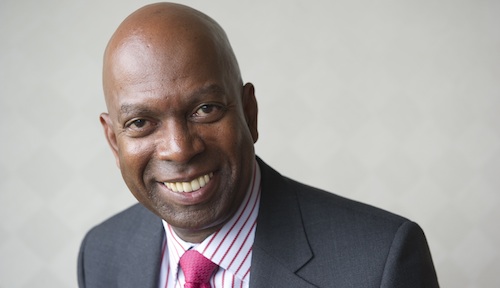
    Safaricom CEO Bob Collymore
    Safaricom CEO Bob Collymore

    He said that M-Pesa fitted very well with the traditional forms of exchange of money. Transferring money through third-party systems had been culturally accepted in Kenya for a long time. Thus, M-Pesa did not cause any cultural dissonance with the users.

    Accessibility and security

    Added to that was the fact that it was simple to operate and access. Registration was very simple and the costs were cheap. Also, unlike traditional banks, there were many access points called “agents” all over the country. All one needed was an active Safaricom number.

    Collymore M-Pesa continued to exceed expectations because it remained the easiest form to transact in Kenya.

    “M-Pesa continues to break barriers, in that it is the simplest way to do business in Kenya. As long as you have a Safaricom line you have your future in your hands. There is no lining up in banks, no need to produce affidavits and what-not. That is the main difference,” he said.

    Also, for a country with a growing crime rate, the fact that people could move around without actual cash in their pockets, and still have an easy time going about their lives, was an added bonus.

    With its sister service, M-Shwari, users were even able to save their money and take loans, all without the much dreaded waiting hours, charges, vetting and paperwork which for many is the reason they felt left out by traditional banks.

    It also allowed users to pay bills in supermarkets, shops, restaurants and bars as well as utilities such as water and electricity bills at the touch of a button.

    “For the normal Kenyan, the thought of a bank scares. The feeling is that it is a daunting process. It is a task. M-Pesa gets rid of that feeling,” Collymore said.

    Growth of M-Pesa

    The growth of M-Pesa is expected to continue, with the market expected to see no let-up in the coming years.

    In its 2015 financial report, Safaricom notes that the service has grown further, thanks to the popularisation of betting services in the country which depend solely on mobile money transfers to operate.

    “The potential is there. Our job is to make it more accessible and simpler to use. We aim to ensure that M-Pesa remains the number one financial services partner for Kenyans. The rest will follow,” he said.


    News24

    Follow TechCentral on Google News Add TechCentral as your preferred source on Google


    Bob Collymore M-Pesa Safaricom Vodacom
    WhatsApp YouTube
    Share. Facebook Twitter LinkedIn WhatsApp Telegram Email Copy Link
    Previous ArticleBackspace: ‘Off the grid’
    Next Article Inside Teraco’s giant new data centre

    Related Posts

    TCS+ | A smarter approach to cloud for South African businesses - Joel Chacko and Jonathan Oaker

    TCS+ | A smarter approach to cloud for South African businesses

    28 July 2026
    Vodacom scales back dividend policy to fund growth push - Shameel Joosub

    Vodacom scales back dividend policy to fund growth push

    27 July 2026
    MTN, Vodacom take Icasa to court over data expiry rules

    MTN, Vodacom take Icasa to court over data expiry rules

    26 July 2026
    Company News
    Domains.co.za launches self-hosted n8n VPS hosting

    Domains.co.za launches self-hosted n8n VPS hosting

    31 July 2026
    Smarter.tech '26 shows why smarter technology begins with context - Obsidian Systems

    Context is the missing piece in enterprise AI: Obsidian

    31 July 2026
    Huawei launches 12 intelligent transport solutions in South Africa - Sam Tang

    Huawei launches 12 intelligent transport solutions in South Africa

    30 July 2026
    Opinion
    The author, Jannie van Zyl

    Selling vapour is corporate suicide in slow motion

    16 July 2026
    Brazil's online gambling crackdown is a lesson for South Africa

    How Amazon outmanoeuvred Starlink in South Africa

    15 July 2026
    The Popia problem with agentic AI - Herman Haasbroek

    The Popia problem with agentic AI

    14 July 2026

    Subscribe to Updates

    Get the best South African technology news and analysis delivered to your e-mail inbox every morning.

    Latest Posts
    Nedbank hires MTN's former tech chief as group CIO - Nikos Angelopoulos

    Nedbank hires MTN’s former tech chief as group CIO

    31 July 2026
    Eskom's diesel bill falls 86% as breakdowns hit eight-year low

    Eskom’s diesel bill falls 86% as breakdowns hit eight-year low

    31 July 2026
    Ramaphosa signs off on taking the grid away from Eskom

    Ramaphosa signs off on taking the grid away from Eskom

    31 July 2026
    TCS+ | Why South African workers must become supervisors of digital labour - Accelera Digital Group Cliff de Wit

    TCS+ | Why South African workers must become supervisors of digital labour

    31 July 2026
    © 2009 - 2026 NewsCentral Media
    Built and maintained by Chronon
    • Cookie policy (ZA)
    • TechCentral – privacy and Popia

    Type above and press Enter to search. Press Esc to cancel.

    Manage consent

    TechCentral uses cookies to enhance its offerings. Consenting to these technologies allows us to serve you better. Not consenting or withdrawing consent may adversely affect certain features and functions of the website.

    Functional Always active
    The technical storage or access is strictly necessary for the legitimate purpose of enabling the use of a specific service explicitly requested by the subscriber or user, or for the sole purpose of carrying out the transmission of a communication over an electronic communications network.
    Preferences
    The technical storage or access is necessary for the legitimate purpose of storing preferences that are not requested by the subscriber or user.
    Statistics
    The technical storage or access that is used exclusively for statistical purposes. The technical storage or access that is used exclusively for anonymous statistical purposes. Without a subpoena, voluntary compliance on the part of your Internet Service Provider, or additional records from a third party, information stored or retrieved for this purpose alone cannot usually be used to identify you.
    Marketing
    The technical storage or access is required to create user profiles to send advertising, or to track the user on a website or across several websites for similar marketing purposes.
    • Manage options
    • Manage services
    • Manage {vendor_count} vendors
    • Read more about these purposes
    View preferences
    • {title}
    • {title}
    • {title}