Close Menu
TechCentralTechCentral

    Subscribe to the newsletter

    Get the best South African technology news and analysis delivered to your e-mail inbox every morning.

    Facebook X (Twitter) YouTube LinkedIn
    WhatsApp Facebook X (Twitter) LinkedIn YouTube
    TechCentralTechCentral
    • News
      Meta may launch AI-powered smartwatch in 2026

      Meta may launch AI-powered smartwatch in 2026

      19 February 2026
      The last generation of coders

      The last generation of coders

      18 February 2026
      The AI fraud crisis your bank is not ready for - Andries Maritz

      The AI fraud crisis your bank is not ready for

      18 February 2026
      Vibe coding is transforming development - but at what cost to open source? - Julian Gericke

      Vibe coding is transforming development – but at what cost to open source?

      18 February 2026
      SA film industry to get funding boost and digital overhaul after outcry

      SA film industry to get funding boost and digital overhaul after outcry

      18 February 2026
    • World
      Prominent Southern African journalist targeted with Predator spyware

      Prominent Southern African journalist targeted with Predator spyware

      18 February 2026
      More drama in Warner Bros tug of war

      More drama in Warner Bros tug of war

      17 February 2026
      Russia bans WhatsApp

      Russia bans WhatsApp

      12 February 2026
      EU regulators take aim at WhatsApp

      EU regulators take aim at WhatsApp

      9 February 2026
      Musk hits brakes on Mars mission

      Musk hits brakes on Mars mission

      9 February 2026
    • In-depth
      How liberalisation is rewiring South Africa's power sector

      How liberalisation is rewiring South Africa’s power sector

      21 January 2026
      The top-performing South African tech shares of 2025

      The top-performing South African tech shares of 2025

      12 January 2026
      Digital authoritarianism grows as African states normalise internet blackouts

      Digital authoritarianism grows as African states normalise internet blackouts

      19 December 2025
      TechCentral's South African Newsmakers of 2025

      TechCentral’s South African Newsmakers of 2025

      18 December 2025
      Black Friday goes digital in South Africa as online spending surges to record high

      Black Friday goes digital in South Africa as online spending surges to record high

      4 December 2025
    • TCS
      Watts & Wheels S1E4: 'We drive an electric Uber'

      Watts & Wheels S1E4: ‘We drive an electric Uber’

      10 February 2026
      TCS+ | How Cloud On Demand is helping SA businesses succeed in the cloud - Xhenia Rhode, Dion Kalicharan

      TCS+ | Cloud On Demand and Consnet: inside a real-world AWS partner success story

      30 January 2026
      Watts & Wheels S1E4: 'We drive an electric Uber'

      Watts & Wheels S1E3: ‘BYD’s Corolla Cross challenger’

      30 January 2026
      Watts & Wheels S1E4: 'We drive an electric Uber'

      Watts & Wheels S1E2: ‘China attacks, BMW digs in, Toyota’s sublime supercar’

      23 January 2026

      TCS+ | Why cybersecurity is becoming a competitive advantage for SA businesses

      20 January 2026
    • Opinion
      A million reasons monopolies don't work - Duncan McLeod

      A million reasons monopolies don’t work

      10 February 2026
      The author, Business Leadership South Africa CEO Busi Mavuso

      Eskom unbundling U-turn threatens to undo hard-won electricity gains

      9 February 2026
      South Africa's skills advantage is being overlooked at home - Richard Firth

      South Africa’s skills advantage is being overlooked at home

      29 January 2026
      Why Elon Musk's Starlink is a 'hard no' for me - Songezo Zibi

      Why Elon Musk’s Starlink is a ‘hard no’ for me

      26 January 2026
      A million reasons monopolies don't work - Duncan McLeod

      South Africa’s new fibre broadband battle

      20 January 2026
    • Company Hubs
      • Africa Data Centres
      • AfriGIS
      • Altron Digital Business
      • Altron Document Solutions
      • Altron Group
      • Arctic Wolf
      • AvertITD
      • Braintree
      • CallMiner
      • CambriLearn
      • CYBER1 Solutions
      • Digicloud Africa
      • Digimune
      • Domains.co.za
      • ESET
      • Euphoria Telecom
      • Incredible Business
      • iONLINE
      • IQbusiness
      • Iris Network Systems
      • LSD Open
      • Mitel
      • NEC XON
      • Netstar
      • Network Platforms
      • Next DLP
      • Ovations
      • Paracon
      • Paratus
      • Q-KON
      • SevenC
      • SkyWire
      • Solid8 Technologies
      • Telit Cinterion
      • Tenable
      • Vertiv
      • Videri Digital
      • Vodacom Business
      • Wipro
      • Workday
      • XLink
    • Sections
      • AI and machine learning
      • Banking
      • Broadcasting and Media
      • Cloud services
      • Contact centres and CX
      • Cryptocurrencies
      • Education and skills
      • Electronics and hardware
      • Energy and sustainability
      • Enterprise software
      • Financial services
      • Information security
      • Internet and connectivity
      • Internet of Things
      • Investment
      • IT services
      • Lifestyle
      • Motoring
      • Public sector
      • Retail and e-commerce
      • Satellite communications
      • Science
      • SMEs and start-ups
      • Social media
      • Talent and leadership
      • Telecoms
    • Events
    • Advertise
    TechCentralTechCentral
    Home » In-depth » Why we should fear the Apple Watch

    Why we should fear the Apple Watch

    By The Conversation10 March 2015
    Twitter LinkedIn Facebook WhatsApp Email Telegram Copy Link
    News Alerts
    WhatsApp

    apple-watch-640

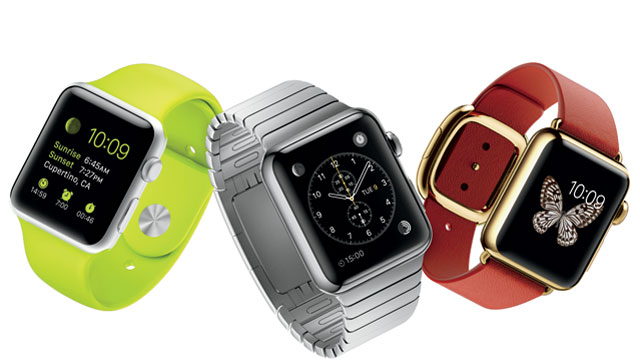
    Apple CEO Tim Cook has released the much anticipated Apple Watch, the company’s first new product since the iPad. Cook said the new watch, in addition to telling the time, was a “comprehensive health and fitness companion”. But we’re unlikely to hear much about how people will actually use this new product for some time.

    Our research has found that smartwatches certainly do have some benefits for users. But they also have a hidden, darker side which the companies selling them are unlikely to talk about.

    As part of a research project with Alberto Rizzoli, we have tried to understand what drives people to invest in smartwatches. One participant, a judge, hoped he could keep track of the deluge of e-mails during long hours in the courtroom when he had to pay attention — and be seen to pay attention.

    The dilemma is familiar to many of us. We spend our days engaged in social interaction. Huge amounts of our time are taken up with meetings or impromptu encounters with a colleagues. However, when we are in these meetings, our smartphone is buzzing away reminding us that our inbox is filling up. We may want to check these incoming messages, but know it would be rude to glace at our phone. When one of the first smartwatches came to market, the judge thought he had found the solution to this problem.

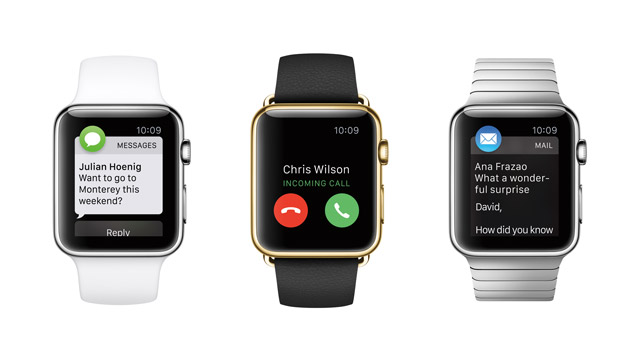
    We found that heavy smartwatch users valued how the devices helped them track information as it arrived while still appearing socially attentive. It also saved users the hassle of having to dig through their pockets or handbags to find a buzzing phone. Surprisingly, only about half the people we spoke to actually used all the health tracking technology built in to the watches. They were more interested in keeping abreast of their inbox than their calorie count.

    We also noticed a worrying side to these new devices as heavy users of the watches incorporate them into their daily routines — we call it the “phantom device effect”. They would compulsively check their watch not just for the time, but for a wide range of information. In some cases their new gizmo would become such an instinctive part of their life that even when not wearing one they would check their bare wrist. Some would feel a phantom buzz, notifying them of an imaginary incoming e-mail.

    The phantom device effect leads us to ask about just how ingrained in our daily habits these devices might become. Recent research has suggested that average smartphone users check their phone 150 times a day, starting just minutes after waking up.

    We also know this has the effect of extending work into all areas of our lives — monitoring work e-mails late into the night or during social or family events. We used to worry that the average person watched television for many hours every day. Now we accept as a matter of course the fact that we tied to our devices for most of the time we’re awake. Indeed, many of us go to bed with our smart devices quietly monitoring our rhythms as we sleep.
    apple-watch-640-2

    This raises the question of what impact it will have on our lives. In the work Carl Cederström and I have done on the hidden dangers of wearables, a big concern is privacy.

    The Apple Watch, like most wearables, is essentially a tracking device, recording heart rate, sleep patterns, movement, whereabouts and much more depending on the apps installed. All this is packaged and transmitted to data centres for analysis. The result? A database of personal information of which the Stasi could only have dreamed.

    As well as sucking up personal information, wearables could fuel an unhealthy obsession with personal wellness. By pumping health and wellbeing information at us nonstop, we start to become a little too focused on our biorhythms. Data which would have been generated only in the most unusual situations now becomes commonplace, making people not just health conscious, but also self-obsessed.

    Instead of checking in with social networks, we spend more time checking in with our own bodily rhythms. As a result, other people start to become more interested in what is going on inside themselves rather than what is happening in the world.

    Information obsession
    As we pay more attention to our feed of personal biodata, we’re likely to become more anxious about things that we may never have given a second thought to in the past. Not walking your allotted steps in a day or finding you had a poor sleeping pattern at night can become a source of significant personal guilt or worry. As a result, we pour more attention into monitoring and controlling ourselves, giving us less time to do the things which actually make us happy.

    If Apple’s projections are indeed correct and tens of millions of people purchase smartwatches, it’s likely to create a step change in our lives. We already see people routinely posting on social media information they would have only shared with their doctor a few years ago.

    Widespread use of smartwatches could mean that instead of relieving our boredom by answering e-mails, people will spend their time sifting through their biodata stream, planning ways to maximise their personal wellness ratings. Rather than talking about what was on television last night, people will start comparing charts of their sleeping patterns. When this happens we will know that the internet of me has arrived.The Conversation

    • Andre Spicer is professor of organisational behaviour, Cass Business School, City University London
    • This article was originally published on The Conversation


    Andre Spicer Apple Apple Watch Tim Cook
    WhatsApp YouTube Follow on Google News Add as preferred source on Google
    Share. Facebook Twitter LinkedIn WhatsApp Telegram Email Copy Link
    Previous ArticleNew MacBook steals the show
    Next Article Denel working on e-warfare programmes

    Related Posts

    AI chatbots are coming to Apple CarPlay

    AI chatbots are coming to Apple CarPlay

    8 February 2026
    Google goes from laggard to leader in AI

    Google goes from laggard to leader in AI

    5 February 2026
    Apple acquires audio AI start-up Q.ai

    Apple acquires audio AI start-up Q.ai

    30 January 2026
    Company News
    The quiet infrastructure powering AI: why long-life IOT networks matter more than ever - Sigfox South Africa

    The quiet infrastructure powering AI: why long-life IoT networks matter more than ever

    18 February 2026
    Scaling modern, data-driven farming across Africa - Chris Duvenage

    Scaling modern, data-driven farming across Africa

    17 February 2026
    Why getting your small business online costs less than you think

    Why getting your small business online costs less than you think

    17 February 2026
    Opinion
    A million reasons monopolies don't work - Duncan McLeod

    A million reasons monopolies don’t work

    10 February 2026
    The author, Business Leadership South Africa CEO Busi Mavuso

    Eskom unbundling U-turn threatens to undo hard-won electricity gains

    9 February 2026
    South Africa's skills advantage is being overlooked at home - Richard Firth

    South Africa’s skills advantage is being overlooked at home

    29 January 2026

    Subscribe to Updates

    Get the best South African technology news and analysis delivered to your e-mail inbox every morning.

    Latest Posts
    Meta may launch AI-powered smartwatch in 2026

    Meta may launch AI-powered smartwatch in 2026

    19 February 2026
    The last generation of coders

    The last generation of coders

    18 February 2026
    The AI fraud crisis your bank is not ready for - Andries Maritz

    The AI fraud crisis your bank is not ready for

    18 February 2026
    Vibe coding is transforming development - but at what cost to open source? - Julian Gericke

    Vibe coding is transforming development – but at what cost to open source?

    18 February 2026
    © 2009 - 2026 NewsCentral Media
    • Cookie policy (ZA)
    • TechCentral – privacy and Popia

    Type above and press Enter to search. Press Esc to cancel.

    Manage consent

    TechCentral uses cookies to enhance its offerings. Consenting to these technologies allows us to serve you better. Not consenting or withdrawing consent may adversely affect certain features and functions of the website.

    Functional Always active
    The technical storage or access is strictly necessary for the legitimate purpose of enabling the use of a specific service explicitly requested by the subscriber or user, or for the sole purpose of carrying out the transmission of a communication over an electronic communications network.
    Preferences
    The technical storage or access is necessary for the legitimate purpose of storing preferences that are not requested by the subscriber or user.
    Statistics
    The technical storage or access that is used exclusively for statistical purposes. The technical storage or access that is used exclusively for anonymous statistical purposes. Without a subpoena, voluntary compliance on the part of your Internet Service Provider, or additional records from a third party, information stored or retrieved for this purpose alone cannot usually be used to identify you.
    Marketing
    The technical storage or access is required to create user profiles to send advertising, or to track the user on a website or across several websites for similar marketing purposes.
    • Manage options
    • Manage services
    • Manage {vendor_count} vendors
    • Read more about these purposes
    View preferences
    • {title}
    • {title}
    • {title}