Close Menu
TechCentralTechCentral

    Subscribe to the newsletter

    Get the best South African technology news and analysis delivered to your e-mail inbox every morning.

    Facebook X (Twitter) YouTube LinkedIn
    WhatsApp Facebook X (Twitter) LinkedIn YouTube
    TechCentralTechCentral
    • News
      Big Microsoft 365 price increases coming next year

      Big Microsoft price increases coming next year

      5 December 2025
      Vodacom to take control of Safaricom in R36-billion deal - Shameel Joosub

      Vodacom to take control of Safaricom in R36-billion deal

      4 December 2025
      Black Friday goes digital in South Africa as online spending surges to record high

      Black Friday goes digital in South Africa as online spending surges to record high

      4 December 2025
      BYD takes direct aim at Toyota with launch of sub-R500 000 Sealion 5 PHEV

      BYD takes direct aim at Toyota with launch of sub-R500 000 Sealion 5 PHEV

      4 December 2025
      'Get it now': Takealot in new instant deliveries pilot

      ‘Get it now’: Takealot in new instant deliveries pilot

      4 December 2025
    • World
      Amazon and Google launch multi-cloud service for faster connectivity

      Amazon and Google launch multi-cloud service for faster connectivity

      1 December 2025
      Google makes final court plea to stop US breakup

      Google makes final court plea to stop US breakup

      21 November 2025
      Bezos unveils monster rocket: New Glenn 9x4 set to dwarf Saturn V

      Bezos unveils monster rocket: New Glenn 9×4 set to dwarf Saturn V

      21 November 2025
      Tech shares turbocharged by Nvidia's stellar earnings

      Tech shares turbocharged by stellar Nvidia earnings

      20 November 2025
      Config file blamed for Cloudflare meltdown that disrupted the web

      Config file blamed for Cloudflare meltdown that disrupted the web

      19 November 2025
    • In-depth
      Jensen Huang Nvidia

      So, will China really win the AI race?

      14 November 2025
      Valve's Linux console takes aim at Microsoft's gaming empire

      Valve’s Linux console takes aim at Microsoft’s gaming empire

      13 November 2025
      iOCO's extraordinary comeback plan - Rhys Summerton

      iOCO’s extraordinary comeback plan

      28 October 2025
      Why smart glasses keep failing - no, it's not the tech - Mark Zuckerberg

      Why smart glasses keep failing – it’s not the tech

      19 October 2025
      BYD to blanket South Africa with megawatt-scale EV charging network - Stella Li

      BYD to blanket South Africa with megawatt-scale EV charging network

      16 October 2025
    • TCS
      TCS+ | How Cloud on Demand helps partners thrive in the AWS ecosystem - Odwa Ndyaluvane and Xenia Rhode

      TCS+ | How Cloud On Demand helps partners thrive in the AWS ecosystem

      4 December 2025
      TCS | MTN Group CEO Ralph Mupita on competition, AI and the future of mobile

      TCS | Ralph Mupita on competition, AI and the future of mobile

      28 November 2025
      TCS | Dominic Cull on fixing South Africa's ICT policy bottlenecks

      TCS | Dominic Cull on fixing South Africa’s ICT policy bottlenecks

      21 November 2025
      TCS | BMW CEO Peter van Binsbergen on the future of South Africa's automotive industry

      TCS | BMW CEO Peter van Binsbergen on the future of South Africa’s automotive industry

      6 November 2025
      TCS | Why Altron is building an AI factory - Bongani Andy Mabaso

      TCS | Why Altron is building an AI factory in Johannesburg

      28 October 2025
    • Opinion
      Your data, your hardware: the DIY AI revolution is coming - Duncan McLeod

      Your data, your hardware: the DIY AI revolution is coming

      20 November 2025
      Zero Carbon Charge founder Joubert Roux

      The energy revolution South Africa can’t afford to miss

      20 November 2025
      It's time for a new approach to government IT spend in South Africa - Richard Firth

      It’s time for a new approach to government IT spend in South Africa

      19 November 2025
      How South Africa's broken Rica system fuels murder and mayhem - Farhad Khan

      How South Africa’s broken Rica system fuels murder and mayhem

      10 November 2025
      South Africa's AI data centre boom risks overloading a fragile grid - Paul Colmer

      South Africa’s AI data centre boom risks overloading a fragile grid

      30 October 2025
    • Company Hubs
      • Africa Data Centres
      • AfriGIS
      • Altron Digital Business
      • Altron Document Solutions
      • Altron Group
      • Arctic Wolf
      • AvertITD
      • Braintree
      • CallMiner
      • CambriLearn
      • CYBER1 Solutions
      • Digicloud Africa
      • Digimune
      • Domains.co.za
      • ESET
      • Euphoria Telecom
      • Incredible Business
      • iONLINE
      • IQbusiness
      • Iris Network Systems
      • LSD Open
      • NEC XON
      • Netstar
      • Network Platforms
      • Next DLP
      • Ovations
      • Paracon
      • Paratus
      • Q-KON
      • SevenC
      • SkyWire
      • Solid8 Technologies
      • Telit Cinterion
      • Tenable
      • Vertiv
      • Videri Digital
      • Vodacom Business
      • Wipro
      • Workday
      • XLink
    • Sections
      • AI and machine learning
      • Banking
      • Broadcasting and Media
      • Cloud services
      • Contact centres and CX
      • Cryptocurrencies
      • Education and skills
      • Electronics and hardware
      • Energy and sustainability
      • Enterprise software
      • Financial services
      • Information security
      • Internet and connectivity
      • Internet of Things
      • Investment
      • IT services
      • Lifestyle
      • Motoring
      • Public sector
      • Retail and e-commerce
      • Satellite communications
      • Science
      • SMEs and start-ups
      • Social media
      • Talent and leadership
      • Telecoms
    • Events
    • Advertise
    TechCentralTechCentral
    Home » Opinion » Alistair Fairweather » Why wearables are computing’s future

    Why wearables are computing’s future

    By Alistair Fairweather5 January 2014
    Twitter LinkedIn Facebook WhatsApp Email Telegram Copy Link
    News Alerts
    WhatsApp

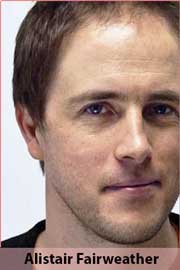
    Alistair-Fairweather-180-profileFor many technophiles, 2013 was a slightly disappointing year. Sure, there were one or two groundbreaking launches (such as Google Glass), but for the most part it was a year of consolidation rather than raw innovation. This year is likely to be more exciting as several waves of long-awaited technology finally begin to peak.

    Wearable computing
    What is the most ubiquitous technology on the planet? No, it’s not the television or even the car — it’s the cellphone. The International Telecommunication Union has predicted that during 2014 the global cellphone market will pass 100% penetration. In other words, there will be more active cellphone subscribers (both prepaid and post-paid) on the planet than there are people.

    Now, imagine that you could wear your phone like a watch or a pair of spectacles. Instead of having to dig around in your pocket or bag to answer a call or look up something on the Internet, you could simply speak a command and the device would obey.

    That, in a nutshell, is the promise of wearables: instantly accessible computing integrated into both your wardrobe and your daily life.

    Two major wearable computing devices were launched in 2013: Google Glass (which looks like a pair of spectacles) and Samsung’s Galaxy Gear (a “smart watch”). Both are more prototypes than mature products. Negative reviews have flooded in — they are “expensive”, “buggy”, “bulky” and their battery life is “appalling”. Blogs with titles such as White Men Wearing Google Glass have been launched, dedicated to ridiculing anyone caught using them in public.

    Had blogs existed in the late 1980s, there would have been several dedicated to scoffing at pretentious cellphone owners. The earliest cellphones were expensive, ludicrously bulky, did not work particularly well and had terrible battery life. They were little more than status symbols for the technologically obsessed. And yet, by the mid-1990s, the cellphone market was booming.

    Although wearable computing will not reach mainstream acceptance for at least another five years, 2014 will see a slew of new devices entering the market, both from established players such as Apple (the long-awaited iWatch) and from relatively new entrants such as FitBit (which focuses on the activity tracking market).

    The volume of ridicule will also grow as more nerdy trailblazers take the plunge into wearables. But I predict that within 10 years the wearable computing market will be as big as the smartphone market is today, and within 20 it will be bigger than the entire global cellphone market.

    NSA-proof communication
    The second half of 2013 was dominated by revelations of indiscriminate and unjustifiable snooping by America’s National Security Agency (NSA) and the British Government Communications Headquarters. Leaks by Edward Snowden, a former NSA contractor, have revealed an appalling disregard for the privacy of innocent civilians and allies alike.

    One of the most shocking revelations was the mechanism through which NSA operatives are able to compel large service providers such as Google and Facebook to release private data to them. Secret courts issue secret federal warrants for this data, and the companies are forbidden to warn the targets or disclose the contents of these warrants.

    These blatant attacks on privacy have fuelled demand for communication platforms and standards that both organisations would be unable to penetrate. Riseup, a service that allows political dissidents in repressive countries to communicate securely with one another, is being overwhelmed by demand for new accounts. Its founders have launched a fundraising drive to expand its capacity.

    Because Riseup refrains from storing any information that might allow anyone to identify its users, even if the NSA did seize its servers it would find little of any use. Riseup also encrypts all of the data it stores. Without the keys to that encryption, even the combined computing might of both organisations would take millennia to unscramble the data.

    Particularly cautious Riseup users can connect to the service with a virtual private network. This technology conceals their location from anyone who may be tapping the network by routing all traffic through an intermediate server. Anyone tracing the connection will only be able to find the location of that intermediate server, not the user.

    Another initiative, Darkmail, is developing a new standard aimed at making e-mail immune to surveillance. The idea is to send encrypted e-mails directly between trusted users — a method known as “peer to peer” — rather than through centralised servers, which is where messages are most often intercepted. Its founders hope Darkmail will become so popular with smaller service providers that the likes of Microsoft and Google will be forced to adopt it.

    Both of these are nonprofit initiatives, but several commercial service providers will jump on the bandwagon before the end of 2014. For ordinary people with nothing to hide, the pain of abandoning their trusty Gmail or Yahoo addresses will be too much to bear, but the paranoid will flock to these new islands of privacy.

    Smart televisions
    For the better part of 20 years, the promise of smart TV has been like cold fusion: great in theory but impossible in practice. Every attempt was dogged by intractable problems such as incompatibility of standards, awful user interfaces, lack of sufficient content and slow Internet connectivity.

    And so, though our phones and our computers have become smarter and smarter, our TVs have remained as dumb as they were in the 1980s. But in the past three years a perfect storm has been forming that will, in 2014, make the smart TV a mainstream reality.

    Devices such as Google’s Chromecast, Apple TV and Boxee have solved the compatibility and user interface problems at a stroke. You simply plug them into one of the standard ports on your TV set and, voilà, you have a smart TV.

    Content used to be controlled entirely by the broadcasters. Now services such as Netflix, iTunes and Hulu offer catalogues so vast that even the most esoteric and discerning tastes are catered for (and usually at a fraction of the price charged by the broadcasters).

    Internet connectivity is improving around the globe, if somewhat unevenly. Although South Africa remains one of the worst laggards in terms of broadband roll-out and affordability, an average middle-class family can afford an uncapped broadband connection without having to sell any children into slavery.

    Today, anyone with a modicum of technical skill (or a geeky friend) can access legal, on-demand Internet content on their television set. At the moment, South African bandwidth prices make this option slightly more expensive than local pay-TV services, but those prices will tend to fall over time. And so, increasingly, people will begin cancelling their DStv subscription in favour of services such as Netflix and Hulu.

    Within 10 years, wearable computing technologies like Google Glass will be used more than smartphones
    Within 10 years, wearable computing devices like Google Glass will be used more than smartphones

    Because of its effective monopoly over sports coverage, MultiChoice will be protected from this phenomenon of “cord cutting” for at least another five years. But on-demand Internet TV is too powerful a force to resist for long. The likes of Google and Apple do not care about the MultiChoices of the world — they will simply go around them.

    Of course, television manufacturers are not taking this invasion of their turf lying down. Scarred by years of unprofitability and bogged down by outdated thinking, most TV makers have struggled to get the formula right. Some, such as Samsung and LG, are beginning to make headway but they have a long way to go. Still, most people’s first experience of smart TV will probably be through one of these “native” platforms.

    Other trends to watch
    3D printing seems to be an expensive hobby now, but by the end of this decade we will be printing aircraft and car parts (and possibly human organs).

    The cloud will continue to swallow corporate and personal data as computing power moves away from devices and back to servers.

    The smart home is finally starting to become a reality. Within four or five more years almost all our appliances will be connected to the Internet. Nest Labs is the best example of this trend in action.

    Robotic logistics and delivery systems such as Amazon’s Prime Air seem like PR stunts now, but by 2020 they will be an integral part of life.  — (c) 2014 Mail & Guardian

    • Alistair Fairweather is chief technology officer at the Mail & Guardian
    • Visit the Mail & Guardian Online, the smart news source


    Alistair Fairweather Apple DStv Google Google Glass LG LG Electronics MultiChoice Samsung Samsung Electronics
    Subscribe to TechCentral Subscribe to TechCentral
    Share. Facebook Twitter LinkedIn WhatsApp Telegram Email Copy Link
    Previous ArticleInternet scam uses Mandela name
    Next Article Vodacom boss offloads shares

    Related Posts

    What South Africans searched for most in 2025

    What South Africans searched for most in 2025, according to Google

    4 December 2025
    Canal+ plays hardball - and DStv viewers feel the pain

    Canal+ plays hardball – and DStv viewers feel the pain

    3 December 2025
    Smartphone prices set to jump as memory crunch hits consumer tech

    Smartphone prices set to jump as memory crunch hits consumer tech

    3 December 2025
    Company News
    AI is not a technology problem - iqbusiness

    AI is not a technology problem – iqbusiness

    5 December 2025
    Telcos are sitting on a data gold mine - but few know what do with it - Phillip du Plessis

    Telcos are sitting on a data gold mine – but few know what do with it

    4 December 2025
    Unlock smarter computing with your surface Copilot+ PC

    Unlock smarter computing with your Surface Copilot+ PC

    4 December 2025
    Opinion
    Your data, your hardware: the DIY AI revolution is coming - Duncan McLeod

    Your data, your hardware: the DIY AI revolution is coming

    20 November 2025
    Zero Carbon Charge founder Joubert Roux

    The energy revolution South Africa can’t afford to miss

    20 November 2025
    It's time for a new approach to government IT spend in South Africa - Richard Firth

    It’s time for a new approach to government IT spend in South Africa

    19 November 2025

    Subscribe to Updates

    Get the best South African technology news and analysis delivered to your e-mail inbox every morning.

    Latest Posts
    Big Microsoft 365 price increases coming next year

    Big Microsoft price increases coming next year

    5 December 2025
    AI is not a technology problem - iqbusiness

    AI is not a technology problem – iqbusiness

    5 December 2025
    Vodacom to take control of Safaricom in R36-billion deal - Shameel Joosub

    Vodacom to take control of Safaricom in R36-billion deal

    4 December 2025
    Black Friday goes digital in South Africa as online spending surges to record high

    Black Friday goes digital in South Africa as online spending surges to record high

    4 December 2025
    © 2009 - 2025 NewsCentral Media
    • Cookie policy (ZA)
    • TechCentral – privacy and Popia

    Type above and press Enter to search. Press Esc to cancel.

    Manage consent

    TechCentral uses cookies to enhance its offerings. Consenting to these technologies allows us to serve you better. Not consenting or withdrawing consent may adversely affect certain features and functions of the website.

    Functional Always active
    The technical storage or access is strictly necessary for the legitimate purpose of enabling the use of a specific service explicitly requested by the subscriber or user, or for the sole purpose of carrying out the transmission of a communication over an electronic communications network.
    Preferences
    The technical storage or access is necessary for the legitimate purpose of storing preferences that are not requested by the subscriber or user.
    Statistics
    The technical storage or access that is used exclusively for statistical purposes. The technical storage or access that is used exclusively for anonymous statistical purposes. Without a subpoena, voluntary compliance on the part of your Internet Service Provider, or additional records from a third party, information stored or retrieved for this purpose alone cannot usually be used to identify you.
    Marketing
    The technical storage or access is required to create user profiles to send advertising, or to track the user on a website or across several websites for similar marketing purposes.
    • Manage options
    • Manage services
    • Manage {vendor_count} vendors
    • Read more about these purposes
    View preferences
    • {title}
    • {title}
    • {title}