Close Menu
TechCentralTechCentral

    Subscribe to the newsletter

    Get the best South African technology news and analysis delivered to your e-mail inbox every morning.

    Facebook X (Twitter) YouTube LinkedIn
    WhatsApp Facebook X (Twitter) LinkedIn YouTube
    TechCentralTechCentral
    • News
      Big Microsoft 365 price increases coming next year

      Big Microsoft price increases coming next year

      5 December 2025
      Vodacom to take control of Safaricom in R36-billion deal - Shameel Joosub

      Vodacom to take control of Safaricom in R36-billion deal

      4 December 2025
      Black Friday goes digital in South Africa as online spending surges to record high

      Black Friday goes digital in South Africa as online spending surges to record high

      4 December 2025
      BYD takes direct aim at Toyota with launch of sub-R500 000 Sealion 5 PHEV

      BYD takes direct aim at Toyota with launch of sub-R500 000 Sealion 5 PHEV

      4 December 2025
      'Get it now': Takealot in new instant deliveries pilot

      ‘Get it now’: Takealot in new instant deliveries pilot

      4 December 2025
    • World
      Amazon and Google launch multi-cloud service for faster connectivity

      Amazon and Google launch multi-cloud service for faster connectivity

      1 December 2025
      Google makes final court plea to stop US breakup

      Google makes final court plea to stop US breakup

      21 November 2025
      Bezos unveils monster rocket: New Glenn 9x4 set to dwarf Saturn V

      Bezos unveils monster rocket: New Glenn 9×4 set to dwarf Saturn V

      21 November 2025
      Tech shares turbocharged by Nvidia's stellar earnings

      Tech shares turbocharged by stellar Nvidia earnings

      20 November 2025
      Config file blamed for Cloudflare meltdown that disrupted the web

      Config file blamed for Cloudflare meltdown that disrupted the web

      19 November 2025
    • In-depth
      Jensen Huang Nvidia

      So, will China really win the AI race?

      14 November 2025
      Valve's Linux console takes aim at Microsoft's gaming empire

      Valve’s Linux console takes aim at Microsoft’s gaming empire

      13 November 2025
      iOCO's extraordinary comeback plan - Rhys Summerton

      iOCO’s extraordinary comeback plan

      28 October 2025
      Why smart glasses keep failing - no, it's not the tech - Mark Zuckerberg

      Why smart glasses keep failing – it’s not the tech

      19 October 2025
      BYD to blanket South Africa with megawatt-scale EV charging network - Stella Li

      BYD to blanket South Africa with megawatt-scale EV charging network

      16 October 2025
    • TCS
      TCS+ | How Cloud on Demand helps partners thrive in the AWS ecosystem - Odwa Ndyaluvane and Xenia Rhode

      TCS+ | How Cloud On Demand helps partners thrive in the AWS ecosystem

      4 December 2025
      TCS | MTN Group CEO Ralph Mupita on competition, AI and the future of mobile

      TCS | Ralph Mupita on competition, AI and the future of mobile

      28 November 2025
      TCS | Dominic Cull on fixing South Africa's ICT policy bottlenecks

      TCS | Dominic Cull on fixing South Africa’s ICT policy bottlenecks

      21 November 2025
      TCS | BMW CEO Peter van Binsbergen on the future of South Africa's automotive industry

      TCS | BMW CEO Peter van Binsbergen on the future of South Africa’s automotive industry

      6 November 2025
      TCS | Why Altron is building an AI factory - Bongani Andy Mabaso

      TCS | Why Altron is building an AI factory in Johannesburg

      28 October 2025
    • Opinion
      Your data, your hardware: the DIY AI revolution is coming - Duncan McLeod

      Your data, your hardware: the DIY AI revolution is coming

      20 November 2025
      Zero Carbon Charge founder Joubert Roux

      The energy revolution South Africa can’t afford to miss

      20 November 2025
      It's time for a new approach to government IT spend in South Africa - Richard Firth

      It’s time for a new approach to government IT spend in South Africa

      19 November 2025
      How South Africa's broken Rica system fuels murder and mayhem - Farhad Khan

      How South Africa’s broken Rica system fuels murder and mayhem

      10 November 2025
      South Africa's AI data centre boom risks overloading a fragile grid - Paul Colmer

      South Africa’s AI data centre boom risks overloading a fragile grid

      30 October 2025
    • Company Hubs
      • Africa Data Centres
      • AfriGIS
      • Altron Digital Business
      • Altron Document Solutions
      • Altron Group
      • Arctic Wolf
      • AvertITD
      • Braintree
      • CallMiner
      • CambriLearn
      • CYBER1 Solutions
      • Digicloud Africa
      • Digimune
      • Domains.co.za
      • ESET
      • Euphoria Telecom
      • Incredible Business
      • iONLINE
      • IQbusiness
      • Iris Network Systems
      • LSD Open
      • NEC XON
      • Netstar
      • Network Platforms
      • Next DLP
      • Ovations
      • Paracon
      • Paratus
      • Q-KON
      • SevenC
      • SkyWire
      • Solid8 Technologies
      • Telit Cinterion
      • Tenable
      • Vertiv
      • Videri Digital
      • Vodacom Business
      • Wipro
      • Workday
      • XLink
    • Sections
      • AI and machine learning
      • Banking
      • Broadcasting and Media
      • Cloud services
      • Contact centres and CX
      • Cryptocurrencies
      • Education and skills
      • Electronics and hardware
      • Energy and sustainability
      • Enterprise software
      • Financial services
      • Information security
      • Internet and connectivity
      • Internet of Things
      • Investment
      • IT services
      • Lifestyle
      • Motoring
      • Public sector
      • Retail and e-commerce
      • Satellite communications
      • Science
      • SMEs and start-ups
      • Social media
      • Talent and leadership
      • Telecoms
    • Events
    • Advertise
    TechCentralTechCentral
    Home » In-depth » Will next-gen wearables make us healthier?

    Will next-gen wearables make us healthier?

    By The Conversation25 November 2015
    Twitter LinkedIn Facebook WhatsApp Email Telegram Copy Link
    News Alerts
    WhatsApp

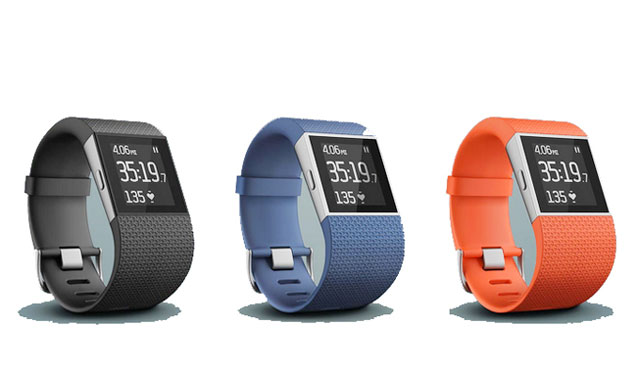
    fitbit-surge-640

    There is certainly no shortage of headlines on wearable sensors these days. “A contact lens measures your glucose level.” “New electronic tattoos could help monitor health during normal daily activities.” A “headband can read your brainwaves.” Numerous wearable sensors are currently on the market that can monitor body data including activity and sleep, heart rate, galvanic skin response and electrocardiogram (ECG). But are these wearables making any difference? Are they actually making us healthier?

    The answer is not clear yet. And the challenges are plenty.

    First, there is the quick abandonment issue. A recent study conducted by Endeavor Partners found that one third of American customers stopped using their wearable activity trackers after just six months. Some attribute this problem to the fact that every so often the user needs to take off and recharge the device. Every time you remove a wearable sensor, it’s an opportunity to forget to put it back on again.

    Others believe current wearables get cast aside because they don’t possess the magic ability to change human behaviours. Don’t we all know that regular exercise, eating healthy food and sleeping well are good for our health? Wearing a wristband alone will not make us do such things. Unless wearables can provide additional actionable incentives or insights that lead to long-term behaviour change, their impact is rather limited. The million-dollar question is: what will such actionable incentives for users look like?
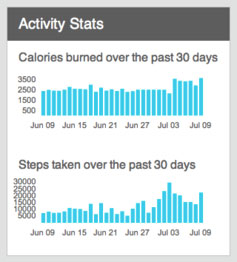
    The joy of tracking loses its luster over time
    The joy of tracking loses its luster over time

    It’s also not clear what’s the best format for wearable sensors. The majority of wearables in the market today are wristbands or watches. However, it’s very difficult to get reproducible clinical-quality data from the wrist, as Apple discovered when developing the Apple Watch.

    According to The Wall Street Journal, after a long and costly development process, Apple had to abandon some of the health monitoring functions, such as ECG and skin conductivity sensors, because “these features didn’t perform consistently on some people, including those with hairy arms or dry skin. Results also varied depending on how tightly the person wore the Watch.” If Apple cannot pull it off, it is certainly a challenging task.

    Before wearable sensors can deliver their promise, they must overcome some serious technological challenges.

    What wearables must do
    What will next-generation wearable sensors do in order to succeed? Here’s my guess.

    First, future wearable sensors should be “wear-and-forget.” After the sensor is put on, it should simply disappear into the background and quietly acquire data without the need for recharge, without disturbing the user’s daily life and without others even noticing it. Instead of wrist-worn, future unobtrusive wearable sensors may look like something that is completely indistinguishable from a normal wedding ring.

    One way to solve the recharging problem is to harvest energy from the environment. For example, radio frequency (RF) waves are ubiquitous and always around us due to cellular networks, Wi-Fi and radio stations. Researchers at the University of Washington have built a complete ambient RF-powered sensor for wireless temperature measurements.

    Another always-on energy source for wearables is the body’s own heat. Recent work from the University of Virginia and University of Washington demonstrated a body heat-powered ECG sensor which is the size of a grain of rice (2,5mm by 3,3mm) and consumes only 19uW (about 10 millionth of the power needed by a regular light bulb). Unless it’s broken, this device can last forever and track the user’s ECG continuously as a skin patch.
    Such technological breakthroughs may one day enable truly wear-and-forget sensors which users never need to worry about once put on.

    Future wearable sensors should also be able to measure disease-specific markers inside the body, not just the physiological signals or vital signs from the body surface. For example, Google X is working on magnetic nanoparticles circulating in the body to search for cancer, with the results to be read out by a wearable device. This is a tall order and we don’t yet know if they can successfully pull it off.
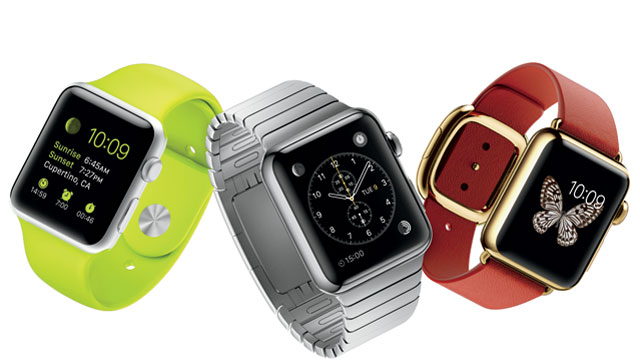
    apple-watch-640
    It’s very difficult to get reproducible clinical-quality data from the wrist, as Apple discovered when developing the Apple Watch

    Another promising way to sense what’s happening inside the body might be to measure chemicals from sweat. For example, researchers from the University of Cincinnati and the University of California, San Diego are working on wearable sensors that can measure electrolytes, metabolites and other molecules from the sweat. If such capabilities become a reality, wearable sensors’ clinical values will increase dramatically by providing molecular information that is more specific to a certain condition, such as cortisol level in chronic stress.

    Finally, the single most important factor that will determine next-gen wearable sensors’ success or failure is whether they can actually contribute to better health outcomes.

    Many physicians and researchers, including me, believe in the transformative potential of wearable health sensors. Just as smartphones decentralised computing and communication, wearable sensors hold the potential to decentralise and democratise health care, changing it from reactive to proactive, from one-size-fits-all to personalised medicine. With the right wearable sensors, consumers gain the power to continuously monitor their own health status; at a doctor’s appointment, the patient can provide both quantitative baseline and abnormal health data to the physician. This scenario could fundamentally change how health care is delivered.

    However, the burden is now on wearable sensor developers to provide unambiguous proof that such sensors can improve health. We need to make the jump from just collecting the data that’s easy to collect, to collecting and using data for real medical purposes. Recently, some wearable sensor makers, such as iRhythm, started to provide clinical study data that support their device’s clinical value. Such trends will likely continue for future wearable sensors.

    Are wearable sensors fad or the future? The answer to this question will ultimately depend on clear evidence that they do make us healthier.The Conversation

    • Zhenyu Li is assistant professor of biomedical engineering at George Washington University
    • This article was originally published on The Conversation


    Apple Apple Watch Zhenyu Li
    Subscribe to TechCentral Subscribe to TechCentral
    Share. Facebook Twitter LinkedIn WhatsApp Telegram Email Copy Link
    Previous ArticleBlack Friday deals: online retailers gear up
    Next Article Work to start on new subsea cable for SA

    Related Posts

    Samsung goes trifold while Apple folds its arms

    Samsung goes trifold while Apple folds its arms

    2 December 2025
    Samsung's first trifold smartphone is here

    Samsung’s first trifold smartphone is here

    2 December 2025
    Your data, your hardware: the DIY AI revolution is coming - Duncan McLeod

    Your data, your hardware: the DIY AI revolution is coming

    20 November 2025
    Company News
    AI is not a technology problem - iqbusiness

    AI is not a technology problem – iqbusiness

    5 December 2025
    Telcos are sitting on a data gold mine - but few know what do with it - Phillip du Plessis

    Telcos are sitting on a data gold mine – but few know what do with it

    4 December 2025
    Unlock smarter computing with your surface Copilot+ PC

    Unlock smarter computing with your Surface Copilot+ PC

    4 December 2025
    Opinion
    Your data, your hardware: the DIY AI revolution is coming - Duncan McLeod

    Your data, your hardware: the DIY AI revolution is coming

    20 November 2025
    Zero Carbon Charge founder Joubert Roux

    The energy revolution South Africa can’t afford to miss

    20 November 2025
    It's time for a new approach to government IT spend in South Africa - Richard Firth

    It’s time for a new approach to government IT spend in South Africa

    19 November 2025

    Subscribe to Updates

    Get the best South African technology news and analysis delivered to your e-mail inbox every morning.

    Latest Posts
    Big Microsoft 365 price increases coming next year

    Big Microsoft price increases coming next year

    5 December 2025
    AI is not a technology problem - iqbusiness

    AI is not a technology problem – iqbusiness

    5 December 2025
    Vodacom to take control of Safaricom in R36-billion deal - Shameel Joosub

    Vodacom to take control of Safaricom in R36-billion deal

    4 December 2025
    Black Friday goes digital in South Africa as online spending surges to record high

    Black Friday goes digital in South Africa as online spending surges to record high

    4 December 2025
    © 2009 - 2025 NewsCentral Media
    • Cookie policy (ZA)
    • TechCentral – privacy and Popia

    Type above and press Enter to search. Press Esc to cancel.

    Manage consent

    TechCentral uses cookies to enhance its offerings. Consenting to these technologies allows us to serve you better. Not consenting or withdrawing consent may adversely affect certain features and functions of the website.

    Functional Always active
    The technical storage or access is strictly necessary for the legitimate purpose of enabling the use of a specific service explicitly requested by the subscriber or user, or for the sole purpose of carrying out the transmission of a communication over an electronic communications network.
    Preferences
    The technical storage or access is necessary for the legitimate purpose of storing preferences that are not requested by the subscriber or user.
    Statistics
    The technical storage or access that is used exclusively for statistical purposes. The technical storage or access that is used exclusively for anonymous statistical purposes. Without a subpoena, voluntary compliance on the part of your Internet Service Provider, or additional records from a third party, information stored or retrieved for this purpose alone cannot usually be used to identify you.
    Marketing
    The technical storage or access is required to create user profiles to send advertising, or to track the user on a website or across several websites for similar marketing purposes.
    • Manage options
    • Manage services
    • Manage {vendor_count} vendors
    • Read more about these purposes
    View preferences
    • {title}
    • {title}
    • {title}