Close Menu
TechCentralTechCentral

    Subscribe to the newsletter

    Get the best South African technology news and analysis delivered to your e-mail inbox every morning.

    Facebook X (Twitter) YouTube LinkedIn
    WhatsApp Facebook X (Twitter) LinkedIn YouTube
    TechCentralTechCentral
    • News
      Every electric car you can buy in South Africa in early 2026, ranked by price

      Every electric car you can buy in South Africa in early 2026, ranked by price

      6 February 2026
      From stocks to crypto, markets reel as AI doubts grow

      From stocks to crypto, markets reel as AI doubts grow

      6 February 2026
      South Africa deepens China ties as US trade tensions escalate

      South Africa deepens China ties as US trade tensions escalate

      6 February 2026
      Big changes at Lesaka as Bank Zero deal nears completion - Lincoln Mali

      Big changes at Lesaka as Bank Zero deal nears completion

      6 February 2026
      South Africa's stablecoin silence is becoming a policy failure

      South Africa’s stablecoin silence is becoming a policy failure

      6 February 2026
    • World
      AI won't replace software, says Nvidia CEO amid market rout - Jensen Huang

      AI won’t replace software, says Nvidia CEO amid market rout

      4 February 2026
      Apple acquires audio AI start-up Q.ai

      Apple acquires audio AI start-up Q.ai

      30 January 2026
      SpaceX IPO may be largest in history

      SpaceX IPO may be largest in history

      28 January 2026
      Nvidia throws AI at the weather

      Nvidia throws AI at weather forecasting

      27 January 2026
      Debate erupts over value of in-flight Wi-Fi

      Debate erupts over value of in-flight Wi-Fi

      26 January 2026
    • In-depth
      How liberalisation is rewiring South Africa's power sector

      How liberalisation is rewiring South Africa’s power sector

      21 January 2026
      The top-performing South African tech shares of 2025

      The top-performing South African tech shares of 2025

      12 January 2026
      Digital authoritarianism grows as African states normalise internet blackouts

      Digital authoritarianism grows as African states normalise internet blackouts

      19 December 2025
      TechCentral's South African Newsmakers of 2025

      TechCentral’s South African Newsmakers of 2025

      18 December 2025
      Black Friday goes digital in South Africa as online spending surges to record high

      Black Friday goes digital in South Africa as online spending surges to record high

      4 December 2025
    • TCS
      TCS+ | How Cloud On Demand is helping SA businesses succeed in the cloud - Xhenia Rhode, Dion Kalicharan

      TCS+ | Cloud On Demand and Consnet: inside a real-world AWS partner success story

      30 January 2026
      Watts & Wheels S1E3: 'BYD's Corolla Cross challenger'

      Watts & Wheels S1E3: ‘BYD’s Corolla Cross challenger’

      30 January 2026
      Watts & Wheels S1E3: 'BYD's Corolla Cross challenger'

      Watts & Wheels S1E2: ‘China attacks, BMW digs in, Toyota’s sublime supercar’

      23 January 2026

      TCS+ | Why cybersecurity is becoming a competitive advantage for SA businesses

      20 January 2026
      Watts & Wheels S1E3: 'BYD's Corolla Cross challenger'

      Watts & Wheels: S1E1 – ‘William, Prince of Wheels’

      8 January 2026
    • Opinion
      South Africa's skills advantage is being overlooked at home - Richard Firth

      South Africa’s skills advantage is being overlooked at home

      29 January 2026
      Why Elon Musk's Starlink is a 'hard no' for me - Songezo Zibi

      Why Elon Musk’s Starlink is a ‘hard no’ for me

      26 January 2026
      South Africa's new fibre broadband battle - Duncan McLeod

      South Africa’s new fibre broadband battle

      20 January 2026
      AI moves from pilots to production in South African companies - Nazia Pillay SAP

      AI moves from pilots to production in South African companies

      20 January 2026
      South Africa's new fibre broadband battle - Duncan McLeod

      ANC’s attack on Solly Malatsi shows how BEE dogma trumps economic reality

      14 December 2025
    • Company Hubs
      • Africa Data Centres
      • AfriGIS
      • Altron Digital Business
      • Altron Document Solutions
      • Altron Group
      • Arctic Wolf
      • AvertITD
      • Braintree
      • CallMiner
      • CambriLearn
      • CYBER1 Solutions
      • Digicloud Africa
      • Digimune
      • Domains.co.za
      • ESET
      • Euphoria Telecom
      • Incredible Business
      • iONLINE
      • IQbusiness
      • Iris Network Systems
      • LSD Open
      • NEC XON
      • Netstar
      • Network Platforms
      • Next DLP
      • Ovations
      • Paracon
      • Paratus
      • Q-KON
      • SevenC
      • SkyWire
      • Solid8 Technologies
      • Telit Cinterion
      • Tenable
      • Vertiv
      • Videri Digital
      • Vodacom Business
      • Wipro
      • Workday
      • XLink
    • Sections
      • AI and machine learning
      • Banking
      • Broadcasting and Media
      • Cloud services
      • Contact centres and CX
      • Cryptocurrencies
      • Education and skills
      • Electronics and hardware
      • Energy and sustainability
      • Enterprise software
      • Financial services
      • Information security
      • Internet and connectivity
      • Internet of Things
      • Investment
      • IT services
      • Lifestyle
      • Motoring
      • Public sector
      • Retail and e-commerce
      • Satellite communications
      • Science
      • SMEs and start-ups
      • Social media
      • Talent and leadership
      • Telecoms
    • Events
    • Advertise
    TechCentralTechCentral
    Home » World » Windows ATMs: how safe is your money?

    Windows ATMs: how safe is your money?

    By The Conversation13 October 2014
    Twitter LinkedIn Facebook WhatsApp Email Telegram Copy Link
    News Alerts
    WhatsApp

    ATM-640

    How safe is Microsoft Windows? After all, the list of malware that has caused major headaches worldwide over the last 15 years is long – viruses, worms and Trojans have forced computers to shut down, knocked Korea offline and even overloaded Google’s servers.

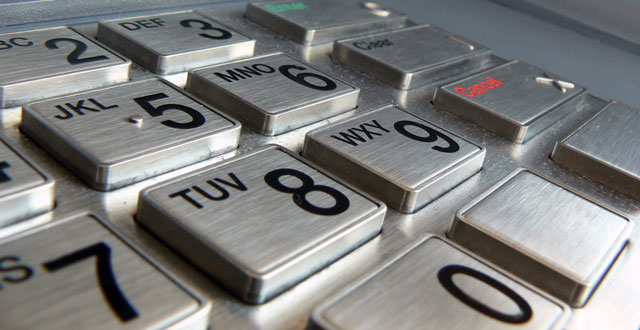
    Now, how safe do you feel knowing that cash machines across the world run Microsoft Windows?

    A plot has been discovered, apparently spread across Russia, India and China, whereby cash machines can be turned into a free money vending machine.

    The hack requires re-starting the cash machine — essentially a Windows terminal — from a prepared CD that injects malware into the system to circumvent the security. At set times of the week, a unique code is generated and given to a “mule” who would approach the machine, enter the code, and withdraw up to 40 notes, anonymously and without trace.

    Attacks on ATMs (those more sophisticated than removing the cash machine and cutting into its safe) started around 10 years ago with card-reader devices containing a tiny integrated camera and card reader. As a user withdraws cash, the device reads the account details from the card’s magnetic stripe and videos the Pin number entered into the keypad.

    Earlier generations of ATM machines were often built around computer terminals running IBM’s OS/2 operating system (which started life as a joint IBM-Microsoft venture, and which somewhat ironically spawned Microsoft’s Windows NT, the grandparent of modern Windows, and IBM’s OS/2 when that project collapsed). Due to its more esoteric and rare nature, there are far fewer attacks for OS/2, but now it is standard builds of Windows, potentially vulnerable to all the usual malware and exploits, that run modern ATMs.

    So, it is not surprising that intruders have started to find ways inside ATMs’ card processing and cash dispensing systems. Malware that can offer external control to an ATM have been reported for some years, allowing attackers to dispense cash, record and print out card details and Pin numbers.

    This latest malware is Backdoor.MSIL.Tyupkin, which while running continuously will only listen for commands on a Sunday and Monday night. The criminal gangs operating the malware generate a random, unique, six-digit key code that activates the program, which is given to the “mule” who is withdrawing the money.

    Like previous efforts to crack into ATMs, the malware requires physical access to the ATM, typically by booting the machine from a CD prepared to install the malware. At present, the malware has been active on at least 50 ATMs in Russia and Eastern Europe, but also in the US, China and India.

    The malware is the file ulssm.exe, which is copied into the c:\windows\system32 directory and which is protected and maintained on the system between reboots by modifying the Windows registry (a database of configuration settings) so that Windows automatically runs the program at start-up. The program then interacts with the ATM through the Extension for Financial Services (XFS) library, MSXFS.dll. To avoid detection, it will only allow access controller commands on Sunday and Monday evenings.

    The threat of rebooting machines from CDs or bootable USB sticks in order to install malware and abusing the Windows autorun feature to sustain the program in memory is an exploit that has been common for over a decade. Few lessons have been learned in terms of securing physical access to the device, and also in the privileged rights that malware can gain. Even as companies focus on improving and securing the user interface, often the debugging and diagnostic side can provide further routes into a system.

    Versions of Windows used in embedded control systems are now sufficiently secure, but as ATM manufacturers use standard installations of Windows, they are opening themselves up to further problems — not least because it allows hackers the opportunity to simulate and craft their malware on well-known versions of the operating system.

    However, at the core of this attack — as with those before it — is the need for physical access to the device, which implies an insider working in the bank. That means with monitoring of who has access to the cash machine, this can be prevented. The key lesson is that the ATM operating system is a weak link in the chain which needs to be closed.The Conversation

    • Bill Buchanan is head of the Centre for Distributed Computing, Networks and Security at Edinburgh Napier University
    • This article was originally published on The Conversation


    IBM Kaspersky Kaspersky Lab Microsoft
    WhatsApp YouTube Follow on Google News Add as preferred source on Google
    Share. Facebook Twitter LinkedIn WhatsApp Telegram Email Copy Link
    Previous ArticleJudgment reserved in StarSat case
    Next Article Vox Guardian Eye Lite: eye spy

    Related Posts

    From stocks to crypto, markets reel as AI doubts grow

    From stocks to crypto, markets reel as AI doubts grow

    6 February 2026
    SABC Plus to flight Microsoft AI training videos

    SABC Plus to flight Microsoft AI training videos

    30 January 2026
    Cloud adoption the weak link in SA's digital government push: Microsoft - Vukani Mngxati

    Cloud adoption the weak link in SA’s digital government push: Microsoft

    29 January 2026
    Company News
    The skills gap is a thinking gap: why South African employers can't find problem solvers

    The skills gap is a thinking gap: why SA employers can’t find problem solvers

    6 February 2026
    Vox Kiwi Wireless: fibre-like broadband for South African homes

    Vox Kiwi Wireless: fibre-like broadband for South African homes

    5 February 2026
    NEC XON achieves an African first with full Fortinet accreditation - Ian Kruger

    NEC XON achieves an African first with full Fortinet accreditation

    5 February 2026
    Opinion
    South Africa's skills advantage is being overlooked at home - Richard Firth

    South Africa’s skills advantage is being overlooked at home

    29 January 2026
    Why Elon Musk's Starlink is a 'hard no' for me - Songezo Zibi

    Why Elon Musk’s Starlink is a ‘hard no’ for me

    26 January 2026
    South Africa's new fibre broadband battle - Duncan McLeod

    South Africa’s new fibre broadband battle

    20 January 2026

    Subscribe to Updates

    Get the best South African technology news and analysis delivered to your e-mail inbox every morning.

    Latest Posts
    Every electric car you can buy in South Africa in early 2026, ranked by price

    Every electric car you can buy in South Africa in early 2026, ranked by price

    6 February 2026
    From stocks to crypto, markets reel as AI doubts grow

    From stocks to crypto, markets reel as AI doubts grow

    6 February 2026
    South Africa deepens China ties as US trade tensions escalate

    South Africa deepens China ties as US trade tensions escalate

    6 February 2026
    The skills gap is a thinking gap: why South African employers can't find problem solvers

    The skills gap is a thinking gap: why SA employers can’t find problem solvers

    6 February 2026
    © 2009 - 2026 NewsCentral Media
    • Cookie policy (ZA)
    • TechCentral – privacy and Popia

    Type above and press Enter to search. Press Esc to cancel.

    Manage consent

    TechCentral uses cookies to enhance its offerings. Consenting to these technologies allows us to serve you better. Not consenting or withdrawing consent may adversely affect certain features and functions of the website.

    Functional Always active
    The technical storage or access is strictly necessary for the legitimate purpose of enabling the use of a specific service explicitly requested by the subscriber or user, or for the sole purpose of carrying out the transmission of a communication over an electronic communications network.
    Preferences
    The technical storage or access is necessary for the legitimate purpose of storing preferences that are not requested by the subscriber or user.
    Statistics
    The technical storage or access that is used exclusively for statistical purposes. The technical storage or access that is used exclusively for anonymous statistical purposes. Without a subpoena, voluntary compliance on the part of your Internet Service Provider, or additional records from a third party, information stored or retrieved for this purpose alone cannot usually be used to identify you.
    Marketing
    The technical storage or access is required to create user profiles to send advertising, or to track the user on a website or across several websites for similar marketing purposes.
    • Manage options
    • Manage services
    • Manage {vendor_count} vendors
    • Read more about these purposes
    View preferences
    • {title}
    • {title}
    • {title}