Close Menu
TechCentralTechCentral

    Subscribe to the newsletter

    Get the best South African technology news and analysis delivered to your e-mail inbox every morning.

    Facebook X (Twitter) YouTube LinkedIn
    WhatsApp Facebook X (Twitter) LinkedIn YouTube
    TechCentralTechCentral
    • News
      Your iPhone is about to get a massive upgrade

      Your iPhone is about to get a massive upgrade

      18 August 2026
      Absa writes off another R200-million in software - Johnson Idesoh

      Absa writes off another R200-million in software

      18 August 2026
      Sars maps out the tech stack that will replace VAT returns

      Sars maps out the tech stack that will replace VAT returns

      17 August 2026
      Starlink direct-to-mobile network launched in key Sadc country

      Starlink direct-to-mobile network launched in key Sadc country

      17 August 2026
      Volvo's ES90 has one flaw, and it is not the price - Volvo ES90 review

      Volvo’s ES90 has one flaw, and it is not the price

      17 August 2026
    • World
      Russia building its own Starlink - and faster than expected - Vadym Skibitskyi

      Russia building its own Starlink – and faster than expected

      11 August 2026
      Meta AI will now tell parents if their teen is in crisis

      Meta AI will now tell parents if their teen is in crisis

      17 July 2026
      IBM shares crash 25% as AI upends software spending - Arvind Krishna

      IBM shares crash 25% as AI upends software spending

      15 July 2026
      Jony Ive's first OpenAI device: an AI smart speaker - Jony Ive and Sam Altman

      Jony Ive’s first OpenAI device: an AI smart speaker

      15 July 2026
      Stripe, Advent in talks to buy PayPal for $53-billion

      Stripe, Advent in talks to buy PayPal for $53-billion

      15 July 2026
    • In-depth
      Google DeepMind CEO Demis Hassabis. Image: John Sears

      The plan to stop AI from breaking the world

      16 July 2026
      The internet has a Strait of Hormuz problem

      The internet has a Strait of Hormuz problem

      15 July 2026
      AI boom sparks rally, frenzy and fear

      AI boom sparks rally, frenzy and fear

      11 June 2026
      Every plug-in hybrid on sale in South Africa, ranked by price - Lamborghini Temerario

      Every plug-in hybrid on sale in South Africa, ranked by price

      7 June 2026
      What Wi-Fi 8 will mean for wireless networks

      What Wi-Fi 8 will mean for wireless networks

      1 June 2026
    • TCS
      Meet the CIO | Discovery's Derek Wilcocks on AI, guardrails and growth

      Meet the CIO | Derek Wilcocks on how AI personalised Vitality

      13 August 2026
      TCS | Money just became native to the internet - Steven Boykey Sidley

      TCS | Money just became native to the internet – Steven Boykey Sidley

      12 August 2026
      TCS+ | Specops' Darren James on continuous trust in an AI world

      TCS+ | Specops’ Darren James on continuous trust in an AI world

      7 August 2026
      TCS+ | How AI is turning hardware into a subscription service - Shane van der Merwe Merchant West

      TCS+ | How AI is turning hardware into a subscription service

      6 August 2026
      TCS+ | Why South African workers must become supervisors of digital labour - Accelera Digital Group Cliff de Wit

      TCS+ | Why South African workers must become supervisors of digital labour

      31 July 2026
    • Opinion
      The author, Jannie van Zyl

      Selling vapour is corporate suicide in slow motion

      16 July 2026
      Brazil's online gambling crackdown is a lesson for South Africa

      How Amazon outmanoeuvred Starlink in South Africa

      15 July 2026
      The Popia problem with agentic AI - Herman Haasbroek

      The Popia problem with agentic AI

      14 July 2026
      The author, Fanie van Rooyen

      South Africa can still catch the AI wave – here’s how

      7 July 2026
      The author, Fanie van Rooyen

      The AI utopia South Africa can’t afford

      1 July 2026
    • Company Hubs
      • 1Stream
      • Africa Data Centres
      • AfriGIS
      • Altron Digital Business
      • Altron Document Solutions
      • Altron Group
      • Arctic Wolf
      • Ascent Technology
      • AvertITD
      • BBD
      • Braintree
      • CallMiner
      • CambriLearn
      • CM Telecom
      • Contactable
      • CYBER1 Solutions
      • Digicloud Africa
      • Digimune
      • Domains.co.za
      • ESET
      • Euphoria Telecom
      • HOSTAFRICA
      • Incredible Business
      • iONLINE
      • IQbusiness
      • Iris Network Systems
      • Kaspersky
      • LSD Open
      • Mitel
      • NEC XON
      • Netstar
      • Network Platforms
      • Next DLP
      • Ovations
      • Paracon
      • Paratus
      • Q-KON
      • SevenC
      • SkyWire
      • Solid8 Technologies
      • Telit Cinterion
      • Telviva
      • Tenable
      • Vertiv
      • Videri Digital
      • Vodacom Business
      • Vox
      • Wipro
      • Workday
      • XLink
    • Sections
      • AI and machine learning
      • Banking
      • Broadcasting and Media
      • Cloud services
      • Contact centres and CX
      • Cryptocurrencies
      • Education and skills
      • Electronics and hardware
      • Energy and sustainability
      • Enterprise software
      • Financial services
      • HealthTech
      • Information security
      • Internet and connectivity
      • Internet of Things
      • Investment
      • IT services
      • Lifestyle
      • Policy and regulation
      • Public sector
      • Retail and e-commerce
      • Satellite communications
      • Science
      • SMEs and start-ups
      • Social media
      • Talent and leadership
      • Telecoms
      • Watts & Wheels
    • Events
    • Advertise
    TechCentralTechCentral
    Home » Sections » Cryptocurrencies » A quiet bitcoin boom is unfolding in Africa

    A quiet bitcoin boom is unfolding in Africa

    By Agency Staff8 September 2020
    Twitter LinkedIn Facebook WhatsApp Email Telegram Copy Link
    News Alerts
    WhatsApp
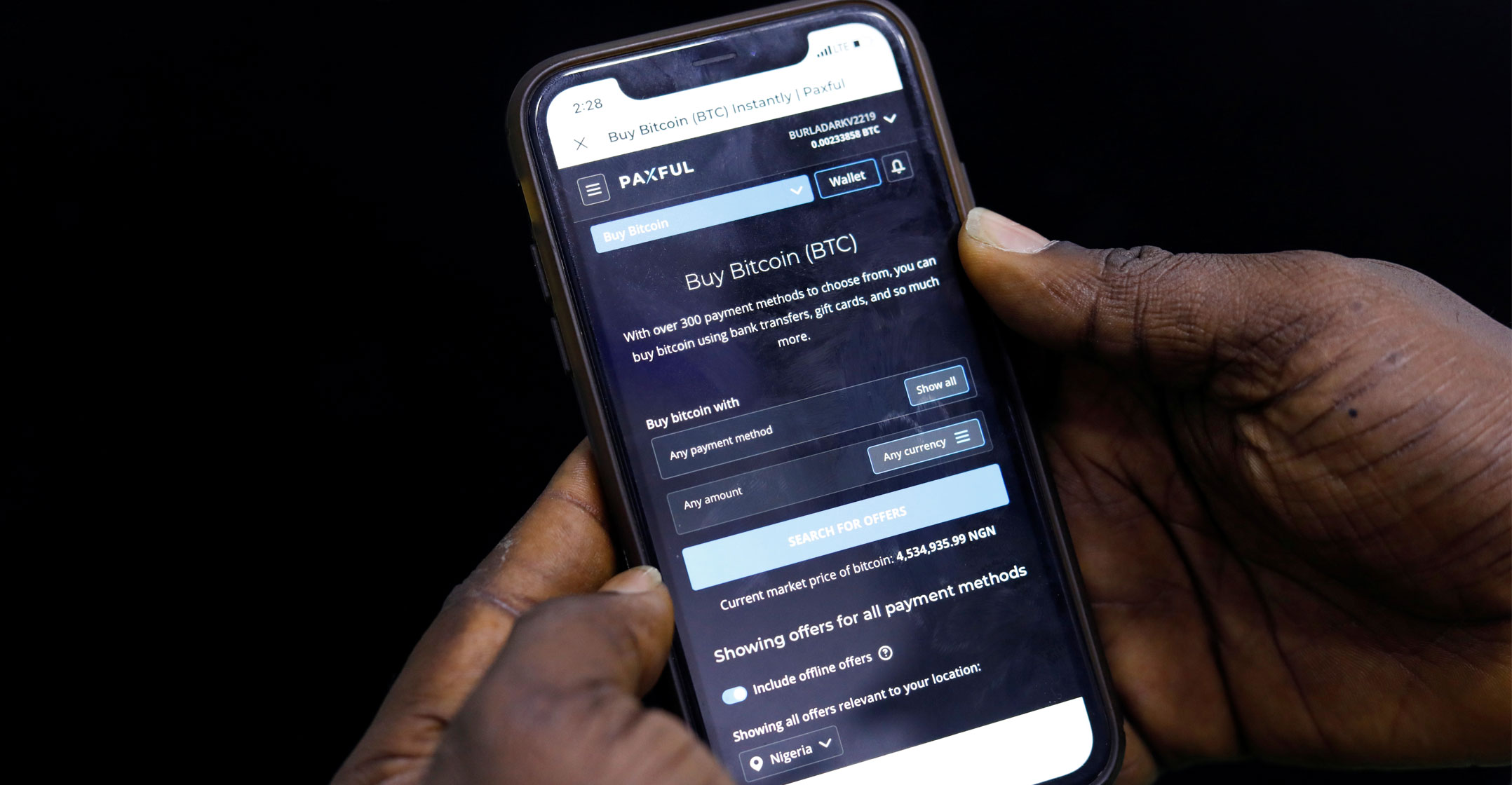
    Abolaji Odunjo, a gadget vendor who trades with bitcoin, demonstrates a bitcoin application on his mobile phone at his store at the Computer Village in Lagos, Nigeria. Temilade Adelaja/Reuters

    Four months ago, Abolaji Odunjo made a fundamental change to his business selling mobile phones in a bustling street market in Lagos: He started paying his suppliers in bitcoin.

    Odunjo sources handsets and accessories from China and the United Arab Emirates. His Chinese suppliers asked to be paid in the cryptocurrency, he said, for speed and convenience.

    The shift has boosted his profits, as he no longer has to buy dollars using the Nigerian naira or shell out fees to money-transfer firms. It is also one example of how, in Africa, bitcoin — the original and biggest cryptocurrency — is finding the practical use that it has largely failed to elsewhere.

    Bitcoin helped to protect my business against the currency devaluation, and enabled me to grow at the same time

    “Bitcoin helped to protect my business against the currency devaluation, and enabled me to grow at the same time,” Odunjo said from his two-by-eight metre shop.

    “You don’t have to pay charges, you don’t have to buy dollars,” the 30-year-old said, raising his voice above the sound of loud haggling and the honking horns of scooters.

    Odunjo is one of many people at the heart of a quiet bitcoin boom in Africa, driven by payments from small businesses as well as remittances sent home from migrant workers, according to data shared exclusively with Reuters and interviews with around 20 bitcoin users and five cryptocurrency exchanges.

    Leap in transfers

    Monthly cryptocurrency transfers to and from Africa of under US$10 000 — typically made by individuals and small businesses — jumped more than 55% in a year to reach $316-million in June, the data from US blockchain research firm Chainalysis shows.

    The number of monthly transfers also rose by almost half, surpassing 600 700, according to Chainalysis, which says the research is the most comprehensive effort yet to map out global crypto use. Much of the activity took place in Nigeria, the continent’s biggest economy, along with South Africa and Kenya.

    This represents a reversal for bitcoin which, despite its birth as a payments tool over a decade ago, has mainly been used for speculation by financial traders rather than for commerce.
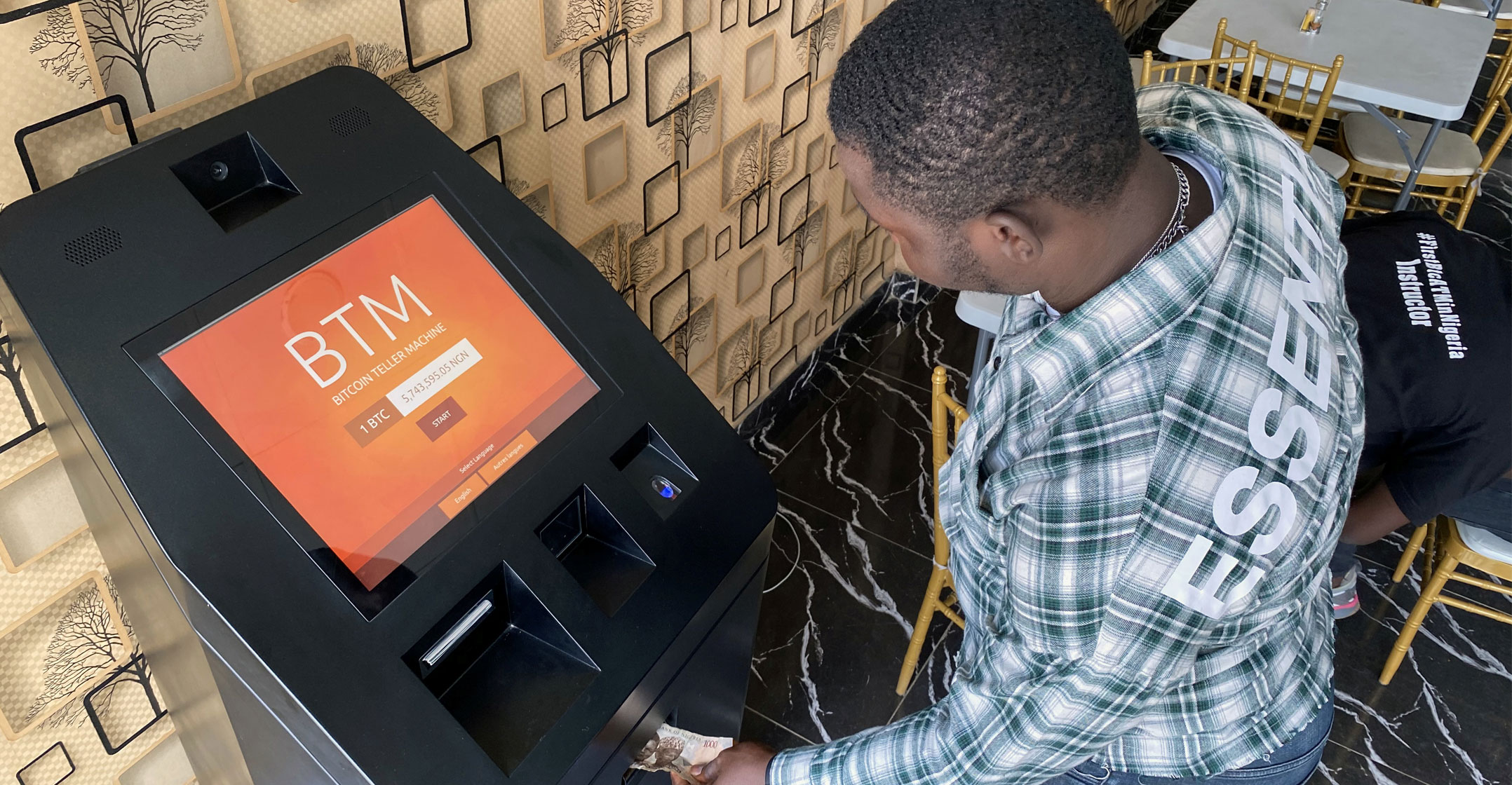
    A consumer buys bitcoin with naira on a bitcoin ATM in Lagos, Nigeria. Seun Sanni/Reuters

    Why a boom in Africa? Young, tech-savvy populations that have adapted quickly to bitcoin; weaker local currencies that make it harder to get dollars, the de facto currency of global trade; and complex bureaucracy that complicates money transfers.

    The bitcoin users interviewed, based in five countries from Nigeria to Botswana, said the cryptocurrency was helping people make their businesses nimbler and more profitable, and helping those working in places like Europe and North America hang on to more of the earnings they send home.

    Yet risks abound.

    Bitcoin and other cryptocurrencies are unregulated in many countries and their legal status is unclear, meaning there is no safety net and little recourse if you lose funds.

    Odunjo makes two or three transfers a month of around 0.5-0.7 bitcoin ($5 900-$8 300) each, to suppliers in Shanghai and Zhangzhou

    For many, converting local currencies to and from bitcoin relies on informal brokers. Prices are volatile, and buying and selling is a complex process that demands technical knowledge.

    In 2018, the Nigerian central bank warned cryptocurrencies were not legal tender, and investors were unprotected.

    A steady stream of customers comes and goes from Odunjo’s shop, one of a dozen units along a dark corridor in an indoor section of the market known as Computer Village.

    Odunjo makes two or three transfers a month of around 0.5-0.7 bitcoin ($5 900-$8 300) each, to suppliers in Shanghai and Zhangzhou. East Asia, Chainalysis found, is one of the top partners for bitcoin trading with Africa.

    Wider trends

    Odunjo’s trades offer a microcosm of the wider trends at play in both Nigeria and across the continent.

    In Nigeria, small cryptocurrency transfers totalled nearly $56-million in June, nearly 50% more than a year before. The number of transactions jumped over 55% to 120 000.

    Gauging how cryptocurrencies are used in particular locations is tough, though. Digital coins offer a high degree of anonymity, and though the value of transactions can be tracked on the blockchain, the identity or whereabouts of a user cannot.

    Chainalysis, which tracks crypto flows for financial firms and US law enforcement, gathered the data by analysing Web traffic and trading patterns, though locations can be obscured by virtual private networks. It separated transfers of under $10 000 from larger sums common among professional traders.

    With Nigeria’s oil-dependent economy rocked by low crude prices and Covid-19, the central bank has twice devalued the naira this year. As a result, Odunjo and other importers must pay more to buy increasingly scarce dollars.

    The naira’s fall has pushed many Nigerians towards bitcoin, the interviews showed, as they seek methods of purchasing goods from overseas without having to buy dollars.

    Sylvester Kalu, who runs a clothing starch maker in Uyo, eastern Nigeria, uses bitcoin to buy supplies from Istanbul and Shenzhen.

    “Everything is oil. When the price of oil dropped, forex became scare,” he said. “That became a very big problem.”

    Everything is oil. When the price of oil dropped, forex became scare. That became a very big problem

    The 30-year-old said his transactions totalled around two bitcoin ($20 000) a time, adding: “I don’t need anyone in the banks, I don’t need a person to use the back door to get dollars.”

    Timi Ajiboye, who runs Lagos exchange BuyCoins, said its monthly cryptocurrency volumes jumped over three-fold to $21-million in June after the naira was devalued in March. Exchanges across Africa spoke of a similar boom.

    Yellow Card, which operates in five countries, said its monthly crypto volumes had jumped five-fold in 2020 to $25-million in August. A big driver was workers using bitcoin for remittances, it added.

    Quicker and cheaper

    Luno said the combined monthly bitcoin trading volumes of all market participants in South Africa and Nigeria had jumped by half this year to more than $536-million in August.

    For some people working abroad, in other continents or other African countries, sending money home via bitcoin can be quicker and cheaper.

    A Nigerian worker in London sending £100 in cash to Lagos via a big traditional money-transfer firm, for example, would pay fees of around 5%. Costs are lower when sending larger amounts or using a debit card, but the exchange rates on offer are typically several percentage points less favourable than the market rate.

    Bitcoin fees vary depending on the exchange or broker, but would typically total about 2%-2.5% for sending £100. However, both exchanges and over-the-counter (OTC) brokers carry risks, from hacks to scams.

    And bitcoin, while handy for transfers, isn’t much use on the ground — shops and landlords rarely accept it, for instance. This means friends or family sent funds by workers must convert it back to traditional currency, often via a broker at their end, introducing additional risk.

    Yet the bitcoin users interviewed said many OTC brokers, who rely on word-of-mouth reviews, functioned reliably in an increasingly competitive market and were loath to imperil the reputations they needed to stay in business.

    And for a growing number of people, the potential rewards outweigh the pitfalls.

    “People are very adoptive of any technology that will make their life easier,” said Frankline Kihiu, a crypto broker in Kenya’s capital, Nairobi. “In most African countries, there are lots of government restrictions that bitcoin takes away.”  — Reported by Alexis Akwagyiram and Tom Wilson, with additional reporting by Nneka Chile, (c) 2020 Reuters


    Follow TechCentral on Google News Add TechCentral as your preferred source on Google


    Abolaji Odunjo Bitcoin top
    WhatsApp YouTube
    Share. Facebook Twitter LinkedIn WhatsApp Telegram Email Copy Link
    Previous ArticleMustek revenue climbs 9% despite lockdown
    Next Article Transaction Capital swoops on WeBuyCars

    Related Posts

    Bitcoin at $65 000: stalled, or simply early?

    Bitcoin at $65 000: stalled, or simply early?

    22 July 2026
    Quantum computers are coming for bitcoin

    Quantum computers are coming for bitcoin

    9 July 2026
    More pain ahead for bitcoin investors

    More pain ahead for bitcoin investors

    10 June 2026
    Company News
    Paratus Rwanda marks first year with AfPIF opening reception

    Paratus Rwanda marks first year with AfPIF opening reception

    18 August 2026
    Digital sovereignty on the agenda at Africa Cybersecurity Indaba

    Digital sovereignty on the agenda at Africa Cybersecurity Indaba

    18 August 2026
    Avast, AVG and Norton in 2026: smarter security for a new generation of threats

    Avast, AVG and Norton in 2026: smarter security for a new generation of threats

    17 August 2026
    Opinion
    The author, Jannie van Zyl

    Selling vapour is corporate suicide in slow motion

    16 July 2026
    Brazil's online gambling crackdown is a lesson for South Africa

    How Amazon outmanoeuvred Starlink in South Africa

    15 July 2026
    The Popia problem with agentic AI - Herman Haasbroek

    The Popia problem with agentic AI

    14 July 2026

    Subscribe to Updates

    Get the best South African technology news and analysis delivered to your e-mail inbox every morning.

    Latest Posts
    Paratus Rwanda marks first year with AfPIF opening reception

    Paratus Rwanda marks first year with AfPIF opening reception

    18 August 2026
    Digital sovereignty on the agenda at Africa Cybersecurity Indaba

    Digital sovereignty on the agenda at Africa Cybersecurity Indaba

    18 August 2026
    Your iPhone is about to get a massive upgrade

    Your iPhone is about to get a massive upgrade

    18 August 2026
    Absa writes off another R200-million in software - Johnson Idesoh

    Absa writes off another R200-million in software

    18 August 2026
    © 2009 - 2026 NewsCentral Media
    Built and maintained by Chronon
    • Cookie policy (ZA)
    • TechCentral – privacy and Popia

    Type above and press Enter to search. Press Esc to cancel.

    Manage consent

    TechCentral uses cookies to enhance its offerings. Consenting to these technologies allows us to serve you better. Not consenting or withdrawing consent may adversely affect certain features and functions of the website.

    Functional Always active
    The technical storage or access is strictly necessary for the legitimate purpose of enabling the use of a specific service explicitly requested by the subscriber or user, or for the sole purpose of carrying out the transmission of a communication over an electronic communications network.
    Preferences
    The technical storage or access is necessary for the legitimate purpose of storing preferences that are not requested by the subscriber or user.
    Statistics
    The technical storage or access that is used exclusively for statistical purposes. The technical storage or access that is used exclusively for anonymous statistical purposes. Without a subpoena, voluntary compliance on the part of your Internet Service Provider, or additional records from a third party, information stored or retrieved for this purpose alone cannot usually be used to identify you.
    Marketing
    The technical storage or access is required to create user profiles to send advertising, or to track the user on a website or across several websites for similar marketing purposes.
    • Manage options
    • Manage services
    • Manage {vendor_count} vendors
    • Read more about these purposes
    View preferences
    • {title}
    • {title}
    • {title}