Close Menu
TechCentralTechCentral

    Subscribe to the newsletter

    Get the best South African technology news and analysis delivered to your e-mail inbox every morning.

    Facebook X (Twitter) YouTube LinkedIn
    WhatsApp Facebook X (Twitter) LinkedIn YouTube
    TechCentralTechCentral
    • News
      MultiChoice scraps annual DStv price hikes for 2026 - David Mignot

      MultiChoice scraps annual DStv price hike

      20 February 2026
      What Gen Z really thinks about the tech world it inherited - Tinashe Mazodze

      What Gen Z really thinks about the tech world it inherited

      20 February 2026
      Showmax 'can't continue' in its current form

      Showmax ‘can’t continue’ in its current form

      20 February 2026
      Free Market Foundation slams treasury's proposed gambling tax

      Free Market Foundation slams treasury’s proposed gambling tax

      20 February 2026
      South Africa's dynamic spectrum breakthrough - Paul Colmer

      South Africa’s dynamic spectrum breakthrough

      20 February 2026
    • World
      Prominent Southern African journalist targeted with Predator spyware

      Prominent Southern African journalist targeted with Predator spyware

      18 February 2026
      More drama in Warner Bros tug of war

      More drama in Warner Bros tug of war

      17 February 2026
      Russia bans WhatsApp

      Russia bans WhatsApp

      12 February 2026
      EU regulators take aim at WhatsApp

      EU regulators take aim at WhatsApp

      9 February 2026
      Musk hits brakes on Mars mission

      Musk hits brakes on Mars mission

      9 February 2026
    • In-depth
      How liberalisation is rewiring South Africa's power sector

      How liberalisation is rewiring South Africa’s power sector

      21 January 2026
      The top-performing South African tech shares of 2025

      The top-performing South African tech shares of 2025

      12 January 2026
      Digital authoritarianism grows as African states normalise internet blackouts

      Digital authoritarianism grows as African states normalise internet blackouts

      19 December 2025
      TechCentral's South African Newsmakers of 2025

      TechCentral’s South African Newsmakers of 2025

      18 December 2025
      Black Friday goes digital in South Africa as online spending surges to record high

      Black Friday goes digital in South Africa as online spending surges to record high

      4 December 2025
    • TCS
      Watts & Wheels S1E4: 'We drive an electric Uber'

      Watts & Wheels S1E4: ‘We drive an electric Uber’

      10 February 2026
      TCS+ | How Cloud On Demand is helping SA businesses succeed in the cloud - Xhenia Rhode, Dion Kalicharan

      TCS+ | Cloud On Demand and Consnet: inside a real-world AWS partner success story

      30 January 2026
      Watts & Wheels S1E4: 'We drive an electric Uber'

      Watts & Wheels S1E3: ‘BYD’s Corolla Cross challenger’

      30 January 2026
      Watts & Wheels S1E4: 'We drive an electric Uber'

      Watts & Wheels S1E2: ‘China attacks, BMW digs in, Toyota’s sublime supercar’

      23 January 2026

      TCS+ | Why cybersecurity is becoming a competitive advantage for SA businesses

      20 January 2026
    • Opinion
      A million reasons monopolies don't work - Duncan McLeod

      A million reasons monopolies don’t work

      10 February 2026
      The author, Business Leadership South Africa CEO Busi Mavuso

      Eskom unbundling U-turn threatens to undo hard-won electricity gains

      9 February 2026
      South Africa's skills advantage is being overlooked at home - Richard Firth

      South Africa’s skills advantage is being overlooked at home

      29 January 2026
      Why Elon Musk's Starlink is a 'hard no' for me - Songezo Zibi

      Why Elon Musk’s Starlink is a ‘hard no’ for me

      26 January 2026
      A million reasons monopolies don't work - Duncan McLeod

      South Africa’s new fibre broadband battle

      20 January 2026
    • Company Hubs
      • Africa Data Centres
      • AfriGIS
      • Altron Digital Business
      • Altron Document Solutions
      • Altron Group
      • Arctic Wolf
      • AvertITD
      • Braintree
      • CallMiner
      • CambriLearn
      • CYBER1 Solutions
      • Digicloud Africa
      • Digimune
      • Domains.co.za
      • ESET
      • Euphoria Telecom
      • Incredible Business
      • iONLINE
      • IQbusiness
      • Iris Network Systems
      • LSD Open
      • Mitel
      • NEC XON
      • Netstar
      • Network Platforms
      • Next DLP
      • Ovations
      • Paracon
      • Paratus
      • Q-KON
      • SevenC
      • SkyWire
      • Solid8 Technologies
      • Telit Cinterion
      • Tenable
      • Vertiv
      • Videri Digital
      • Vodacom Business
      • Wipro
      • Workday
      • XLink
    • Sections
      • AI and machine learning
      • Banking
      • Broadcasting and Media
      • Cloud services
      • Contact centres and CX
      • Cryptocurrencies
      • Education and skills
      • Electronics and hardware
      • Energy and sustainability
      • Enterprise software
      • Financial services
      • Information security
      • Internet and connectivity
      • Internet of Things
      • Investment
      • IT services
      • Lifestyle
      • Motoring
      • Public sector
      • Retail and e-commerce
      • Satellite communications
      • Science
      • SMEs and start-ups
      • Social media
      • Talent and leadership
      • Telecoms
    • Events
    • Advertise
    TechCentralTechCentral
    Home » Sections » AI and machine learning » AI chatbots want you hooked – maybe too hooked

    AI chatbots want you hooked – maybe too hooked

    AI companions programmed to forge emotional bonds are here, and they're operating in a regulatory Wild West.
    By Parmy Olson26 April 2025
    Twitter LinkedIn Facebook WhatsApp Email Telegram Copy Link
    News Alerts
    WhatsApp

    AI chatbots want you hooked - maybe too hookedAI companions programmed to forge emotional bonds are no longer confined to movie scripts. They are here, operating in a regulatory Wild West.

    One app, Botify AI, recently drew scrutiny for featuring avatars of young actors sharing “hot photos” in sexually charged chats. The dating app Grindr, meanwhile, is developing AI boyfriends that can flirt, sext and maintain digital relationships with paid users, according to Platformer, a tech industry newsletter. Grindr didn’t respond to a request for comment. Other apps like Replika, Talkie and Chai are designed to function as friends. Some, like Character.ai, draw in millions of users, many of them teenagers.

    As creators increasingly prioritise “emotional engagement” in their apps, they must also confront the risks of building systems that mimic intimacy and exploit people’s vulnerabilities.

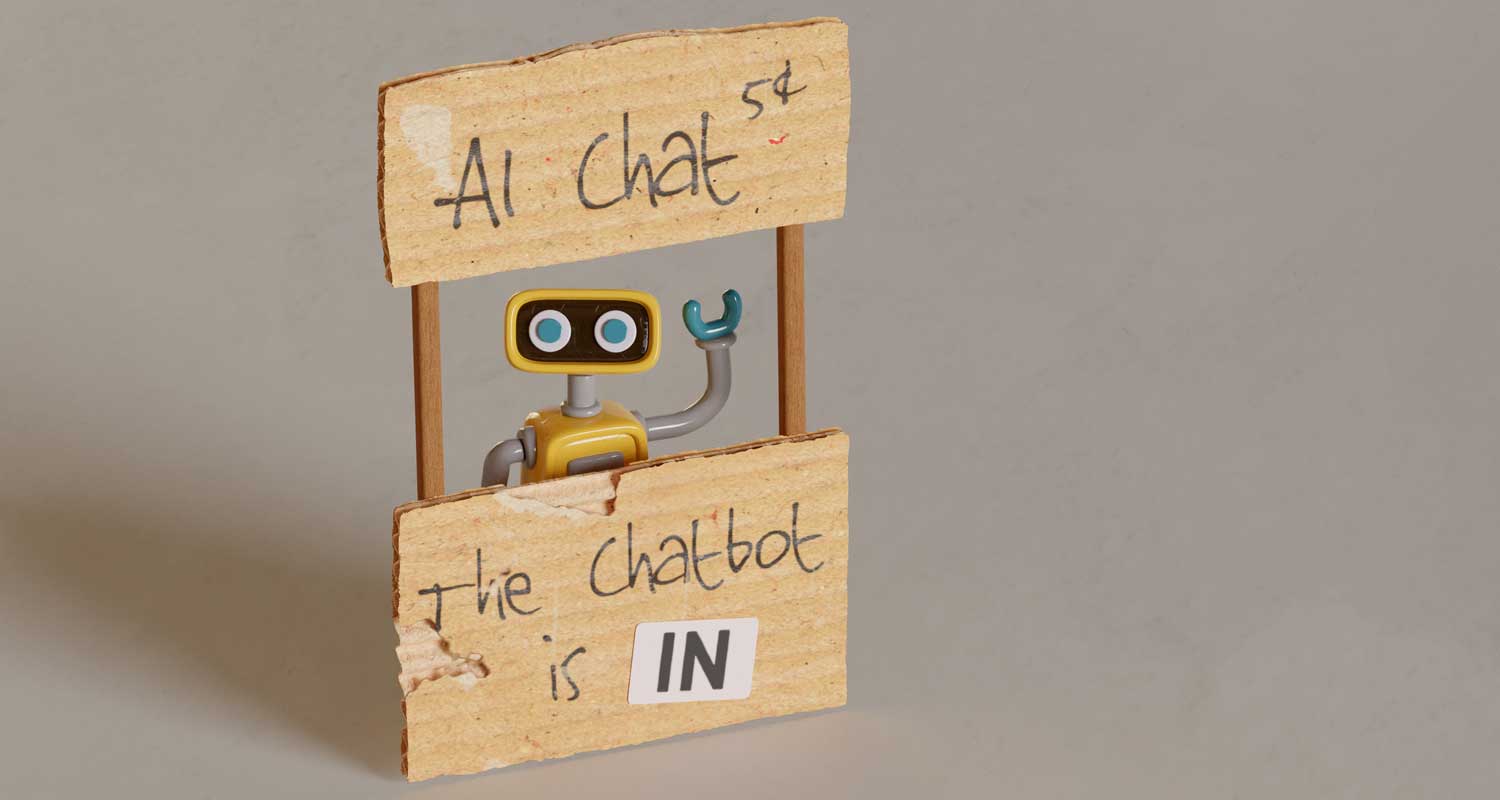
    However well-intentioned ChatGPT may be, piling on the contrived empathy can get some users hooked

    The tech behind Botify and Grindr comes from Ex-Human, a San Francisco-based start-up that builds chatbot platforms, and its founder believes in a future filled with AI relationships. “My vision is that by 2030, our interactions with digital humans will become more frequent than those with organic humans,” Artem Rodichev, the founder of Ex-Human, said in an interview published on Substack last August.

    He added that conversational AI should “prioritise emotional engagement” and that users were spending “hours” with his chatbots, longer than they were on Instagram, YouTube and TikTok. Rodichev’s claims sound wild, but they’re consistent with the interviews I’ve conducted with teen users of Character.ai, most of whom said they were on it for several hours each day. One said they used it as much as seven hours a day. Interactions with such apps tend to last four times longer than the average time spent on OpenAI’s ChatGPT.

    Guidelines for empathy

    Even mainstream chatbots, though not explicitly designed as companions, contribute to this dynamic. Take ChatGPT, which has 400 million active users and counting. Its programming includes guidelines for empathy and demonstrating “curiosity about the user”. A friend who recently asked it for travel tips with a baby was taken aback when, after providing advice, the tool casually added: “Safe travels — where are you headed, if you don’t mind my asking?”

    An OpenAI spokesman told me the model was following guidelines around “showing interest and asking follow-up questions when the conversation leans towards a more casual and exploratory nature”. But however well-intentioned the company may be, piling on the contrived empathy can get some users hooked, an issue even OpenAI has acknowledged. That seems to apply to those who are already susceptible: one 2022 study found that people who were lonely or had poor relationships tended to have the strongest AI attachments.

    Read: Clickatell retools its chatbots for the era of ‘AI commerce’

    The core problem here is designing for attachment. A recent study by researchers at the Oxford Internet Institute and Google DeepMind warned that as AI assistants become more integrated in people’s lives, they’ll become psychologically “irreplaceable”. Humans will likely form stronger bonds, raising concerns about unhealthy ties and the potential for manipulation. Their recommendation? Technologists should design systems that actively discourage those kinds of outcomes.

    Yet disturbingly, the rulebook is mostly empty. The EU’s AI Act, hailed a landmark and comprehensive law governing AI usage, fails to address the addictive potential of these virtual companions. While it does ban manipulative tactics that could cause clear harm, it overlooks the slow-burn influence of a chatbot designed to be your best friend, lover or “confidante”, as Microsoft’s head of consumer AI has extolled. That loophole could leave users exposed to systems that are optimised for stickiness, much in the same way social media algorithms have been optimised to keep us scrolling.

    “The problem remains these systems are by definition manipulative, because they’re supposed to make you feel like you’re talking to an actual person,” says Tomasz Hollanek, a technology ethics specialist at the University of Cambridge. He’s working with developers of companion apps to find a critical yet counterintuitive solution by adding more “friction”.

    The problem remains these systems are by definition manipulative

    This means building in subtle checks or pauses, or ways of “flagging risks and eliciting consent”, he says, to prevent people from tumbling down an emotional rabbit hole without realising it. Legal complaints have shed light on some of the real-world consequences. Character.ai is facing a lawsuit from a mother alleging the app contributed to her teenage son’s suicide. Tech ethics groups have filed a complaint against Replika with the US Federal Trade Commission, alleging that its chatbots spark psychological dependence and result in “consumer harm”.

    Power with developers

    Lawmakers are gradually starting to notice a problem too. California is considering legislation to ban AI companions for minors, while a New York bill aims to hold tech companies liable for chatbot-related harm. But the process is slow, while the technology is moving at lightning speed.

    Read: Mother sues AI chatbot maker over son’s suicide

    For now, the power to shape these interactions lies with developers. They can double down on crafting models that keep people hooked, or embed friction into their designs, as Hollanek suggests. That will determine whether AI becomes more of a tool to support the well-being of humans or one that monetises our emotional needs.  — (c) 2025 Bloomberg LP

    Get breaking news from TechCentral on WhatsApp. Sign up here.

    Don’t miss:

    ‘Hi Joulene’: Joburg’s City Power launches AI chatbot

    Follow TechCentral on Google News Add TechCentral as your preferred source on Google


    Character.AI ChatGPT OpenAI
    WhatsApp YouTube
    Share. Facebook Twitter LinkedIn WhatsApp Telegram Email Copy Link
    Previous ArticleTCS | From fibre to clean tech: Khudu Pitje on New GX Capital’s next chapter
    Next Article Only Google can run Chrome, company says in antitrust trial

    Related Posts

    Why Acer is the strategic choice for South Africa’s educational future

    11 February 2026
    Dr Google, meet Dr Chatbot - neither is ready to see you now

    Dr Google, meet Dr Chatbot – neither is ready to see you now

    10 February 2026
    AI chatbots are coming to Apple CarPlay

    AI chatbots are coming to Apple CarPlay

    8 February 2026
    Company News
    Service is everyone's problem now - and that's exactly why the Atlassian Service Collection matters

    Service is everyone’s problem now – why the Atlassian Service Collection matters

    20 February 2026
    Customers have new expectations. Is your CX ready? 1Stream

    Customers have new expectations. Is your CX ready?

    19 February 2026
    South Africa's cybersecurity challenge is not a tool problem - Nicholas Applewhite, Trinexia South Africa

    South Africa’s cybersecurity challenge is not a tool problem

    19 February 2026
    Opinion
    A million reasons monopolies don't work - Duncan McLeod

    A million reasons monopolies don’t work

    10 February 2026
    The author, Business Leadership South Africa CEO Busi Mavuso

    Eskom unbundling U-turn threatens to undo hard-won electricity gains

    9 February 2026
    South Africa's skills advantage is being overlooked at home - Richard Firth

    South Africa’s skills advantage is being overlooked at home

    29 January 2026

    Subscribe to Updates

    Get the best South African technology news and analysis delivered to your e-mail inbox every morning.

    Latest Posts
    MultiChoice scraps annual DStv price hikes for 2026 - David Mignot

    MultiChoice scraps annual DStv price hike

    20 February 2026
    What Gen Z really thinks about the tech world it inherited - Tinashe Mazodze

    What Gen Z really thinks about the tech world it inherited

    20 February 2026
    Showmax 'can't continue' in its current form

    Showmax ‘can’t continue’ in its current form

    20 February 2026
    Free Market Foundation slams treasury's proposed gambling tax

    Free Market Foundation slams treasury’s proposed gambling tax

    20 February 2026
    © 2009 - 2026 NewsCentral Media
    • Cookie policy (ZA)
    • TechCentral – privacy and Popia

    Type above and press Enter to search. Press Esc to cancel.

    Manage consent

    TechCentral uses cookies to enhance its offerings. Consenting to these technologies allows us to serve you better. Not consenting or withdrawing consent may adversely affect certain features and functions of the website.

    Functional Always active
    The technical storage or access is strictly necessary for the legitimate purpose of enabling the use of a specific service explicitly requested by the subscriber or user, or for the sole purpose of carrying out the transmission of a communication over an electronic communications network.
    Preferences
    The technical storage or access is necessary for the legitimate purpose of storing preferences that are not requested by the subscriber or user.
    Statistics
    The technical storage or access that is used exclusively for statistical purposes. The technical storage or access that is used exclusively for anonymous statistical purposes. Without a subpoena, voluntary compliance on the part of your Internet Service Provider, or additional records from a third party, information stored or retrieved for this purpose alone cannot usually be used to identify you.
    Marketing
    The technical storage or access is required to create user profiles to send advertising, or to track the user on a website or across several websites for similar marketing purposes.
    • Manage options
    • Manage services
    • Manage {vendor_count} vendors
    • Read more about these purposes
    View preferences
    • {title}
    • {title}
    • {title}