Close Menu
TechCentralTechCentral

    Subscribe to the newsletter

    Get the best South African technology news and analysis delivered to your e-mail inbox every morning.

    Facebook X (Twitter) YouTube LinkedIn
    WhatsApp Facebook X (Twitter) LinkedIn YouTube
    TechCentralTechCentral
    • News
      Censorship-resistant internet from space - Spacecoin

      Censorship-resistant internet from space

      12 February 2026
      Chip shortage hits PCs as AI swallows the world's memory supply

      Chip shortage hits PCs as AI swallows the world’s memory supply

      12 February 2026
      Here comes the next wave of Chinese AI models

      Here comes the next wave of Chinese AI models

      12 February 2026
      Jumia aims for profit as it fends off Chinese rivals

      Jumia aims for profit as it fends off Chinese rivals

      12 February 2026
      Broadband Infraco in limbo

      Broadband Infraco in limbo

      11 February 2026
    • World
      EU regulators take aim at WhatsApp

      EU regulators take aim at WhatsApp

      9 February 2026
      Musk hits brakes on Mars mission

      Musk hits brakes on Mars mission

      9 February 2026
      Crypto firm accidentally sends R700-billion in bitcoin to its users

      Crypto firm accidentally sends R700-billion in bitcoin to its users

      8 February 2026
      AI won't replace software, says Nvidia CEO amid market rout - Jensen Huang

      AI won’t replace software, says Nvidia CEO amid market rout

      4 February 2026
      Apple acquires audio AI start-up Q.ai

      Apple acquires audio AI start-up Q.ai

      30 January 2026
    • In-depth
      How liberalisation is rewiring South Africa's power sector

      How liberalisation is rewiring South Africa’s power sector

      21 January 2026
      The top-performing South African tech shares of 2025

      The top-performing South African tech shares of 2025

      12 January 2026
      Digital authoritarianism grows as African states normalise internet blackouts

      Digital authoritarianism grows as African states normalise internet blackouts

      19 December 2025
      TechCentral's South African Newsmakers of 2025

      TechCentral’s South African Newsmakers of 2025

      18 December 2025
      Black Friday goes digital in South Africa as online spending surges to record high

      Black Friday goes digital in South Africa as online spending surges to record high

      4 December 2025
    • TCS
      Watts & Wheels S1E4: 'We drive an electric Uber'

      Watts & Wheels S1E4: ‘We drive an electric Uber’

      10 February 2026
      TCS+ | How Cloud On Demand is helping SA businesses succeed in the cloud - Xhenia Rhode, Dion Kalicharan

      TCS+ | Cloud On Demand and Consnet: inside a real-world AWS partner success story

      30 January 2026
      Watts & Wheels S1E4: 'We drive an electric Uber'

      Watts & Wheels S1E3: ‘BYD’s Corolla Cross challenger’

      30 January 2026
      Watts & Wheels S1E4: 'We drive an electric Uber'

      Watts & Wheels S1E2: ‘China attacks, BMW digs in, Toyota’s sublime supercar’

      23 January 2026

      TCS+ | Why cybersecurity is becoming a competitive advantage for SA businesses

      20 January 2026
    • Opinion
      South Africa's skills advantage is being overlooked at home - Richard Firth

      South Africa’s skills advantage is being overlooked at home

      29 January 2026
      Why Elon Musk's Starlink is a 'hard no' for me - Songezo Zibi

      Why Elon Musk’s Starlink is a ‘hard no’ for me

      26 January 2026
      South Africa's new fibre broadband battle - Duncan McLeod

      South Africa’s new fibre broadband battle

      20 January 2026
      AI moves from pilots to production in South African companies - Nazia Pillay SAP

      AI moves from pilots to production in South African companies

      20 January 2026
      South Africa's new fibre broadband battle - Duncan McLeod

      ANC’s attack on Solly Malatsi shows how BEE dogma trumps economic reality

      14 December 2025
    • Company Hubs
      • Africa Data Centres
      • AfriGIS
      • Altron Digital Business
      • Altron Document Solutions
      • Altron Group
      • Arctic Wolf
      • AvertITD
      • Braintree
      • CallMiner
      • CambriLearn
      • CYBER1 Solutions
      • Digicloud Africa
      • Digimune
      • Domains.co.za
      • ESET
      • Euphoria Telecom
      • Incredible Business
      • iONLINE
      • IQbusiness
      • Iris Network Systems
      • LSD Open
      • Mitel
      • NEC XON
      • Netstar
      • Network Platforms
      • Next DLP
      • Ovations
      • Paracon
      • Paratus
      • Q-KON
      • SevenC
      • SkyWire
      • Solid8 Technologies
      • Telit Cinterion
      • Tenable
      • Vertiv
      • Videri Digital
      • Vodacom Business
      • Wipro
      • Workday
      • XLink
    • Sections
      • AI and machine learning
      • Banking
      • Broadcasting and Media
      • Cloud services
      • Contact centres and CX
      • Cryptocurrencies
      • Education and skills
      • Electronics and hardware
      • Energy and sustainability
      • Enterprise software
      • Financial services
      • Information security
      • Internet and connectivity
      • Internet of Things
      • Investment
      • IT services
      • Lifestyle
      • Motoring
      • Public sector
      • Retail and e-commerce
      • Satellite communications
      • Science
      • SMEs and start-ups
      • Social media
      • Talent and leadership
      • Telecoms
    • Events
    • Advertise
    TechCentralTechCentral
    Home » Opinion » All is not well in technology land

    All is not well in technology land

    By Alistair Fairweather10 March 2014
    Twitter LinkedIn Facebook WhatsApp Email Telegram Copy Link
    News Alerts
    WhatsApp

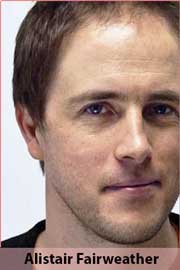
    Alistair-Fairweather-180-profileAll is not well in technology land. The normally ebullient mood at the annual SxSW Interactive conference is darker this year, weighed down by concerns about the prying eyes of governments. A keynote address by WikiLeaks co-founder Julian Assange over the weekend captured this growing unease.

    Speaking to a packed audience via video conference, Assange contrasted the relative comfort of his confinement in the Ecuadorian embassy in London with the plight of prisoners around the world. But for nearly two years he has essentially been in prison.

    “Outside the embassy at any one point there are at least a dozen police… The UK government has admitted to spending US$8m on surveillance of the embassy alone,” Assange said, which he feels illustrates just how much money a government is willing to spend to “keep its prestige” in a situation of “international conflict”. Asked about how governments should be reacting to the revelations about abuses by the National Security Agency (NSA) and UK Government Communications Headquarters (GCHQ), Assange takes a long view on the issue.

    To him this problem has been developing for more than 20 years, since the fall of the Soviet Union, and is the natural result of “75% of military spending” residing in “one power block: Nato”. In Assange’s view, the NSA has grown, unfettered, into a “rogue agency”. As the Internet has come to include so much of our personal and economic lives, the NSA and GCHQ have been “sucking all this up”. Given the constant exponential growth in the power of computing and a relatively stable population, “the ability to surveil everyone on the planet is almost there, and arguably will be there in a few years.”

    This is “a huge transfer of power from the people who are surveilled to the people who control the surveillance”. And this isn’t just the product of a single agency in Washington but a “fluid postmodern amalgam of agencies and private contractors, many of whom are transnational”. The Edward Snowden case and the raw power brought to bear on efforts to detain the whistleblower represent, for Assange, a kind of global wake-up call for ordinary citizens.

    We began to ask: “How is it that the Internet, that was looked upon as the greatest tool for human emancipation that has ever been, had been co-opted … for the most aggressive form of state surveillance that had ever been?” This foreshadows a kind of “new totalitarian world … not in the sense of Stalin or Pol Pot, but totalitarian in the sense that surveillance is total, no one can exist outside of the state”.

    In just four years, the Internet has transformed from a quite “apathetic” space into a political battlefield. Assange praises activists and journalists such as Glenn Greenwald (who is also speaking at SXSW), Laura Poitras and Jacob Appelbaum. All of these people are now living outside of the US and the UK in “effective exile” in countries such as Brazil and Germany. “There’s an exodus of national security reporters, national security reporters are a new type of refugee.”

    Ironically, the Internet allows these people to continue work and do so without fear of arrest or harassment by the governments about which they are reporting. These new nodes of reportage can “bring some restraint to the growing militarism” of the US and UK, he says. Later Assange is even more blunt: “There has been a militarisation of our civilian space — an occupation of our civilian space.” You might be tempted to dismiss Assange as a lone kook or a dangerous attention seeker, but earlier in the conference, Eric Schmidt, the chairman of Google, was equally blunt about his views on the US’s security apparatus.

    Watch Julian Assange’s presentation to SXSW:

    “In 2010, we were attacked by the Chinese government, in 2013 we were attacked by the US government — that’s a fact.” Schmidt describes how, when Google discovered that the NSA was tapping the Internet and trying to reverse engineer its data, the company simply began encrypting all the points along the network. “Now we’re fairly sure that information inside Google is safe from the prying eyes of governments — including the US.”

    The line-up for the rest of SXSW, normally packed with hyper-optimistic visions of tech utopia, is full of sessions on privacy, surveillance, cyber warfare and defensive encryption strategies. It’s clear that America’s tech elite are no longer able to rise above the messy sphere of politics — and this transition is deeply uncomfortable to them.

    But, as is always the case with this bleeding edge of technology genius, they are looking for solutions instead of dwelling on problems. If Assange represents a new class of global whistleblowers, the entrepreneurs and engineers at SXSW represent the engine room of the machine that will resist abuse of government power.

    Even in the midst of the current gloom, it’s hard not to get caught up in their unfaltering shared mission: “We can make the world a better place.”  — (c) 2014 Mail & Guardian

    • Alistair Fairweather is chief technology officer at the Mail & Guardian
    • Visit the Mail & Guardian Online, the smart news source


    Alistair Fairweather Eric Schmidt GCHQ Google Julian Assange NSA
    WhatsApp YouTube Follow on Google News Add as preferred source on Google
    Share. Facebook Twitter LinkedIn WhatsApp Telegram Email Copy Link
    Previous ArticleBCX snaps up African IT firms
    Next Article Pistorius trial media circus in numbers

    Related Posts

    Dr Google, meet Dr Chatbot - neither is ready to see you now

    Dr Google, meet Dr Chatbot – neither is ready to see you now

    10 February 2026
    AI chatbots are coming to Apple CarPlay

    AI chatbots are coming to Apple CarPlay

    8 February 2026
    From stocks to crypto, markets reel as AI doubts grow

    From stocks to crypto, markets reel as AI doubts grow

    6 February 2026
    Company News
    How NEC XON tackled identity risk for a major telco - Michael de Neuilly Rice

    How NEC XON tackled identity risk for a major telco

    11 February 2026

    Why Acer is the strategic choice for South Africa’s educational future

    11 February 2026
    Fyndae is building Africa's human verification layer for community security and collaboration

    Fyndae wants to turn lost-item recovery into Africa’s trust infrastructure

    11 February 2026
    Opinion
    South Africa's skills advantage is being overlooked at home - Richard Firth

    South Africa’s skills advantage is being overlooked at home

    29 January 2026
    Why Elon Musk's Starlink is a 'hard no' for me - Songezo Zibi

    Why Elon Musk’s Starlink is a ‘hard no’ for me

    26 January 2026
    South Africa's new fibre broadband battle - Duncan McLeod

    South Africa’s new fibre broadband battle

    20 January 2026

    Subscribe to Updates

    Get the best South African technology news and analysis delivered to your e-mail inbox every morning.

    Latest Posts
    Censorship-resistant internet from space - Spacecoin

    Censorship-resistant internet from space

    12 February 2026
    Chip shortage hits PCs as AI swallows the world's memory supply

    Chip shortage hits PCs as AI swallows the world’s memory supply

    12 February 2026
    Here comes the next wave of Chinese AI models

    Here comes the next wave of Chinese AI models

    12 February 2026
    Jumia aims for profit as it fends off Chinese rivals

    Jumia aims for profit as it fends off Chinese rivals

    12 February 2026
    © 2009 - 2026 NewsCentral Media
    • Cookie policy (ZA)
    • TechCentral – privacy and Popia

    Type above and press Enter to search. Press Esc to cancel.

    Manage consent

    TechCentral uses cookies to enhance its offerings. Consenting to these technologies allows us to serve you better. Not consenting or withdrawing consent may adversely affect certain features and functions of the website.

    Functional Always active
    The technical storage or access is strictly necessary for the legitimate purpose of enabling the use of a specific service explicitly requested by the subscriber or user, or for the sole purpose of carrying out the transmission of a communication over an electronic communications network.
    Preferences
    The technical storage or access is necessary for the legitimate purpose of storing preferences that are not requested by the subscriber or user.
    Statistics
    The technical storage or access that is used exclusively for statistical purposes. The technical storage or access that is used exclusively for anonymous statistical purposes. Without a subpoena, voluntary compliance on the part of your Internet Service Provider, or additional records from a third party, information stored or retrieved for this purpose alone cannot usually be used to identify you.
    Marketing
    The technical storage or access is required to create user profiles to send advertising, or to track the user on a website or across several websites for similar marketing purposes.
    • Manage options
    • Manage services
    • Manage {vendor_count} vendors
    • Read more about these purposes
    View preferences
    • {title}
    • {title}
    • {title}