Close Menu
TechCentralTechCentral

    Subscribe to the newsletter

    Get the best South African technology news and analysis delivered to your e-mail inbox every morning.

    Facebook X (Twitter) YouTube LinkedIn
    WhatsApp Facebook X (Twitter) LinkedIn YouTube
    TechCentralTechCentral
    • News
      MultiChoice scraps annual DStv price hikes for 2026 - David Mignot

      MultiChoice scraps annual DStv price hike

      20 February 2026
      What Gen Z really thinks about the tech world it inherited - Tinashe Mazodze

      What Gen Z really thinks about the tech world it inherited

      20 February 2026
      Showmax 'can't continue' in its current form

      Showmax ‘can’t continue’ in its current form

      20 February 2026
      Free Market Foundation slams treasury's proposed gambling tax

      Free Market Foundation slams treasury’s proposed gambling tax

      20 February 2026
      South Africa's dynamic spectrum breakthrough - Paul Colmer

      South Africa’s dynamic spectrum breakthrough

      20 February 2026
    • World
      Prominent Southern African journalist targeted with Predator spyware

      Prominent Southern African journalist targeted with Predator spyware

      18 February 2026
      More drama in Warner Bros tug of war

      More drama in Warner Bros tug of war

      17 February 2026
      Russia bans WhatsApp

      Russia bans WhatsApp

      12 February 2026
      EU regulators take aim at WhatsApp

      EU regulators take aim at WhatsApp

      9 February 2026
      Musk hits brakes on Mars mission

      Musk hits brakes on Mars mission

      9 February 2026
    • In-depth
      How liberalisation is rewiring South Africa's power sector

      How liberalisation is rewiring South Africa’s power sector

      21 January 2026
      The top-performing South African tech shares of 2025

      The top-performing South African tech shares of 2025

      12 January 2026
      Digital authoritarianism grows as African states normalise internet blackouts

      Digital authoritarianism grows as African states normalise internet blackouts

      19 December 2025
      TechCentral's South African Newsmakers of 2025

      TechCentral’s South African Newsmakers of 2025

      18 December 2025
      Black Friday goes digital in South Africa as online spending surges to record high

      Black Friday goes digital in South Africa as online spending surges to record high

      4 December 2025
    • TCS
      Watts & Wheels S1E4: 'We drive an electric Uber'

      Watts & Wheels S1E4: ‘We drive an electric Uber’

      10 February 2026
      TCS+ | How Cloud On Demand is helping SA businesses succeed in the cloud - Xhenia Rhode, Dion Kalicharan

      TCS+ | Cloud On Demand and Consnet: inside a real-world AWS partner success story

      30 January 2026
      Watts & Wheels S1E4: 'We drive an electric Uber'

      Watts & Wheels S1E3: ‘BYD’s Corolla Cross challenger’

      30 January 2026
      Watts & Wheels S1E4: 'We drive an electric Uber'

      Watts & Wheels S1E2: ‘China attacks, BMW digs in, Toyota’s sublime supercar’

      23 January 2026

      TCS+ | Why cybersecurity is becoming a competitive advantage for SA businesses

      20 January 2026
    • Opinion
      A million reasons monopolies don't work - Duncan McLeod

      A million reasons monopolies don’t work

      10 February 2026
      The author, Business Leadership South Africa CEO Busi Mavuso

      Eskom unbundling U-turn threatens to undo hard-won electricity gains

      9 February 2026
      South Africa's skills advantage is being overlooked at home - Richard Firth

      South Africa’s skills advantage is being overlooked at home

      29 January 2026
      Why Elon Musk's Starlink is a 'hard no' for me - Songezo Zibi

      Why Elon Musk’s Starlink is a ‘hard no’ for me

      26 January 2026
      A million reasons monopolies don't work - Duncan McLeod

      South Africa’s new fibre broadband battle

      20 January 2026
    • Company Hubs
      • Africa Data Centres
      • AfriGIS
      • Altron Digital Business
      • Altron Document Solutions
      • Altron Group
      • Arctic Wolf
      • AvertITD
      • Braintree
      • CallMiner
      • CambriLearn
      • CYBER1 Solutions
      • Digicloud Africa
      • Digimune
      • Domains.co.za
      • ESET
      • Euphoria Telecom
      • Incredible Business
      • iONLINE
      • IQbusiness
      • Iris Network Systems
      • LSD Open
      • Mitel
      • NEC XON
      • Netstar
      • Network Platforms
      • Next DLP
      • Ovations
      • Paracon
      • Paratus
      • Q-KON
      • SevenC
      • SkyWire
      • Solid8 Technologies
      • Telit Cinterion
      • Tenable
      • Vertiv
      • Videri Digital
      • Vodacom Business
      • Wipro
      • Workday
      • XLink
    • Sections
      • AI and machine learning
      • Banking
      • Broadcasting and Media
      • Cloud services
      • Contact centres and CX
      • Cryptocurrencies
      • Education and skills
      • Electronics and hardware
      • Energy and sustainability
      • Enterprise software
      • Financial services
      • Information security
      • Internet and connectivity
      • Internet of Things
      • Investment
      • IT services
      • Lifestyle
      • Motoring
      • Public sector
      • Retail and e-commerce
      • Satellite communications
      • Science
      • SMEs and start-ups
      • Social media
      • Talent and leadership
      • Telecoms
    • Events
    • Advertise
    TechCentralTechCentral
    Home » World » Why Apple is set to take a big early lead in AR

    Why Apple is set to take a big early lead in AR

    By Agency Staff13 July 2017
    Twitter LinkedIn Facebook WhatsApp Email Telegram Copy Link
    News Alerts
    WhatsApp

    [dropcap]L[/dropcap]ater this year, Apple will put augmented reality software in as many as a billion mobile devices.

    Google beat Apple by three years in releasing AR tools, but its features are on very few phones and haven’t gained wide acceptance. By contrast, Apple can easily pair its software and devices, an advantage that will help it quickly make up lost ground, developers say.

    “When they make it available, my apps will be in millions of phones,” said Alper Guler, who makes AR programs. “It’s a major update which enables us to push forward far further.”

    The reason Android can’t compete with ARKit is that the original equipment manufacturers would need to effectively standardise their camera systems

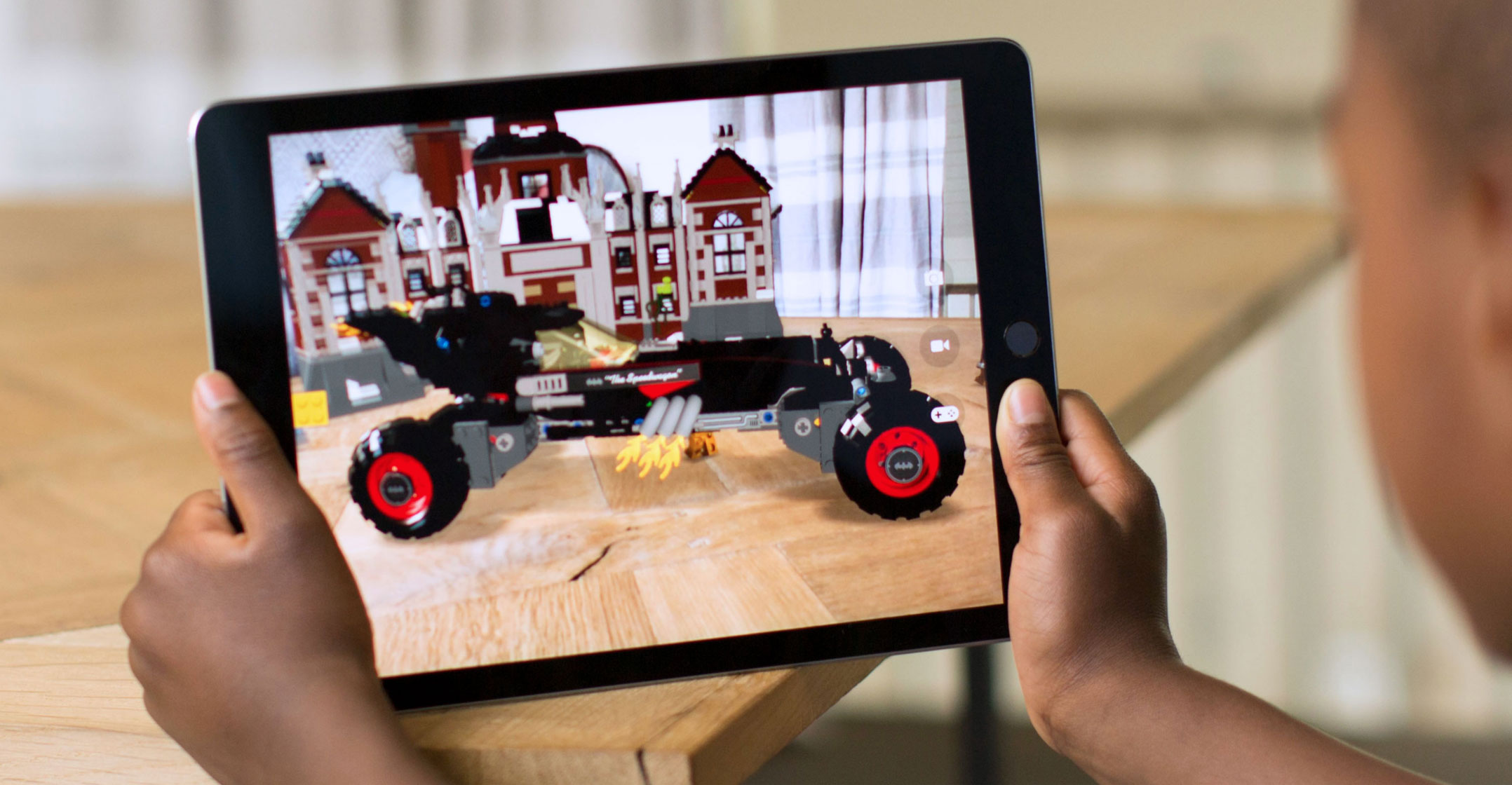
    AR superimposes digital information — for example, videogame characters or product prices — onto a person’s view of the real world. Virtual reality, on the other hand, immerses users in a completely digital experience. The market for both technologies could be worth as much as US$182bn by 2025, according to Goldman Sachs Group.

    Apple last month lifted the lid on ARKit, the Cupertino, California-based company’s first foray into this field. The tool lets developers build AR applications for iPhones and iPads.

    Google revealed Tango, its AR software system, back in 2014, with the latest iteration showed off this January. Unlike ARKit, it requires infrared depth perception sensors, and there are currently only two mobile phones available with the technology: Lenovo’s Phab 2 Pro and Asustek’s ZenFone AR. Apple’s ARKit uses the iPhone’s existing hardware, such as the camera and gyroscope, to achieve similar ends.

    Google’s problem

    The crux of the problem for Google is what’s known as fragmentation. When it updates its Android mobile operating system, hardware makers and cellular network operators are often slow to send the new software to phones.  That means the latest features, like Tango, only reach a fraction of Android’s more than two billion monthly active devices.

    Apple designs both software and hardware, giving it more control over when and how its operating system is loaded onto iPhones. The result: 86% of Apple’s mobile devices run the latest iOS software, compared to 11.5% of Android devices that run the newest Android OS.

    This is a major drawback when you’re in the business of building a new AR ecosystem that weds apps made by third-party developers to millions of smartphone-wielding consumers. Tango is on so few Android devices that developers won’t risk making apps for the system because they worry no one will use them.

    It’s the opposite with Apple: if only half of all its active devices download the new iOS 11 operating system this fall, that will be 500m iPhones and iPads with ARKit. (More than a billion Apple devices run iOS, but some earlier models will be incompatible with the new OS). Still, that’s a huge, almost instant market for AR developers to target.

    Take the designers at Buenos Aires-based digital studio Dift Collective, who considered Tango but still haven’t been tempted to use it. Yet since Apple released ARKit to developers in June, the team has made AR experiences including a computer-generated rocket landing in a swimming pool and a 3D moon that floats in the middle of a living room.

    This has a runway. And it’s an incredible runway. It’s time to put the seat belt on and go

    “For us the main step forward is the distribution,” said Charly De Venezia, Dift’s head of operations.

    Even if Google came up with AR software that didn’t require a 3D sensor, the multiple versions of Android running on hundreds of different phones would create a lot of extra work for developers, he explained. As of early July, there were seven different versions of Android running on mobile devices, according to Google.

    Since developers would have to test and optimise AR apps for so many different devices with varying display resolutions and performance capabilities, “it would require a huge effort to take this to Android and make it market-ready”, De Venezia said.

    Google declined to comment. However, the company is trying to tackle the fragmentation issue. Project Treble, unveiled in May, redesigned Android to make it faster and cheaper for manufacturers to update devices.

    Hurdle

    Still, requiring Android hardware makers to adhere to strict standards for their phone cameras is a particularly big hurdle, according to Matt Miesnieks, a partner at VR and AR investment firm Super Ventures. He used to work at Samsung Electronics, the largest Android phone manufacturer. Apple, meanwhile, designs its own hardware and software into only one phone, so it can develop cameras to match ARKit’s exact requirements.

    “The reason Android can’t compete with ARKit is that the original equipment manufacturers would need to effectively standardise their camera” systems, Miesnieks said.

    After an early push with Tango and the struggles of the Google Glass head-mounted display, the search giant’s AR efforts seem to have taken a back seat to other priorities for now. Glass is no longer available for consumers to buy, and Tango remains on just two handsets.

    For Apple, ARKit is the foundation for a later, but larger push into AR-infused devices. The company has a team of engineers working on smart glasses, and the next iPhone will likely include front- and rear-facing 3D sensors when it’s released later this year, analysts at JPMorgan Chase & Co and others have predicted.

    “The first step in making it a mainstream kind of experience is to put it in the operating system,” Apple CEO Tim Cook said in a June interview. “This has a runway. And it’s an incredible runway. It’s time to put the seat belt on and go.”

    A 3D sensor would permit improved accuracy when placing virtual objects in a real environment. That is essential for e-commerce applications in particular, said Ari Bloom, CEO of Avametric, a maker of AR tools for the fashion industry.

    “It’s super important that, if you’re going to present something for sale to a customer that you show it extremely accurately,” Bloom said, adding that doing so reduces costly product returns.

    Apple gave Ikea Group early access to ARKit. The furniture giant’s existing AR tool, which lets customers see how sofas and wardrobes might look in their homes, was built by Metaio, an AR start-up Apple acquired in 2015. After the deal, many of Metaio’s software tools stopped being available to developers. They’re showing up again now.

    “It’s been closed for two-and-a-half years,” said AR developer Guler. “What they’ve released now is a major, major update. I never saw anything close to this before.”  — Reported by Alex Webb, (c) 2017 Bloomberg LP

    Follow TechCentral on Google News Add TechCentral as your preferred source on Google


    Apple ARKit Google Tim Cook
    WhatsApp YouTube
    Share. Facebook Twitter LinkedIn WhatsApp Telegram Email Copy Link
    Previous ArticleUber, Yandex in $3.7bn merger deal
    Next Article SAP’s Adaire Fox-Martin on SA ‘kickbacks’ scandal

    Related Posts

    Dr Google, meet Dr Chatbot - neither is ready to see you now

    Dr Google, meet Dr Chatbot – neither is ready to see you now

    10 February 2026
    AI chatbots are coming to Apple CarPlay

    AI chatbots are coming to Apple CarPlay

    8 February 2026
    From stocks to crypto, markets reel as AI doubts grow

    From stocks to crypto, markets reel as AI doubts grow

    6 February 2026
    Company News
    Service is everyone's problem now - and that's exactly why the Atlassian Service Collection matters

    Service is everyone’s problem now – why the Atlassian Service Collection matters

    20 February 2026
    Customers have new expectations. Is your CX ready? 1Stream

    Customers have new expectations. Is your CX ready?

    19 February 2026
    South Africa's cybersecurity challenge is not a tool problem - Nicholas Applewhite, Trinexia South Africa

    South Africa’s cybersecurity challenge is not a tool problem

    19 February 2026
    Opinion
    A million reasons monopolies don't work - Duncan McLeod

    A million reasons monopolies don’t work

    10 February 2026
    The author, Business Leadership South Africa CEO Busi Mavuso

    Eskom unbundling U-turn threatens to undo hard-won electricity gains

    9 February 2026
    South Africa's skills advantage is being overlooked at home - Richard Firth

    South Africa’s skills advantage is being overlooked at home

    29 January 2026

    Subscribe to Updates

    Get the best South African technology news and analysis delivered to your e-mail inbox every morning.

    Latest Posts
    MultiChoice scraps annual DStv price hikes for 2026 - David Mignot

    MultiChoice scraps annual DStv price hike

    20 February 2026
    What Gen Z really thinks about the tech world it inherited - Tinashe Mazodze

    What Gen Z really thinks about the tech world it inherited

    20 February 2026
    Showmax 'can't continue' in its current form

    Showmax ‘can’t continue’ in its current form

    20 February 2026
    Free Market Foundation slams treasury's proposed gambling tax

    Free Market Foundation slams treasury’s proposed gambling tax

    20 February 2026
    © 2009 - 2026 NewsCentral Media
    • Cookie policy (ZA)
    • TechCentral – privacy and Popia

    Type above and press Enter to search. Press Esc to cancel.

    Manage consent

    TechCentral uses cookies to enhance its offerings. Consenting to these technologies allows us to serve you better. Not consenting or withdrawing consent may adversely affect certain features and functions of the website.

    Functional Always active
    The technical storage or access is strictly necessary for the legitimate purpose of enabling the use of a specific service explicitly requested by the subscriber or user, or for the sole purpose of carrying out the transmission of a communication over an electronic communications network.
    Preferences
    The technical storage or access is necessary for the legitimate purpose of storing preferences that are not requested by the subscriber or user.
    Statistics
    The technical storage or access that is used exclusively for statistical purposes. The technical storage or access that is used exclusively for anonymous statistical purposes. Without a subpoena, voluntary compliance on the part of your Internet Service Provider, or additional records from a third party, information stored or retrieved for this purpose alone cannot usually be used to identify you.
    Marketing
    The technical storage or access is required to create user profiles to send advertising, or to track the user on a website or across several websites for similar marketing purposes.
    • Manage options
    • Manage services
    • Manage {vendor_count} vendors
    • Read more about these purposes
    View preferences
    • {title}
    • {title}
    • {title}