Close Menu
TechCentralTechCentral

    Subscribe to the newsletter

    Get the best South African technology news and analysis delivered to your e-mail inbox every morning.

    Facebook X (Twitter) YouTube LinkedIn
    WhatsApp Facebook X (Twitter) LinkedIn YouTube
    TechCentralTechCentral
    • News
      New rand stablecoin market opens into a potential regulatory wall

      New rand stablecoin market opens into a potential regulatory wall

      10 August 2026
      Simon Dingle

      ‘South Africa has to abolish exchange control’

      10 August 2026
      The most dangerous customer is the quiet one - Jannie van Zyl

      The most dangerous customer is the quiet one

      10 August 2026
      Eskom fixed the fleet and the customers left

      Eskom fixed the fleet and the customers left

      7 August 2026
      DStv chops channels as Canal+ leans harder on sport

      DStv chops channels as Canal+ leans harder on sport

      7 August 2026
    • World
      Meta AI will now tell parents if their teen is in crisis

      Meta AI will now tell parents if their teen is in crisis

      17 July 2026
      IBM shares crash 25% as AI upends software spending - Arvind Krishna

      IBM shares crash 25% as AI upends software spending

      15 July 2026
      Jony Ive's first OpenAI device: an AI smart speaker - Jony Ive and Sam Altman

      Jony Ive’s first OpenAI device: an AI smart speaker

      15 July 2026
      Stripe, Advent in talks to buy PayPal for $53-billion

      Stripe, Advent in talks to buy PayPal for $53-billion

      15 July 2026
      Memory crisis sends smartphone market into steep decline

      Memory crisis sends smartphone market into steep decline

      13 July 2026
    • In-depth
      The plan to stop AI from breaking the world - Google DeepMind CEO Demis Hassabis. Image: John Sears

      The plan to stop AI from breaking the world

      16 July 2026
      The internet has a Strait of Hormuz problem

      The internet has a Strait of Hormuz problem

      15 July 2026
      AI boom sparks rally, frenzy and fear

      AI boom sparks rally, frenzy and fear

      11 June 2026
      Every plug-in hybrid on sale in South Africa, ranked by price - Lamborghini Temerario

      Every plug-in hybrid on sale in South Africa, ranked by price

      7 June 2026
      What Wi-Fi 8 will mean for wireless networks

      What Wi-Fi 8 will mean for wireless networks

      1 June 2026
    • TCS
      TCS+ | Specops' Darren James on continuous trust in an AI world

      TCS+ | Specops’ Darren James on continuous trust in an AI world

      7 August 2026
      TCS+ | How AI is turning hardware into a subscription service - Shane van der Merwe Merchant West

      TCS+ | How AI is turning hardware into a subscription service

      6 August 2026
      TCS+ | Why South African workers must become supervisors of digital labour - Accelera Digital Group Cliff de Wit

      TCS+ | Why South African workers must become supervisors of digital labour

      31 July 2026
      TCS | Rapid deployment rules can't work without municipalities: ACT - Nomvuyiso Batyi

      TCS | Icasa’s rules skip the real bottleneck: ACT

      30 July 2026
      TCS+ | iStore Business on why Apple makes sense for SMEs - Sudesh Pillay and Tamia Nontsikelelo

      TCS+ | iStore Business on why Apple makes sense for SMEs

      30 July 2026
    • Opinion
      The author, Jannie van Zyl

      Selling vapour is corporate suicide in slow motion

      16 July 2026
      Brazil's online gambling crackdown is a lesson for South Africa

      How Amazon outmanoeuvred Starlink in South Africa

      15 July 2026
      The Popia problem with agentic AI - Herman Haasbroek

      The Popia problem with agentic AI

      14 July 2026
      The author, Fanie van Rooyen

      South Africa can still catch the AI wave – here’s how

      7 July 2026
      The author, Fanie van Rooyen

      The AI utopia South Africa can’t afford

      1 July 2026
    • Company Hubs
      • 1Stream
      • Africa Data Centres
      • AfriGIS
      • Altron Digital Business
      • Altron Document Solutions
      • Altron Group
      • Arctic Wolf
      • Ascent Technology
      • AvertITD
      • BBD
      • Braintree
      • CallMiner
      • CambriLearn
      • CM Telecom
      • Contactable
      • CYBER1 Solutions
      • Digicloud Africa
      • Digimune
      • Domains.co.za
      • ESET
      • Euphoria Telecom
      • HOSTAFRICA
      • Incredible Business
      • iONLINE
      • IQbusiness
      • Iris Network Systems
      • Kaspersky
      • LSD Open
      • Mitel
      • NEC XON
      • Netstar
      • Network Platforms
      • Next DLP
      • Ovations
      • Paracon
      • Paratus
      • Q-KON
      • SevenC
      • SkyWire
      • Solid8 Technologies
      • Telit Cinterion
      • Telviva
      • Tenable
      • Vertiv
      • Videri Digital
      • Vodacom Business
      • Vox
      • Wipro
      • Workday
      • XLink
    • Sections
      • AI and machine learning
      • Banking
      • Broadcasting and Media
      • Cloud services
      • Contact centres and CX
      • Cryptocurrencies
      • Education and skills
      • Electronics and hardware
      • Energy and sustainability
      • Enterprise software
      • Financial services
      • HealthTech
      • Information security
      • Internet and connectivity
      • Internet of Things
      • Investment
      • IT services
      • Lifestyle
      • Policy and regulation
      • Public sector
      • Retail and e-commerce
      • Satellite communications
      • Science
      • SMEs and start-ups
      • Social media
      • Talent and leadership
      • Telecoms
      • Watts & Wheels
    • Events
    • Advertise
    TechCentralTechCentral
    Home » Science » Asgardia: an aspiring nation state – in space

    Asgardia: an aspiring nation state – in space

    By The Conversation14 October 2016
    Twitter LinkedIn Facebook WhatsApp Email Telegram Copy Link
    News Alerts
    WhatsApp
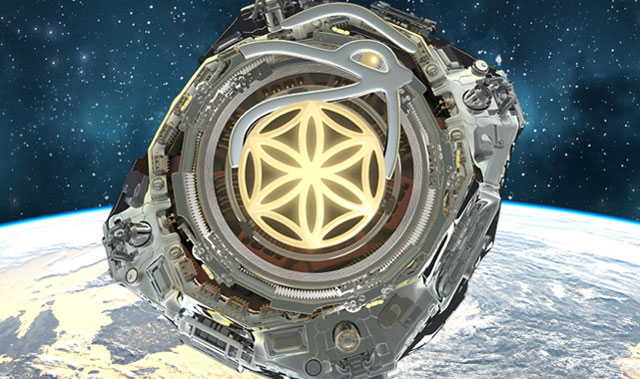
    asgardia-640
    Artist’s impression of the first Asgardia satellite

    I have become citizen number 62 of Asgardia, a new space nation dedicated to expanding peaceful exploration of space for the benefit of humanity. It is led by Igor Ashurbeyli, chairman of Unesco’s Science of Space Committee and founder of the Aerospace International Research Centre in Vienna. At first glance, it’s an amazing concept and surely one that every space scientist should welcome.

    According to its website, Asgardia will offer an “independent platform free from the constraint of a land-based country’s laws. It will become a place in orbit which is truly ‘no man’s land’”. Its first aim is to launch a satellite in October 2017, on the 60th anniversary of the launch of Sputnik. Another goal is to create a “protective shield” from threats to life on Earth, such as space debris, coronal mass ejections and asteroids.

    The project, announced at a press conference in Paris on 12 October, is urging people to sign up to become citizens. Ashurbeyli has said that when the number of applications goes above 100 000, the organisation can officially apply to the UN for the status of state. The claims are visionary — but could they be something of a mirage?

    In Norse mythology, Asgard is one of the Nine Worlds of the ancient gods, ruled over by Odin. Set in the skies, it is connected to Earth by the rainbow bridge, Bifrost. In taking the name Asgardia for the new “nation state”, the founders call upon its potential citizens to create an independent world of peaceful scientific cooperation. I am not sure the mythological world of Asgard is the best model for such an aspiration: after all, the largest hall in Asgard is Valhalla, where warriors killed in battle spend their time feasting or fighting.

    More fitting perhaps are the descriptions of Asgard in the fictional Marvel universe, where it’s a world that “exists in another dimensional plane and is about the size of the US”. According to Marvel’s history, Asgard was created by the god Thor on Earth, where he had bought a huge piece of property. But Iron Man confronted Thor about his construction, “and after a short but heated debate, [Iron Man] proposed to Thor that Asgard would be considered a separate nation just like a foreign embassy”. I enjoyed the phrase “short but heated debate” — surely code for a punch-up. But a “separate nation just like a foreign embassy” is pretty much what the Asgardia of today is proposing.

    The need to stay grounded

    But when you turn your attention from the world of mythology and superheroes back to reality, things are a little less exciting. What, exactly, is Asgardia? What is it for? What will it do? How will it operate? What is its governance? How is it funded? The organisation has failed to disclose any such information.

    We already have the International Space Station as an example of international collaboration in space, including both governments and private organisations. Although the ISS works well, it is regulated by international space agencies and wrapped in the associated bureaucracy. If Asgardia’s vision is to make space and experimentation in space more accessible, then that is laudable, but cannot be completely divorced from the necessity of some regulation.

    When it comes to plans to defend the Earth from space debris we need a bit more substance than an aim to launch a satellite. Maybe I am cynical, but I’d like to know who is doing the work. Where is this satellite being built? How will Asgardia achieve something that no other nation, or consortium of nations, has come close to achieving?

    I also have some worries about the wording in the concept. In particular, it complains about the fact that “economic and political considerations often take precedence over purely scientific ones and ethical boundaries are considered necessary to sustain safety”. To combat this, it says “Asgardia will demonstrate … that independent, private and unrestricted research is possible”. To me, ethical boundaries are necessary — especially if unrestricted research is on the agenda and it is to be “free from the constraint of a land-based country’s laws”. History has given us too many examples where unrestricted research has resulted in unacceptable consequences — the Nazis, for example, did a lot of unethical and unscientific research.

    We currently have laws and treaties that govern the peaceful use of space, acknowledged by all space-faring nations and operated through the UN. They may not be perfect, and may be in need of revision, given the accelerating pace of space technologies and the increasing influence and role of private companies in space exploration. But at least they are a framework within which nations must operate.

    Importantly, these laws state that the nation launching a satellite — or procures the launch of one — is liable for any damage caused by it. The office in charge of these laws also oversees the international register of all objects launched into space, and co-ordinates efforts to monitor space debris.

    If Asgardia is serious in its desire to be an independent player in space exploration, then it must consider its duties relative to the UN treaties — any attempt to become a “launching state” or procure a launch for a satellite leaves Asgardia liable if something goes wrong. It is difficult to reconcile this with Asgardia’s declared aim of being “free from the constraint of a land-based country’s laws”. No nation should be free to act completely independently of its neighbours — and by basing the idea of Asgardia in space, every nation on Earth is Asgardia’s neighbour. There is no doubt that space law is in need of an urgent update but I don’t believe that acting completely independently of land-based laws is a useful way forward.

    I hope that my doubts and concerns are groundless, and that Asgardia will indeed fulfil its promise to act for the benefit of humanity. Especially as by the time I had finished this article, the number of citizens of Asgardia had climbed to almost 20 000.The Conversation

    • Monica Grady is professor of planetary and space sciences, The Open University
    • This article was originally published on The Conversation

    Follow TechCentral on Google News Add TechCentral as your preferred source on Google


    Asgardia Igor Ashurbeyli Monica Grady
    WhatsApp YouTube
    Share. Facebook Twitter LinkedIn WhatsApp Telegram Email Copy Link
    Previous ArticleIndia’s hi-tech boom turns to bust
    Next Article Courts to decide fate of state capture report

    Related Posts

    Humanity could reach the stars within a generation

    14 April 2016
    Company News
    African Bank signs on as GEC+Africa 2026 partner

    African Bank signs on as GEC+Africa 2026 partner

    7 August 2026
    What a cloud review reveals about how a company actually runs - LSD Open

    What a cloud review reveals about how a company actually runs

    6 August 2026
    Manufacturing from a garage is now a realistic business plan - MaxLaser

    Manufacturing from a garage is now a realistic business plan

    6 August 2026
    Opinion
    The author, Jannie van Zyl

    Selling vapour is corporate suicide in slow motion

    16 July 2026
    Brazil's online gambling crackdown is a lesson for South Africa

    How Amazon outmanoeuvred Starlink in South Africa

    15 July 2026
    The Popia problem with agentic AI - Herman Haasbroek

    The Popia problem with agentic AI

    14 July 2026

    Subscribe to Updates

    Get the best South African technology news and analysis delivered to your e-mail inbox every morning.

    Latest Posts
    New rand stablecoin market opens into a potential regulatory wall

    New rand stablecoin market opens into a potential regulatory wall

    10 August 2026
    Simon Dingle

    ‘South Africa has to abolish exchange control’

    10 August 2026
    The most dangerous customer is the quiet one - Jannie van Zyl

    The most dangerous customer is the quiet one

    10 August 2026
    Eskom fixed the fleet and the customers left

    Eskom fixed the fleet and the customers left

    7 August 2026
    © 2009 - 2026 NewsCentral Media
    Built and maintained by Chronon
    • Cookie policy (ZA)
    • TechCentral – privacy and Popia

    Type above and press Enter to search. Press Esc to cancel.

    Manage consent

    TechCentral uses cookies to enhance its offerings. Consenting to these technologies allows us to serve you better. Not consenting or withdrawing consent may adversely affect certain features and functions of the website.

    Functional Always active
    The technical storage or access is strictly necessary for the legitimate purpose of enabling the use of a specific service explicitly requested by the subscriber or user, or for the sole purpose of carrying out the transmission of a communication over an electronic communications network.
    Preferences
    The technical storage or access is necessary for the legitimate purpose of storing preferences that are not requested by the subscriber or user.
    Statistics
    The technical storage or access that is used exclusively for statistical purposes. The technical storage or access that is used exclusively for anonymous statistical purposes. Without a subpoena, voluntary compliance on the part of your Internet Service Provider, or additional records from a third party, information stored or retrieved for this purpose alone cannot usually be used to identify you.
    Marketing
    The technical storage or access is required to create user profiles to send advertising, or to track the user on a website or across several websites for similar marketing purposes.
    • Manage options
    • Manage services
    • Manage {vendor_count} vendors
    • Read more about these purposes
    View preferences
    • {title}
    • {title}
    • {title}